
Written by: Ellie Pranckevicius, FNP-BC, Aesthetic Nurse Practitioner & Aesthetic Injector | Facial Restoration & Regenerative Injectable Specialist, Mirror Plastic Surgery | Last updated: August 26, 2026
Key Takeaways
- Lip augmentation cost in Sarasota reflects provider expertise, product choice, volume needs, and maintenance, not just the per-syringe price.
- Individualized treatment planning protects both results and budget, because the wrong filler or technique often requires costly correction.
- HA fillers remain the safest, reversible option with experienced injectors, and 2026 trends favor microdosing and natural-looking enhancement.
- Patients reduce hidden risks and corrective expenses by prioritizing anatomical knowledge, transparent pricing, and on-site complication management over the lowest rate.
- Schedule a personalized consultation at Mirror Plastic Surgery for an anatomy-first lip augmentation plan that fits your goals and budget.
Personalized Lip Augmentation Decisions in 2026
No two patients share the same lip anatomy, skin quality, or aesthetic goals. A 2026 systematic review concluded that current evidence does not identify any single superior injection technique, instrument, or filler formulation for lip augmentation, supporting individualized treatment planning based on patient anatomy and aesthetic goals. This finding directly affects cost. The right volume, product, and technique for one patient may be entirely wrong for another and more expensive to correct.
Key decision factors include cost transparency, provider safety protocols, expected longevity of results, and the likelihood of achieving natural outcomes. Evaluating all four together creates a clearer picture of value than price alone.
Key Lip Augmentation Terms You Will Hear
Clear language during lip augmentation consultations helps patients ask focused questions and interpret quotes accurately.
- Syringe volume: Most lip filler syringes contain 1 mL of product. A half-syringe at 0.5 mL can create a subtle volume increase. A full 1 mL syringe can create a more noticeable change depending on technique and placement.
- Lip flip: A neuromodulator such as Botox is injected into the orbicularis oris muscle to relax the upper lip so it rolls slightly outward. A Botox lip flip typically uses 2–4 units, lasts 8–12 weeks, and can be combined with filler in a single visit to enhance upper-lip appearance without adding volume. It does not add volume.
- Surgical lip lift: A procedure that shortens the philtrum, the skin between the nose and upper lip, to increase vermilion show and create structural change. The subnasal bull-horn lip lift produces permanent results without adding foreign volume.
The Consultation Process at Mirror Plastic Surgery
Understanding these options is the first step, and matching them to your anatomy happens during a detailed consultation. A thorough consultation forms the foundation of a safe and satisfying outcome.
At Mirror Plastic Surgery, the initial assessment can last up to an hour and evaluates full facial anatomy, emotional motivations, and long-term goals, not just the lips in isolation. Ellie Pranckevicius, FNP-BC, leads non-surgical consultations with a holistic, full-face approach and considers volume augmentation only after facial balance is assessed.
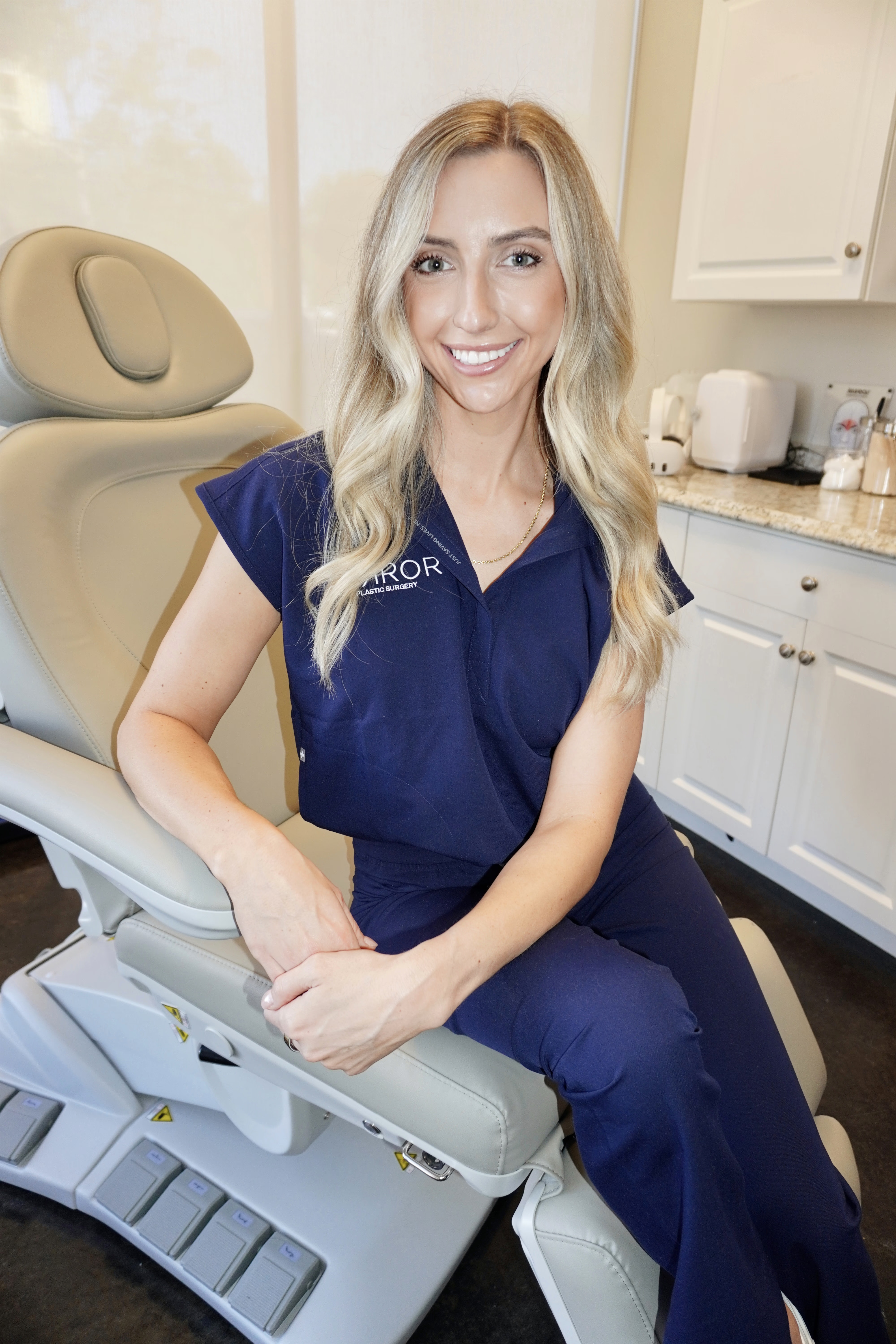
Candidacy review addresses existing filler history, lip-to-face proportion, skin quality, and whether non-surgical or surgical options make more sense. Treatment planning then identifies the right product, volume, and technique before any injection occurs. Follow-up expectations, including swelling timelines, touch-up windows, and maintenance schedules, are discussed in advance so patients understand the full scope of their investment.
Schedule your consultation with Ellie to discuss your specific anatomy and goals.
2026 Safety Standards and Treatment Trends
Hyaluronic acid, or HA, filler remains the dominant product category for lip augmentation and is reversible with hyaluronidase enzyme. A 2026 systematic review found no reported cases of vascular occlusion or vision-threatening events across included studies when HA lip augmentation was performed by experienced injectors. The same review noted rare but clinically relevant adverse events, including foreign-body granulomas and vascular compromise, which highlights the importance of injector expertise.
Patient expectations in 2026 favor subtlety. The leading trend, often called “Quiet Aesthetics,” focuses on lips that look healthier and more balanced rather than obviously augmented. Microdosing, which uses small volumes across multiple visits, has become a popular way to achieve gradual, natural-looking results.
Mirror Plastic Surgery remains supplier-neutral. Product recommendations follow patient anatomy and published evidence instead of brand relationships. The practice also keeps hyaluronidase on site for complication management.
Pre-Treatment Factors That Shape Your Experience
Patients benefit from weighing several factors beyond the quoted price before proceeding with lip augmentation.
Board-certified dermatologists and plastic surgeons typically charge more per syringe than less experienced injectors at med-spas, reflecting differences in medical training, complication management, and aesthetic judgment. Beyond credentials, board-certified injectors with extensive lip experience carry detailed knowledge of the superior and inferior labial arteries, cannula versus needle technique, and complication management such as vascular occlusion. Together, these factors influence both safety and the likelihood of needing correction.
Realistic outcomes also matter. The classical ideal upper-to-lower lip volume ratio is 1:1.6, though natural variation is common. Overfilling the upper lip central tubercle disrupts this ratio and produces an unnatural shelf or duck-lip appearance.
Maintenance should be part of the plan from the start. Annual lip filler maintenance costs commonly range from $1,200 to $4,000 depending on filler brand, injector expertise, treatment frequency, and location. Patients should factor this range into the total cost of care.
Recovery expectations complete the picture. Most patients experience swelling and tenderness immediately after treatment, with resolution within five to ten days for the majority of cases.1
Risks, Limitations, and Tradeoffs of Lip Filler
Common side effects of lip filler include bruising, swelling and tenderness, lumps, and asymmetry. Most of these resolve on their own within five to ten days. Less common risks include infection, nodules, and cold sore reactivation in HSV-positive patients who do not receive antiviral prophylaxis.
A 2026 case report in the Journal of Cosmetic Dermatology documented persistent trigeminal neuralgia-like pain following isolated injection of 0.6 mL of HA filler into the lips, with symptoms beginning 10 days post-procedure as bilateral stabbing paroxysms along the dental arches. The authors recommend that practitioners maintain detailed knowledge of perioral anatomy, avoid excessive volumes in confined spaces, and minimize repeated needle passes. Electric, stabbing, or burning facial pain that persists beyond the typical recovery period requires prompt neurological evaluation.
Not every patient qualifies for lip filler. Patients with active oral infections, certain autoimmune conditions, or unrealistic volume expectations may do better with alternative approaches or a staged plan developed over multiple visits.
Clarifying Common Lip Filler Misconceptions
Several widely shared concerns about lip filler are not supported by current evidence, yet they still influence patient decisions.
- Sagging after filler dissolves: Hyaluronic acid fillers do not stretch skin or cause sagging when they wear off. Lips return to their natural shape and size, and some patients notice slightly fuller lips than before treatment because of minor collagen stimulation.
- Lumpiness: Lumps can appear at the two-week review and usually resolve without intervention. Persistent nodules are rare and typically relate to incorrect product depth or technique.
- Unnatural feel: Modern HA formulations such as RHA and Restylane Kysse are engineered for dynamic movement, producing results that feel natural during normal lip function.
- Hidden fees: A transparent lip filler quote should itemize the consultation fee, filler product cost, injector fee, clinical supplies, numbing support, and follow-up policy for adjustments. Patients should request this breakdown before proceeding so they understand the full financial commitment.
Comparing Filler and Surgical Lip Lift
Filler and surgical lip lift address different anatomical concerns and cannot always substitute for each other. The table below summarizes key differences using comparable metrics. Cost figures reflect published 2026 U.S. market data and are provided for educational context only. Personalized quotes are provided during consultation.
| Factor | HA Lip Filler | Surgical Lip Lift |
|---|---|---|
| Primary purpose | Volume, hydration, contour | Philtrum shortening, vermilion show |
| Durability | 8–18 months, repeat treatments required | Permanent structural change |
| Recovery | Minor swelling, no downtime | Suture removal at 5–7 days, scar maturation 3–6 months |
| Reversibility | Fully reversible with hyaluronidase | Permanent, not reversible |
| Long-term cumulative cost consideration | Repeated sessions accumulate over years | One-time surgical investment |
Patients with significant age-related philtrum lengthening or those seeking permanent structural change may be better candidates for a surgical lip lift. Patients seeking reversible volume enhancement or hydration are typically better served by filler. At Mirror Plastic Surgery, Ellie’s non-surgical work can be complemented by Dr. Akash Chandawarkar, MD, when surgical evaluation is appropriate.
Half-Syringe Lip Filler: When a Small Change Works
Half-syringe, or 0.5 mL, lip filler treatments provide a subtle volume increase and suit patients who want very subtle change, improved hydration, or a cautious first treatment. This approach aligns with the 2026 microdosing trend and works well for patients with naturally fuller lips who want refinement rather than noticeable augmentation.
However, a half-syringe is not always the right value if more structure or fuller correction is needed. In those cases, a half-syringe may create an underwhelming result while still incurring most of the session cost. Whether a half-syringe makes sense is determined during the consultation based on existing lip volume, anatomy, and goals.
Dissolving Prior Filler: Costs and Planning
Dissolving unwanted lip filler with hyaluronidase typically costs $80–$500 per session, averaging around $335 and is not always included in the original treatment price. Correction is appropriate when prior filler has migrated, created asymmetry, or produced an unnatural appearance. Patients who choose unlicensed providers to save money often face additional costs later to correct poor results.
A 2024 MRI-based study published in Plastic and Reconstructive Surgery Global Open found that hyaluronic acid filler remained detectable in mid-face tissue for at least 2 years in every patient imaged, even though visible cosmetic effects typically fade earlier. Patients who present with prior filler history may therefore need hyaluronidase before new product is placed, which adds to the total session cost.
Post-Treatment Recovery and Follow-Up
Swelling and tenderness occur universally immediately after lip filler injections. Most adverse effects resolve spontaneously within five to ten days.1 Bruising, when present, usually fades within one to two weeks.
Final results are typically visible at the two-week mark, which is also when follow-up appointments occur to evaluate symmetry and decide whether a touch-up is needed.1 Patients with a history of cold sores should discuss antiviral prophylaxis with their provider before treatment, because cold sore reactivation can occur in HSV-positive patients without preventive medication.
Real Patient Concerns About Feel, Longevity, and Maintenance
Patients often want clear answers about longevity, feel, and maintenance before committing to lip augmentation. Current evidence offers practical guidance.
- How long will results last? Soft HA products such as Juvederm Volbella or Restylane Kysse typically last 6–12 months.1 First-time patients often see results fade faster because the tissue lacks an existing filler foundation.
- Will it feel natural? The dynamic formulations mentioned earlier, including RHA 2 and RHA 3, flex naturally with lip motion. Patient satisfaction across reviewed studies was consistently high.
- What does maintenance involve? Most patients schedule maintenance sessions every 8–12 months, often using less product per visit as cumulative filler provides structural support.1
Get personalized answers to your lip augmentation questions—schedule with Ellie today.
Credentials of the Lead Injector and Surgeon
| Provider | Credentials | Relevant Expertise |
|---|---|---|
| Ellie Pranckevicius, FNP-BC | B.S. Health Science, Boston University; 600-hour aesthetics licensure program; B.S. and M.S. Nursing, University of South Florida; Board-Certified Family Nurse Practitioner | Neuromodulators and dermal fillers for full-face rejuvenation; 4 years Neuroscience ICU at Tampa General Hospital; dual background in esthetics and advanced nursing; deep surface and subdermal anatomical knowledge |
| Dr. Akash Chandawarkar, MD | Harvard-educated physician; Johns Hopkins-trained plastic surgeon; fellowship-trained aesthetic surgeon, Manhattan Eye Ear & Throat Hospital (MEETH)/Lenox Hill Hospital; medical innovation training, Stanford University | Surgical lip lift and complementary surgical procedures; oversight and complication management; evidence-based, supplier-neutral practice standards |
Key Questions Sarasota Patients Should Ask
Patients can protect their results and budget by asking targeted questions before booking any lip augmentation appointment. Evasive or incomplete answers signal the need for a second opinion.
- What specific product and volume do you recommend for my anatomy, and why?
- What is included in the quoted price, including consultation, product, injector fee, follow-up, and touch-up policy?
- Do you carry hyaluronidase on site for emergency reversal?
- How do you manage vascular occlusion if it occurs?
- What is your approach if I am dissatisfied with the result at my two-week follow-up?
- Are you recommending this volume because it suits my anatomy, or because it is a standard package?
- What is the realistic maintenance schedule and annual cost for sustaining my results?
Rushed consultations that skip these questions, or providers who discourage them, often lead to dissatisfaction and corrective costs that drive patients to more qualified practices.
Typical Cost Variables in the Sarasota Area
The table below summarizes the primary cost variables for lip augmentation in the Sarasota and Tampa Bay market. No specific prices appear here. Personalized quotes are provided during consultation based on each patient’s anatomy, product selection, and treatment plan.
| Cost Variable | What Drives It | Market Context |
|---|---|---|
| Syringe volume (0.5 mL vs. 1 mL vs. 1.5–2 mL) | Patient anatomy, existing volume, correction goals | 0.5 mL suited for slight volumization; 1.5–2 mL for advanced contouring or symmetry correction |
| Product brand and formulation | Longevity, movement, texture goals | Product selection is a primary variable increasing total cost beyond the base per-syringe price in the Tampa market |
| Injector qualifications | Training depth, complication management, anatomical expertise | Reputable Tampa cosmetic surgery centers charge more per syringe than standalone med spas, reflecting higher accountability for complications |
| Correction of prior filler | Hyaluronidase session required before new product | Dissolution sessions average $335 and are billed separately |
| Add-on treatments | Lip flip, perioral line treatment, combination visits | Add-on treatments such as a Botox lip flip are a primary variable increasing total cost |
| Annual maintenance | Individual metabolism, product longevity, cumulative volume | The annual maintenance range mentioned earlier, $1,200 to $4,000, varies based on these combined factors |
Why Cost Variables Matter for Sarasota Patients
Lip augmentation cost in the Sarasota area functions as a collection of variables rather than a single number. Product selection, injector expertise, volume requirements, correction history, and ongoing maintenance all depend on anatomy and individual goals. Low-cost procedures carry hidden risks including use of unapproved products, higher rates of granuloma or asymmetry, and potentially expensive corrective interventions that can exceed the savings of the initial treatment.
Patients who evaluate providers based on anatomical expertise, transparent pricing, and individualized planning, rather than the lowest advertised per-syringe rate, are more likely to achieve results that are safe, natural, and sustainable. Mirror Plastic Surgery’s concierge approach, supplier-neutral product selection, and hour-long initial assessments support patients who value this level of care.
Ready to create your personalized treatment plan? Connect with Ellie at Mirror Plastic Surgery.
Frequently Asked Questions
Is a half-syringe of lip filler worth it for first-time patients?
A half-syringe, or 0.5 mL, suits patients who already have reasonable lip volume and want subtle hydration, mild definition, or a cautious introduction to filler. It provides a gentle enhancement and aligns with the 2026 microdosing trend toward gradual, natural-looking results. Patients with thinner lips, significant asymmetry, or age-related volume loss usually need a full syringe or more to achieve a meaningful and lasting result. Whether a half-syringe represents good value depends on the individual’s anatomy and goals, which are assessed during a thorough consultation rather than from a price list.
How much does it cost to dissolve lip filler in the Sarasota area?
Dissolving prior lip filler with hyaluronidase functions as a separate procedure from new filler placement and is billed independently at most practices. The fee covers the enzyme, the clinical visit, and the provider’s time to assess and treat the area safely. The number of sessions required depends on how much filler is present, how long it has been in place, and how the tissue responds to the enzyme. Patients with a history of multiple filler sessions may need more than one dissolution appointment before new product can be placed accurately. Mirror Plastic Surgery provides personalized quotes for dissolution during the consultation after reviewing the patient’s existing filler history.
What is the difference between a lip flip and lip filler, and which costs more?
A lip flip uses a small amount of neuromodulator injected into the orbicularis oris muscle to relax the upper lip so it rolls outward slightly. It does not add volume and lasts approximately 8–12 weeks. Lip filler uses a gel product injected directly into the lip tissue to add volume, shape, and hydration, with results lasting 8–18 months depending on the product. Lip filler generally costs more per session because it requires more product and a more technically demanding injection. The two approaches are frequently combined in a single visit for patients who want both improved upper-lip show and added volume. The right approach depends on the patient’s anatomy and goals, which Ellie evaluates during the consultation.
How does a surgical lip lift compare to ongoing filler in terms of long-term cost?
A surgical lip lift is a one-time procedure that permanently shortens the philtrum and increases vermilion show without adding volume. It requires a recovery period that includes suture removal at 5–7 days and scar maturation over 3–6 months. Repeated lip filler sessions, by contrast, accumulate in cost over time because maintenance is required every 8–18 months indefinitely. For patients whose primary concern is philtrum length or upper-lip show rather than volume, a surgical lip lift may represent a more cost-effective long-term solution. For patients seeking reversible volume enhancement, filler remains the appropriate non-surgical option. Dr. Akash Chandawarkar, MD, evaluates surgical candidacy at Mirror Plastic Surgery when a lip lift is under consideration.
What qualifications should I look for in a lip filler injector in the Sarasota area?
In Florida, lip filler injections must be performed by or under the supervision of a licensed medical professional, such as an MD, DO, ARNP, or PA. Beyond licensure, patients should evaluate the injector’s depth of anatomical training, familiarity with the specific products being used, protocol for managing complications such as vascular occlusion, and whether hyaluronidase is maintained on site for emergency reversal. An injector who conducts a thorough pre-treatment assessment, explains the rationale for product and volume selection, and provides a transparent itemized quote demonstrates a standard of care that reduces both complication risk and the likelihood of needing costly corrections. Ellie Pranckevicius, FNP-BC, brings a dual background in esthetics and advanced nursing, four years of critical care experience, and deep subdermal anatomical knowledge to every lip augmentation consultation at Mirror Plastic Surgery.
Disclaimer: Results may vary from person to person. Editorial content, before and after images, and patient testimonials do not constitute a guarantee of specific results.
1 Results may vary from person to person. Editorial content, before and after images, and patient testimonials do not constitute a guarantee of specific results.