
Written by: Ellie Pranckevicius, FNP-BC, Aesthetic Nurse Practitioner & Aesthetic Injector | Facial Restoration & Regenerative Injectable Specialist, Mirror Plastic Surgery | Last updated: August 26, 2026
Key Takeaways for Safer Lip Filler in 2026
- Vascular occlusion is a rare but serious lip filler complication that requires immediate recognition and hyaluronidase reversal to prevent tissue damage.
- Safety depends on provider credentials, anatomical knowledge, product selection, and strict evidence-based protocols, not any single brand or injector.
- Only hyaluronic acid fillers are appropriate for lip augmentation in 2026 because they are reversible with hyaluronidase; permanent fillers should never be used.
- Repeated filler treatments carry long-term risks including product migration, delayed nodules, and cumulative tissue burden that require ongoing assessment and possible dissolution.
- Women in the Tampa Bay area seeking safe, anatomy-first lip augmentation should schedule a comprehensive consultation with Ellie at Mirror Plastic Surgery and begin with a thorough one-hour assessment.
Vascular Occlusion: The Complication Every Lip Filler Patient Should Understand
Vascular adverse events related to facial filler injections are rare and likely underreported given high global procedural volumes. The mechanism involves either direct intravascular injection of filler or external compression of a vessel wall strong enough to halt blood flow.
The perioral region carries disproportionate risk. The superior and inferior labial arteries, branches of the facial artery, run through the body of the lip with highly variable depth and course between individuals. This variability makes the lip one of the least predictable injection territories on the face. The labial arteries can change planes in some cases, appearing in superficial subdermal or intramuscular locations, although the deep arterial pathway is commonly observed.
A multicenter retrospective study of patients with clinically diagnosed filler-related facial vascular adverse events highlighted the importance of early recognition of clinical signs. The study identified the following presentation pattern:
- Livedo reticularis (mottled skin discoloration): a common sign
- Blanching: can be present
- Pain: can be present and may be associated with livedo reticularis
Safety Protocols That Meaningfully Reduce Lip Filler Risk
Lower complication rates consistently cluster in regulated, clinician-led settings with written and rehearsed protocols, in-date hyaluronidase, defined escalation pathways, and longitudinal training. These outcomes do not cluster around a specific product brand or a charismatic injector.
A defensible 2026 safety program for lip augmentation includes the following non-negotiable elements:
- Patient screening and a good-faith physical exam before treatment
- Risk-specific informed consent explicitly naming vascular occlusion and product migration
- Assessment of the position and depth of the labial arteries combined with injection techniques that minimize vascular compromise risk
- Pre-injection palpation or ultrasound evaluation to predict the labial arterial pathway
- Conservative volume selection, limiting total product to no more than approximately 1 mL into the vermilion in a single session for treatment-naïve patients
- Hyaluronidase maintained on site in adequate dose for full territory flood
- Written aftercare instructions listing warning signs and a contemporaneous adverse-event record
Mirror Plastic Surgery follows this framework in daily practice. Ellie Pranckevicius, FNP-BC, conducts up to a one-hour top-to-bottom assessment before any treatment. She maps anatomy, reviews vascular risk factors, and builds a personalized plan that places safety first, function second, and aesthetics third.
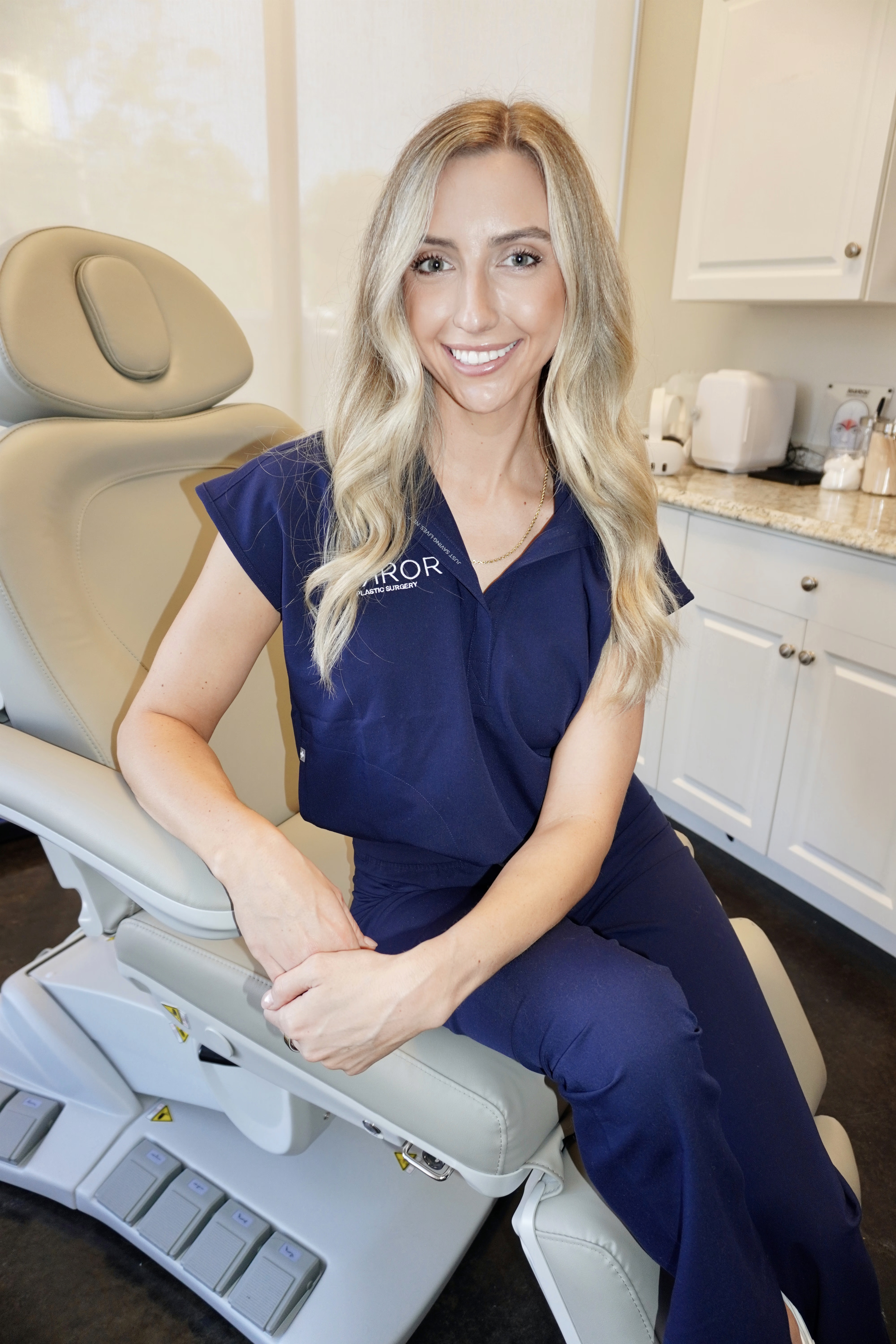
Start with a pre-treatment anatomical consultation with Ellie before any injection decision is made.
Safest Lip Filler Choices and Techniques in 2026
Hyaluronic acid fillers such as Juvederm Volbella and Restylane Kysse are FDA-labeled for lip augmentation in adults aged 21 and over, are reversible with hyaluronidase, and last 6–18 months.1 Reversibility is the defining safety advantage of HA fillers. Hyaluronidase can partially or fully dissolve HA product within 24–48 hours, which makes HA fillers the only appropriate lip filler category in 2026.
Non-hyaluronic acid products such as Radiesse, Sculptra, and silicone should never be used in the lips because they are not reversible with hyaluronidase and can produce significant complications. Permanent fillers including Bellafill, PMMA, and silicone carry documented long-term risks including granuloma formation and are inappropriate for lip augmentation.
Needles generally provide greater precision and control than cannulas for lip filler injections. They allow small deposits into different compartments and fine sculpting of the vermilion border and Cupid’s bow. Cannulas may be preferred in patients with elevated vascular risk such as a history of trauma or atypical vasculature. Product selection follows anatomy. Restylane Kysse is suited for flexible natural movement in the lip body, Restylane Silk for border definition, and Juvederm Volbella for subtle enhancement. While these products carry specific duration claims, understanding how long they persist in tissue matters for long-term safety planning.
Long-Term Lip Filler Effects and Delayed Complications
Long-term tissue effects from repeated lip filler use form an underappreciated dimension of lip augmentation safety. A review of 33 MRI studies found hyaluronic acid filler still visible in the mid-face of every patient scanned, with no complete dissipation over a two-year period.
Repeated lip filler injections increase the risk of migration, which can produce a shelf-like fullness above the lip border over time as product drifts into surrounding tissue. Migration is associated with overfilling, repeated treatment before prior product clears, superficial placement, and lip mobility.
Residual hyaluronic acid filler can trigger delayed-onset nodules weeks, months, or years after injection; non-inflammatory nodules feel cool and firm, while inflammatory nodules are painful, red, or tender and may indicate infection. In addition, hyaluronic acid fillers behave as non-Newtonian fluids and can increase G-prime by up to 2,000% under labial movement. This behavior can contribute to late-onset nodules, inflammation, or irregularities even when the product feels soft during injection.
When cumulative product burden, migration, or nodule formation appears, dissolution with hyaluronidase followed by a structured reassessment is the appropriate clinical response before any additional volume is placed.
What Many First-Time Lip Filler Patients Wish They Knew
Several practical realities about lip augmentation rarely get explained clearly before a first treatment. The upper-to-lower lip ratio is an important consideration in Caucasian females, though this varies by ethnicity and cultural background and should guide individualized treatment planning. Chasing volume beyond these proportions often drives unnatural results.
For first-time patients, a standard safety approach is to start with 0.5 mL of HA filler, reassess at two weeks, and add more only if needed, rather than beginning with a full 1 mL syringe. Lip filler results should be evaluated only after two weeks, once swelling has fully subsided; immediate post-treatment swelling peaks on days 1–3 and bruising may take 7–14 days to resolve.1
Maintenance continues over time. Hyaluronic acid lip fillers typically last 6–12 months, with variation depending on product, placement depth, and individual metabolism, as lips experience constant movement that accelerates breakdown compared to static facial areas.1 A provider who claims a patient will never need to dissolve or reassess is not planning with that patient’s long-term anatomy in mind.
Comparing Lip Lift Surgery and Lip Fillers
A surgical lip lift, most commonly a bullhorn or subnasal lip lift, shortens the philtrum, increases upper lip show, and creates a permanent structural change that filler cannot replicate. Unlike filler, it carries surgical risks including scarring, asymmetry, and anesthesia-related considerations. It also removes the ongoing maintenance cycle and vascular occlusion risk associated with repeated injections.
The choice between a lip lift and filler should follow anatomy. Patients with a long philtrum, significant upper lip thinning from aging, or a history of filler migration may be better served surgically. Patients seeking modest volume enhancement with an intact philtral length are typically good candidates for conservative HA filler. A key safety principle in either case involves assessment of the position and depth of the labial arteries and the use of techniques that minimize the risk of vascular compromise. At Mirror Plastic Surgery, Dr. Akash Chandawarkar’s surgical expertise and Ellie’s injection proficiency support an integrated assessment of which approach, or combination, best serves each patient’s anatomy and goals.
Provider Credentials That Signal Safer Lip Augmentation
The following table outlines the credential and protocol markers associated with reduced complication rates in lip augmentation. Lower complication rates consistently cluster in regulated, clinician-led settings with written and rehearsed protocols and defined escalation pathways.
| Credential / Protocol | Why It Matters | What to Ask | Mirror Plastic Surgery |
|---|---|---|---|
| Licensed MD, DO, NP, or PA injector | In Florida, lip filler injections must be performed by or under the supervision of a licensed medical professional such as an MD, DO, ARNP, or PA | Can you confirm your license type and supervising physician? | Ellie Pranckevicius, FNP-BC, with physician oversight by Dr. Akash Chandawarkar, MD |
| Advanced anatomical training | Comprehensive training programs dedicate substantial curriculum time to vascular anatomy of the face, including danger zones such as the nasolabial folds and perioral region | What formal training have you completed in facial vascular anatomy? | Dual background in esthetics and advanced nursing, 4 years Neuroscience ICU experience, supervised by a Johns Hopkins-trained plastic surgeon |
| Hyaluronidase on site at every appointment | Clinics must maintain in-date hyaluronidase on premises in adequate dose for full territory flood | Is hyaluronidase stocked and in-date at this location? | Yes, maintained on site per written complication protocol |
| Written complication protocol and escalation pathway | A written, dated, and signed complication protocol covering vascular occlusion, suspected visual loss, anaphylaxis, and severe vasovagal events is required for safe practice | Do you have a written protocol for vascular occlusion emergencies? | Yes, with documented escalation pathways |
When Mirror Plastic Surgery Recommends Saying No to Lip Filler
A provider’s willingness to decline treatment is one of the clearest signals of a safety-first philosophy. The decision to defer or refuse treatment follows a hierarchy of risk assessment. First, Ellie evaluates whether the vascular anatomy itself permits safe injection.
- Atypical or compromised vasculature: Cannulas may be preferred in patients with elevated vascular risk such as history of trauma or atypical vasculature. When safe injection cannot be confirmed through palpation or ultrasound, treatment does not proceed.
Even when vasculature appears normal, a patient’s treatment history can create contraindications.
- Prior vascular occlusion or unresolved complication: Any history of filler-related vascular event requires full dissolution, a healing interval, and re-evaluation before new product is placed.
- Existing product burden without adequate clearance: Migration and dissolution of hyaluronic acid filler are separate processes, so filler can shift from the original injection site into surrounding tissue and still remain detectable for years. Adding volume to an already-burdened lip is contraindicated.
Beyond anatomy and history, Ellie considers whether expectations align with safe practice.
- Unrealistic volume expectations: Overfilling lips can erase the vermilion border, cause excessive forward projection, and produce a “duck lip” appearance. Requests that exceed safe anatomical ratios are declined.
Finally, acute conditions at the injection site require temporary deferral.
- Active infection, cold sore, or inflammatory skin condition at the injection site: Treatment is deferred until the condition resolves.
Ellie’s practice reflects the same transparency that defines Mirror Plastic Surgery’s broader philosophy. Sometimes the most valuable clinical decision protects a patient from a procedure they do not yet need, or should not have at all.
Request an honest evaluation with Ellie to determine whether lip augmentation is appropriate for your specific anatomy.
Post-Procedure Timeline and Red-Flag Symptoms
Knowing the normal recovery trajectory helps patients distinguish expected swelling from a developing complication. Normal lip filler swelling peaks within 24–72 hours, largely resolves by two weeks, and is accompanied by common bruising that may last a week or longer; small palpable lumps that soften over the first two weeks are also typical.1
The following timeline reflects standard post-treatment progression:
- Day 1–3: Peak swelling and possible bruising. Lips appear larger than the final result, which is expected.
- Day 4–7: Swelling begins to subside and bruising fades. Mild tenderness at injection points remains normal.
- Day 7–14: Residual swelling resolves and small lumps soften. Final shape becomes visible.
- Day 14+: Final evaluation occurs at the two-week mark discussed earlier, once swelling has fully resolved. Follow-up assessment is scheduled at this point.
The following signs require immediate contact with your provider or emergency care. Patients should not wait to see if they resolve.
- Severe or escalating pain disproportionate to the procedure
- Blanching or dusky, mottled discoloration of the lip or surrounding skin
- Coolness of tissue, spreading rash, or fever
- Any change in vision
Choosing a Safer Path Forward With Lip Augmentation
Lip augmentation safety in 2026 depends on the quality of the provider, the depth of the anatomical assessment, and the integrity of the clinical protocol surrounding the procedure. Vascular adverse events are rare but clinically significant, likely underreported, and concentrated in the perioral region. High-volume, rushed treatment environments create the greatest risk in this territory.
Mirror Plastic Surgery follows a different standard. Every lip augmentation patient receives a one-hour top-to-bottom assessment with Ellie Pranckevicius, FNP-BC, within a practice founded and overseen by Dr. Akash Chandawarkar, a Harvard-educated, Johns Hopkins-trained, fellowship-certified plastic surgeon. The assessment maps anatomy, evaluates vascular risk, reviews product history, and establishes a treatment plan in which safety comes first, function second, and aesthetics third. When anatomy or expectations make a safe outcome uncertain, the answer is no.
For women in St. Petersburg and the Tampa Bay area who want a provider that prioritizes long-term well-being over procedural volume, that conversation begins with a dedicated consultation.
Book your one-hour consultation with Ellie at Mirror Plastic Surgery and receive the personalized assessment your anatomy deserves.
Frequently Asked Questions
What is the most important thing to look for in a lip filler provider in Tampa Bay?
The single most important factor is whether the provider conducts a genuine anatomical assessment before any product is placed. This assessment includes your existing lip structure, upper-to-lower ratio, philtral height, vascular risk factors, and cumulative product history, not just a question about desired volume. In Florida, lip filler must be performed by or under the supervision of a licensed medical professional such as an MD, DO, ARNP, or PA. Beyond licensure, the practice should maintain the reversal agent on site at every appointment, have a written complication protocol for vascular occlusion, and be willing to decline treatment when anatomy or expectations make a safe outcome uncertain. At Mirror Plastic Surgery, Ellie Pranckevicius, FNP-BC, conducts up to a one-hour top-to-bottom assessment under the oversight of Dr. Akash Chandawarkar, a Johns Hopkins-trained plastic surgeon, so every treatment decision remains grounded in anatomy and evidence.
How do I know if I am experiencing vascular occlusion after lip filler?
Vascular occlusion typically presents within minutes to hours of injection. The warning signs described earlier, including blanching, a mottled or livedo pattern, and disproportionate pain, often appear quickly. Coolness of the tissue and, in rare cases, changes in vision can also occur. These signs require immediate contact with your provider, not a wait-and-see approach. A qualified provider will have the reversal agent on site, as discussed in the credential checklist, and a written protocol for initiating high-dose reversal without waiting for diagnostic certainty. Normal post-treatment swelling, by contrast, peaks within 24–72 hours, is accompanied by bruising that resolves within one to two weeks, and does not involve blanching, mottled discoloration, or escalating pain.
Are there long-term risks to getting lip fillers repeatedly over many years?
Repeated lip filler treatments carry cumulative risks that differ from the risks of a single session. MRI evidence shows that hyaluronic acid filler can persist in tissue for years, in some cases up to 15 years, even when patients believe it has fully dissolved. Over time, repeated injections increase the risk of product migration, which can create a shelf-like fullness above the lip border. Delayed-onset nodules, both inflammatory and non-inflammatory, can develop months or years after injection. The lips are a high-movement area, so filler breaks down faster than in static facial regions, but mechanical stress also increases the likelihood of product shifting from its original placement. A responsible provider will assess cumulative product burden at each visit, recommend dissolution when appropriate, and avoid adding new volume to a lip that has not adequately cleared prior treatment.
What is the difference between a lip lift and lip fillers, and how do I know which is right for me?
A lip lift is a surgical procedure that permanently shortens the philtrum and increases upper lip show by removing a small strip of skin beneath the nose. It creates a structural change that filler cannot replicate and eliminates the maintenance cycle associated with repeated injections. Lip fillers, by contrast, add volume and definition non-surgically using reversible hyaluronic acid products, with results lasting approximately 6–18 months depending on the product and individual metabolism. The right choice depends on your anatomy. Patients with a long philtrum, significant age-related upper lip thinning, or a history of filler migration may achieve better long-term outcomes with a surgical lip lift. Patients seeking modest volume enhancement with an intact philtral length are typically good candidates for conservative HA filler. At Mirror Plastic Surgery, both options are available, with Ellie handling non-surgical augmentation and Dr. Akash Chandawarkar performing surgical lip lifts, which allows for an integrated assessment rather than a default recommendation toward one modality.
Why does Mirror Plastic Surgery spend an hour on a lip augmentation consultation when most medspas do not?
The one-hour top-to-bottom assessment exists because safe, natural lip augmentation cannot be planned in five minutes. A thorough consultation maps your existing lip anatomy, evaluates upper-to-lower ratios, reviews your history of prior filler treatments and any complications, identifies vascular risk factors, and sets realistic expectations grounded in your facial proportions rather than a generic template. It also allows time to understand the emotional drivers behind your interest in treatment and to have an honest conversation about whether augmentation is the right approach, or whether a different treatment, or no treatment at that time, better serves your long-term well-being. This level of attention forms the foundation of Mirror Plastic Surgery’s concierge medicine philosophy and distinguishes a practice that prioritizes safety, function, and aesthetics, in that order, from a high-volume environment where speed outruns personalized care.
Disclaimer: Results may vary from person to person. Editorial content, before and after images, and patient testimonials do not constitute a guarantee of specific results.
1 Results may vary from person to person. Editorial content, before and after images, and patient testimonials do not constitute a guarantee of specific results.