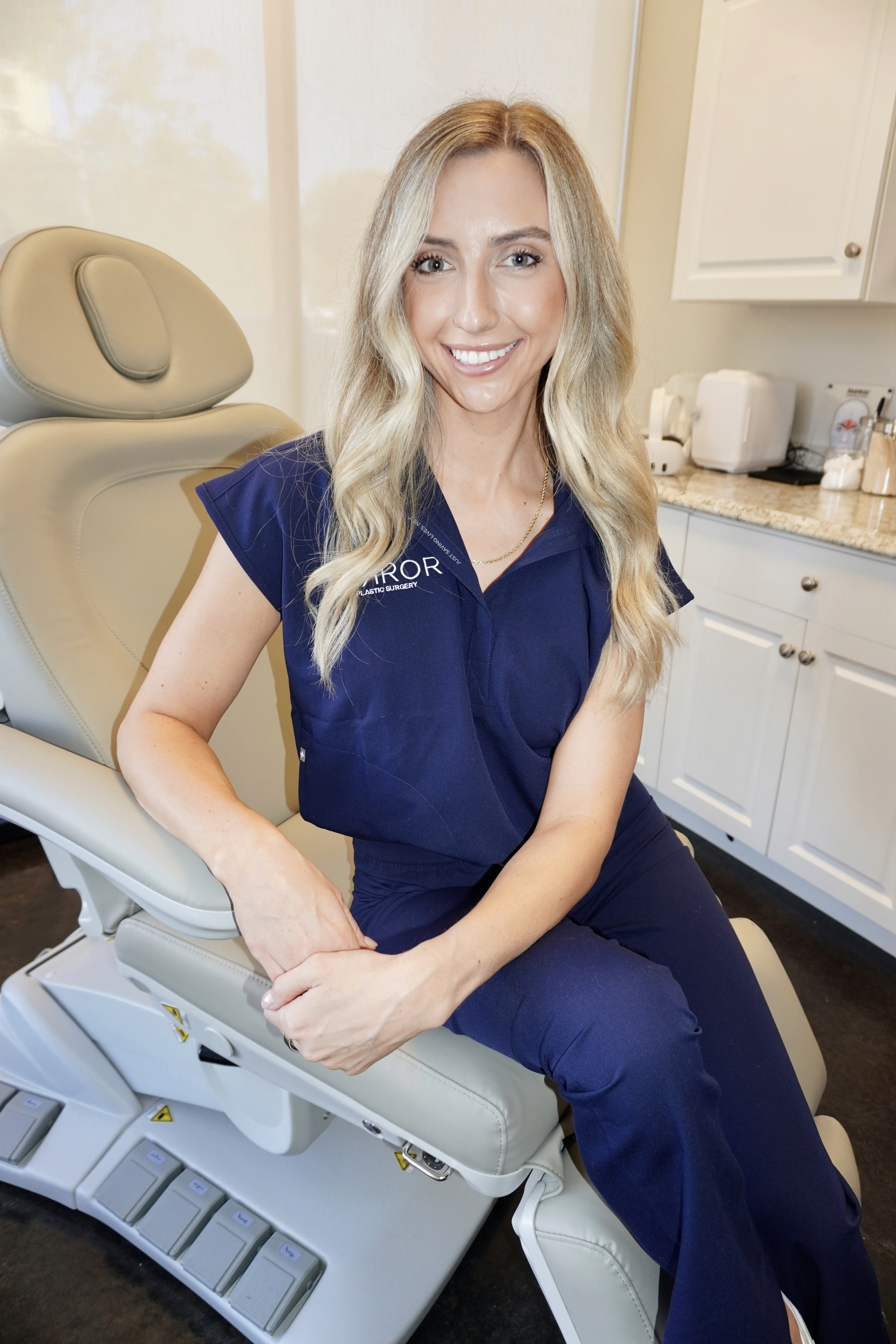
Written by: Ellie Pranckevicius, FNP-BC, Aesthetic Nurse Practitioner & Aesthetic Injector | Facial Restoration & Regenerative Injectable Specialist, Mirror Plastic Surgery | Last updated: August 26, 2026
Key Takeaways
Vascular occlusion is the most serious risk of lip augmentation and needs immediate treatment to prevent tissue necrosis.
Bruising, swelling, and tenderness are common, usually mild, and typically clear within weeks, while serious complications remain rare.
Filler can persist, migrate, or trigger delayed inflammatory nodules months or years later, especially after overfilling or poor technique.
Choosing a qualified provider with strong anatomy knowledge, on-site hyaluronidase, and a rehearsed vascular occlusion protocol is the most reliable way to reduce risk.
Common Lip Filler Side Effects and Rare Serious Complications
A 2026 systematic review found that minor reactions after lip augmentation, such as edema, bruising, nodularity, tenderness, and local discomfort, were consistently mild and short-lived. Serious adverse events occurred infrequently.1
Multicentre series have reported low rates of vascular occlusion. Permanent visual loss from filler remains rare but is considered a structural risk, with more than 190 published cases globally.
Severe or escalating pain that feels out of proportion to the procedure
Blanching or white discoloration of the skin
Dusky, mottled, or purple discoloration
Cool tissue temperature at or near the injection site
Any sudden change in vision
Contact your injector or go to an emergency facility immediately if these symptoms appear. Delayed recognition greatly increases the chance that tissue injury becomes permanent.
Book a consultation with Ellie to review your vascular risk profile and learn how Mirror’s anatomy-first protocols aim to minimize serious adverse events.
Long-Term Lip Filler Persistence, Migration, and Delayed Reactions
This persistence extends to perioral tissue, where long-lasting deposits can correlate with migration risk. Lip filler migration is a recognized complication, with primary drivers that include overfilling in a single session, injection into the wrong tissue plane, and stacking treatments before earlier filler has broken down.
A qualified provider selection checklist includes:
Verifiable credentials in medicine, nursing, or dentistry with documented aesthetic training
Demonstrated knowledge of perioral vascular anatomy, including labial artery course variability
Consultation time long enough for a full facial assessment rather than a rushed, single-area visit
Supplier-neutral product selection based on your anatomy, not commission or quotas
On-site hyaluronidase with a written, rehearsed vascular occlusion protocol
Documented volume tracking across sessions to prevent cumulative overfilling
Clear, written informed consent that names vascular occlusion, migration, and management pathways
Accessible follow-up communication beyond standard office hours
Mirror Plastic Surgery’s concierge model addresses each of these points. Ellie Pranckevicius holds dual esthetician and advanced nursing credentials, including a Master’s in Nursing from the University of South Florida and four years of ICU experience, which supports early recognition of vascular compromise. Her injections take place within a practice founded by Dr. Akash Chandawarkar, a Harvard-educated, Johns Hopkins-trained plastic surgeon with fellowship training at Manhattan Eye Ear and Throat Hospital, whose anatomical expertise guides the injection protocols Ellie follows so that emergency recognition and anatomical precision work together.
Mirror Plastic Surgery uses only FDA-cleared filler formulations on a supplier-neutral basis. The product portfolio, which includes Juvederm, RHA, Versa, Restylane, Radiesse, and Evolysse, is chosen according to individual anatomy and treatment goals rather than brand relationships.
Frequently Asked Questions
What happens when you stop getting lip fillers?
When patients stop sensible, properly spaced lip filler treatments, the lips gradually return close to their original appearance over several months as filler breaks down.1 Normal aging continues during this time. Patients who received repeated high-volume treatments over many years may notice some residual tissue laxity, since chronic overfilling beyond natural tissue capacity can reduce skin elasticity. MRI studies show that trace amounts of filler material can remain detectable in tissue for years after visible results fade, although conservatively treated patients usually do not experience functional problems.
Do lips go saggy after lip fillers?
Sagging does not automatically follow lip filler. The risk relates to the same overfilling patterns discussed earlier, including stacking treatments before prior filler clears and exceeding the natural tissue capacity of the lips over many years. Conservative, properly spaced treatments with appropriate volumes have not been shown in long-term studies to cause lasting structural harm.1 Patients who dissolve filler with hyaluronidase may temporarily notice thinning or minor laxity beyond their pre-filler baseline, but the body typically restores its own volume over time. A provider who tracks cumulative volume and avoids overfilling can greatly reduce sagging risk.
What is the difference between lip filler migration and normal swelling?
Normal post-treatment swelling follows a predictable pattern, peaking within 24–72 hours and largely resolving within two weeks. This swelling is usually symmetrical and does not change the structural outline of the lip border. Migration develops more slowly over weeks to months and appears as a puffy shelf above the lip border, soft lumps, or a blurred vermilion border that fails to move naturally with facial expressions. Migration links to overfilling in a single session, superficial or incorrect tissue plane placement, stacking treatments before earlier product clears, and the constant mechanical stress of lip movement. Hyaluronidase dissolution and a revised injection strategy address this issue.
Are lip implants safer than fillers?
Lip implants and injectable fillers carry different risk profiles rather than a simple safer-versus-less-safe ranking. Injectable fillers offer enzymatic reversibility with hyaluronidase, which supports treatment algorithms for vascular occlusion, nodules, and chronic edema. Permanent implants avoid migration and repeat-treatment concerns but require surgical removal if complications occur. The FDA has not approved injectable permanent fillers such as silicone for lip augmentation because of risks that include long-term pain, infection, permanent scarring, and disfigurement. The right choice depends on your anatomy, goals, and risk tolerance, which a qualified provider can help you evaluate during a detailed consultation.
Conclusion and Next Steps for Safe Lip Augmentation
The 2026 evidence base on lip augmentation shows that common side effects are usually mild and short-lived, serious vascular events are rare but demand rapid recognition and treatment, and long-term tissue changes are largely preventable with conservative volumes, appropriate treatment intervals, and cumulative volume tracking.1 Provider selection remains the most modifiable risk factor across all categories.
Patients in the St. Petersburg and Tampa Bay area who want lip augmentation within a safety-first framework can access Mirror Plastic Surgery’s concierge approach, which includes up to an hour of consultation time, a full anatomical assessment, supplier-neutral product selection, on-site emergency protocols, and the combined expertise of Ellie Pranckevicius and Dr. Akash Chandawarkar.
Book a consultation with Ellie at Mirror Plastic Surgery to receive a personalized, anatomy-driven lip augmentation assessment grounded in the 2026 evidence standard.
Disclaimer: Results may vary from person to person. Editorial content, before and after images, and patient testimonials do not constitute a guarantee of specific results.
1 Results may vary from person to person. Editorial content, before and after images, and patient testimonials do not constitute a guarantee of specific results.