
Written by: Ellie Pranckevicius, FNP-BC, Aesthetic Nurse Practitioner & Aesthetic Injector | Facial Restoration & Regenerative Injectable Specialist, Mirror Plastic Surgery | Last updated: August 25, 2026
Key Takeaways
- Lip augmentation options range from reversible HA fillers lasting 6–12 months to permanent surgical lip lifts and implants, each addressing different anatomical needs.
- Patient satisfaction is consistently high across modalities when procedures use conservative volumes and precise anatomic technique.1
- Provider expertise and individualized facial assessment are the strongest predictors of safety and natural-looking results, outweighing product brand or technique alone.
- HA fillers offer full reversibility and minimal downtime, while surgical options provide lasting structural change but require careful candidate selection because of scarring and revision risks.1
- Schedule a personalized consultation at Mirror Plastic Surgery for an evidence-based, anatomy-first evaluation and recommendations tailored to your goals.
Overview of Lip Augmentation Options
Lip augmentation falls into two broad categories: non-surgical treatments and surgical procedures. Non-surgical approaches include dermal fillers and the lip flip, a neuromodulator technique that relaxes the orbicularis oris to evert the upper lip without adding volume. Surgical approaches include the subnasal bullhorn lip lift, which excises skin beneath the nose to permanently shorten the philtrum and raise the vermilion, and lip implants, which insert soft silicone or ePTFE prostheses for lasting volume.
Each modality targets a different anatomical concern. Fillers restore or augment volume and border definition. Lifts correct a long philtrum or age-related lip descent. Implants provide permanent projection. The choice between subtle refinement and structural change depends on individual anatomy, aging pattern, and comfort with recovery time and permanence.
Research Sources and Analytical Lens
This overview draws on several high-quality sources. These include a PRISMA-registered systematic review of HA lip augmentation, a multicenter retrospective study across five Brazilian centers, a prospective multicenter randomized controlled trial supporting FDA approval of Juvéderm ULTRA XC for lips, a 2023 systematic review of surgical lip lift studies, and a structured safety analysis covering implant revision and fat-transfer longevity data.
Across these publications, key outcome metrics include patient satisfaction scales, adverse-event frequencies, longevity intervals, revision rates, and factors that influence how natural the results appear.
How Long Does Lip Augmentation Last?
Longevity varies widely between fillers, lifts, implants, and fat transfer, and this difference often guides the first round of decision-making. Dermal lip fillers typically last 6–12 months, with variation driven by product formulation, injected volume, metabolic rate, and lip mobility.1 The pivotal Juvéderm Ultra XC lip-augmentation trial (NCT01197495) ran from 2010 to 2015, and the 12-month responder rate is not reported in the provided evidence. Maintenance sessions remain optional, and results are fully reversible with hyaluronidase at any point.
Surgical lip lifts sit in a different longevity category. A lip lift is a permanent surgical procedure whose results continue indefinitely, subject only to ongoing natural facial aging, because excised skin does not return.1 A 2023 systematic review characterized surgical upper lip lifts as long-lasting. Lip implants also provide durable volume but introduce long-term revision considerations such as malposition and elective removal.
Fat transfer to the lips can produce long-lasting enhancement, although resorption rates vary between individuals.1
Pain, Recovery, and Downtime by Treatment Type
Pain levels and downtime differ between fillers and surgery, and many patients weigh these factors as heavily as longevity. For HA fillers, the 2026 Miranda Cerna systematic review of 3,692 patients identified edema, ecchymosis, tenderness, and nodularity as the most common adverse events. These effects were predominantly mild and self-limited, resolving within 14 days. Mild side effects such as bruising, swelling, tenderness, and redness affect up to 41% of patients with short-term injection-site pain, and symptoms usually settle within a few days.
Rare neurological events, such as trigeminal neuropathic pain documented in a 2026 case report in the Journal of Cosmetic Dermatology, appear underreported and highlight the need for experienced providers and careful follow-up. Surgical lip lift recovery follows a more structured timeline. Swelling peaks at 24–48 hours and most patients return to work within three to five days, with social activities resuming within two weeks. Full recovery typically occurs in 4–6 weeks, while scar maturation continues for several months. Discomfort usually feels like tightness and pressure rather than sharp pain and responds to standard oral analgesics.
Comparing Fillers, Lip Lifts, Implants, and Fat Transfer
Natural appearance depends less on the chosen modality and more on anatomic precision, conservative volume, and provider skill. To clarify the structural trade-offs between permanence, reversibility, and scarring, the table below compares longevity, reversibility, and scar or permanence risk across the four primary modalities.
| Modality | Longevity | Reversibility | Scar / Permanence Risk |
|---|---|---|---|
| Dermal Filler | 6–12 months | Fully reversible with hyaluronidase | No scar, migration risk with overfilling |
| Surgical Lip Lift | Permanent (subject to natural aging) | Not reversible, excised skin cannot be replaced | Possible visible scar, hypertrophic scarring possible |
| Lip Implant | Long-term / permanent | Removable but requires surgery | Risk of malposition and elective removal |
| Fat Transfer | Can be long-lasting | Not enzymatically reversible | Donor-site scar, variable resorption |
Natural-looking filler outcomes depend on preserving the patient’s individual lip architecture. Cupid’s bow, vermilion border, philtral columns, upper-to-lower lip ratio, and the lips’ relationship to the nose, chin, and overall facial profile all matter. For lifts, over-shortening of the philtrum creates an unnatural smile that cannot be reversed, so precise anatomic measurement before surgery is essential.
Schedule your personalized lip assessment to determine which modality best fits your anatomy and goals.
Risks, Revisions, and Safety Considerations
HA fillers carry a severe complication rate of 0.0041% based on peer-reviewed data from a retrospective study of 290,307 cases. Vascular occlusion after HA filler injection remains uncommon and occurs more often in the glabella, forehead, and nose than in the lips because of proximity to ophthalmic artery anastomoses. Foreign-body granulomas after HA fillers are also uncommon.
For surgical lip lifts, studies report low revision rates, with most revisions performed for aesthetic refinement rather than major failure and no major complications documented. Lip implants, by contrast, present a distinct risk profile. Infection or extrusion occurs in less than 1% of cases, while malposition and the need for revision or size adjustment are more frequent, which makes implants less predictable than lifts even though both are permanent options.
The main safety differentiator across all modalities is provider anatomic knowledge. The 2026 Miranda Cerna systematic review concludes that anatomically informed injection technique reduces risk and that no single technique, instrument, or HA formulation has proven superior. Injector expertise, not product brand, therefore represents the primary safety variable.
2026 Benchmarks and Supporting Data
Across the evidence base, patient satisfaction with dermal lip augmentation remains consistently high.1 Trials in the Miranda Cerna systematic review reported high rates of patients rating results as “improved” or “much improved” on the Global Aesthetic Improvement Scale (GAIS). Studies of Juvéderm ULTRA XC and Juvéderm ULTRA Smile showed improved lip appearance and smoothness, with the 2015 Juvéderm Ultra XC pivotal trial (NCT01197495) using responder rate for a one-point improvement in lip fullness at month three as the primary endpoint.1
A Brazilian multicenter study reported high mean satisfaction with HA lip filler, mild side effects such as edema and bruising, and no major complications. Surgical lip lift studies also report high patient satisfaction on GAIS.1 Injected dermal filler volumes typically fall between 1 and 2 mL per session, which reflects a shift toward conservative, anatomy-guided dosing instead of trend-driven overfilling. These satisfaction rates and safety benchmarks are achievable only when providers apply the anatomic knowledge and assessment discipline emphasized throughout the literature.
Practical Implications for Choosing a Provider
The clinical literature consistently identifies provider skill and assessment depth as the main drivers of outcome quality and safety. Helpful criteria for evaluating any provider include the following:
- A thorough, unhurried consultation that evaluates the full face, not just the lips in isolation, including philtrum length, upper-to-lower lip ratio, chin projection, and dental support
- Honest communication about which modality fits the patient’s anatomy, including clear guidance when a procedure is not yet indicated
- Supplier neutrality, with recommendations driven by anatomy and product rheology rather than brand quotas or commission structures
- A safety-first hierarchy that protects function before aesthetics
- Dynamic assessment of the lips at rest, during speech, and during smiling, since a result that appears attractive statically may behave unnaturally in motion
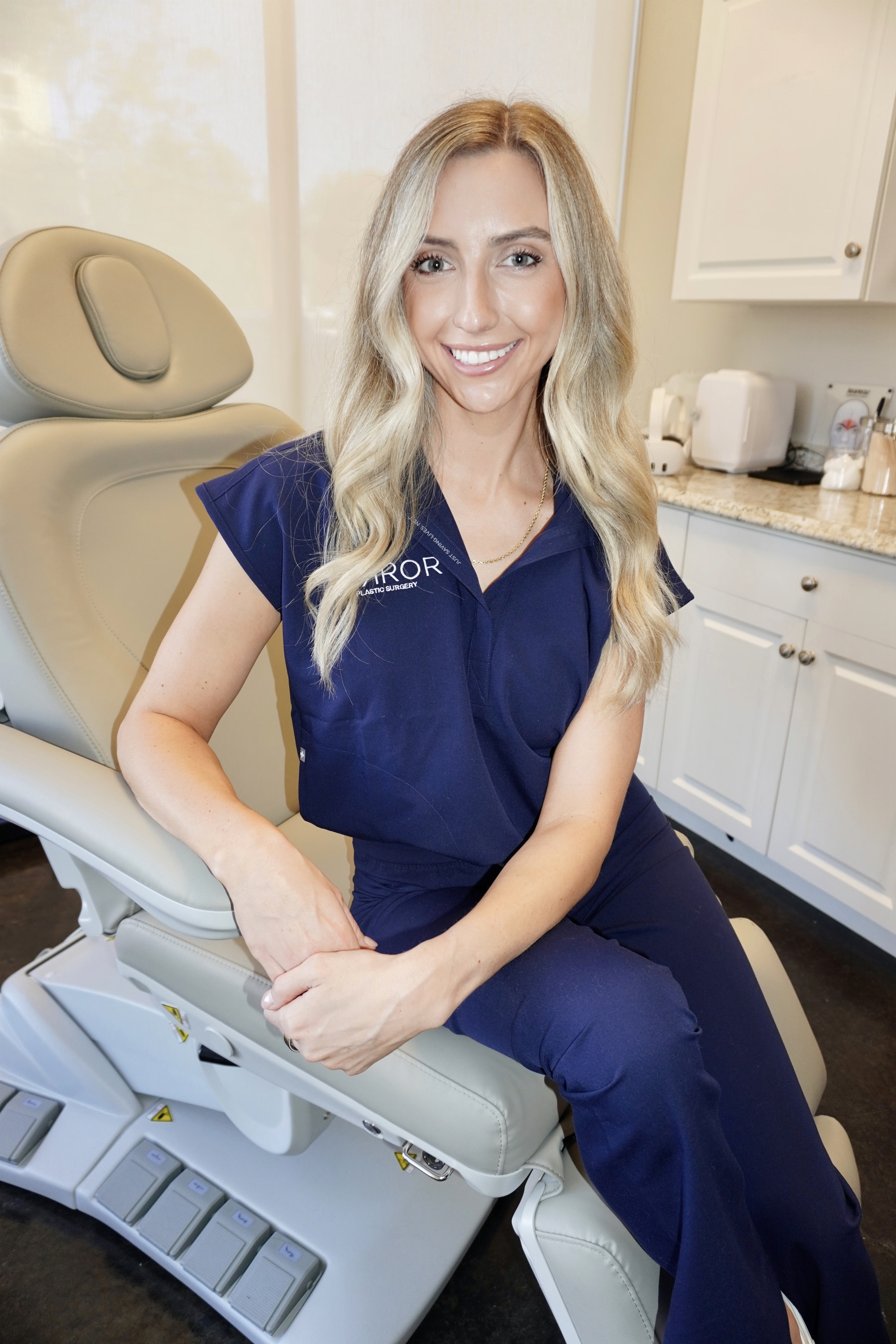
Red flags include rushed consultations with no facial assessment beyond the lips, pressure to purchase a specific volume or brand, and lack of a documented plan for managing complications. At Mirror Plastic Surgery in St. Petersburg, Ellie Pranckevicius conducts hour-long top-to-bottom assessments before any injectable recommendation. She draws on her dual background in esthetics and advanced nursing, including four years in a Neuroscience ICU, to apply both surface and subdermal anatomic knowledge to every treatment plan. Experience Ellie’s hour-long assessment process firsthand to see this approach in practice.
Individual Variability and Limitations
The 2026 Miranda Cerna systematic review notes that technique and instrument choice should be individualized based on patient anatomy, aesthetic goals, filler rheology, and injector expertise, with no single approach proven superior. Lip anatomy varies substantially across individuals and ethnic backgrounds in philtrum length, vermilion height, tissue thickness, and vascular patterns. Product placement in the submucosal or intramuscular layers, while respecting labial arteries located 3–6 mm deep, helps avoid the Tyndall effect and supports safe, natural integration.
Outcome data from multicenter trials reflect specific populations and protocols that may not match every individual. Published satisfaction rates therefore function as population-level benchmarks rather than guarantees of personal results.
Industry Shift Toward Evidence-Based, Safety-First Care
Recent literature from 2026 shows a clear move away from high-volume, trend-driven injection models toward anatomy-first, conservative care. Many of the most natural treatments come from knowing where not to inject and identifying one or two changes that improve facial harmony instead of adding volume everywhere. A conservative, multi-session approach using 0.5–1 mL per session allows HA filler to integrate with lip tissue and reduces migration risk compared with aggressive single-session overfilling.
This philosophy aligns with a concierge medicine model. Limiting patient volume per day creates time for the detailed, individualized assessments that high-throughput practices often cannot provide.
Frequently Asked Questions
How long does bruising last after lip fillers?
Bruising after lip filler is common and usually mild. Most bruising from injectable fillers resolves within 1 to 2 weeks, although vascular anatomy, anticoagulant use, and injection technique can extend this timeline. Cold compresses immediately after treatment and avoiding blood-thinning supplements such as fish oil, vitamin E, and aspirin in the days before the appointment can reduce bruising severity. If bruising is extensive or accompanied by disproportionate pain or skin color changes, contact the treating provider promptly.
Can lip augmentation be reversed?
Dermal fillers are the only lip augmentation modality that is fully and rapidly reversible. Hyaluronidase, an enzyme injected directly into the treated area, dissolves filler within hours to days. This reversibility offers a meaningful safety advantage. If a patient is dissatisfied with the result, experiences an adverse reaction, or develops a vascular complication, the filler can be dissolved. Surgical lip lifts, lip implants, and fat transfer are not enzymatically reversible. Implants can be surgically removed, but excised skin from a lip lift cannot be replaced, so over-shortening of the philtrum remains permanent.
Will a lip lift leave a visible scar?
A lip lift requires an incision at the base of the nose, so some degree of scarring is expected. Systematic reviews report that visible long-term incision scars and hypertrophic scarring occur in a small percentage of cases after surgical lip lift. Scar maturation continues for three to six months after surgery, and the final appearance depends on individual healing biology, sun protection, and adherence to post-operative scar management protocols such as silicone gel and gentle massage. Patients with a personal or family history of keloid or hypertrophic scarring are generally considered poor candidates.
Is a lip lift better than filler for natural results?
No single modality is universally superior for natural results, because the answer depends on the underlying anatomical concern. A lip lift suits patients whose primary issue is a long philtrum or age-related lip descent, where adding filler volume alone would not correct the structural problem and could create a heavy, unnatural look. HA filler works well when the goal is volume restoration, border definition, or subtle projection without structural repositioning. With precise anatomic measurement and conservative technique, both options can produce natural-looking outcomes.
The most reliable predictor of a natural result is the depth of the provider’s anatomic assessment and their willingness to recommend the option that fits the patient’s anatomy, not the one that is quickest or easiest to perform.
Conclusion
The clinical literature supports several clear conclusions for adults evaluating lip augmentation. HA fillers deliver high satisfaction rates with a predominantly mild, transient adverse-event profile and full reversibility. Surgical lip lifts provide durable structural correction that continues indefinitely, subject to natural facial aging, with low revision rates and a scar that matures over months. Lip implants offer permanence but carry risks of malposition and elective removal, so they require careful candidate selection.
Natural results across all modalities depend on individualized anatomic assessment, conservative volume, appropriate product rheology, and dynamic evaluation of lip movement. Provider skill and assessment depth drive both safety and natural appearance more than product brand or specific named technique. A thorough, unhurried consultation that evaluates the full face, sets realistic expectations, and operates without supplier bias remains the strongest indicator of a trustworthy provider.
Book your consultation at Mirror Plastic Surgery in St. Petersburg to receive a comprehensive, anatomy-first evaluation and an evidence-based treatment plan tailored to your facial structure and long-term goals.
Disclaimer: Results may vary from person to person. Editorial content, before and after images, and patient testimonials do not constitute a guarantee of specific results.
1 Results may vary from person to person. Editorial content, before and after images, and patient testimonials do not constitute a guarantee of specific results.