

Written by: Ellie Pranckevicius, FNP-BC, Aesthetic Nurse Practitioner & Aesthetic Injector | Facial Restoration & Regenerative Injectable Specialist, Mirror Plastic Surgery
Key Takeaways for Florida Women
- Laser hair removal in Florida demands strict sun discipline and seasonal planning to keep skin safe and results consistent.
- Results depend on skin type, hair color, and hormones. Fitzpatrick IV–VI patients usually need Nd:YAG lasers and more sessions.
- October through April is the best window for a full treatment series. Summer works better for maintenance only.
- Over 10 years, laser hair removal usually costs less than ongoing waxing or daily shaving for Florida women.
- Schedule your Fitzpatrick assessment with Ellie at Mirror Plastic Surgery to receive a personalized, Florida-specific treatment plan.
How Skin Type and Hair Color Affect Your Candidacy
Laser hair removal targets melanin in the hair follicle. The contrast between hair pigment and skin pigment determines both how well it works and how safe it is. Any qualified provider starts by assessing your skin type before recommending a device.
Fitzpatrick types I–III with dark, coarse hair usually see the quickest results and often need 4 to 6 sessions.1 Lighter or finer hair responds more slowly across all skin tones, so expectations need to match that reality.
For Fitzpatrick types IV–VI, treatment planning becomes more nuanced. Nd:YAG lasers at 1064 nm are the best-studied safer wavelength for darker skin because longer wavelengths penetrate deeper and interact less with epidermal melanin than shorter wavelengths such as ruby or alexandrite. Patients with Fitzpatrick IV–VI skin often require additional sessions to reach similar hair reduction.1 Provider expertise matters here. Significant adverse effects and litigation from laser hair removal have been associated primarily with nonphysician operators rather than trained physicians.
Hormonal areas behave differently than non-hormonal areas. Hormonally influenced areas such as the face and bikini line often require more sessions and more frequent touch-ups than non-hormonal areas like the legs, arms, and underarms.1 Women with PCOS or other endocrine conditions should expect longer treatment courses because hormonal signals continue to stimulate new terminal hair growth in androgen-sensitive areas.1
Schedule your Fitzpatrick assessment with Ellie to receive a personalized session plan before you commit to a full treatment course. Once you know you are a good candidate, the next key step is timing your series around Florida’s sun calendar.
Florida’s Sun Calendar: When to Start, Pause, and Maintain
Florida’s year-round sun creates a planning challenge that most generic laser guides ignore. A seasonal calendar protects both your skin and your long-term results.
- October–November (Ideal Start Window): UV index drops, beach activity slows, and a 4-week sun-free lead-in becomes realistic. Starting in this window allows 2 to 3 sessions before peak winter travel.
- December–February (Peak Treatment Season): These are the lowest UV months. Sessions can be spaced every 4 to 6 weeks with the least sun-exposure risk between appointments.
- March–April (Continue with Caution): Spring break travel often conflicts with safe scheduling. Patients should avoid scheduling treatments immediately before or after sun-drenched vacations. Plan sessions around travel, not alongside it.
- May–August (Maintenance Window Only): High UV, frequent beach exposure, and warmer baseline skin make full-series sessions riskier. Tanned skin reduces the contrast between hair follicle and epidermis, often requiring more conservative settings and additional sessions. Focus on touch-ups in reliably sun-protected areas only.
- September (Transition Month): UV levels begin to ease. Use this month for a pre-season consultation and sun-avoidance preparation before restarting a full series in October.
What Laser Hair Removal Feels Like on a 1–10 Scale
Most patients describe laser hair removal as mild to moderate in discomfort when modern cooling technology is used. The sensation feels like brief warm pulses instead of the sustained pulling of waxing, which most patients rate between 5 and 8 out of 10.
Beyond the initial comparison to waxing, laser hair removal offers another comfort advantage. Pain usually decreases with each subsequent session because thinner, less dense hair generates less heat at the follicle. Many patients find their fifth or sixth session noticeably more comfortable than the first. Pain scores also vary by treatment site, with some areas more sensitive than others.
Modern medical-grade laser systems reduce discomfort with integrated cooling such as chilled sapphire tips, cold air blowers, and cryogen spray that cools the skin before, during, or after each pulse. Topical numbing cream is available for first sessions and for sensitive areas.
Cost vs. Shaving ROI: A 10-Year Look
The table below compares 10-year costs for three common hair removal methods across the Brazilian and underarm areas, which are the two most frequently treated zones for Florida women.
| Method | 10-Year Cost (Brazilian + Underarms) | Time Investment | Florida-Specific Notes |
|---|---|---|---|
| Shaving | Recurring cost with regular blade purchases | ~42 full days over 10 years | Humidity accelerates razor burn and folliculitis, so daily upkeep continues year-round |
| Professional Waxing | High cumulative cost due to indefinite repetition | 13 appointments per year, indefinitely | Cost adds up because it must be repeated indefinitely, and heat plus humidity worsen post-wax inflammation |
| Laser Hair Removal | One-time course plus occasional maintenance | 6–10 sessions total, then rare touch-ups | Requires Florida sun calendar planning, with a payback period approximately 1.8–2.2 years vs. waxing |
Over 10 years for underarms, bikini, and lower legs combined, professional waxing usually costs substantially more than a complete laser course. For women who plan to maintain hair removal long term, laser becomes the most cost-effective option after the first few years.
Regret Rates and Long-Term Satisfaction
Regret can occur, yet accurate expectations make it far less likely. The most common sources of dissatisfaction include incomplete results from too few sessions, hormonal regrowth in androgen-sensitive areas, and paradoxical hypertrichosis.
Of these regret sources, paradoxical hypertrichosis deserves special attention because it is the least understood. A systematic review and meta-analysis pooling over 9,700 patients across 22 studies found paradoxical hypertrichosis in about 3% of laser hair removal cases, more commonly associated with face and neck treatment areas. This rare outcome, where laser stimulates rather than destroys fine vellus hair, is most likely when low fluence is applied to fine, light facial hair.
Laser hair removal is not fully permanent; even after a complete course most patients experience significant long-term reduction but may see a few stray hairs years later. After a complete initial course, most patients achieve substantial reduction in hair density, and remaining hair is usually finer, lighter, and slower-growing.1 Patients who understand this upfront rarely regret the investment.
Checklist for Choosing a Safe, Detail-Oriented Provider
The questions below help you separate safety-first providers from high-volume clinics that focus on speed over outcomes.
- Does the provider perform a formal Fitzpatrick skin-type assessment before recommending a device or energy setting?
- Is the provider trained in Nd:YAG protocols specifically for Fitzpatrick IV–VI skin?
- Does the consultation include a review of your sun exposure history and a Florida-specific seasonal treatment plan?
- Is the provider transparent about realistic session counts, maintenance expectations, and paradoxical hypertrichosis risk for your treatment area?
- Does the practice limit daily patient volume to ensure focused clinical attention instead of operating as a high-volume mill?
- Are cooling systems integrated into the laser device, and is topical numbing available?
- Does the provider have documented anatomical expertise, not just device certification?
Experience what a thorough, unhurried provider assessment feels like and book your consultation with Ellie.
Alternatives to Laser Hair Removal in Florida
Laser hair removal does not fit every person, budget, or timeline. The alternatives below carry trade-offs that matter in Florida’s climate.
- Shaving: Lowest upfront cost, but the time commitment discussed earlier adds up to more than a month of your life over a decade. Florida humidity accelerates folliculitis and razor burn, especially in the bikini area.
- Professional Waxing: Results last 3–6 weeks, but as shown in the cost comparison above, the indefinite repetition makes this one of the most expensive long-term options. Post-wax inflammation worsens with heat and sweat.
- At-Home IPL Devices: Upfront costs range from about $139 to $599 depending on the model, but at-home devices are predominantly IPL systems operating at lower energy levels, which reduces but does not eliminate adverse-effect risk in darker skin tones. These devices are not appropriate for Fitzpatrick V–VI.
- Electrolysis: The only FDA-recognized permanent hair removal method. It requires multiple treatment sessions over time. Electrolysis works well for gray, blonde, or red hair that laser cannot target, but it is slow for large body areas.
Conclusion: Partnering With a Florida-Savvy Laser Specialist
Evidence shows that laser hair removal delivers meaningful, long-term cost savings and convenience for most Florida women. Results stay predictable when treatment is timed to the sun calendar, matched to skin type with the correct device, and performed by a provider with real anatomical expertise.1 Regret usually appears when any of those three elements are ignored.
At Mirror Plastic Surgery in St. Petersburg, non-surgical treatments are led by Ellie Pranckevicius, FNP-BC, an Aesthetic Nurse Practitioner whose background spans esthetics licensure, advanced nursing, and four years in the Neuroscience ICU at Tampa General Hospital. Her training in both skin physiology and clinical anatomy means your Fitzpatrick assessment, seasonal treatment plan, and session-by-session protocol follow the same evidence-based rigor that guides every procedure at the practice.
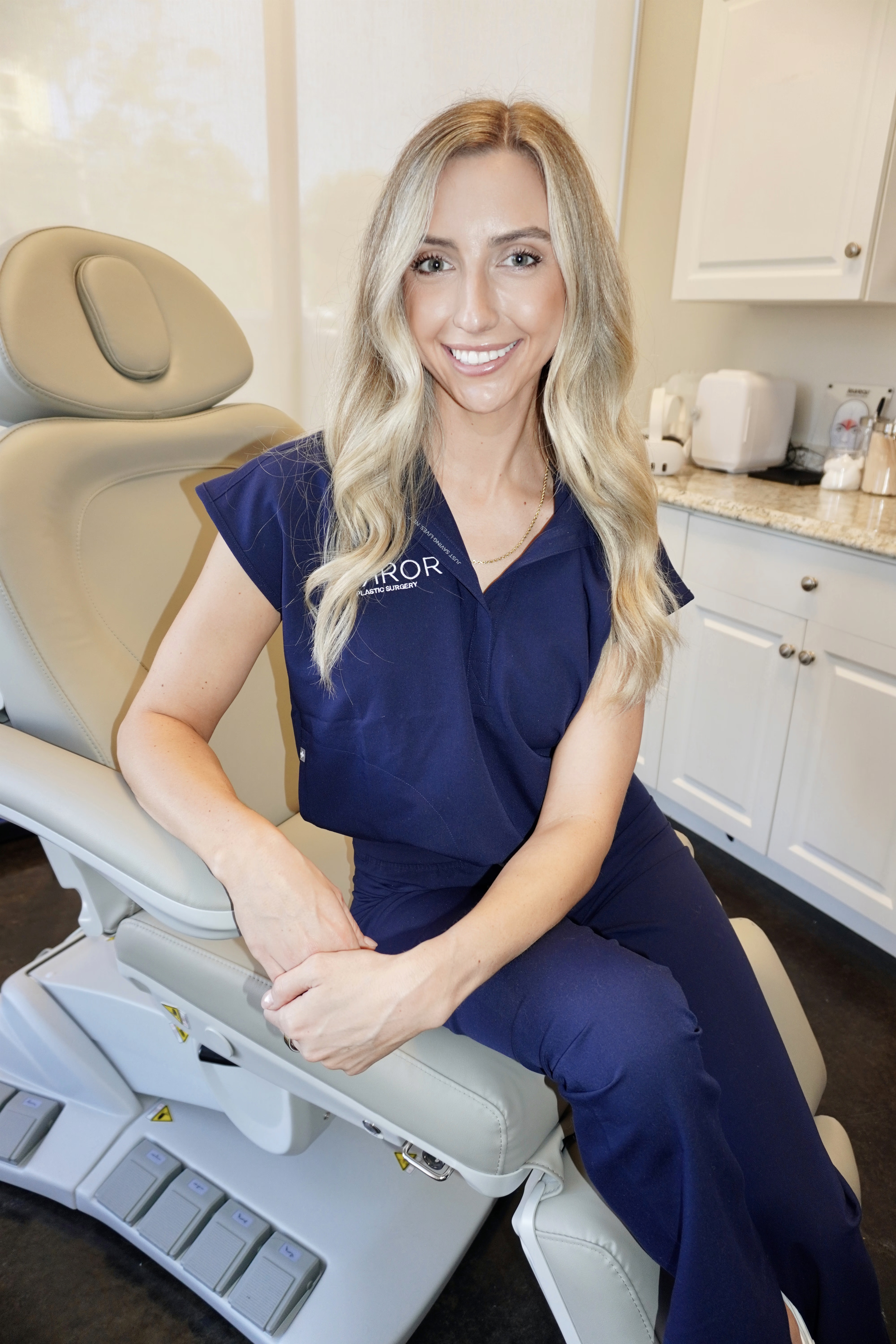
Mirror Plastic Surgery’s concierge philosophy gives your initial consultation up to an hour. That window allows time to understand your sun exposure history, hormonal factors, skin type, and long-term goals before a single pulse is delivered. For a treatment where provider decisions directly determine safety outcomes, that level of attention creates a meaningful difference compared with a rushed, volume-driven clinic.
Get a top-to-bottom assessment built around your skin, your schedule, and Florida’s sun, and start with a consultation at Mirror Plastic Surgery.
Frequently Asked Questions
Can I get laser hair removal year-round in Florida?
You can receive laser hair removal year-round, but your approach needs to shift with the seasons. Florida’s high UV index from May through August makes full-series sessions riskier because sun-exposed or tanned skin has reduced contrast between the hair follicle and epidermis. That contrast loss forces lower energy settings and often requires additional sessions to achieve the same clearance. The optimal window to begin or continue a full treatment series is October through April, when UV levels are lower and a 4-week sun-free lead-in before each session is realistic. Summer months work better for touch-up sessions on areas that can be reliably kept out of the sun. A provider familiar with Florida’s seasonal UV patterns will build this calendar into your treatment plan from the start.
Is laser hair removal safe for darker skin tones in Florida?
Laser hair removal can be safe for darker skin tones when a qualified provider uses the right device and protocol. As discussed in the candidacy section, Nd:YAG lasers are the gold standard for darker skin tones and significantly reduce the risk of burns or post-inflammatory hyperpigmentation when used correctly. The main risks arise from incorrect device selection, improper energy settings, or treating recently tanned skin, which are provider and protocol failures rather than limitations of the technology itself. Florida’s intense sun adds complexity because even a mild tan between sessions can shift your skin’s melanin enough to require adjusted settings. A formal Fitzpatrick assessment, a strict sun-avoidance plan, and a provider with documented experience treating skin of color are essential for safe outcomes.
How many sessions will I realistically need, and what affects that number?
Most women need between 6 and 10 sessions for the majority of body areas, spaced 4 to 8 weeks apart. Several factors can push that number higher. Hormonal areas such as the face, chin, upper lip, and bikini line typically require more sessions and more frequent maintenance than non-hormonal areas like the legs and underarms because androgen-driven follicles keep receiving stimulation even after treatment. Women with PCOS or other endocrine conditions should expect a longer initial course and more regular touch-ups. Fine, light, or gray hair responds more slowly regardless of skin tone. After a complete course, most patients achieve 70–90% hair density reduction, and remaining hair grows in finer and slower.1 Annual or biannual maintenance sessions are common, especially for hormonally active areas.
How does laser hair removal compare to waxing in cost over time for a Florida woman?
Over a 10-year horizon, laser hair removal is usually more cost-effective than professional waxing for the most commonly treated areas. Brazilian waxing at roughly $75 per appointment every 4 weeks produces an annual cost of approximately $975 and a 10-year total near $9,750, with no endpoint in sight. A complete laser course for the same area carries a one-time investment followed by only occasional maintenance, and earlier cost comparisons show a payback period of under two years compared with ongoing waxing. Underarms follow a similar pattern. The financial case strengthens further when you factor in the time cost of 13 waxing appointments per year indefinitely versus a finite series of laser sessions. For a woman planning long-term hair removal, laser becomes the lower total-cost option by a wide margin.
What makes Mirror Plastic Surgery’s approach to laser hair removal different?
Mirror Plastic Surgery follows a concierge medicine model that differs from high-volume aesthetic clinics. Initial consultations run up to an hour and include a top-to-bottom assessment of your skin type, sun exposure history, hormonal factors, treatment area anatomy, and long-term goals before any protocol is recommended. Non-surgical treatments are led by Ellie Pranckevicius, FNP-BC, whose background combines esthetics licensure, advanced nursing, and critical care experience. That combination supports precise clinical judgment and a deep understanding of skin physiology. The practice is supplier-neutral, so recommendations are based on what fits your anatomy rather than product quotas or package upselling. For a treatment where provider decisions directly determine safety outcomes, especially for darker skin tones or patients navigating Florida’s sun calendar, that level of individualized attention can change both safety and results.
Disclaimer: Results may vary from person to person. Editorial content, before and after images, and patient testimonials do not constitute a guarantee of specific results.
1 Results may vary from person to person. Editorial content, before and after images, and patient testimonials do not constitute a guarantee of specific results.
