
Written by: Dr. Akash Chandawarkar, Board Certified Plastic Surgeon, Mirror Plastic Surgery | Last updated: September 9, 2026
Key Takeaways
Before you dive into the details, review these core findings from the Tampa laser hair removal cost data.
- Per-session laser hair removal prices in Tampa range from $40 for small areas to $650 for large areas, and total treatment cost depends on skin type, hair characteristics, and provider expertise more than sticker price alone.
- Most patients require 6–12 sessions spaced 4–6 weeks apart, so package pricing that lowers per-session costs by 10–30% usually matters more financially than individual session rates.1
- Five primary factors drive price variation: treatment area size, laser technology matched to skin type, provider credentials, patient skin and hair characteristics, and geographic location within Tampa.
- Board-certified physician oversight, appropriate laser wavelength selection, and comprehensive consultations are essential safety factors that separate high-quality providers from low-cost risks.
- At Mirror Plastic Surgery, personalized treatment plans begin with a thorough consultation to ensure transparent pricing and reliable results, and you can schedule your consultation to receive an accurate quote tailored to your skin type and goals.
Market Data: Average Laser Hair Removal Cost In Tampa By Body Area
This report aggregated per-session pricing from multiple Tampa providers to show how costs vary by area and total course length. The table below highlights the wide range of per-session prices and total course costs, and the spread within a single area often exceeds the difference between areas.
| Treatment Area | Typical Per-Session Range (Tampa) | Typical Sessions Needed | Estimated Total Course Range |
|---|---|---|---|
| Upper Lip / Chin | $40–$150 | 6–8 | $240–$1,200 |
| Underarms | $60–$200 | 6–12 | $360–$2,400 |
| Bikini Line | $60–$225 | 6–12 | $360–$2,700 |
| Brazilian | $100–$300 | 6–10 | $600–$3,000 |
| Half Legs | $175–$400 | 6–10 | $1,050–$4,000 |
| Full Legs | $250–$650 | 6–10 | $1,500–$6,500 |
| Full Back / Chest | $250–$650 | 8–10 | $2,000–$6,500 |
Several observations emerge from this data. The price spread within a single treatment area is dramatic, so an upper lip can cost $40 or $150 per session depending on the provider. The gap between a low per-session price and the final total often creates surprises for patients. A $40-per-session upper lip treatment requiring 8 sessions costs $320, while a $150-per-session treatment requiring 6 sessions costs $900, and the higher price may include a physician’s assessment, advanced technology, and fewer total visits. The national average per-session cost reported by the American Society of Plastic Surgeons is approximately $389, which places Tampa’s large-area pricing in line with national norms.
Cost Modeling: Per-Session Vs. Package Pricing And Full Treatment Costs
Laser hair removal functions as a multi-session treatment course rather than a one-time purchase. Lasers only affect hair follicles in their active growth phase. Estimates of follicles in that phase at any moment range from 20–30% to 80–90%. As a result, most patients require multiple sessions spaced 4 to 6 weeks apart, so total course cost matters more than a single per-session rate.
The following cost-modeling examples use published Tampa market ranges, not prices from any individual clinic.
- Small Area (Upper Lip): At a typical Tampa range of $40–$150 per session, a 6-to-8-session course totals $240–$1,200. Many Tampa providers offer 6-session packages that reduce the per-session cost and bring the total toward the lower end of that range for patients who commit upfront.
- Medium Area (Underarms): At $60–$200 per session, a 6-to-12-session course totals $360–$2,400. Package pricing at Tampa providers offering session bundles typically reduces the effective per-session rate by roughly 17%.
- Large Area (Full Legs): At $250–$650 per session, a 6-to-10-session course totals $1,500–$6,500. Some Tampa providers structure packages as 10 sessions for the price of 7, which creates a meaningful saving compared with paying per session.
The pattern across Tampa providers remains consistent. Packages lower the effective per-session cost by 10–30%, and they also require an upfront commitment. The more important question is what the package includes, such as physician assessment, technology matched to your skin type, and a clear policy for additional sessions if needed. Maintenance sessions are typically needed every 12–24 months, and some packages do not address this long-term care.
At Mirror Plastic Surgery, treatment plans are personalized after a comprehensive consultation, and pricing is transparent so you understand the full scope of your investment before you commit. Get a personalized quote for your treatment plan based on your skin type, treatment area, and goals.
Factor Analysis: Why Laser Hair Removal Prices Vary Across Tampa
Laser hair removal prices vary widely across Tampa because several clinical and business factors interact to shape the final quote. This report identifies five primary cost drivers, ranked roughly by their impact on price. Treatment area size usually has the largest effect, while geographic location within Tampa explains why prices differ between neighborhoods.
1. Treatment Area Size And Density
Surface area is the single largest cost factor. Small areas like the upper lip require under 10 minutes of laser time, while full legs can take up to an hour per session. Denser hair growth also requires more energy and additional passes, which increases treatment time and overall cost.
2. Laser Technology
Lasers vary significantly in their effectiveness and safety for different skin types. Alexandrite lasers (755 nm) are highly effective for lighter skin tones, diode lasers (800–810 nm) work across a broader range, and Nd:YAG lasers (1064 nm) are the safest option for darker skin (Fitzpatrick types IV–VI). Because multi-wavelength platforms cost significantly more to purchase and maintain than older single-wavelength machines, that cost appears in per-session pricing. A clinic that relies on outdated IPL devices may charge less and deliver weaker results with higher risk for darker skin tones.
3. Provider Credentials And Oversight
Board-certified dermatologists and plastic surgeons command higher rates because of their residency-level training in laser physics and complication management. The American Academy of Dermatology explicitly warns that laser hair removal can be dangerous in inexperienced hands, potentially causing burns, permanent skin color changes, and scarring. A licensed laser therapist who adjusts settings in real time provides a higher level of clinical judgment than a technician who runs a preset, and that expertise influences pricing.
4. Skin Type And Hair Color
Your Fitzpatrick skin type directly affects device selection and session count. Patients with Fitzpatrick IV–VI skin may require 7–10 sessions versus 6–7 for lighter skin, which can increase total cost by 15–30%. Light blonde, red, gray, or white hair contains little melanin and responds poorly to all laser types, so some clinics charge more for these cases because they require additional passes or higher fluence settings.
5. Geographic Location Within Tampa
Major metropolitan areas typically command 20–40% higher prices than smaller cities, and Tampa follows this pattern. Providers in high-rent districts may price higher than those in suburban locations, although higher rent does not automatically indicate higher quality.
Clinical Interpretation: How Many Sessions You Are Likely To Need
Most patients want to know whether they can complete treatment in fewer sessions, and the evidence shows that biology sets the limits. Your skin type, hair color, and hormonal profile determine the final number more than marketing claims.
Most patients need 6–8 sessions for meaningful, lasting hair reduction, with area-specific variations.1 The face and bikini region often require 8–12 sessions because hormonal influences can recruit additional follicles, while legs and underarms typically follow a more predictable 6–8 session pattern. A 2023 literature review found a mean hair reduction of 78% after 4–6 sessions, and protocols of 6–8 monthly sessions appeared consistently across studies.1
At any given moment, estimates of hair follicles in the active growth (anagen) phase that lasers can target range from 20–30% to 80–90%. A treatment-interval study found better long-term results with sessions every six weeks than every two weeks, which supports a schedule that allows follicles to cycle through growth phases between appointments.
Hormonal factors play a major role. PCOS, pregnancy, thyroid changes, and menopause can activate dormant follicles and may require additional sessions even after an initial series. A personalized assessment, rather than a fixed package, gives a more realistic plan for your situation.
Evidence Review: Is Laser Hair Removal Permanent?
The FDA’s regulatory language is precise: laser hair removal devices are cleared for “permanent hair reduction,” defined as “the long-term, stable reduction in the number of hairs regrowing after a treatment regime.” The FDA deliberately authorized only “permanent hair reduction” because no cosmetic technology achieves 100% follicle destruction in 100% of patients.
After a complete course of treatment, most patients achieve 75–85% long-term reduction in treated areas,1 and remaining hair usually grows in finer, lighter, and more slowly. The American Academy of Dermatology reports that many patients remain hair-free for months or even years after completing treatment, and when hair regrows, it tends to be finer and lighter. Maintenance sessions, typically 1–2 per year, address regrowth and hormonal changes.
The clinical evidence supports long-term reduction as a realistic expectation. A long-term evidence review reported average permanent hair reduction ranges of 30–73.61% for Nd:YAG, 35–84.25% for Alexandrite, and 32.5–69.2% for diode devices, depending on patient characteristics and treatment protocols.1
Safety And Side Effects: What The Clinical Data Shows
Pain And Discomfort
Most patients describe the sensation as warm pinpricks or a rubber band snapping against the skin. Modern laser platforms with integrated contact cooling significantly improve comfort compared with older devices. Treatment times range from under 10 minutes for the upper lip to roughly an hour for full legs.
Common Side Effects
Beyond the immediate sensation, most patients experience some temporary side effects. Redness, swelling, and mild discomfort are expected and typically resolve within 1–3 days. Perifollicular edema, or small bumps around treated follicles, is common in the first 24–72 hours and represents a normal reaction rather than an infection.
Rare But Serious Risks
Blistering, infections, scarring, and skin lightening or darkening occur rarely when a qualified physician performs the procedure or supervises it directly. Pigmentary complications appear more often with shorter-wavelength devices and in darker skin types, so Nd:YAG lasers remain the preferred, safer standard for Fitzpatrick types IV–VI. Paradoxical hypertrichosis (increased hair growth in treated areas) occurs in approximately 3% of cases, most often on the face and neck, and appears more frequently in patients with hormonal drivers like PCOS.
Preparation And Aftercare
Patients should avoid sun exposure for two weeks before treatment, stop waxing or plucking for four weeks, and shave the area 24 hours before each session. After treatment, sun protection (SPF 30+) is essential for two weeks, and hot baths, saunas, and intense exercise should be avoided for 24–48 hours.
Mirror Plastic Surgery’s physician-led approach means every patient receives explicit pre- and post-care guidance tailored to their skin type rather than a generic handout. Discuss your skin type and medical history with a physician to plan the safest treatment protocol for your goals.
Expert Recommendations: How To Choose A Laser Hair Removal Provider In Tampa
Price alone should never determine your choice of provider. The American Academy of Dermatology warns that laser hair removal can be dangerous in inexperienced hands, and most reported burns or scarring trace back to incorrect device settings for the patient’s skin type rather than the technology itself.
The following criteria distinguish a safe, effective provider from a low-cost risk. First, look for board-certified physician oversight, because a board-certified plastic surgeon or dermatologist brings residency-level training in laser physics, skin anatomy, and complication management, which strongly predicts safe, effective treatment. Second, confirm that the technology matches your skin type, so the clinic assesses your Fitzpatrick skin type and selects the appropriate laser wavelength, such as Alexandrite for lighter skin, Nd:YAG for darker skin, and diode for a broad range. Third, expect a comprehensive consultation that includes a skin assessment, discussion of your medical history, and a transparent treatment plan instead of a rushed sales pitch. Fourth, insist on transparent pricing, with clear explanations of per-session costs, total treatment costs, and policies for additional sessions beyond a package. Fifth, verify safety protocols, including patch testing, appropriate cooling methods, and strict hygiene standards.
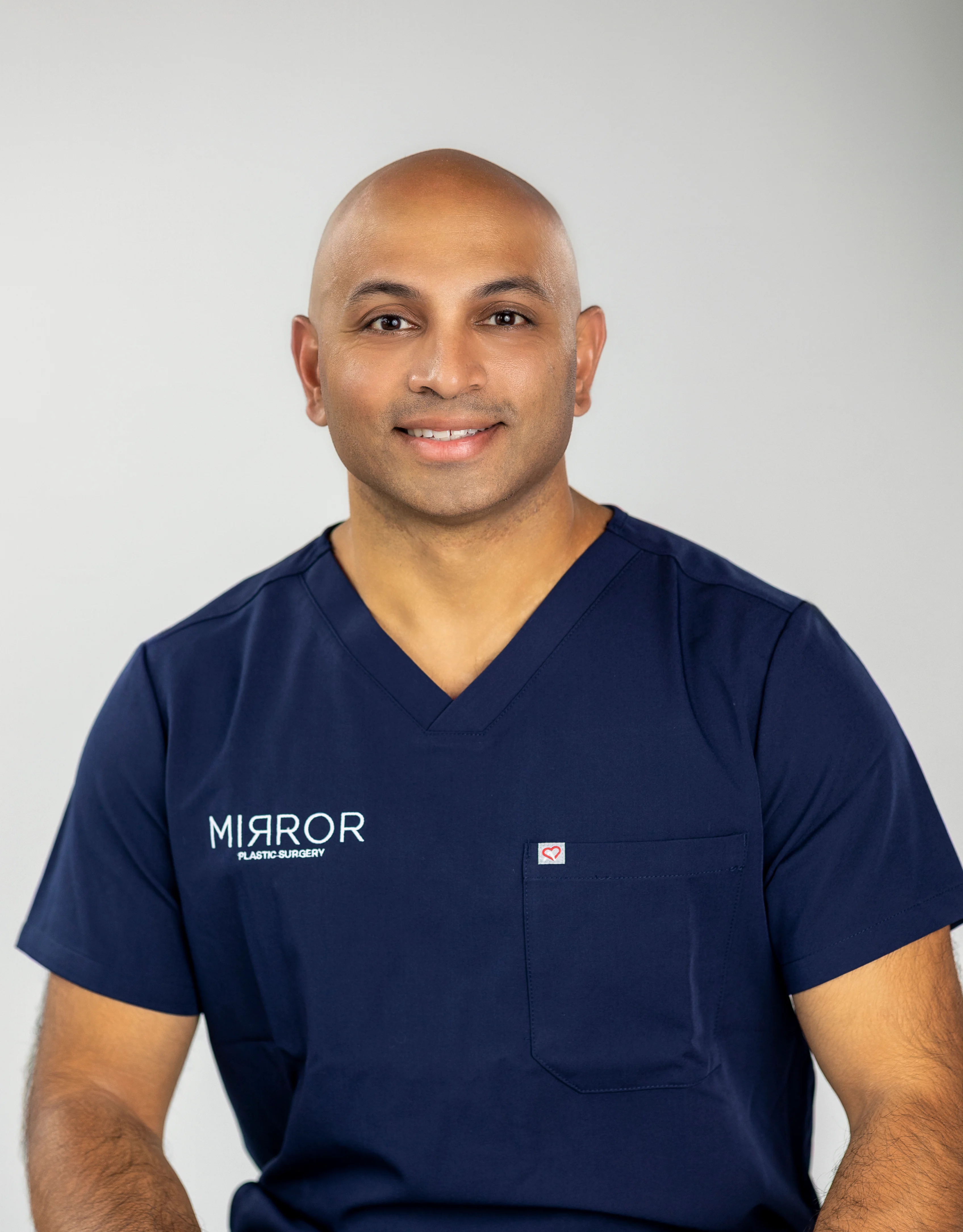
Mirror Plastic Surgery, led by board-certified plastic surgeon Dr. Akash Chandawarkar, exemplifies these criteria. Dr. Akash’s Harvard education, Johns Hopkins surgical training, and fellowship in aesthetic surgery at the Manhattan Eye Ear And Throat Hospital provide the anatomical expertise that makes laser treatment both safer and more effective. Every treatment plan begins with a comprehensive, top-to-bottom assessment that often lasts up to an hour and ensures your treatment is personalized to your skin type, hair characteristics, and goals. Pricing remains transparent, with no hidden fees and no quota-driven upselling.
Frequently Asked Questions
Is Laser Hair Removal 100% Permanent?
No. The FDA classifies laser hair removal as “permanent hair reduction”. As noted earlier, most patients achieve a long-term reduction of 75–85%, and remaining hair usually appears finer and lighter. Maintenance sessions every 12–24 months are typically needed to sustain results, and patients with hormonal conditions such as PCOS may require more frequent touch-ups. The realistic expectation is a dramatic, lasting reduction rather than complete, lifelong elimination of every follicle.
Is 7 Sessions Enough For Laser Hair Removal?
For many patients, seven sessions fall within the effective range.1 As mentioned earlier, most clinical protocols call for 6–8 sessions for areas like the underarms and legs. Hormone-sensitive areas like the face and bikini region may require 8–12 sessions, and patients with darker skin (Fitzpatrick IV–VI) or hormonal drivers like PCOS may need additional sessions for optimal results. A personalized assessment from a qualified provider offers the most accurate estimate for your biology.
What Is The Downside Of Laser Hair Removal?
The primary downsides are cost, time commitment, and the fact that results do not reach 100% permanence. A full course for large areas can represent a significant investment, and completing that course usually requires 6–12 months of consistent appointments. Rare side effects include blistering, pigment changes, and paradoxical hypertrichosis, and these risks increase substantially with inexperienced providers or mismatched technology. For patients with light blonde, red, gray, or white hair, laser hair removal is largely ineffective because those hair types lack the melanin the laser targets, so electrolysis is the appropriate alternative.
Does Laser Hair Removal Hurt?
Most patients describe the sensation as warm pinpricks or a rubber band snap against the skin. Pain tolerance varies by individual and treatment area, and more sensitive areas like the upper lip and bikini region generally feel more intense than the legs or underarms. Modern laser platforms with integrated cooling technology significantly reduce discomfort compared with older devices. Topical numbing cream can be applied before treatment for particularly sensitive patients, and a qualified provider will adjust settings to balance efficacy and comfort.
How Much Does Laser Hair Removal Cost For A Brazilian In Tampa?
Based on published market data, Brazilian laser hair removal in Tampa ranges from $100–$300 per session, with 6–10 sessions typically needed, placing the total course range at $600–$3,000. Package pricing at many Tampa providers reduces the effective per-session cost by 10–30%. The actual cost for any individual depends on their skin type, hair characteristics, the technology used, and the number of sessions their biology requires, and a personalized consultation clarifies these factors before any financial commitment.
Conclusion: Key Findings And Next Steps
This research report confirms that laser hair removal cost in Tampa varies dramatically, from $40 per session for small areas to $650 for large areas, with total treatment costs ranging from roughly $240 for an upper lip course to over $5,000 for full legs. Three factors matter more than sticker price: the number of sessions your skin and hair require, the technology matched to your skin type, and the expertise of the person operating the laser. Packages offer genuine savings of 10–30%, and they deliver value only when the treatment plan matches your biology.
The cheapest per-session price in Tampa often leads to more sessions, weaker technology, or higher risk. As the American Academy of Dermatology warns, inexperience is a major risk factor. Patients who prioritize safety, efficacy, and personalized care can turn to Mirror Plastic Surgery for physician-led laser hair removal with transparent pricing and comprehensive consultations.
Start your personalized treatment plan today and receive an accurate quote and schedule designed for your skin type and goals.
Disclaimer: Results may vary from person to person. Editorial content, before and after images, and patient testimonials do not constitute a guarantee of specific results.
1 Results may vary from person to person. Editorial content, before and after images, and patient testimonials do not constitute a guarantee of specific results.