

Written by: Dr. Akash Chandawarkar, Board Certified Plastic Surgeon, Mirror Plastic Surgery | Last updated: September 9, 2026
Key Takeaways
- Jaw slimming Botox is generally safe when a board-certified physician with advanced anatomical training performs the injections. Most side effects are mild and temporary.1
- Human clinical trials have not detected mandibular bone loss at 12 months when patients receive standard treatment doses.1
- Complication rates stay low, under 3% in expert hands, and most issues relate to injector error or poor patient selection.1
- Provider expertise is the key safety factor. Board-certified plastic surgeons with surgeon-level anatomical knowledge achieve safer, more consistent results through precise placement, dosing, and candidacy assessment.
- Patients considering jaw slimming Botox should schedule a consultation at Mirror Plastic Surgery for a personalized, evidence-based evaluation before treatment.
Executive Summary: What This Report Finds
This report reviews peer-reviewed studies from 2024 to 2026, large retrospective reviews, and expert guidelines to answer whether jaw slimming Botox is safe. The evidence supports safety when a skilled provider treats an appropriate candidate. Provider expertise and patient selection consistently emerge as the main safety drivers.
Key findings from the current literature include the following:
- No bone loss detected at 12 months in human trials using standard doses.1
- The most common side effects, such as chewing fatigue and temporary bruising, are mild and self-limiting.
- Serious complications occur in less than 3% of cases in expert hands and usually trace back to injector error.1
- Patient selection is the single most important safety variable, and many reported complications reflect candidacy problems.
Schedule a personalized candidacy assessment with Dr. Chandawarkar at Mirror Plastic Surgery in St. Petersburg, FL to review your individual risk profile before deciding on treatment.
The sections below expand on these findings, starting with bone density, then complication rates, side effects, candidacy, long-term effects, and finally the role of provider expertise.
The Evidence Base: What Peer-Reviewed Studies Actually Say
Bone Density Findings in Modern Human Studies
Concerns about jaw bone loss began with animal research, but current human data are more reassuring. A 12-month randomized, placebo-controlled study in the Aesthetic Surgery Journal followed 187 healthy adults through one or two bilateral masseter treatments. High-resolution imaging showed no clinically relevant changes to mandibular bone density, cortical thickness, or TMJ structure compared with placebo.
A second 2026 study using multi-detector CT in 123 adults, with doses from 48 to 96 units, also found no significant bone density changes in the condyle, premolar area, or ramus over 12 months. These human studies suggest the mandible remains stable at typical cosmetic doses.
Earlier rodent and rabbit studies did show bone loss, but human longitudinal data indicate that ongoing loading from other chewing muscles, such as the temporalis and medial pterygoid, helps protect the mandible. Researchers still note that effects beyond 12 months cannot be fully excluded. Patients planning many years of treatment should discuss conservative dosing and periodic reassessment with their provider.
Complication Rates From Large-Scale Reviews
Large datasets help clarify how often problems occur. A retrospective review of 46,250 patients treated for masseter hypertrophy identified 223 physician-diagnosed adverse events, a rate of 0.48%. Most events, 88.3%, were paradoxical bulging, and all resolved spontaneously within an average of 160 days.
A separate clinical analysis of 2,036 treatment sessions reported several side effects at low rates. Temporary chewing-force reduction occurred in about 30% of sessions, bruising in 2.5%, paradoxical bulging in 0.49%, sunken cheeks in 0.44%, and smile limitation in 0.15%. These findings align with the larger review and support a low overall complication rate.
When trained professionals perform jaw slimming Botox, complications remain rare and occur in less than 3% of cases.1 The next section explains the more common, usually temporary side effects that patients may still notice.
Common Side Effects: Incidence, Timeline, and Management
- Chewing fatigue (30% of sessions): This expected effect appears during weeks 2 to 6 as the muscle weakens. Patients can favor softer foods during this period. The fatigue improves as the toxin wears off.
- Bruising at injection sites (2.5–10%): Using a fine 32-gauge needle and avoiding NSAIDs and alcohol for 24 hours before and after treatment lowers bruising risk. Any bruising usually clears within 5 to 7 days.
- Temporary headache (0.58% of sessions): Headaches tend to be mild and resolve within 24 to 48 hours. Simple over-the-counter pain relievers are usually enough.
- Paradoxical masseteric bulging (0.15–0.49%): This visible bulge during clenching results from uneven toxin distribution. A small supplementary dose of 5–15 units placed deeper into the bulging fibers typically corrects the issue within about one week.
- Smile asymmetry (0.15%): This occurs when toxin diffuses into the risorius muscle, usually from injections placed too far forward. The effect is temporary, lasting 6 to 12 weeks, and careful placement prevents it.
Most side effects improve with observation rather than active treatment. In the 46,250-patient review, the average resolution time for all adverse events was about 160 days.
Who Should Avoid Jaw Slimming Botox? Candidacy Red Flags
Some patients should not receive masseter Botox at all. Absolute contraindications include:
- Pregnancy or breastfeeding
- Neuromuscular disorders such as myasthenia gravis, Lambert-Eaton syndrome, and ALS
- Known allergy to botulinum toxin or formulation ingredients
- Active infection at the injection site
Other situations call for extra caution and a detailed assessment:
- Patients taking aminoglycoside antibiotics, which can increase toxin effects
- Patients with significant lower-face skin laxity or pre-existing jowling, because muscle volume loss can worsen sagging
- Patients whose jaw width is primarily skeletal, since Botox changes muscle size rather than bone structure
- Patients over 50 with marked midface volume loss, where slimming can create a gaunt look
- Patients with sleep apnea or suspected sleep-disordered breathing, because “protective bruxism” may help maintain airway patency
Masseter Botox targets muscle only and does not change bone width, facial fat, or skin laxity. The clench test, where the provider palpates the muscle during clenching, remains the most important screening tool for candidacy.
Can Jawline Botox Go Wrong? Rare but Serious Risks
Significant problems usually trace back to three types of provider error:
- Incorrect placement: Injections placed too far forward or high can spread into the risorius or zygamericus muscles and cause smile asymmetry or cheek flattening. Staying within the safe zone in the lower posterior third of the masseter, at least 1 cm from any border, helps prevent this.
- Incorrect dosing: Overdosing can cause excessive weakness, hollowing, or chewing difficulty. Underdosing may produce no visible change. Conservative starting doses of 20–30 units per side with reassessment at 6–8 weeks have the strongest support.
- Poor patient selection: Treating skeletal jaw width or significant skin laxity often leads to disappointing or harmful outcomes. Thorough candidacy assessment before injection is essential.
Masseter Botox itself does not create jowls. Jowls develop from age-related skin laxity and volume loss. In patients with existing laxity, rapid muscle atrophy can reveal or speed up jowl formation. A review of 2,036 sessions found sagging after only 0.20% of treatments.
Discuss your anatomy, goals, and risk profile with Dr. Chandawarkar to decide whether jaw slimming Botox fits your needs.
Long-Term Effects: What Happens When Botox Wears Off?
Botox effects in the masseter last about 3 to 6 months. Muscle activity returns as nerve sprouting reinnervates the muscle, and full muscle volume usually returns within 6 to 12 months after stopping treatment.
Longitudinal ultrasound studies show that repeated injections cause progressive muscle thinning. After three or more treatments over one to two years, muscle volume may remain 20 to 30% below baseline even after the toxin wears off. Many patients view this as a benefit, since it supports lasting slimming.
Patients should still understand that the muscle may not fully return to pre-treatment size after years of consistent treatment. Histological changes, including fatty infiltration, can appear with chronic high-dose use. Studies of musicians treated with Botox for focal hand dystonia show weakness persisting for up to 3.5 years after stopping injections.
If jowls appear after masseter Botox, they usually reflect age-related laxity that muscle volume loss has unmasked. Jowls often improve as the muscle regains volume after discontinuation.
The Provider Variable: Why Injector Expertise Drives Safety
Provider skill influences safety outcomes more than product choice. Complications occur in less than 3% of cases when board-certified practitioners with specific facial anatomy training perform injections.1 The American Academy of Facial Esthetics notes that a DDS or DMD degree alone does not establish competency. Hands-on, supervised training in anatomy, patient selection, and injection technique is essential.
The most frequent technical causes of complications include incorrect injection placement or depth, product spread outside the intended masseter borders, and dosing that does not match the patient’s muscle size. Choosing a provider who understands and controls these variables greatly improves safety.
Key qualities to look for in a provider include:
- Board certification by the American Board of Plastic Surgery or an equivalent body
- Surgeon-level anatomical knowledge, beyond basic cosmetic training
- A consultation that includes the clench test, baseline asymmetry assessment, and candidacy evaluation
- Clear discussion of off-label status and thorough informed consent
- A conservative dosing approach with planned follow-up rather than aggressive one-time dosing
Why Mirror Plastic Surgery Meets the Safety Standard
Dr. Akash Chandawarkar, MD, founder of Mirror Plastic Surgery, practices the safety standards supported by current evidence. He is board-certified by the American Board of Plastic Surgery, Harvard-educated, and Johns Hopkins-trained, with a fellowship in aesthetic surgery at the Manhattan Eye Ear & Throat Hospital (MEETH)/Lenox Hill Hospital. His philosophy places safety first, then function, then aesthetics.
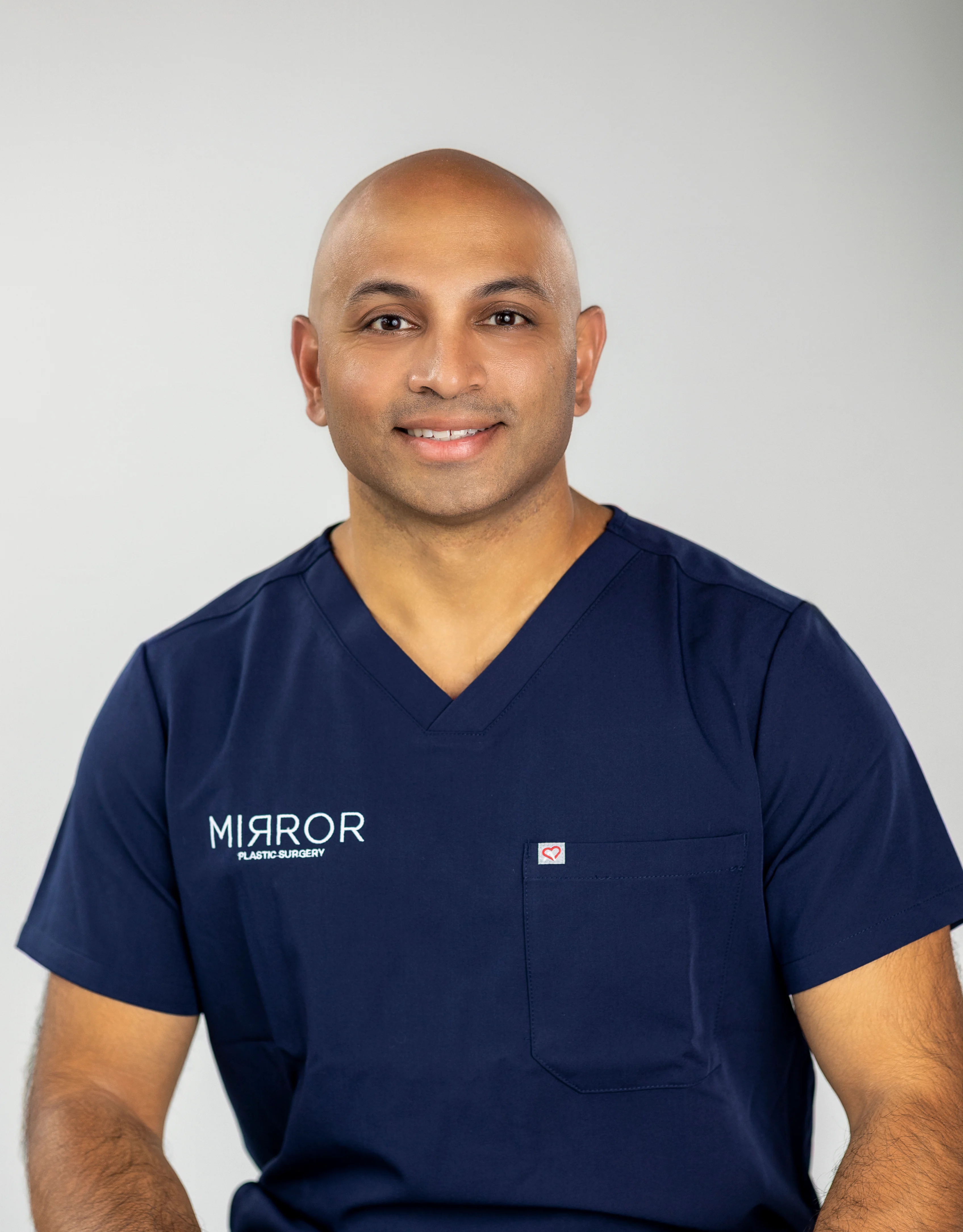
Because a board-certified plastic surgeon performs every neuromodulator injection, patients receive care from a physician with a surgeon’s command of facial and subdermal anatomy. Dr. Chandawarkar personally performs all injections and applies surgeon-level precision to each treatment.
Mirror Plastic Surgery’s concierge model allows consultations of up to one hour. This structure supports the detailed candidacy assessment that research links to lower complication rates. The practice also limits daily procedures to maintain focus and individualized planning, rather than high-volume, rapid-fire scheduling.
Conclusion: The Evidence-Based Bottom Line
The current body of evidence supports the following conclusions:
- Jaw slimming Botox is safe when qualified professionals perform the procedure. Modern clinical trials show no detectable bone loss at 12 months, and serious complications occur in under 3% of cases, with large-scale reviews reporting rates under 1%.
- Most complications arise from candidacy issues or injector errors rather than from the product itself.
- The most important safety decision is choosing a provider with surgeon-level anatomical expertise and a conservative, assessment-first approach.
If you are considering jaw slimming Botox and want a provider who prioritizes safety, schedule a consultation with Dr. Chandawarkar at Mirror Plastic Surgery in St. Petersburg, FL.
Frequently Asked Questions
Does Masseter Botox Cause Bone Loss?
Animal studies first raised concerns about mandibular bone loss after masseter Botox. Current human data are more reassuring. Two major 2026 clinical studies, one following 187 adults for 12 months and another using high-resolution CT imaging in 123 adults with escalating doses, found no clinically significant changes to mandibular bone density, cortical thickness, or TMJ structure.
Researchers still acknowledge that a 12-month window cannot fully rule out effects from decades of repeated high-dose use. Some retrospective analyses note subtle trabecular changes in long-term users. The responsible position views short- to medium-term evidence as reassuring while recognizing that long-term cumulative effects remain an open question that calls for ongoing monitoring and conservative dosing.
Will My Face Go Back to Normal After Masseter Botox Wears Off?
Most patients see their face return close to baseline. Botox effects in the masseter last 3 to 6 months, after which nerve sprouting restores muscle function. Full muscle volume usually recovers within 6 to 12 months after stopping treatment.
Long-term repeated use changes this picture slightly. Longitudinal ultrasound studies show that after multiple treatment cycles over one to two years, the muscle may remain 20 to 30% thinner than baseline even after the toxin wears off. Many patients seeking lasting jaw slimming welcome this change.
Patients should still understand that histological changes, including partial replacement of muscle fibers with fatty tissue, can occur with chronic high-dose protocols. Complete return to pre-treatment muscle size is not guaranteed after many years of consistent treatment.
Do Jowls Go Away After Masseter Botox Wears Off?
Masseter Botox does not directly create jowls. Jowls result from age-related skin laxity and volume loss. In susceptible patients, masseter Botox can unmask or accelerate jowl formation by reducing the structural support that the muscle provides to the overlying tissues.
This effect appears most often in patients over 40 with pre-existing laxity, low body fat, or thin subcutaneous tissue. When jowling develops after masseter Botox, it usually improves as the muscle regains volume after discontinuation, typically within three to six months. Careful pre-treatment candidacy assessment remains the most effective prevention strategy.
What Qualifications Should My Masseter Botox Injector Have?
Evidence shows that provider expertise is the primary determinant of safety. At minimum, an injector should hold a medical license that permits botulinum toxin injections in their state and should complete hands-on, supervised training in facial anatomy, patient selection, dosing, injection technique, and complication management.
A degree alone, whether medical, dental, or nursing, does not guarantee competency for this procedure. The highest standard of care comes from a board-certified plastic surgeon who personally performs injections and brings surgeon-level anatomical knowledge to every treatment. Additional quality markers include a thorough consultation with a clench test and asymmetry assessment, conservative dosing with follow-up, and transparent informed consent that explains the off-label status of masseter Botox in the United States.
What Is Paradoxical Masseteric Bulging and How Is It Treated?
Paradoxical masseteric bulging (PMB) is a visible outward bulge of the jaw during clenching. It typically appears 2 to 4 weeks after injection, although some studies report earlier onset with a mean of about 5 days. PMB occurs when botulinum toxin distributes unevenly within the masseter, paralyzing superficial fibers while deeper fibers stay active and contract against the weakening tissue.
A broad internal structure called the deep inferior tendon acts as a barrier that can limit uniform toxin diffusion and is present in nearly all patients. PMB appears in 0.15% to 0.49% of treatment sessions in large clinical reviews, with some variation based on technique and anatomy. It is not dangerous and does not require emergency care.
The preferred management uses ultrasound-guided supplementary injection of 5 to 15 units placed precisely into the bulging fibers, which usually resolves the issue within about one week. Prevention focuses on layered injection techniques that treat both superficial and deep portions of the masseter and on individualized dosing guided by preoperative ultrasound assessment of the muscle and tendon.
Disclaimer: Results may vary from person to person. Editorial content, before and after images, and patient testimonials do not constitute a guarantee of specific results.
1 Results may vary from person to person. Editorial content, before and after images, and patient testimonials do not constitute a guarantee of specific results.


