

Written by: Dr. Akash Chandawarkar, Board Certified Plastic Surgeon, Mirror Plastic Surgery | Last updated: September 9, 2026
Key Takeaways
Before you decide on masseter Botox, keep these core points in mind about safety, risks, and choosing an injector.
- Masseter Botox can slim the jaw and ease TMJ symptoms, but it carries higher stakes than other Botox treatments because the masseter has complex anatomy and supports the lower face.1
- Risks such as jowls, smile asymmetry, and paradoxical bulging depend heavily on technique and dose, so injector expertise drives your outcome.
- Thoughtful patient selection and detailed anatomical mapping are essential. Botox cannot change bone structure, and patients with poor skin elasticity or certain joint conditions may not be ideal candidates.
- A safety-first approach prioritizes function and long-term health, using conservative dosing, deep precise injections, and thorough pre-treatment assessments to reduce complications.
- Book a personalized, surgeon-led evaluation with Dr. Akash Chandawarkar by scheduling a consultation with Ellie.
The Anatomy Of Risk: Why Masseter Botox Is Different
The masseter is not a simple block of muscle. A 2026 narrative review by Dr. Ahmed Haq describes it as a multipennate, multilaminar structure, with superficial, intermediate, and deep parts separated by aponeurotic laminae. He calls it “a stack of feathers, not a block.”
This pennate architecture means that weakening one lamina leaves others free to contract and hypertrophy. That pattern explains several of the most distressing complications seen after treatment.
Lee and colleagues showed that the superficial masseter contains a broad deep inferior tendon (DIT) that partitions superficial from sub-tendinous contractile tissue. This tendon acts as a physical barrier that can limit uniform toxin diffusion. The DIT is invisible to the naked eye, so injectors must understand layered anatomy to account for it.
The masseter also lies close to structures that control your smile and saliva. The risorius muscle, which helps lift the corner of the mouth, arises from fascia in variable patterns. In 58.7% of dissected hemifaces, it arose solely from the fascial layer superficial to the SMAS. In 34.8%, it arose from fascial layers both superficial and deep to the SMAS.
The parotid gland sits just behind the masseter and shares a continuous fascial sheet with the overlying tissue. Because of this proximity, toxin injected too high, too far forward, or too superficially can pool in the sub-SMAS areolar plane and reach these structures, affecting smile or salivary function.
This anatomical complexity makes a one-size-fits-all injection pattern unsafe. A careful injector maps your unique muscle and nearby structures instead of following a generic diagram.
What Can Go Wrong? Addressing The Most Common Fears
Masseter Botox And Jowls: How Sagging Can Happen
The masseteric cutaneous ligaments tether the SMAS to the anterior border of the masseter, making this border a landmark for jowl formation. When the masseter shrinks, it removes soft-tissue scaffolding that supports the lower cheek and jawline. This sagging occurs more often in older patients or those with poor skin elasticity, because reduced masseter volume removes structural support and can worsen jowls or create sunken cheeks.
Jowling reflects over-treatment or poor patient selection rather than an automatic consequence of masseter Botox. A skilled injector evaluates skin elasticity before recommending treatment, may advise against it in patients with significant laxity, or may use a conservative starting dose to preserve lower-face support.
Smile Asymmetry: Why Some Smiles Look “Off”
Smile asymmetry occurs when toxin diffuses into the risorius or zygomaticus muscles, which lift the corner of the mouth. The conventional vertical injection approach into the inferior masseter for deep-layer administration can allow unintended diffusion into the risorius muscle, which can create an unnatural smile. Injecting the deep head of the masseter can also spread product to the zygomaticus major and minor muscles that animate the cheeks and smile.
A large review of over 2,000 masseter injection sessions reported smile changes in 0.15% of sessions. This complication is rare but real and depends heavily on technique. Precise, deep intramuscular injection away from the anterior border remains the main safeguard.
TMJ Concerns: When Masseter Botox May Not Help
For most patients, masseter Botox eases TMJ pain by reducing muscle tension and interrupting the clench-spasm-pain cycle. However, patients with joint hypermobility, such as those with Ehlers-Danlos Syndrome, often rely on their masseter muscles as “dynamic ligaments” to stabilize the TMJ. Weakening these muscles can increase TMJ clicking, raise the risk of jaw subluxation, and worsen facial pain.
A thorough consultation must assess joint health as well as muscle bulk to determine whether you are a safe candidate.
Paradoxical Masseteric Bulging (“Frog Cheek”)
Paradoxical masseteric bulging (PMB) appears as a visible bulge when you bite down, usually within days to weeks after injection. A 2026 retrospective case-control study by Sun et al. in the Journal of Cosmetic Dermatology reported PMB incidence ranging from 0.15% to 27.3%. This wide range reflects differences in injection technique, anatomical variation such as DIT morphology, and assessment criteria.
Sun et al. found that PMB-affected muscles had greater masseter thickness (13.30 ± 0.171 mm vs. 10.32 ± 0.169 mm) and thicker deep inferior tendons (0.85 mm vs. 0.60 mm) than controls. In their study, 72.7% of PMB cases reported a fascial penetration sensation during injection, compared with 15.1% of controls. That tactile feedback suggesting DIT toughness can help predict PMB risk.
For established PMB, Sun et al. recommend ultrasound-guided, precise layered supplementary injection of 5–15 units of botulinum toxin. In their cohort, this approach resolved PMB within one week.
The Risk Vs. Benefit Matrix: What The Data Says
The table below summarizes documented complication rates and how an expert injector reduces those risks. Most complications relate to technique and dosing rather than the medication itself.
| Complication | Documented Rate | How An Expert Injector Mitigates It |
|---|---|---|
| Mastication Disorder (chewing fatigue or weakness) | 3.5% in controlled trials, the most frequent treatment-related adverse event | Conservative starting doses (for example, 20–25 units per side) that preserve chewing function |
| Paradoxical Masseteric Bulging | 0.15%–27.3% across studies (see above) | Detailed anatomical mapping, using tactile feedback to identify the DIT, layered injection technique, and avoiding over-dosing |
| Smile Asymmetry | 0.15% in large session reviews (as noted above) | Deep intramuscular injection away from the anterior border and away from smile muscles |
| Jowls / Lower-Face Laxity | Risk rises with age and existing skin laxity | Strict patient selection, possible recommendation against treatment, or pairing with skin-tightening modalities |
Because these risks depend so strongly on technique and dose, injector skill becomes the most important factor in your result.
The Mirror Plastic Surgery Protocol: Safety First, Function Second, Aesthetics Third
At Mirror Plastic Surgery in St. Petersburg, Dr. Akash Chandawarkar, a Harvard-educated, Johns Hopkins-trained, board-certified plastic surgeon and advisory board member for Merz Aesthetics and Tiger Aesthetics, approaches masseter Botox with a safety-focused, surgeon-led protocol.
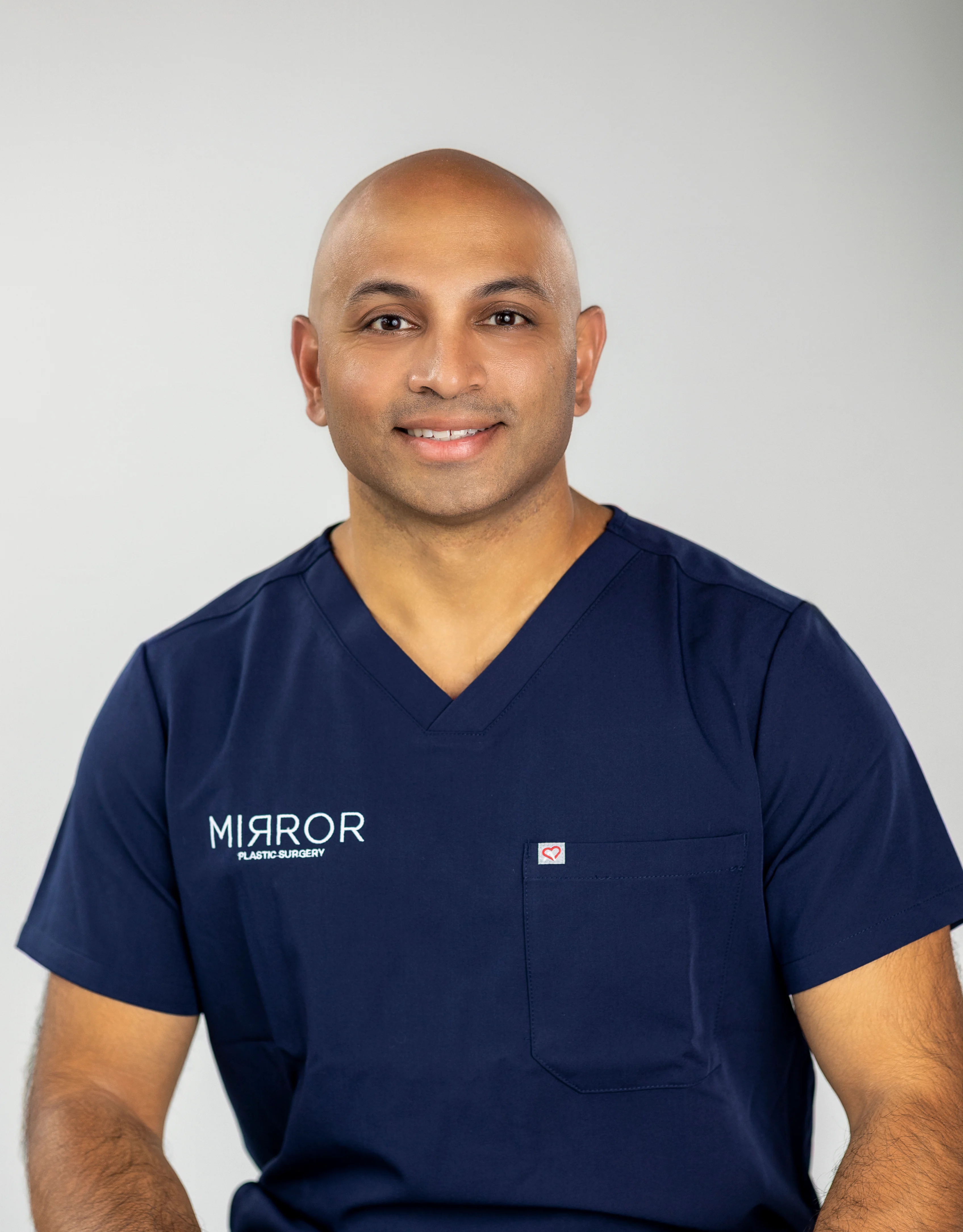
A Top-to-Bottom Assessment. Dr. Akash spends up to an hour in consultation, evaluating the entire face, including bite mechanics, muscle strength, skin elasticity, and the patient’s underlying motivations. He determines whether jaw width is muscular or skeletal, because Botox cannot change bone, and a patient with a skeletal wide jaw deserves that honest answer before treatment begins.
Surgeon-Level Anatomical Mapping. As a board-certified plastic surgeon, Dr. Akash has a three-dimensional understanding of subdermal anatomy. He palpates the muscle to identify its borders and the strongest contraction point, then places toxin precisely within the muscle belly, away from the parotid gland and smile muscles. Safe masseter treatment requires mapping the muscle itself rather than treating the cheek broadly, including identifying the anterior and posterior borders on clench and the likely parotid gland and duct territory.
A Conservative, Individualized Dosing Strategy. Dr. Akash avoids a fixed, one-size-fits-all dose. He may start conservatively to see how your muscle responds, prioritizing function and preventing the over-weakening that can cause jowls or chewing difficulty. The 2026 Yoshida review in Toxins notes that injection placement matters as much as dose when slimming the jaw while preserving chewing function, and that ethical use requires dose minimization and functional monitoring.
Long-Term Care And Honest Communication. Dr. Akash educates patients on muscle recovery and advises against overly frequent treatments to avoid permanent atrophy. Chronic botulinum toxin administration into the masseter can cause progressive atrophy that may not fully recover between cycles, with ultrasound studies showing cumulative decreases in muscle thickness. He stays transparent about what Botox can and cannot do and sometimes recommends delaying or skipping treatment, building trust over time.
Schedule your safety-first consultation with Ellie to experience this protocol, where your facial function and long-term health come before any aesthetic goal.
How To Vet An Injector: A Checklist For Florida Patients
In Florida, registered nurses can administer Botox only under physician delegation after a physician examines the patient and writes the order, while nurse practitioners work under a reduced practice model that requires a collaborative agreement with a physician. Understanding who is legally and clinically qualified to inject you forms the starting point. Use this checklist before you book.
- Board Certification: Confirm whether the injector is a board-certified plastic surgeon or dermatologist. Physicians hold the broadest legal authority to administer Botox in all 50 states and can independently evaluate patients, prescribe Botox, and perform injections without supervision.
- Specialized Training: Ask about documented, hands-on training in facial anatomy and neuromodulator injections for the masseter. The standard of care expects documented training in facial anatomy, injection techniques, patient assessment, and complication management, not just a license.
- Assessment Process: Notice whether they spend meaningful time assessing your anatomy, clench, and bite, and whether they ask about bruxism, TMJ pain, and sleep apnea, instead of rushing through a brief appointment.
- Anatomical Knowledge: Ask them to explain the risks of injecting near the risorius or parotid gland and whether they mention the deep inferior tendon. For masseter Botox, a qualified injector should explain jaw anatomy, identify the correct injection zone, and describe how they avoid adjacent structures and diffusion-related complications.
- Dosing Philosophy: Look for a personalized dose based on your muscle rather than a standard package with a fixed number of units.
- Transparency: Expect honesty about what Botox cannot do, such as changing bone structure, and ask to see before-and-after photos of masseter patients specifically.
Dr. Akash Chandawarkar meets every criterion on this list. His Harvard education, Johns Hopkins training, fellowship at Manhattan Eye Ear And Throat Hospital, and advisory roles with leading aesthetic companies represent a rare level of expertise in any market and stand out in the St. Petersburg and Tampa Bay area.
Post-Treatment Care And Long-Term Maintenance In Florida
Immediate Aftercare. In Florida’s humid climate, patients should avoid strenuous exercise, saunas, and excessive sun exposure for 24 to 48 hours after treatment. These steps help limit swelling and bruising and reduce the chance of unwanted toxin migration.
Long-Term Planning. Results do not last forever. The muscle gradually regains strength over three to six months. After three to four sessions, some patients experience semi-permanent muscular atrophy where jaw width does not fully return to baseline.1 That change can support slimming goals but requires careful monitoring to avoid over-atrophy. Dr. Akash helps patients plan a maintenance schedule that spaces treatments appropriately and preserves both function and a natural appearance.
Concierge Support. Mirror Plastic Surgery offers a concierge experience that extends beyond the treatment room. Dr. Akash remains available for follow-up questions by text or call, providing a level of personalized care that high-volume clinics rarely match.
Frequently Asked Questions
How Long Does Masseter Botox Last?
Results typically last three to six months after the first treatment.1 With repeated sessions, the muscle may stay smaller for longer periods, allowing many patients to extend the interval between treatments. Muscle size, clenching strength, and treatment history all influence duration.
Is The Procedure Painful?
Most patients feel a brief, mild pinch at each injection point. The procedure itself takes only a few minutes. Dr. Akash’s precise technique limits discomfort, and patients usually resume normal activities right away.
When Will I See Results?
Muscle relaxation begins within the first week, and a softening of the jawline typically becomes visible within two to four weeks.1 The full slimming effect appears around eight to twelve weeks as the muscle gradually atrophies.1 TMJ-related symptoms such as morning jaw soreness and tension headaches often improve even earlier, within the first two weeks.1
Can Masseter Botox Be Reversed?
The effects remain temporary. There is no reversal injection for neuromodulators, so if you dislike the result, you wait for the toxin to wear off over three to six months. During that time, the muscle regains full function and gradually rebuilds mass through normal chewing.
Are There Any Long-Term Risks?
The main long-term consideration is muscle atrophy. Gradual atrophy supports jaw slimming, but excessive or too-frequent treatment can cause over-atrophy and may contribute to jowling or a hollowed lower face, especially in patients over 40 or those with existing laxity. A conservative, well-spaced treatment plan under an experienced physician helps manage this risk. Bone density changes have been studied, and a 12-month placebo-controlled trial found no clinically significant changes in mandibular bone density at cosmetic doses, although researchers continue to evaluate longer-term data.
How Is The Treatment Plan Personalized?
Your treatment plan is tailored to your anatomy and goals. During your consultation, Dr. Akash evaluates your bite, muscle strength, facial support, and symptoms, then recommends a plan that prioritizes safety and effectiveness.
Your Face Is Not A Template
Masseter Botox can be safe and effective when performed by the right expert. The risks of jowls, smile asymmetry, and paradoxical bulging are real, yet they remain largely preventable when the injector has surgeon-level anatomical knowledge and a clear commitment to your safety and function.
The most critical decision you make involves who places the toxin and how deeply they understand the anatomy beneath your skin, more than the brand of toxin used. That choice shapes both your short-term result and your long-term facial health.
At Mirror Plastic Surgery, Dr. Akash Chandawarkar combines the precision of a board-certified plastic surgeon with the personalized attention of a concierge practice. He treats your face as a unique, interconnected system rather than a template from a standard protocol. Every consultation begins with an honest, comprehensive assessment of your anatomy, your goals, and your long-term facial health.
Book your consultation with Ellie today and let Dr. Akash create a personalized plan that places your safety and function at the center while achieving your aesthetic goals thoughtfully.
Mirror Plastic Surgery
780 4th Ave S, St. Petersburg, FL 33701
Phone: 727-361-6515
Email: hello@mirrorplasticsurgery.com
Instagram: @mirrorplasticsurgery | @dr.akashplasticsurgery | @perfectlyplastics
Disclaimer: Results may vary from person to person. Editorial content, before and after images, and patient testimonials do not constitute a guarantee of specific results.
1 Results may vary from person to person. Editorial content, before and after images, and patient testimonials do not constitute a guarantee of specific results.


