
Written by: Ellie Pranckevicius, FNP-BC, Aesthetic Nurse Practitioner & Aesthetic Injector | Facial Restoration & Regenerative Injectable Specialist, Mirror Plastic Surgery | Last updated: July 18, 2026
Key Takeaways
- Hip dip filler follows a two-phase timeline: modest volume on treatment day, then a collagen peak around three to four months.1
- Biostimulatory products such as Radiesse and Sculptra often last 12–24 months, while AlloClae provides immediate, stable volume restoration.1
- Most patients need one to three sessions spaced 4–6 weeks apart, based on indentation depth, pelvic structure, and collagen response.1
- Non-surgical hip dip filler offers minimal downtime and suits lean patients or anyone seeking subtle smoothing without surgery.1
- Schedule your personalized consultation at Mirror Plastic Surgery to review your anatomy-specific before-and-after projection and treatment plan here.
How Hip Dip Filler Results Develop Over Time in Tampa
The trochanteric depression, the lateral indentation between the iliac crest and the greater trochanter of the femur, is a structural feature anchored to bone and muscle attachment points. It is not simply a fat deficit. That anatomy defines what filler can realistically accomplish and how long results take to mature.
With Radiesse (calcium hydroxylapatite), visible volume appears on day one. Collagen stimulation then develops over subsequent months, and overall results typically hold for 12–24 months.1
With Sculptra (poly-L-lactic acid), the sterile water carrier absorbs shortly after injection, and the area returns close to baseline. Visible improvement with Sculptra for hip dips typically appears in 4–6 weeks, with full results in 4–6 months. Results from Sculptra can persist up to 24 months or longer.1
AlloClae, a donor-derived structural adipose filler regulated by the FDA as an HCT/P, became available for distribution in 2024 and was launched in early 2025. It provides immediate volume restoration without patient fat harvest. Clinical documentation notes stable behavior over time with minimal change after placement, which makes it a distinct option alongside biostimulatory products.1
Before-and-after photography at Mirror Plastic Surgery uses consistent lighting and standardized posterior-oblique positioning. Image sets are timestamped at baseline, 6–8 weeks, 3 months, and 6 months after treatment. Captions document product used, vial count per side, and session number so Tampa Bay patients can compare like with like instead of guessing across inconsistent photography conditions.
Book a consultation with Ellie to review your personalized before-and-after projection based on your specific hip anatomy and correction goals.
Typical Session Counts for Hip Dip Filler
Most patients need one to three sessions for meaningful hip dip correction, and many biostimulatory protocols land in the two-to-three session range. Sessions are spaced 4–6 weeks apart so Ellie can assess collagen response before adding more product.1
Several anatomical and physiological factors influence total session count:
- Indentation depth and width: Deeper or wider dips require more product volume and therefore more visits than shallow corrections.
- Pelvic bone structure: The distance between the iliac crest and greater trochanter and natural fat distribution patterns affect severity.
- Body fat percentage: Hip dips appear more prominent in thinner patients with lower body fat percentages.
- Metabolism and lifestyle: High-intensity athletes, smokers, and patients with recent major weight changes often require higher vial counts.
- Individual collagen response: Variation in collagen response means session spacing and volume decisions are made after evaluating results from prior treatments.
A staged approach, with conservative volume placed first, time allowed for settling, and then reassessment, produces more predictable and natural-looking results than committing to large volume upfront. Ellie applies this principle at Mirror Plastic Surgery and treats each session as a data point, not a quota to fill.
Why Tampa Patients Often Choose Radiesse, Sculptra, and AlloClae
The hip and gluteal region experiences significant mechanical stress from movement, compression, and postural change. Products used in this area must integrate with surrounding tissue, resist migration, and provide durable structural improvement rather than passive volume that shifts under load.
Radiesse provides immediate visible volume, then transitions to collagen-based results over the first several months. Patients also see skin texture improvement within 4–6 weeks, and hyperdiluted formulations can extend results toward the two-year mark.1
AlloClae functions as a structural adipose scaffold. Its stability over time suits patients who want immediate correction without the gradual collagen-building wait period associated with PLLA-based products.1 Ellie offers AlloClae at Mirror Plastic Surgery as an in-office minor procedure.
Sculptra’s PLLA microparticles stimulate type III collagen formation within 3–4 weeks after injection. Type I collagen predominates by month three and continues to remodel for more than six months. A split-body randomized controlled trial cited in the literature showed an increase in the subcutaneous adipose layer at nine months on the PLLA-treated side.1 In addition, Galderma received EU MDR certification in December 2025 for Sculptra body indications including the gluteal area, posterior thighs, décolletage, and upper arms.
Ellie selects products based on each patient’s anatomy, correction goals, and timeline preferences, not supplier relationships. Mirror Plastic Surgery operates as a supplier-neutral practice, and this product clarity helps frame the investment discussion that follows.
Cost Considerations for Hip Dip Filler
Hip dip filler is best viewed as a multi-session protocol rather than a single-appointment cost. The total value equation includes product quality, number of vials per session, session count, and the longevity of results relative to maintenance frequency.
Biostimulatory products such as Radiesse and Sculptra often provide one to two years of results, depending on product, dose, and maintenance routine.1 This duration reduces the frequency of repeat investment compared with shorter-duration options. AlloClae’s documented stability can further extend the interval between touch-up sessions for appropriate candidates.1
Mirror Plastic Surgery does not apply facial per-syringe pricing models to body contouring. Hip dip work requires a different volume profile, so Ellie performs a hands-on assessment instead of quoting facial pricing for this area. Each patient receives a personalized quote during consultation based on specific anatomy, product selection, and planned number of sessions.
Comparing Hip Dip Filler and Fat Transfer for Tampa Patients
Both hip dip filler and fat transfer address the trochanteric depression, yet they differ in recovery, candidacy, longevity, and degree of correction.
Non-surgical hip dip filler with biostimulatory products avoids surgery and anesthesia. Most patients experience two to three days of swelling and return to normal activity the same day.1 Results last one to two years, and maintenance sessions extend outcomes.1 Lean patients who lack sufficient donor fat for meaningful surgical transfer often benefit from this non-surgical route.
Surgical fat transfer, or BBL, harvests fat via liposuction from the abdomen, flanks, or thighs and injects it into the trochanteric depression. Fat transfer can achieve permanent results for the 60–80% of transferred fat that survives integration, with final contour stabilizing after 3–6 months.1 Recovery involves avoiding direct pressure on the hips for the first two weeks, wearing compression garments through weeks 2–6, and delaying high-impact activity until around weeks 6–8.
Neither approach fully eliminates hip dips, because the trochanteric depression is anchored to bone. Fat transfer and filler both aim for a smoother hip-to-thigh transition and natural-looking smoothing, not complete structural erasure.
When non-surgical results reach their limit and a patient wants greater volume or permanence, Ellie’s work at Mirror Plastic Surgery can be complemented by Dr. Akash Chandawarkar, the practice’s Harvard-educated, Johns Hopkins-trained plastic surgeon, who performs surgical body contouring procedures.
Book a consultation with Ellie to decide whether non-surgical filler, surgical fat transfer, or a staged combination approach best fits your anatomy and goals.
How to Choose a Tampa Provider for Hip Dip Filler
Provider selection for hip dip filler in Tampa Bay directly shapes outcome quality. The criteria below work together as a framework for spotting anatomy-respecting injectors rather than high-volume generalists.
Start with anatomical knowledge. The injector should clearly explain the trochanteric depression, the role of the iliac crest and greater trochanter, and the reasons complete correction is not always achievable before recommending a product.
That knowledge should carry into consultation depth. A thorough assessment of hip dip depth, skin thickness, body fat distribution, and symmetry goals should come before any product recommendation. One-size-fits-all vial counts signal a volume-driven rather than anatomy-driven practice.
Next, review documentation standards. Before-and-after galleries should show consistent lighting, standardized positioning, timeline stamps, and product or vial documentation. Undated or inconsistently photographed results cannot be meaningfully evaluated, so transparency here matters.
Communication style also reveals quality. A qualified injector will tell patients when a procedure is not yet necessary, when surgical fat transfer would produce better outcomes, or when anatomy limits what filler can achieve.
Finally, examine treatment philosophy and product neutrality. A staged approach with conservative volume and follow-up is more reliable than single-session filling, and providers who insist on maximum volume in one visit often prioritize throughput over outcomes. Injectors tied to a single supplier’s portfolio cannot always recommend the most appropriate product for a given patient’s anatomy and timeline.
Meet Your Hip Dip Filler Injector: Ellie Pranckevicius
Ellie Pranckevicius, FNP-BC, leads non-surgical body contouring at Mirror Plastic Surgery in St. Petersburg. Her clinical background is uncommon in aesthetics, with four years in the Neuroscience ICU at Tampa General Hospital sharpening her physiological reasoning, time-critical decision-making, and understanding of tissue behavior under stress. These skills translate directly to precise, anatomy-informed injection technique.
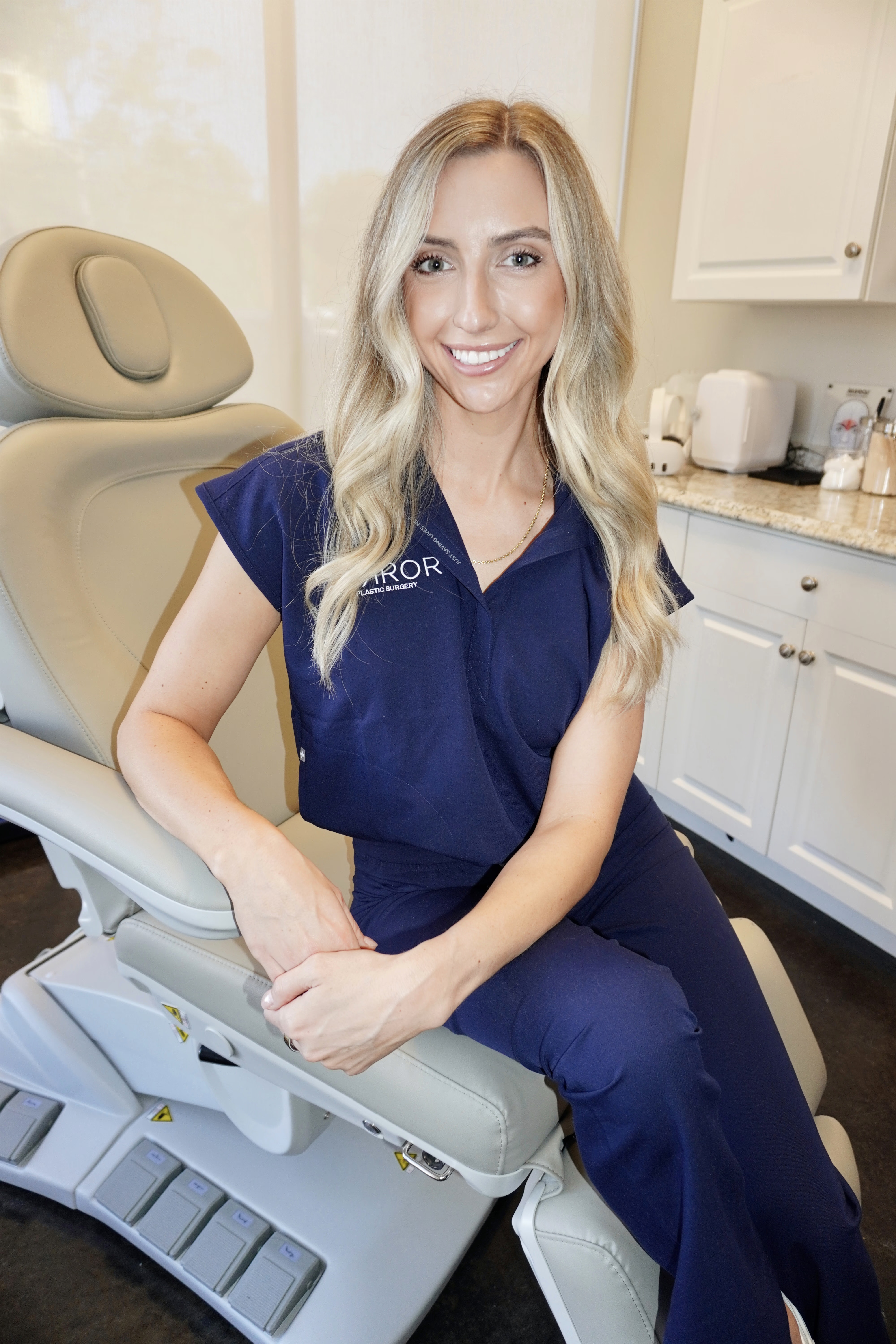
Her dual training path includes a 600-hour esthetics licensure program followed by Bachelor’s and Master’s degrees in Nursing from the University of South Florida, built on a Health Science foundation from Boston University. This combination gives her fluency in skin physiology and advanced clinical anatomy and informs her assessment of surface texture, subdermal structure, and how biostimulatory products interact with both layers over time.
For non-surgical BBL and hip dip correction, Ellie uses a combination of biostimulatory fillers tailored to individual goals, whether the priority is subtle smoothing, symmetry correction, or progressive volume building. Her top-to-bottom assessment evaluates the full gluteal region in the context of overall body proportion rather than treating the hip dip in isolation, which helps prevent contour mismatches from single-area injections.
Ellie’s communication style mirrors her clinical philosophy. She explains what is happening in the tissue, sets honest timelines, and advises against a procedure when a patient’s anatomy or expectations make it unsuitable. This approach supports long-term patient relationships that high-volume practices rarely maintain.
When non-surgical options reach their ceiling, Ellie’s assessments integrate seamlessly with Dr. Akash Chandawarkar’s surgical practice, giving patients a clear, evidence-based pathway from conservative correction to surgical enhancement if that transition becomes appropriate.
Book a consultation with Ellie at Mirror Plastic Surgery’s St. Petersburg location to begin your top-to-bottom assessment.
Frequently Asked Questions
Am I a good candidate for hip dip filler?
Most adults in good general health with visible trochanteric depressions qualify for non-surgical hip dip filler. The assessment at Mirror Plastic Surgery reviews hip dip depth and width, skin quality, body fat distribution, pelvic bone structure, and symmetry goals before recommending a product or protocol. Patients who are pregnant or breastfeeding, have an active skin infection at the injection site, a history of keloid scarring, or an active autoimmune granulomatous disease are not candidates for biostimulatory filler treatment. Very lean patients who lack sufficient donor fat for surgical fat transfer are often well-suited to the non-surgical route, because biostimulatory fillers work independently of body fat percentage.
How long do hip dip filler results last, and will I need maintenance?
Longevity depends on the product used. Radiesse results often last 12–18 months, and hyperdiluted formulations can extend to 24 months or beyond. Sculptra results persist up to 24–25 months based on clinical data, with some patients reporting improvement beyond that window. AlloClae is documented as stable over time with minimal change after placement.1 Most patients schedule a maintenance assessment at 12–18 months to decide whether a touch-up session is needed.1 Lifestyle factors such as exercise intensity, weight fluctuations, and metabolism influence how quickly results evolve.
What is the downtime after hip dip filler treatment?
Non-surgical hip dip filler involves minimal downtime. Most patients experience mild swelling, tenderness, and possible bruising at injection sites for two to three days.1 Normal daily activities usually resume the same day.1 Strenuous exercise and prolonged direct pressure on the treated area are typically avoided for 24–48 hours. Sculptra protocols include a post-injection massage regimen of firm circular massage for five minutes, five times daily, for five days to support even product distribution and reduce the rare risk of nodule formation. There are no incisions, compression garments, or activity restrictions comparable to surgical fat transfer recovery.
How is hip dip filler different from a surgical Brazilian Butt Lift?
Surgical fat transfer, or BBL, harvests the patient’s own fat via liposuction and injects it into the gluteal region, producing permanent results for the fat that survives, typically 60–80% of transferred volume. It requires general anesthesia, 2–4 weeks of restricted activity, and compression garments. Non-surgical hip dip filler uses biostimulatory products or structural adipose scaffolds injected in an office setting without anesthesia, with same-day return to activity and results lasting one to two years. Surgical fat transfer can achieve greater volume correction in a single session, while non-surgical filler suits patients seeking subtle smoothing, those with insufficient donor fat, or those who prefer to avoid surgery. Neither approach fully eliminates hip dips, because the trochanteric depression is anchored to bone structure.
Why does Ellie take a top-to-bottom approach rather than treating just the hip dips?
Hip dips exist within the context of overall body proportion. Treating the trochanteric depression in isolation without evaluating the surrounding gluteal contour, waist-to-hip ratio, and lower body symmetry can produce results that look corrected in one area but mismatched in the broader silhouette. Ellie’s top-to-bottom assessment evaluates the full region before recommending product type, volume, and placement strategy. This mirrors her facial philosophy, where she addresses foundational structure before volume augmentation, applied to body contouring. The result is a treatment plan designed for natural, proportionate improvement rather than isolated filling.
Disclaimer
Disclaimer: Results may vary from person to person. Editorial content, before and after images, and patient testimonials do not constitute a guarantee of specific results.
1 Results may vary from person to person. Editorial content, before and after images, and patient testimonials do not constitute a guarantee of specific results.