

Written by: Ellie Pranckevicius, FNP-BC, Aesthetic Nurse Practitioner & Aesthetic Injector | Facial Restoration & Regenerative Injectable Specialist, Mirror Plastic Surgery
Key Takeaways
-
Hip dips are natural inward curves shaped by bone structure, pelvic width, and genetics, not muscle weakness or fitness level.
-
Exercises like squats and hip thrusts build surrounding muscle and improve function, but cannot remove the underlying bony depression.
-
Biostimulatory fillers such as Radiesse add immediate volume and stimulate collagen for gradual hip contour improvement that can last 1-3 years.
-
Non-surgical fillers offer minimal downtime, lower risks, and reversibility compared to fat transfer surgery, which carries embolism risk and longer recovery.
-
Mirror Plastic Surgery’s concierge approach with Ellie Pranckevicius provides personalized, evidence-based hip dip correction; schedule a consultation with Ellie for your tailored plan.
Hip Dips: Natural Anatomy and Main Causes
Hip dips, also called violin hips or trochanteric depressions, are normal inward curves along the side of the hips just below the hip bone, shaped by the greater trochanters (bony knobs on the outer hips) of the pelvic bones and fat and muscle distribution around the pelvis and thighs. These indentations sit between your iliac crest and greater trochanter, creating a natural depression that varies in depth from person to person.
The primary causes of hip dips include:
Bone Structure: A larger space between the iliac crest and greater trochanter, combined with a longer and more vertical femoral neck, leads to more noticeable hip dips. Pelvic width, femoral neck angle, and the position of bony landmarks are genetically determined and do not change with exercise or lifestyle.
Muscle and Fat Distribution: Low body fat or underdeveloped glutes (especially gluteus medius and minimus) make dips more prominent, but building glute muscle can partially fill the area visually. Stronger glutes can soften the appearance of dips, yet they cannot fully erase the underlying bony contour.
Genetic Factors: The prominence of hip dips is largely genetic and body-type dependent, influenced by pelvic width and angle, depth of soft-tissue padding from muscle and fat, overall body fat percentage, and muscle tone. Because bone structure and genetics play the main role, treatment choices need to work with your anatomy rather than attempt to fight it.
Comparing Non-Surgical and Surgical Hip Dip Options
Knowing how each correction option works helps you choose an approach that fits your anatomy, lifestyle, and goals. The table below outlines key pros, cons, and longevity for common strategies.
|
Option |
Pros |
Cons |
Longevity |
|---|---|---|---|
|
Exercises (hip thrusts, squats) |
Builds muscle stability, improves function |
Cannot fill bony depression, requires ongoing maintenance |
Ongoing maintenance required |
|
Biostimulatory Fillers (Radiesse, alloClae) |
Natural collagen stimulation, gradual improvement |
Multiple sessions needed, gradual results |
|
|
Energy Devices (RF, ultrasound) |
Skin tightening, minimal downtime |
Limited volume enhancement |
6-12 months |
|
Surgery (Fat Transfer) |
More dramatic volume increase |
Embolism risk, significant downtime, variable results |
60-80% permanent with stable weight |
Biostimulatory fillers often provide the most balanced option for patients who want visible improvement without major surgery. These injectables avoid the embolism risk and long recovery associated with fat transfer and instead work with your body’s own collagen to create smoother, more harmonious contours.
Schedule your personalized treatment assessment to compare these options and see which approach best fits your unique anatomy.
Hip Dip Fillers: Mechanism, Results, and Longevity
Modern biostimulatory fillers offer a refined approach to hip dip correction that goes beyond simple volume filling. Radiesse, a calcium-based biostimulatory filler, adds immediate volume while stimulating patients’ own collagen and elastin production over time for improving hip dips and creating a smoother, more contoured, hourglass-like silhouette.
Ellie’s protocol uses advanced biostimulatory fillers like Radiesse that work through dual mechanisms. They provide immediate structural support, then trigger your body’s natural collagen production over the following weeks and months. AlloClae offers similar benefits with a formulation designed specifically for body contouring applications, including hip dips. This collagen development process means results improve progressively over weeks following treatment, providing firmer, more natural contours.
Biostimulatory fillers deliver gradual results over 4-12 weeks through collagen stimulation and can last 2-3 years (about 25 months) in many patients. Most people need 2-4 sessions spaced several weeks apart, and longevity depends on the specific filler, your metabolism, and any maintenance treatments. Touch-up sessions can extend and refine your results over time.
Mirror Plastic Surgery’s Concierge Approach to Hip Dips
Mirror Plastic Surgery follows a concierge model that prioritizes time, safety, and individualized planning. The team dedicates up to an hour for comprehensive consultations and performs detailed top-to-bottom assessments that place safety first, function second, and aesthetics third. This extended timeframe allows careful review of your anatomy so every treatment plan can match your structure and long-term goals.
The practice follows evidence-based medicine and remains supplier-neutral, choosing products and techniques based on scientific support rather than sales pressure. The team limits the schedule to one or two procedures per day, not the five to ten often seen in mill-style practices, which keeps the entire staff focused on you instead of rushing between patients.
This slower, more deliberate pace supports the meticulous attention that complex body contouring requires and helps protect both safety and results.
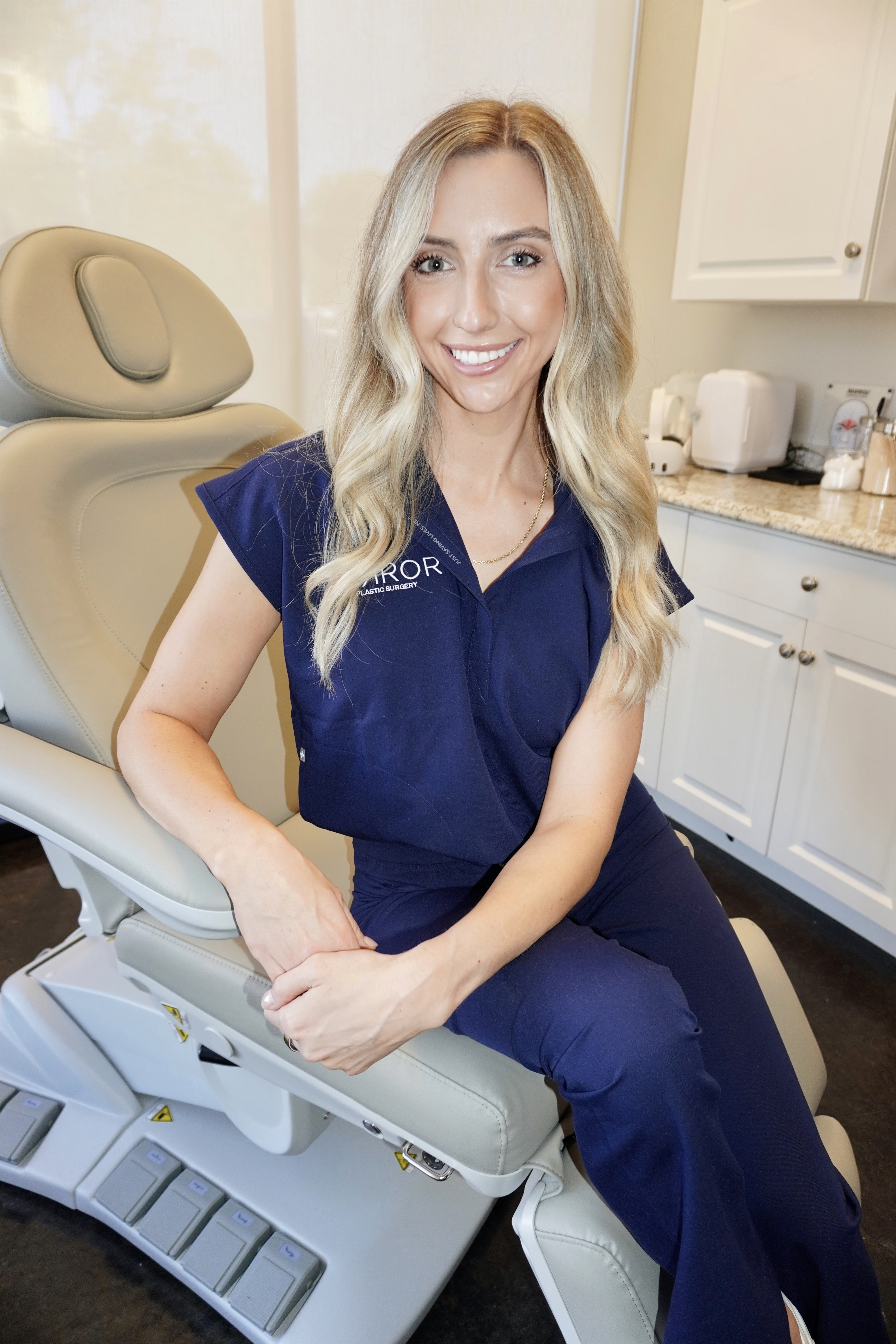
Meet Your Injector: Ellie Pranckevicius
Ellie Pranckevicius, FNP-BC, combines advanced nursing training with specialized aesthetic expertise for hip dip correction. She holds a Master’s degree in Nursing from the University of South Florida and completed 600 hours of intensive aesthetic training, giving her a deep understanding of both surface and subdermal anatomy.
Her four years in the Neuroscience ICU at Tampa General Hospital sharpened her clinical judgment and knowledge of human physiology. That experience translates directly to recognizing subtle anatomical variations and potential complications during body contouring procedures. This critical-care foundation supports Ellie’s work with biostimulatory fillers, where she focuses on restoring natural balance and educating patients about physiology and long-term maintenance.
Her holistic approach looks at how each treatment area interacts with the rest of your body, which helps prevent an “overdone” look from isolated injections. Ellie’s transparency and honest communication also mean she may recommend against expensive treatments when they are not necessary, building trust for long-term care.
Hip Dip Filler Risks, Recovery, and Expected Results
Clear expectations about risks and recovery make it easier to choose between non-surgical fillers and surgical fat transfer.
|
Aspect |
Non-Surgical (Fillers) |
Surgery (Fat Transfer) |
|---|---|---|
|
Common Risks |
Swelling (43%), mild discomfort, and bruising usually resolve within 1 week |
Fat embolism, infection, asymmetry, and revision needs |
|
Recovery Time |
Minimal downtime, return to activities within days |
1-2 weeks downtime, 3-6 months for final results |
|
Results Timeline |
Gradual improvement over weeks to months |
Variable due to fat resorption and healing |
|
Reversibility |
Some fillers can be dissolved if needed |
Surgical revision is required for corrections |
Ellie’s detailed anatomical knowledge and conservative dosing help reduce risks with non-surgical hip dip correction. In a prospective case series of 30 women treated with advanced biostimulatory fillers for hip augmentation, mean patient satisfaction at 6-month follow-up was 8.7 ± 0.9 out of 10, with 86.7% reporting scores of 8-10.
Most patients can expect gradual smoothing of hip dip contours rather than sudden, dramatic changes. Results follow your body’s collagen production timeline, which creates authentic-looking improvements that enhance your natural silhouette instead of completely changing it.
Review personalized before-and-after examples with Ellie and map out a realistic treatment timeline for your anatomy.
Why Tampa Bay Patients Choose Mirror for Hip Dip Correction
Mirror Plastic Surgery’s St. Petersburg location offers convenient access to high-level aesthetic care for the greater Tampa Bay area without the impersonal feel of large metropolitan clinics. The concierge philosophy ensures you receive the time and attention that thoughtful body contouring requires.
The team’s evidence-based approach keeps recommendations grounded in anatomy and science instead of sales quotas or product promotions. This scientific foundation also supports a collaborative model, where Ellie’s non-surgical work can be complemented by Dr. Akash Chandawarkar’s surgical expertise when anatomy calls for a combined plan.
The blend of Ellie’s specialized non-surgical training, access to surgical backup when needed, and a focus on long-term relationships creates an environment where safety, satisfaction, and natural-looking results come before volume-driven metrics.
Frequently Asked Questions
Can you fix hip dips without surgery?
Yes. Biostimulatory fillers like Radiesse and alloClae can smooth hip dips without surgery by stimulating your body’s collagen while providing immediate support. The gradual improvement blends with your existing anatomy, and most patients return to normal activities within a few days.
Do hip dip fillers last?
Yes. As described above, biostimulatory fillers usually maintain improvement for 1-3 years. Your metabolism and any maintenance treatments influence how long your specific results last.
Is hip dip filler treatment safe?
When experienced practitioners use appropriate products and techniques, hip dip filler treatment has a strong safety record. Modern biostimulatory fillers have been widely studied and show high satisfaction with few serious adverse events. Most side effects involve short-term swelling, bruising, or mild discomfort that resolves within days, and careful injection technique further reduces risk.
What is the recovery time for hip dip fillers?
Recovery from hip dip fillers is brief compared to surgery. Most patients notice mild swelling and tenderness for 2-3 days and can return to desk work and light activities right away. Intense lower-body exercise should wait about one week, and sleeping on your side or stomach for the first few nights helps protect the treated area while it settles.
Are biostimulatory fillers better than other options for hip dips?
Biostimulatory fillers such as Radiesse and alloClae suit hip dip correction well because they address structural needs and encourage your own collagen. They last longer than many traditional fillers and avoid the higher risks of fat transfer surgery, which makes them a strong choice for many patients seeking hip dip improvement.
Conclusion: Choosing a Safe, Natural Hip Dip Solution
Non-surgical biostimulatory fillers offer a safe, effective path to smoother hip contours for many people. Recognizing that hip dips reflect genetic anatomy rather than fitness failure can help you choose correction options that match your goals and comfort with risk.
Today’s advanced fillers create natural-looking, long-lasting results without the extended downtime and higher complication rates of surgery. In skilled hands that understand hip anatomy, these treatments can produce a balanced, harmonious silhouette.
At Mirror Plastic Surgery, the concierge model supports personalized attention, honest guidance, and evidence-based planning for hip dip correction.
Start your personalized treatment journey with a comprehensive consultation.
Contact Information:
Phone: 727-361-6515
Email: hello@mirrorplasticsurgery.com
Address: 780 4th Ave S, St. Petersburg, FL 33701
Instagram: @mirrorplasticsurgery, @dr.akashplasticsurgery, @perfectlyplastics
Disclaimer: Results may vary from person to person. Editorial content, before and after images, and patient testimonials do not constitute a guarantee of specific results.
