
Written by: Ellie Pranckevicius, FNP-BC, Aesthetic Nurse Practitioner & Aesthetic Injector | Facial Restoration & Regenerative Injectable Specialist, Mirror Plastic Surgery
Key Takeaways
-
A first Botox consultation lays the groundwork for safe, effective treatment by reviewing your medical history, assessing facial anatomy, and building a plan around your goals.
-
Thorough consultations last 15 to 60 minutes and include detailed safety screening, muscle mapping, and clear conversations about realistic outcomes and what Botox cannot change.
-
Providers should evaluate your facial expressions at rest and in motion to select precise injection sites and dosages that keep your face looking natural.
-
Patients should ask about provider qualifications, the specific muscles being treated, unit amounts, aftercare instructions, and follow-up timing to support informed decisions and safety.
-
Schedule your personalized Botox consultation at Mirror Plastic Surgery to experience comprehensive care that prioritizes your safety, education, and long-term aesthetic goals.
How Long a First Botox Consultation Really Takes
A first Botox consultation at many practices typically lasts 15 to 20 minutes. That window often covers only a brief medical history review, quick facial assessment, and short explanation of the treatment.
Many high-volume practices move quickly through this process and focus on turnover instead of depth. At Mirror Plastic Surgery, Ellie Pranckevicius often dedicates up to one hour for initial consultations. She performs a complete top-to-bottom assessment, reviews your facial anatomy, talks through your aesthetic goals, and makes sure you understand each step of treatment.
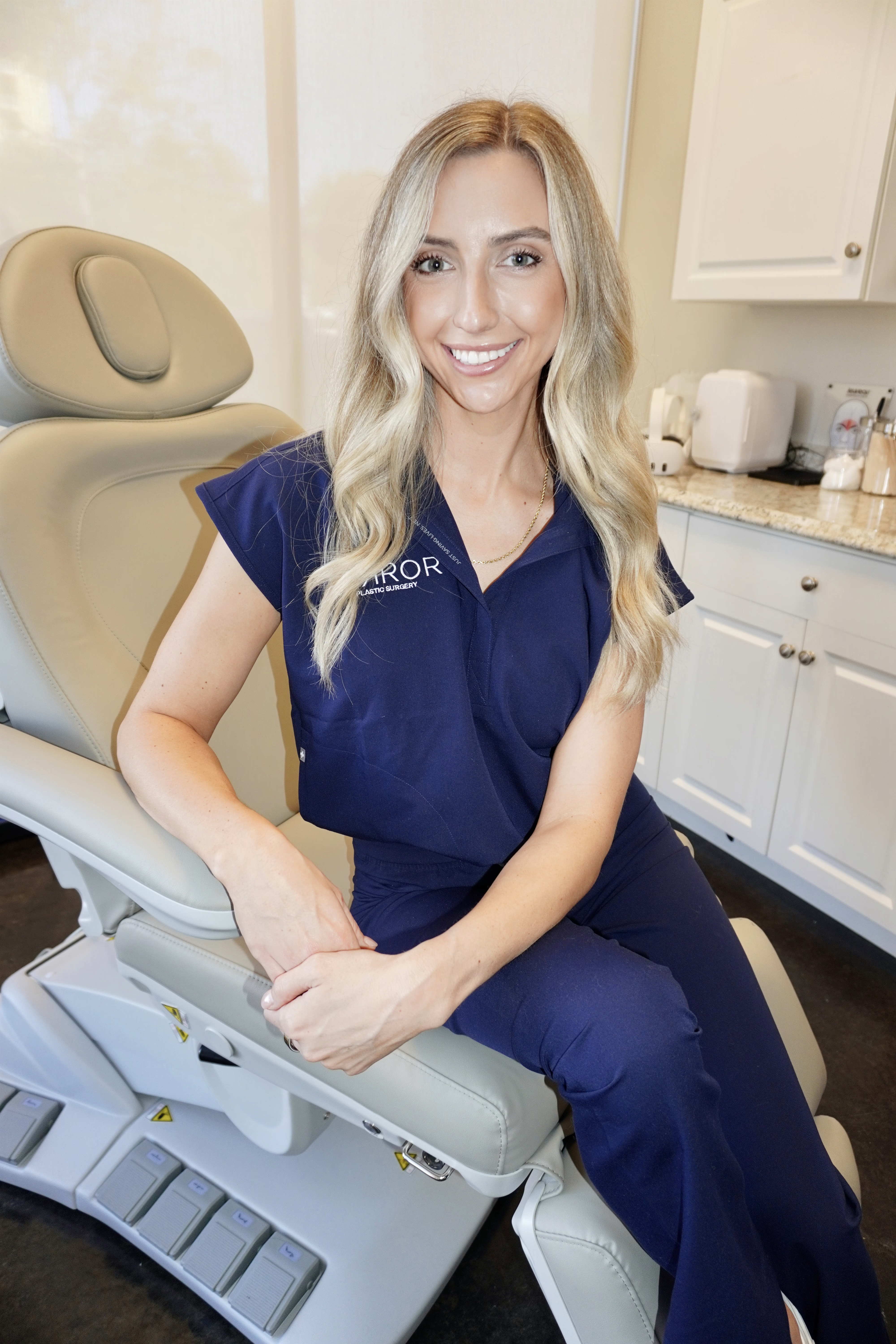
This extended timeframe stands in stark contrast to the “mill” experiences common at high-volume practices, where patients may feel rushed or pressured. The extra time allows for detailed discussion of your concerns, realistic expectations, and thorough safety screening that supports successful treatment.
Book a consultation with Ellie to experience how a slower, more thoughtful approach can shape your Botox journey.
Medical History Review and Safety Screening at Your Visit
A detailed medical history review forms the core safety step of your first Botox consultation. Your provider should ask about medications, allergies, previous cosmetic treatments, and any neuromuscular disorders to decide whether Botox suits your specific health profile.
Key screening factors include pregnancy or nursing status, neurological conditions such as myasthenia gravis, Lambert-Eaton syndrome, or ALS, allergies to botulinum toxin ingredients, active infection at the injection site, and a comprehensive medication review. Beyond these standard contraindications, recent research shows that people with chronic illnesses such as type 1 diabetes, thyroid disorders, chronic migraines, and cataracts face higher risks of certain side effects from cosmetic Botox injections.
Ellie’s background as a neuroscience ICU nurse at Tampa General Hospital gives her advanced skill in recognizing medical contraindications and understanding how complex health conditions may affect treatment safety. Her nursing training supports a careful review of every part of your medical history before she recommends any treatment.
How Your Face Is Assessed for Botox Treatment
The facial assessment serves as the technical center of your consultation. During this step, your provider studies your unique anatomy to design a personalized treatment plan. You will be asked to frown, look surprised, smile, and squint so your injector can map your muscle movements and facial structure.
Your provider should evaluate your face both at rest and in motion. This includes checking muscle strength, movement patterns, and how different areas of your face interact. The practitioner then uses this facial anatomy assessment and a skin evaluation to guide treatment planning, including dosage and injection site selection based on your individual muscle dynamics.
This level of precision requires advanced anatomical knowledge that separates experienced injectors from basic providers. For example, advanced providers like Ellie use a deep understanding of both surface and subdermal anatomy to pinpoint the muscles that create your specific concerns. Her combined background in esthetics and advanced nursing supports a detailed understanding of skin physiology and muscle behavior. This careful mapping helps achieve your goals while preserving natural facial expressions.
Setting Botox Goals and Clarifying Realistic Results
Goal-setting conversations align what you hope to see with what Botox can safely deliver. After learning about your priorities, your provider studies your facial anatomy and recommends a treatment plan based on your unique features and muscle movement.
Your provider should clearly explain what Botox can and cannot address. While Botox smooths dynamic wrinkles caused by muscle movement, it cannot correct static lines present at rest, sun damage, pigmentation, volume loss, sagging skin, or skin texture issues. Understanding these limits prevents unrealistic expectations and helps you and your provider decide whether Botox alone fits your goals or if other treatments might add value.
Ellie focuses on education and transparency during these discussions. She often advises patients to delay or skip expensive services when they are not yet needed. This approach builds trust and keeps recommendations centered on your best interests instead of short-term revenue.
Rushed Botox Consultations Compared to Comprehensive Care
The quality of your consultation strongly affects both safety and cosmetic results. High-volume practices often prioritize speed over depth, which can lead to brief assessments that miss important medical details or skip true customization.
Comprehensive consultations at Mirror Plastic Surgery include detailed medical history review, in-depth facial anatomy assessment, clear goal-setting, and education about the treatment process. If you feel rushed, dismissed, or pressured during a Botox consultation, that experience suggests the process may not be thorough enough for your needs.
Mirror’s concierge medicine model gives each consultation the time and attention required for thoughtful planning. This philosophy places safety first, function second, and aesthetics third. Your treatment plan is designed to support long-term health and confidence instead of quick, one-time results.
Book a consultation with Ellie to experience an unhurried assessment that supports exceptional outcomes.
Key Questions to Ask Your Botox Injector
Specific questions during your consultation help you understand your options and feel confident in your decisions. Consider asking the following:
1. What are your qualifications and how long have you been performing Botox injections? Patients should ask about the injector’s training and experience with facial anatomy, because poor technique from an unqualified provider can cause eyelid drooping or asymmetry.
2. Which specific muscles will you treat and why? Patients should ask which muscles will be treated and why, and request that the provider show injection sites on a diagram or demonstrate expected facial expressions.
3. How many units do you plan to use and what determines that amount? First-time patients often ask how many units they will need for areas such as the forehead and why that number fits their anatomy and goals.
4. What results are realistic for my specific concerns and facial anatomy? The consultation offers the right time to ask what changes you can expect and how much facial expression will remain after treatment.
5. What aftercare instructions should I follow? Patients should ask what specific aftercare steps apply to their treatment areas, including activity limits and skin care guidance.
6. When should I schedule follow-up appointments? Beyond immediate aftercare, patients should also ask when to schedule follow-up visits, including a two-week check-in to review results.
7. How often will I need maintenance treatments? Patients should ask about long-term cost and maintenance frequency for preventative Botox, which often involves sessions every 3 to 4 months.
8. Are there any contraindications based on my medical history? Your provider should identify any contraindications during the medical screening discussed earlier, including pregnancy, nursing status, and neurological conditions.
What to Expect Right After Your Botox Visit
After your consultation and treatment, you will receive specific aftercare instructions that support your results and reduce side effects. The most important guideline is the 4-hour rule. Avoid lying down, exercising, or bending over for at least four hours after injection to lower the chance of Botox moving into unintended areas.
Most people start noticing early Botox changes within 2 to 3 days after injection. Full results usually appear over the next 10 to 14 days as the neurotoxin fully engages with nerve receptors and treated muscles relax.1
Common short-term side effects include mild bruising at the injection site, which affects up to 25 percent of patients, along with mild swelling or redness that fades within hours. Some patients experience headaches in the first 24 to 48 hours and temporary tenderness around treated areas. These effects usually resolve within a few days.
How Botox Progresses in the Weeks After Treatment
Botox results typically settle over 10 to 14 days.1 The two-week mark usually offers the best time to evaluate symmetry and overall cosmetic effect, especially for first-time patients. Your provider should schedule a follow-up visit around this time to review your results and decide whether any adjustments are needed.
Most cosmetic Botox results last 3 to 4 months before the medication wears off and muscle movement returns.1 Long-term planning and repeat-visit expectations should be part of your initial consultation so you understand how often you may want maintenance.
Ellie approaches long-term care similarly to dental care. Professional treatments create change, but lasting results depend on education and consistent maintenance. She teaches patients how to extend their results and protect their investment over time, building relationships focused on long-term aesthetic goals instead of single procedures.
Book a consultation with Ellie to start working with a provider who values your education, safety, and long-term satisfaction.
Summary of Your First Botox Consultation Experience
A thorough first Botox consultation creates the foundation for safe, effective treatment that supports your aesthetic goals while preserving natural expression. This visit should include a complete medical history review, detailed facial anatomy assessment, realistic goal-setting, and clear education about the treatment process and aftercare.
Choosing a provider who spends adequate time with you, understands facial anatomy in depth, and prioritizes your safety and long-term well-being increases the likelihood of results you love. Investing in a comprehensive consultation often pays off in both safety and satisfaction.
Frequently Asked Questions
How long does it take to see full Botox results?
Initial Botox effects typically appear within 2 to 5 days after injection, with full results developing over 10 to 14 days.1 Full results build gradually during this two-week period as the neurotoxin binds to nerve receptors and treated muscles relax.
What should I avoid after my first Botox treatment?
For the first 4 hours after Botox injection, avoid lying down, exercising, or bending over to reduce the risk of toxin migration. You should also avoid rubbing or massaging treated areas, drinking alcohol, and taking blood-thinning medications unless your doctor has prescribed them. Most normal activities can resume after the 4-hour window, although your provider may give extra instructions based on your treatment areas.
How often will I need Botox maintenance treatments?
As mentioned earlier, most patients return every 3 to 4 months, although some notice that results last slightly longer with repeated treatments as muscles gradually weaken with consistent use.1 Your provider will help set a maintenance schedule based on your response to treatment and your aesthetic goals.
What are the most common side effects for first-time Botox patients?
The most common side effects are mild and temporary. These include bruising at injection sites, which affects up to 25 percent of patients, mild swelling or redness that fades within hours, headaches in the first 24 to 48 hours, and temporary tenderness around treated areas. These effects usually resolve within a few days to two weeks. Serious complications remain rare when qualified providers use proper techniques.
How do I know if my provider is qualified to perform Botox injections?
Look for providers who are board-certified physicians, nurse practitioners, or physician assistants with focused training in facial anatomy and injectable treatments. Ask about their experience level, how long they have been performing Botox injections, and request before-and-after photos of their work. Qualified providers should explain their injection technique, outline potential risks and complications, and show strong knowledge of facial anatomy. They should also use only FDA-approved products from authorized distributors.
Disclaimer: Results may vary from person to person. Editorial content, before and after images, and patient testimonials do not constitute a guarantee of specific results.
1 Results may vary from person to person. Editorial content, before and after images, and patient testimonials do not constitute a guarantee of specific results.