
Written by: Dr. Akash Chandawarkar, Board Certified Plastic Surgeon, Mirror Plastic Surgery | Last updated: September 9, 2026
Key Takeaways
- Dermal fillers in the U.S. average $715 per syringe for hyaluronic acid and $901 for biostimulatory fillers, but total costs depend on provider expertise and treatment complexity.
- Board-certified plastic surgeons charge premium rates because their anatomical training and precision reduce complications and create more natural, balanced results.
- Costs vary by filler type, treatment area, and number of syringes, with lips and tear troughs often needing the most frequent maintenance.
- Choosing an experienced injector is a financial decision because corrective treatments for misplaced filler can exceed the original procedure cost.
- Patients seeking safe, personalized dermal filler treatments can schedule a consultation with Dr. Akash Chandawarkar at Mirror Plastic Surgery for transparent pricing and expert care.
Average Cost By Type Of Filler
Filler pricing varies significantly by product category, and longer-lasting products often cost more upfront but less per month over time.1 The table below shows that biostimulatory fillers like Radiesse and Sculptra usually carry a higher per-syringe price than standard hyaluronic acid fillers, yet their extended longevity can make them more cost-effective across the full life of the treatment.1 Actual quotes depend on brand, geographic market, and individual treatment needs. Most patients need more than one syringe per session, so total treatment costs routinely exceed per-syringe figures.
| Filler Category | Examples | National Average Per Syringe | Typical Longevity |
|---|---|---|---|
| Hyaluronic Acid (HA) — Standard | Juvéderm Ultra, Restylane, Versa, Evolysse | ~$715 (ASPS avg.); $550–$900 commercially | 6–12 months |
| Hyaluronic Acid (HA) — Premium Structural | Juvéderm Voluma, Restylane Lyft, RHA 4 | $800–$1,200 per syringe | 12–24 months |
| Calcium Hydroxylapatite (CaHA) | Radiesse | $700–$1,000 per syringe | 12–18 months |
| Poly-L-Lactic Acid (PLLA) | Sculptra | $800–$1,200 per vial | Up to 25 months |
The ASPS reports a national average of $743 for lip augmentation specifically. Non-HA biostimulatory fillers such as Radiesse and Sculptra average approximately $901 per syringe nationally, and their longer duration can translate to a lower cost per month over time.
Estimated Cost By Treatment Area
Treatment area strongly shapes both the number of syringes needed and the total cost, with delicate or structural regions often requiring more product and higher expertise. The number of syringes varies considerably based on patient anatomy, degree of volume loss, and aesthetic goals. The table below highlights how areas differ in syringe count and cost, from a single syringe for lips to multiple syringes for a non-surgical BBL, so a personalized quote always requires a thorough in-person consultation.
| Treatment Area | Typical Syringes Needed | Estimated Cost Range | Notes |
|---|---|---|---|
| Lips | 1 | $500–$1,200 | Lasts 6–12 months; most expensive area to maintain annually |
| Cheeks / Midface | 1–3 | $700–$3,000 | Voluma can last 18–24 months |
| Under-Eyes / Tear Troughs | 0.5–1 | $700–$1,500 | High-risk area; injector expertise is critical |
| Nasolabial Folds | 1–2 | $600–$1,600 | Retreatment every 9–18 months |
| Chin and Jawline | 1–3 | $900–$3,900 | Structural fillers like Volux last 18–24 months |
| Non-Surgical BBL | Multiple (biostimulatory) | $3,000–$10,000+ | Radiesse and AlloClae are preferred options; requires a tailored plan |
Factors That Influence Dermal Filler Cost
Several variables explain the wide spread between a $500 quote and a $1,500 quote for what appears to be the same treatment.
Geographic Location. Major metropolitan areas like New York, Los Angeles, Miami, San Francisco, and Boston run 30–50% above the national average, while smaller cities in the South, Midwest, and rural areas sit 10–25% below. The Tampa Bay and St. Petersburg market generally tracks closer to national averages than high-cost coastal cities.
Provider Credentials. Board-certified plastic surgeons and master injectors charge $900–$1,400 per syringe, while experienced nurse injectors at well-reviewed med spas typically charge $500–$900. Plastic surgeon practices typically charge $1,000–$1,500 per syringe. This premium reflects advanced training and lower complication risk. Pricing under $400 per syringe is a recognized red flag for inexperience or non-genuine product.
Product Brand And Type. Premium structural fillers like Juvéderm Voluma XC command $800–$1,200 per syringe, while softer entry-level options like Versa start around $650. Newer FDA-approved products, including Evolysse (approved February 2025), saypha MagIQ (approved September 2025), and Belotero Volume (+) Lidocaine (approved May 2026), are entering the market with distinct technologies that may carry their own price points.
Number Of Syringes And Treatment Complexity. A typical first-time filler client uses 1–2 syringes, while comprehensive facial balancing can use 4–8 syringes over multiple sessions. Complex areas such as the tear trough and jawline require greater anatomical precision and typically command a higher injector premium. That premium is worth examining closely, because it connects directly to the value of expertise.
What You Are Really Paying For: Expertise Vs. Price
The most consequential line item in any filler budget is the person placing the product, not the product itself. Population-level harm from dermal fillers is driven mainly by operator training and clinic-level protocol adherence rather than product brand alone, and the cheapest injector may become the most expensive choice long-term when inadequate training leads to more adverse events.
The “filler mill” model, characterized by high volume, low prices, rushed consultations, and rotating injectors, contrasts sharply with the concierge approach at Mirror Plastic Surgery. Dr. Akash Chandawarkar performs every injection personally and brings a board-certified plastic surgeon’s understanding of facial and subdermal anatomy to each treatment. His advisory roles with Merz Aesthetics (Radiesse) and Tiger Aesthetics (AlloClae) keep him at the forefront of injectable innovation. His training at Harvard, Johns Hopkins, and the Manhattan Eye Ear & Throat Hospital informs every placement decision.
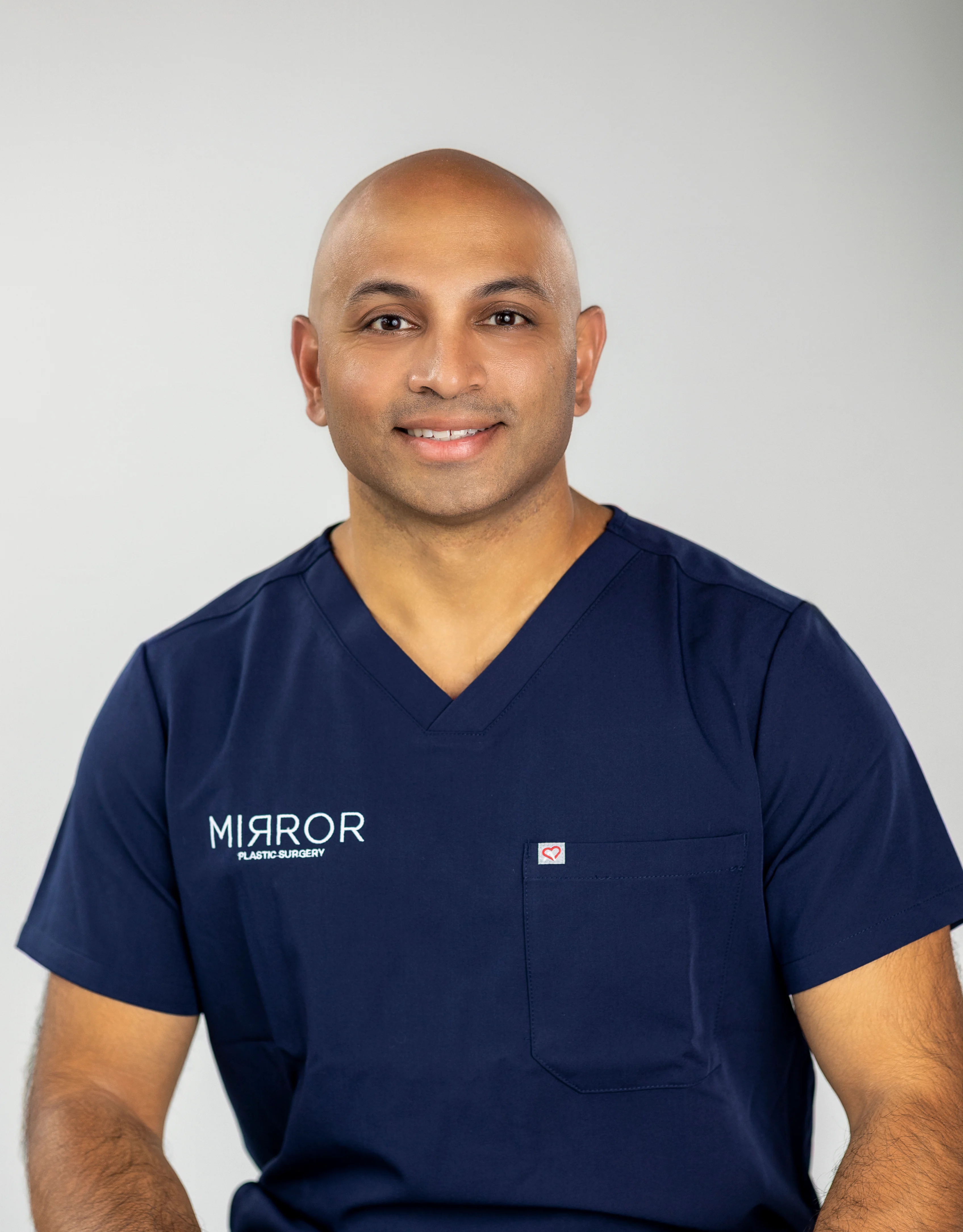
“My approach to every injectable treatment follows the same hierarchy I apply to surgery: safety first, function second, and aesthetics third. I want every patient to understand not just what I am doing, but why, and to leave with results that look like them, only more rested and balanced. Sometimes that means telling someone they do not need a particular treatment yet. That honesty is the foundation of everything we do at Mirror.” — Dr. Akash Chandawarkar, MD, Founder, Mirror Plastic Surgery
The injector premium is often worth paying for complex areas such as under-eyes, tear troughs, and jawline, because experience and anatomy assessment matter enormously. A surgeon’s holistic, full-face perspective also helps prevent the “overdone” appearance that results from isolated, single-area injections performed without regard for overall facial harmony.
Schedule a consultation with Ellie to see how a board-certified plastic surgeon’s expertise can shape your experience from the very first appointment.
Are Dermal Fillers Worth The Cost?
Dermal fillers can significantly improve confidence and quality of life, and patients should plan for ongoing investment because results are temporary.1 Most hyaluronic acid fillers last 6–18 months depending on the product and treatment area, while Sculptra results can persist up to 25 months.1
Choosing a skilled injector also protects your budget. Dissolving misplaced HA filler with hyaluronidase costs $100–$400 per session, and corrective treatments can exceed the original cost. Sculptra cannot be dissolved at all if a patient is unsatisfied, which makes provider selection especially consequential for biostimulatory treatments.
On a cost-per-month basis, longer-lasting products often compare favorably to cheaper, shorter-lasting alternatives. For example, Sculptra costs about $40 per month, the lowest of any filler category, and Radiesse at about $57 per month also competes well with standard HA options.
How To Save Money Safely
Patients can use several legitimate strategies to reduce the total cost of filler treatments while still protecting safety and outcomes.
- Multi-syringe discounts: Many providers offer 10–15% discounts when purchasing multiple syringes in one session.
- Loyalty programs: Allergan’s Allē (for Juvéderm) and Galderma’s Aspire (for Restylane) earn points on each syringe, which translate to $20–$100 off future treatments.
- Medical financing: CareCredit, Alphaeon Credit, and Cherry are commonly accepted at aesthetic practices, with 0% promotional periods typically available for 6–24 months.
- Avoid bargain shopping: Pricing under $400 per syringe is a recognized red flag for inexperience or non-genuine product. The under-$400 red flag mentioned earlier usually signals poor value once safety and revision costs are considered.
How To Choose A Provider: Red Flags And Green Flags
Careful vetting of a provider before any injection protects both your safety and your investment. Marketing language like “certified injector” or “advanced aesthetic specialist” carries no uniform legal meaning in most states, so verify credentials independently through state licensing boards.
Green flags to look for:
- Board certification by the American Board of Plastic Surgery or an equivalent specialty board
- A thorough consultation lasting at least 30 minutes, with time dedicated to understanding your anatomy and goals
- Transparent pricing with no high-pressure sales tactics
- Willingness to discuss complication protocols and confirmation that hyaluronidase is stocked on-site
- Access to verified before-and-after photos of real patients
Red flags to avoid:
- Prices significantly below market averages, which often indicate diluted products, inexperienced injectors, or hidden fees
- Rushed consultations that do not address your specific anatomy
- Inability to clearly explain what happens if a complication occurs
- Lack of verifiable, independently confirmable credentials
- No clear answer to the question, “What is your complication protocol, and who bears the cost of corrective treatment?”
Insurance And Financing For Dermal Fillers
Dermal fillers are elective cosmetic procedures not covered by health insurance. Mirror Plastic Surgery provides personalized quotes after a comprehensive consultation so patients understand all costs upfront with no hidden fees. Financing options through third-party providers are available to help spread costs over time, and the team can review current options during your consultation.
Frequently Asked Questions
How Much Do Lip Fillers Cost?
Lip augmentation with dermal fillers averages around $743 per syringe nationally, with most patients using one syringe per session. Total costs typically range from $500 to $1,200 depending on the product, provider credentials, and geographic market. Lip filler generally lasts 6 to 12 months, which makes lips one of the more frequent maintenance areas for patients who treat them regularly.
How Much Does A Syringe Of Juvéderm Cost?
Juvéderm products range from approximately $600 to $1,200 per syringe depending on the specific formulation (Volbella, Vollure, Voluma), geographic location, and provider credentials. The ASPS national average for hyaluronic acid fillers is approximately $715 per syringe. Premium structural products like Voluma sit at the higher end of that range because of their greater lifting capacity and longer duration.
How Long Do Dermal Fillers Last?
Duration varies by product and treatment area. Most standard hyaluronic acid fillers last 6 to 12 months, while premium structural HA fillers like Juvéderm Voluma can last 18 to 24 months. Biostimulatory fillers offer longer timelines: Radiesse typically lasts 12 to 18 months, and Sculptra results can persist up to 25 months. Individual metabolism, lifestyle, and the volume of product used all influence how long results remain visible.1
Are Dermal Fillers Safe?
When qualified, board-certified providers with documented emergency protocols perform injections, dermal fillers have a well-established safety profile.1 Complications can still occur.1 Vascular occlusion, the most serious acute risk, occurs at approximately one event per 6,410 syringe injections with needles, based on a JAMA Dermatology study of approximately 1.7 million syringes. The under-eye, glabellar, nasal, and nasolabial fold regions carry the highest risk for serious vascular events. Choosing an experienced injector who stocks hyaluronidase on-site and has a written, rehearsed complication protocol significantly reduces risk. The FDA has also noted that the long-term safety of repeatedly using fillers over many years has not been established in controlled clinical studies.
What Is The Difference Between Botox And Dermal Fillers?
Botox and other neuromodulators temporarily relax specific facial muscles to smooth dynamic wrinkles caused by repeated expression, such as forehead lines, crow’s feet, and frown lines. Dermal fillers restore lost volume, define contours, and stimulate collagen production. They address different concerns and are frequently used together as part of a comprehensive facial rejuvenation plan. A board-certified plastic surgeon can assess which modality, or combination, is appropriate for each patient’s specific anatomy and goals.
Invest In Expertise For Long-Term Value
Dermal filler costs in 2026 range widely, and earlier sections outlined national averages for HA and biostimulatory fillers. While price matters, expertise and safety determine whether a treatment delivers lasting value or requires costly correction.
Mirror Plastic Surgery offers a high standard of injectable care in the St. Petersburg and Tampa Bay area. Dr. Akash Chandawarkar’s surgical training, anatomical precision, and commitment to honest, unbiased communication help ensure that every treatment is safe, purposeful, and tailored to each patient’s unique facial harmony.
Request a personalized filler consultation to discuss your goals with Dr. Akash and receive a clear, customized treatment plan.
Ready To Learn What Your Personalized Treatment Plan Would Cost?
Mirror Plastic Surgery welcomes new patients seeking full-face restorative treatments, lip augmentation, cheek and jawline contouring, non-surgical BBL, and more. Contact the practice directly to schedule your comprehensive consultation with Dr. Akash Chandawarkar.
- Address: 780 4th Ave S, St. Petersburg, FL 33701
- Phone: 727-361-6515
- Email: hello@mirrorplasticsurgery.com
Request your personalized treatment plan consultation
Disclaimer
Disclaimer: Results may vary from person to person. Editorial content, before and after images, and patient testimonials do not constitute a guarantee of specific results.
1 Results may vary from person to person. Editorial content, before and after images, and patient testimonials do not constitute a guarantee of specific results.