
Written by: Dr. Akash Chandawarkar, Board Certified Plastic Surgeon, Mirror Plastic Surgery | Last updated: September 9, 2026
Key Takeaways
- BBL has the highest mortality rate of any elective cosmetic procedure, so choosing a Florida surgeon is a life-or-death decision.
- Florida enforces strict BBL safety laws, including the Juliet law, 33-day rule, 85% rule, and real-time ultrasound guidance, and these protections only work when your surgeon follows them.
- Verify American Board Of Plastic Surgery (ABPS) certification specifically, confirm hospital privileges, and review disciplinary history through official databases before you schedule surgery.
- Red flags include high-volume scheduling, vague credential claims, pressure tactics, and an inability to explain Florida’s safety protocols in clear, simple language.
Step 1: Verify ABPS Board Certification
What “Certified BBL Surgeon” Actually Means
“Board certified” only matters when you know which board granted the certification. The American Board Of Plastic Surgery (ABPS) is the only plastic surgery board recognized by the American Board Of Medical Specialties (ABMS), the umbrella group that oversees legitimate medical specialty boards in the United States.
ABPS certification requires medical school, years of accredited surgical training including a plastic surgery residency, and passing both written and oral exams. Certified surgeons must also keep up with continuing education and periodic reassessment through the ABPS Continuous Certification Program.
The key distinction is simple. A doctor can legally call themselves a “board-certified cosmetic surgeon” after training in a different field such as family medicine, because the “American Board Of Cosmetic Surgery” is not an ABMS member board. The title sounds similar, but the training does not match a true plastic surgery residency.
How To Verify ABPS Certification In Three Quick Checks
- Use the ABMS website at certificationmatters.org. Search the surgeon’s full legal name and state. Confirm that certification is active and specifically in plastic surgery.
- Check the Florida Board Of Medicine through the Florida Department Of Health MQA License Verification portal. Select “Health Care Practitioner,” choose the Board Of Medicine for MDs, and search by license number. Open the full license record and review the “Disciplinary/Administrative Actions” tab.
- Confirm hospital privileges at an accredited local hospital. Hospitals perform detailed peer review of a surgeon’s training, credentials, and safety record before granting privileges. Call the hospital’s medical staff office to verify that your surgeon is on staff.
Key Takeaway: “Board certified” is not enough. Verify ABPS plastic surgery certification specifically, which Florida’s Juliet law now requires for BBL surgeons.
Speak With Ellie About Your BBL Safety Questions and review her credentials while you talk.
Step 2: Understand Florida’s BBL Safety Laws
Once you confirm credentials, learn the laws that govern BBL safety in Florida. These rules spell out what your surgeon must do to protect you.
The Juliet Law (HB 1471, Effective July 1, 2023)
Florida’s HB 1471 requires the surgeon to personally perform both the liposuction and the fat transfer, with no delegation to a nurse or assistant. It also mandates an in-person examination within 24 hours before surgery and limits the operating room to one patient at a time until the prior patient is extubated.
The Juliet law also requires BBL surgeons to hold ABPS board certification in plastic surgery. This ties legal permission to operate directly to rigorous training and testing.
The 33-Day Rule
Florida law sets a mandatory waiting period between the liposuction and fat transfer stages. This 33-day rule exists to lower the risk of fat embolism. Fat embolism is the leading cause of BBL deaths and occurs when fat injected too deeply enters large gluteal veins and travels to the lungs, where it can be fatal within minutes.
The 85% Rule
Florida caps the amount of fat that can be injected compared with the amount removed. This 85% rule prevents over-injection, which raises pressure in the tissues and increases complication risk.
Other Florida Safety Requirements
- Ultrasound mandate: Florida requires real-time ultrasound guidance during gluteal fat injection so the surgeon can see the cannula tip and keep it in the subcutaneous layer above the muscle fascia. The medical record must include a timestamped ultrasound video.
- Daily surgery limit: A 2022 joint Practice Advisory capped BBL procedures at three per surgeon per day to reduce fatigue-related errors, and Florida adopted this limit into regulation.
- Subcutaneous-only injection: The Florida Board Of Medicine’s 2019 rule requires fat placement only above the gluteal muscle fascia. Post-mortem data showed that 100% of fatal pulmonary fat emboli in Florida had fat in the gluteal muscle.
These rules appear in Florida Board Of Medicine Rule 64B8-9.0092 and match the 2022 practice advisory in the Aesthetic Surgery Journal and multi-society task force guidelines.
A safety-focused surgeon explains these laws clearly and confidently. Evasive or vague answers about Florida’s rules signal a serious red flag.
Step 3: Research The Surgeon’s Track Record
Check For Disciplinary Actions
You can search the Florida Department Of Health’s Disciplinary & Administrative Actions page by the surgeon’s name. If a complaint or case number appears, click it to see the full disciplinary record, including details about the provider’s background and treatment history.
Because disciplinary history can span multiple states, use the FSMB DocInfo tool to see license history across all jurisdictions where the doctor has practiced. Red flags include a license on probation, restrictions on practice, actions by multiple state boards, or surrender or revocation of a license.
Verify Hospital Privileges
Ask which local hospitals grant the surgeon privileges, then call the hospital’s medical staff office to confirm. Refusal to share this information or hesitation around it should prompt you to look elsewhere.
Review BBL-Specific Before-And-After Photos
Request before-and-after photos of BBL patients, not just general body contouring cases. Look for consistent results, balanced proportions, and unedited images. Heavy filters or inconsistent angles should make you cautious.
Ask About Complication And Revision Rates
Trustworthy surgeons talk openly about complications and revisions. Claims of zero complications over a career are unrealistic and suggest a lack of honesty. Board certification confirms training and baseline competence, but it does not guarantee outcomes or artistic judgment.
Key Takeaway: Sixty-eight percent of documented South Florida BBL deaths involved ABPS-certified surgeons. Certification is essential, yet you still need to examine track record and safety culture.
Step 4: Ask These Questions In Your Consultation
Ask these eight questions during your consultation to separate safety-first surgeons from high-volume mills.
- “Are you board-certified by the American Board Of Plastic Surgery?” Listen for a direct “yes” with details. Treat vague answers such as “I’m board certified in cosmetic surgery” as a warning sign.
- “Do you personally perform both the liposuction and the fat transfer?” Florida law requires this, and delegation is not allowed.
- “How do you apply the 33-day rule and the 85% rule in your practice?” A safety-first surgeon describes clear, specific protocols.
- “What facility will you use for my procedure, and is it accredited?” Look for accreditation by AAAASF, AAAHC, or The Joint Commission.
- “How many BBL procedures do you perform per day?” Florida caps this at three per surgeon per day. Scheduling more violates state rules.
- “What is your experience with BBLs specifically?” Ask how many BBLs they performed in the past year and what complication rate they track.
- “How do you handle complications?” You should hear about emergency protocols, hospital transfer plans, and aftercare access.
- “How do you balance safety and aesthetics?” Look for an answer that clearly places your safety ahead of cosmetic goals.
Schedule A Consultation To Ask These Questions In Person and see how transparently they are answered.
Step 5: Recognize Red Flags And Avoid High-Volume Mills
Certain patterns show up again and again in the deadliest BBL practices.
- High-volume scheduling: A 2022 South Florida report found that high-volume budget clinics accounted for over 90% of BBL-related fat embolism deaths. Florida now caps BBLs at three per surgeon per day, and safety-focused practices often stay below that limit.
- Prices that seem unrealistically low: Fees far below the going rate for an accredited facility with ultrasound guidance usually reflect a high-volume budget model linked to many South Florida deaths.
- Pressure tactics and upselling: Consultations should center on education, safety, and candidacy, with no pressure to sign contracts or pay deposits on the spot. Hard selling suggests the practice values volume over your safety.
- Vague credential claims: “Board-certified cosmetic surgeon” does not equal ABPS certification. Always ask which board and verify it yourself.
- Weak explanations of safety protocols: A surgeon who cannot clearly explain the 33-day rule, ultrasound guidance, or subcutaneous-only injection likely does not follow these standards closely.
- Requests for payment via digital apps: Requests for payment through apps such as Zelle or Venmo can signal inadequate insurance coverage or informal business practices.
Step 6: Verify Facility Accreditation
Your surgery should take place in a properly accredited facility. AAAASF, AAAHC, and The Joint Commission are the main organizations that inspect ambulatory surgical centers. Equivalent state licensure or Medicare certification can also show appropriate oversight.
Independent inspectors review details that patients cannot easily judge. These include anesthesia equipment and monitoring, emergency medications, sterile processing, staff training for airway or cardiac emergencies, and hospital transfer agreements.
The American Society Of Plastic Surgeons offers a searchable directory of accredited facilities so you can confirm a center’s status before you commit.
Key Takeaway: Do not let a stylish lobby or coffee bar sway you. Accreditation brings outside review of equipment, medication handling, infection control, charting, staffing, and emergency preparedness. It sets a minimum safety standard that every BBL facility should meet.
Step 7: Work With A Surgeon Who Can Say No Safely
A safety-first surgeon sometimes declines to operate when a patient is not a good candidate. This can include patients with limited donor fat or expectations that push toward unsafe volumes or shapes. Thoughtful patient selection forms a core part of BBL safety.
A responsible surgeon evaluates donor fat, reviews the normal 30–50% fat reabsorption rate in the first months, and sets realistic expectations.1 They recommend against surgery when risks outweigh benefits and suggest alternatives, including non-surgical options, when those better match your goals.
Why Mirror Plastic Surgery Follows Every Safety Principle In This Guide
Mirror Plastic Surgery was built around the safety steps you have just read. Dr. Akash Chandawarkar is board-certified by the American Board Of Plastic Surgery, as described in Step 1. He trained at Harvard and Johns Hopkins and completed fellowship training in aesthetic surgery at Manhattan Eye Ear & Throat Hospital (MEETH)/Lenox Hill Hospital.
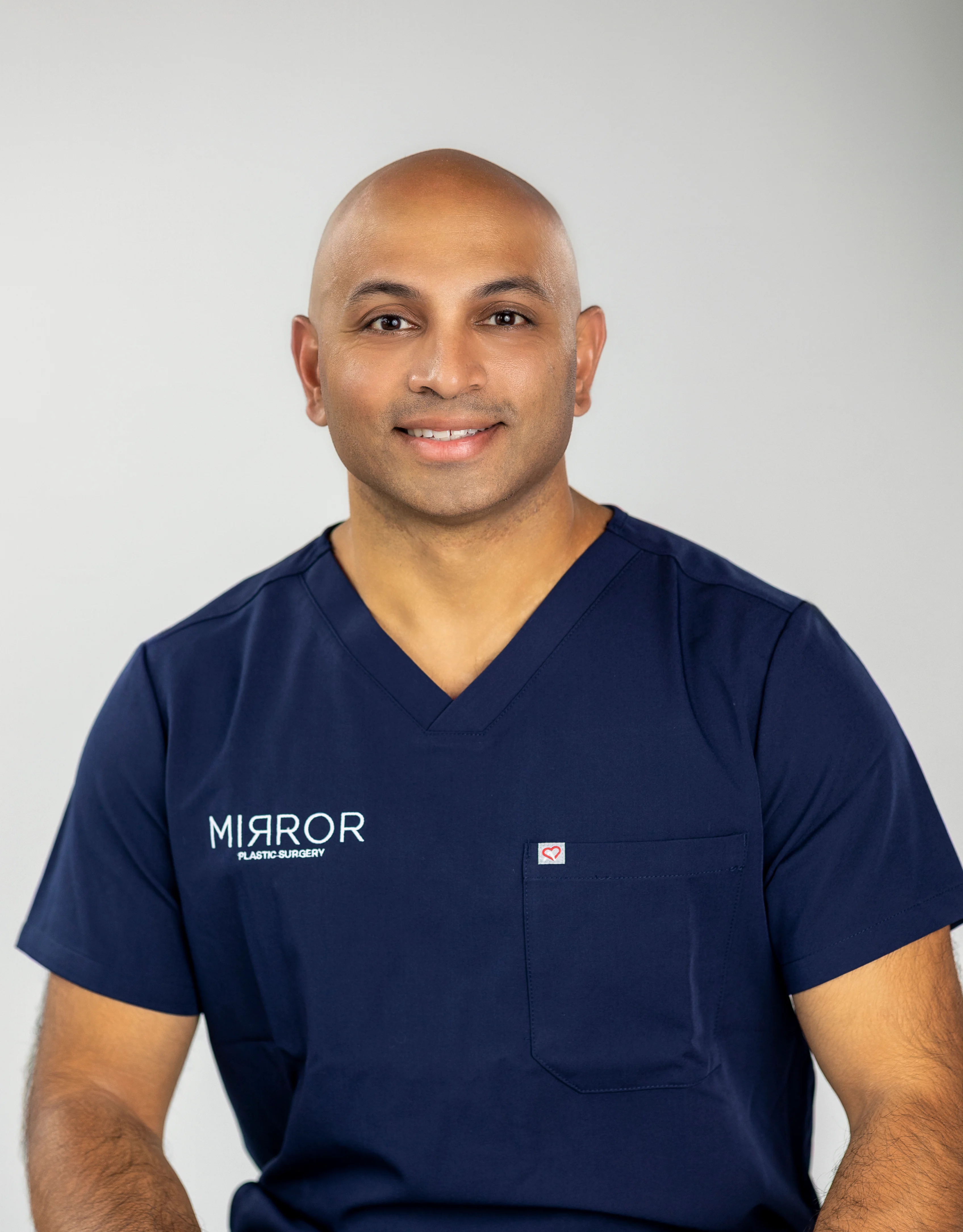
The practice limits itself to one to two surgeries per day so the team can focus fully on each patient before, during, and after surgery. This approach contrasts sharply with high-volume clinics that may schedule five to ten cases a day. Dr. Akash is known for candid guidance and sometimes advises patients to delay or skip expensive procedures when they are not needed yet.
For patients who prefer to avoid liposuction and fat transfer, Dr. Akash offers non-surgical BBL options using biostimulatory fillers such as Radiesse and AlloClae. These treatments provide meaningful gluteal enhancement while sidestepping the specific risks of fat grafting.1
Mirror Plastic Surgery is located at 780 4th Ave S, St. Petersburg, FL 33701, and serves patients across the Tampa Bay area.
Schedule Your Safety-Focused Consultation With Ellie and experience a concierge practice that treats your health as the top priority.
Your Safety Checklist
Choosing a BBL surgeon in Florida is a safety decision first and an aesthetic decision second. Before you move forward, confirm the following points.
- ABPS board certification through the ABMS website at certificationmatters.org
- Florida medical license and disciplinary history through the MQA portal
- Hospital privileges at an accredited local facility, verified with the hospital’s medical staff office
- Clear understanding of Florida’s BBL laws, including the Juliet law, 33-day rule, 85% rule, and ultrasound mandate
- Facility accreditation by AAAASF, AAAHC, or The Joint Commission
- Transparent answers to the consultation questions in Step 4
- Absence of red flags such as high-volume scheduling, bargain pricing, vague credentials, or pressure tactics
The right surgeon welcomes these questions, explains Florida’s safety rules without hesitation, and encourages you to verify everything independently. They value your long-term health more than short-term volume.
Mirror Plastic Surgery follows this approach. Dr. Akash Chandawarkar is ABPS board-certified, the practice uses a concierge model with limited daily surgeries and one-on-one attention, and safety guides every decision.
Take The First Step Toward A Safer BBL Journey by booking your consultation with Ellie.
Disclaimer: Results may vary from person to person. Editorial content, before and after images, and patient testimonials do not constitute a guarantee of specific results.
Frequently Asked Questions
Is BBL Illegal In Florida?
BBL is legal in Florida, but it is the most heavily regulated cosmetic procedure in the state. Florida’s HB 1471, the Juliet law, requires ABPS board certification for BBL surgeons, mandates real-time ultrasound guidance, restricts fat placement to the subcutaneous layer only, requires the surgeon to perform both liposuction and fat transfer personally, and limits surgeons to three BBLs per day. Florida’s 2024 Senate Bill 1188 also expanded surgery center registration rules for cases involving significant liposuction or any gluteal fat grafting.
What Is The 33-Day Rule In Florida?
The 33-day rule is Florida’s required waiting period between the liposuction and fat transfer stages of a BBL. As explained in Step 2, this pause helps reduce the risk of pulmonary fat embolism, the leading cause of BBL-related deaths, by supporting safer technique and planning.
What Is The Juliet Law In Florida?
The Juliet law, or HB 1471, is a Florida statute that took effect on July 1, 2023. It requires ABPS board certification for BBL surgeons, mandates that the surgeon personally perform both liposuction and fat transfer, requires an in-person exam within 24 hours of surgery, limits the operating room to one patient at a time until the prior patient is extubated, and mandates real-time ultrasound guidance with a timestamped video saved in the medical record.
How Do I Verify A Surgeon’s ABPS Certification?
Use the ABMS website at certificationmatters.org and select “Verify A Physician.” Search the surgeon’s full legal name and state and confirm active certification in plastic surgery. Then check the Florida MQA License Verification portal for license status and disciplinary history, and use the FSMB DocInfo tool for a cross-state view of past licenses.
What Is The 85% Rule In Florida?
The 85% rule limits the amount of fat that can be injected during a BBL to no more than 85% of the volume removed during liposuction. As noted in Step 2, this rule is part of Florida Board Of Medicine Rule 64B8-9.0092 and reflects expert consensus that conservative fat volumes are safer.
1 Results may vary from person to person. Editorial content, before and after images, and patient testimonials do not constitute a guarantee of specific results.