
Written by: Ellie Pranckevicius, FNP-BC, Aesthetic Nurse Practitioner & Aesthetic Injector | Facial Restoration & Regenerative Injectable Specialist, Mirror Plastic Surgery | Last updated: August 19, 2026
Key Takeaways on Avéli Cellulite Treatment
- FDA-cleared Avéli subcision is the only treatment that physically severs the fibrous septae responsible for cellulite dimples on the thighs and buttocks, with measurable improvement in up to 81.8% of treated thighs at 180 days.1
- Topical creams, massage, radiofrequency, and acoustic wave devices cannot reach or release the structural bands that cause dimpling, so their results remain temporary and require ongoing maintenance.
- A single Avéli session produces durable improvement lasting one year or more, with results supported by the CONFFIRM pivotal trial and the 2026 DiBernardo study showing progressive collagen remodeling.1
- Ideal candidates are healthy adults at or near ideal body weight with discrete, identifiable dimples and good skin elasticity, and candidacy is determined through an in-person anatomical assessment rather than photos or questionnaires.
- At Mirror Plastic Surgery, every patient receives a concierge-level evaluation to determine whether Avéli subcision is the right structural solution for their anatomy. Schedule a one-on-one consultation with Ellie to learn if this treatment matches your goals.
Cellulite on Thighs and Bum: What Actually Causes It
Cellulite on the thighs and buttocks is a structural condition, not a surface skin problem. Tight fibrous connective tissue bands (septae) pull the dermis downward while surrounding fat pushes upward, creating the characteristic dimpled appearance that affects 80–90% of post-pubescent women, though Caucasian women are more prone than African and Asian American women.
Meaningful, durable improvement is achievable, but complete elimination is not a realistic expectation with any current treatment.1 The distinction matters. Subcision-based procedures reduce rather than erase dimpling, and fibrous bands can re-form or new bands can become apparent over time. Subcision is the only modality that physically severs the tethering bands. Clinical studies of the Avéli device have shown a reduction in the Cellulite Severity Scale in subjects with moderate-to-severe cellulite of the buttocks and thighs.1
Given the structural nature of effective cellulite treatment, determining candidacy requires more than a questionnaire. At Mirror Plastic Surgery, every candidacy assessment begins with a top-to-bottom anatomical evaluation, not a rushed five-minute consult, to determine whether discrete dimple-type cellulite is present and whether subcision is the appropriate structural intervention for your specific anatomy.
Arrange a cellulite evaluation with Ellie to find out whether Avéli subcision is appropriate for your thighs and buttocks.
Stage 4 Cellulite and When a Combined Approach Helps
Cellulite is commonly graded on a severity scale. At its most advanced stage, the skin surface shows deeper dimpling visible at rest, becomes harder, painful, and cold to the touch, and loses elasticity due to fixed fibrous septae. This degree of fibrosis involves structural changes that go beyond what surface-level treatments can address.
For patients with stage 4 cellulite, treatment selection depends on whether the presentation involves discrete dimples or diffuse fibrosis. Subcision targets discrete, identifiable dimples caused by specific fibrous bands. Patients with diffuse wave-type or mattress cellulite respond less predictably because there are no targeted bands to release. For advanced fibrotic presentations, a combined approach, such as the protocol evaluated in the 2026 DiBernardo study pairing Avéli subcision with helium plasma radiofrequency, may address both the structural tethering and overlying skin laxity simultaneously.
For stage 4 cellulite, 100% elimination is not realistic; the practical goal is visible improvement in uniformity, reduced nodule palpability and discomfort, and better skin quality through a combined approach.1 Because advanced presentations require managing expectations as carefully as selecting the right modality, Mirror Plastic Surgery’s philosophy of safety first, function second, and aesthetics third means that treatment planning for advanced cellulite begins with an honest conversation about what is achievable for your specific anatomy, not a promise of perfection.
Massage, Creams, and Home Devices for Thigh Cellulite
Massage, foam rolling, body wraps, and compression garments are among the most commonly attempted home remedies for thigh cellulite. These approaches produce no lasting structural improvement because they do not sever the fibrous septae responsible for dimpling.
Topical products face the same fundamental limitation. No topical treatment can penetrate deeply enough to affect the structural septae responsible for cellulite; caffeine-based products produce only temporary fluid movement, while retinoid creams yield very modest texture improvement. Caffeine in topical cellulite products stimulates temporary lipolysis and blood circulation with effects lasting only a few hours, while no cream can cut fibrous septa or destroy fat cells to address the structural cause of cellulite.
Vacuum massage devices such as LPG Endermologie carry FDA clearance only for temporary reduction of cellulite appearance and necessitate ongoing maintenance treatments indefinitely. For women who have already invested months or years in these approaches without durable results, the frustration is understandable, and the evidence explains why those results were temporary.
Fastest Route to Visible Cellulite Improvement on Thighs
Among currently available options, subcision with Avéli delivers the most meaningful improvement in the fewest sessions. Avéli is an FDA-cleared, minimally invasive, one-time procedure that targets and severs the fibrous septa bands causing cellulite dimples on the thighs and buttocks, performed under local anesthesia. Results develop as swelling resolves over the months following treatment.
By contrast, radiofrequency and laser protocols often require multiple sessions, and acoustic wave therapy typically requires several treatment sessions to achieve visible reduction, with data on durability of results beyond one year lacking in published studies. Single-session subcision is therefore both the fastest and the most structurally durable path to improvement for discrete dimple-type cellulite.
Comparing Evidence-Based Cellulite Treatments
The table below compares the principal FDA-cleared and evidence-supported cellulite treatments on sessions required, durability of results, and key trial outcomes. Every figure is drawn from published clinical data.
| Treatment | Sessions Required | Durability of Results | Key Trial Outcome |
|---|---|---|---|
| Avéli (subcision) | 1 | supported by clinical data demonstrating treatment benefits through one year of observation | Significant reduction in the Cellulite Severity Scale in multicenter open-label study, with up to 81.8% quantitative imaging improvement at 180 days when combined with helium plasma RF (DiBernardo 2026). |
| Cellfina (vacuum-assisted subcision) | 1 | 3+ years (longest FDA-cleared durability) | No loss of benefit at 3 years (Kaminer et al.). |
| Radiofrequency (RF) devices | Clinical studies of radiofrequency devices for cellulite report treatment protocols ranging from 4 to 12 sessions | Temporary | The 2025 Annals of Plastic Surgery paper on combined electromagnetic + RF treatment reported a mean 8.0 mm fat-thickness reduction (not circumference) across treated areas, while fibrous bands remain structurally intact. |
| Acoustic wave therapy | 6 | Temporary | Improvement in cellulite severity scores after 6 sessions of focused ESWT (Knobloch et al., 2013). |
| Topical creams (caffeine/retinol) | Daily, ongoing | No durable structural evidence | Retinol creams may increase dermal thickness over time, while caffeine effects last only hours. |
How Avéli Subcision Works and Result Longevity
Avéli uses an illuminated handheld probe inserted through a small entry point under local anesthesia. The device allows real-time visualization of each fibrous band as it is identified and released, a feature that distinguishes it from earlier subcision methods. Results from subcision for cellulite can last over five years because the released fibrous bands do not reattach in the same configuration1, a finding supported by Cellfina’s 3-year follow-up data demonstrating that once fibrous septa are cut they retract and do not regrow or reconnect in the same configuration.
The DiBernardo study mentioned earlier provided histological confirmation of this remodeling process, with tissue analysis demonstrating progressive increases in collagen and elastin scores through day 180, along with measurable epidermal thickening. True remodeling and stable final results develop over three to six months as collagen production strengthens the treated areas.1
Durability is not unconditional. Subcision does not prevent new cellulite dimples from forming in untreated areas when patients experience significant weight changes or hormonal shifts.
Why Energy Devices and Massage Cannot Match Subcision
Radiofrequency, acoustic wave therapy, and topical treatments share a common limitation, because none of them sever the fibrous septae that cause dimpling. Radiofrequency treatments provide temporary collagen tightening, while the fibrous bands remain untreated so improvement is not structural.
Emtone, which combines radiofrequency heating with acoustic pressure waves, requires a series of 4 sessions spaced 1 week apart and produces modest improvements in cellulite texture and skin quality rather than elimination of discrete dimples. Acoustic wave therapy alone shows moderate evidence from multiple small studies for cellulite improvement but requires multiple sessions with unclear long-term durability.
These modalities still have a role. RF and acoustic wave approaches may serve a useful role in combination protocols or for patients with diffuse textural cellulite rather than discrete dimples. However, for women seeking durable structural correction of identifiable dimples on the thighs and buttocks, energy devices and massage do not provide an equivalent alternative to subcision.
Recovery Time, Ideal Candidates, and Age Factors
Patients undergoing subcision for cellulite on the thighs and buttocks can typically return to daily activities after a few days and resume exercise after about one to two weeks. Avéli treatment adverse events include mild-to-moderate bruising, temporary soreness, and mild edema in many patients; all resolve spontaneously. Most patients should plan for 1–2 weeks of recovery with milder bruising compared to vacuum-assisted methods.
The ideal Avéli candidate is a healthy, non-smoking adult at or near ideal body weight with moderate to severe distinct cellulite dimples on the buttocks and thighs, good skin elasticity, and minimal skin laxity. Among these criteria, skin elasticity becomes particularly critical for patients over 60, as the skin must rebound after the fibrous septa are released, a quality that diminishes with age. Because elasticity cannot be accurately assessed through photographs or questionnaires, this evaluation requires direct anatomical examination rather than a checklist.
Mirror Plastic Surgery performs only one to two procedures per day, ensuring that every Avéli patient receives the full attention of the clinical team before, during, and after treatment. This schedule reflects a deliberate departure from high-volume practices where procedural throughput can compromise the individualized care that safe outcomes require.
Request a personalized Avéli candidacy assessment with Ellie at Mirror Plastic Surgery in St. Petersburg.
What Happens During a Concierge Consultation
A consultation at Mirror Plastic Surgery centers on a top-to-bottom anatomical assessment that can extend up to an hour. The goal is to understand the structural nature of your cellulite, your skin elasticity, and your long-term goals, then determine whether Avéli subcision, a combination approach, or a different modality offers the most appropriate path for your anatomy.
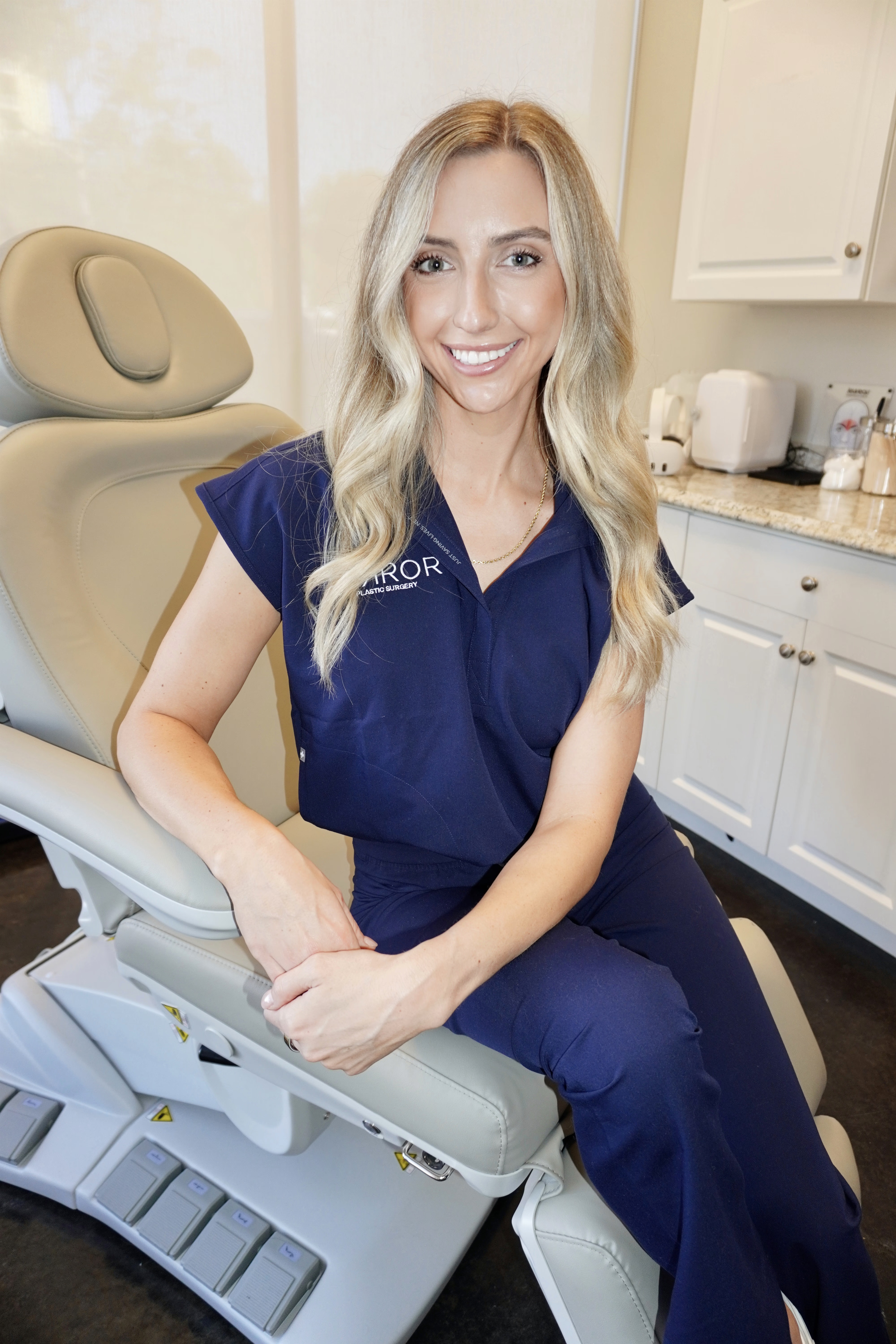
Ellie Pranckevicius, FNP-BC, leads non-surgical and minimally invasive treatments at Mirror. Her background combines esthetics licensure with advanced nursing training and four years in the Neuroscience ICU at Tampa General Hospital, a foundation that informs both her clinical precision and her understanding of how the body responds to procedural interventions. Her approach to aesthetics mirrors the practice’s core philosophy: safety first, function second, aesthetics third.
Mirror operates as a supplier-neutral practice. Treatment recommendations are driven by evidence and your anatomy, not by product quotas or commission structures. If a less expensive or less invasive option is appropriate for your presentation, that is what will be recommended, even if it means advising against a procedure you expected to book.
For patients who have spent years frustrated by temporary results from creams, massage, or energy devices, this kind of direct, unbiased communication often becomes the most valuable part of the consultation itself.
Frequently Asked Questions
Who is a good candidate for Avéli subcision?
The best candidates are adults at or near a stable weight who have discrete, identifiable dimple-type cellulite on the thighs or buttocks, meaning specific visible depressions caused by individual fibrous bands rather than a generalized wave or mattress texture across the skin. Good skin elasticity is important because the skin needs to rebound after the bands are released. Avéli is not indicated for generalized skin laxity, fat reduction, or cellulite-like changes in areas other than the thighs and buttocks. Candidacy is determined through an in-person anatomical assessment, not a photograph or online questionnaire.
How long do Avéli results last?
The CONFFIRM multicenter pivotal study demonstrated sustained improvement at 12 months after a single session. Because the structural mechanism described earlier prevents bands from reforming in the same pattern, results are considered durable, with some subcision data suggesting improvement lasting beyond five years. New dimples can develop over time in untreated areas due to aging, hormonal changes, or significant weight fluctuation, but the treated dimples themselves do not reform in the same way. Most patients require only one session, though those with more extensive dimpling may benefit from a follow-up assessment.
What is the recovery like after Avéli?
Most patients return to light daily activities within a few days. Mild-to-moderate bruising is expected and typically resolves within one to two weeks. Soreness and mild swelling affect some patients and also resolve spontaneously. Strenuous exercise is generally avoided for one to two weeks. Initial smoothing may be visible shortly after treatment, partly due to swelling, with true remodeling and stable final results developing over several months as collagen production strengthens the treated areas.
Can Avéli be combined with other treatments?
Combination treatment can benefit patients with both dimpling and skin laxity. The 2026 DiBernardo study evaluated a single-session combination of Avéli targeted subcision followed by helium plasma radiofrequency (Renuvion) and reported up to 81.8% quantitative imaging improvement at 180 days, along with histological evidence of increased collagen, elastin, and epidermal thickening. Combining structural band release with a skin-tightening modality addresses both the dimpling and any overlying skin laxity, a consideration particularly relevant for patients with more advanced cellulite presentations. Whether a combination approach is appropriate for your anatomy is determined during consultation.
Why do creams, massage, or radiofrequency devices fail to produce lasting results?
Cellulite dimples are caused by fibrous bands beneath the skin that physically tether the dermis downward. No topical product penetrates deeply enough to reach or release these bands. Massage and mechanical devices like foam rollers temporarily alter fluid distribution but leave the structural tethers intact. Radiofrequency devices heat the dermis to stimulate collagen and can improve skin texture, but the fibrous bands remain in place, which is why results from energy-based treatments are temporary and require ongoing maintenance sessions. Only subcision physically severs the bands, which is why its results are structurally durable in a way that surface-level treatments are not.
Conclusion: Choosing a Structural Solution for Cellulite
The evidence consistently positions FDA-cleared subcision, and Avéli specifically, as the most structurally sound and durable treatment for discrete dimple-type cellulite on the thighs and buttocks. A single session addresses the root cause that creams, massage, radiofrequency, and acoustic wave devices cannot reach. The 2026 DiBernardo study, the CONFFIRM pivotal trial, and the Cellfina long-term data collectively demonstrate that severing fibrous septae produces improvement that persists in a way no surface-level modality has replicated.
Mirror Plastic Surgery brings this evidence-based approach to the St. Petersburg and Tampa Bay area through a concierge model that prioritizes your anatomy, your safety, and your long-term outcomes over procedural volume. One to two procedures per day, an hour-long assessment, direct, unbiased communication, and a clinical team whose credentials, from Harvard and Johns Hopkins to the Neuroscience ICU, are matched by a genuine commitment to getting the recommendation right before anything else.
If you have been frustrated by temporary results and want a conversation grounded in evidence and anatomy, Mirror Plastic Surgery offers that level of guidance.
Set up an Avéli consultation with Ellie at Mirror Plastic Surgery in St. Petersburg, FL.
Disclaimer: Results may vary from person to person. Editorial content, before and after images, and patient testimonials do not constitute a guarantee of specific results.
1 Results may vary from person to person. Editorial content, before and after images, and patient testimonials do not constitute a guarantee of specific results.