
Written by: Ellie Pranckevicius, FNP-BC, Aesthetic Nurse Practitioner & Aesthetic Injector | Facial Restoration & Regenerative Injectable Specialist, Mirror Plastic Surgery | Last updated: August 18, 2026
Key Takeaways for Cellulite Treatment in 2026
- Cellulite is a structural skin condition caused by fibrous septae tethering the dermis, not a fat-storage issue. This explains why topical creams and general fat-reduction methods rarely create visible change.
- QWO, the only FDA-approved cellulite injectable, was discontinued in 2022–2023 and remains unavailable in 2026. No new injectable has FDA approval for cellulite treatment.
- Unapproved fat-dissolving agents and mesotherapy cocktails carry documented risks of permanent scarring, infection, and necrosis. None hold FDA approval for cellulite.
- Mechanical release with Avéli provides targeted, verifiable subcision of cellulite-causing septae, supported by multicenter evidence and durability up to three years. Biostimulatory fillers like PLLA-SCA can complement this by addressing skin laxity or volume deficit.
- Schedule your personalized consultation at Mirror Plastic Surgery for an anatomy-first assessment and an evidence-based treatment plan tailored to your cellulite pattern.
How This Cellulite Review Was Built
The findings below draw on FDA regulatory documents, the RELEASE-1 and RELEASE-2 phase 3 trials, a 2026 prospective Journal of Drugs in Dermatology study of PLLA-SCA (NCT05064761), a 2026 prospective trial of targeted verifiable subcision combined with helium plasma radiofrequency, a 2026 systematic review of Profhilo and Profhilo Body, a 2026 Frontiers in Medicine review of deoxycholic acid, and a 2026 systematic review of microvibration for cellulite. No source cited below has a financial relationship with Mirror Plastic Surgery.
Finding 1: QWO’s FDA History and Why It Was Discontinued
Collagenase clostridium histolyticum-aaes (QWO) received FDA approval in July 2020 for moderate-to-severe cellulite of the buttocks in adult women. It was the first and, to date, only injectable to reach that milestone. In the RELEASE-1 and RELEASE-2 phase 3 trials (combined N=843), treatment with Qwo was associated with greater reductions in cellulite severity compared with placebo as measured by CR-PCSS at day 71. Bruising at injection sites occurred frequently in QWO-treated patients, and some patients developed nodularity or skin discoloration that lasted several months.
Endo Pharmaceuticals announced on December 6, 2022, that it would cease production and sale of Qwo, with the return goods program ending March 31, 2023. The company cited concerns about the extent and variability of bruising and the potential for prolonged skin discoloration. As of June 2026, QWO is listed as discontinued and unavailable for purchase.
Clinical implication: Any provider still offering QWO in 2026 raises a serious safety and authenticity concern because the product is not on the market. As of May 2026, no replacement injectable has received FDA approval for cellulite treatment.
Finding 2: Dangers of Unapproved Mesotherapy and Fat-Dissolving Injections
The FDA has warned that unapproved fat-dissolving products marketed under names such as Aqualyx, Lipodissolve, Lipo Lab, and Kabelline pose safety risks because their quality, safety, and effectiveness have not been evaluated. The agency has received reports of permanent scarring, serious infections, skin deformities, cysts, and painful nodules from these injectables.
Kybella is the only FDA-approved fat-dissolving injection in the United States, approved in 2015 solely for moderate to severe submental fat. DCA-based products are FDA-approved exclusively for moderate to severe submental fat and are mechanistically distinct from cellulite-targeted septae-release treatments. The 2026 Frontiers in Medicine review further warns that off-label DCA use outside the submental region carries higher risk of skin necrosis, marginal mandibular nerve palsy, and contour irregularities due to complex anatomy and thinner evidence.
Clinical implication: No fat-dissolving injectable holds FDA approval for cellulite reduction. Providers offering unapproved mesotherapy cocktails for cellulite are operating outside the regulatory framework, and patients carry the documented risk of permanent tissue damage.
Finding 3: Why Mechanical Release Now Leads Cellulite Care
Given the discontinuation of QWO and the safety concerns surrounding unapproved injectables, mechanical release currently offers the most evidence-supported way to address cellulite’s structural cause. The Avéli device enables targeted, verifiable manual subcision by allowing immediate confirmation that the specific septa causing dimpling have been released. This feature improves predictability compared with blind subcision techniques. In an open-label multicenter study of Avéli for moderate-to-severe cellulite, subjects achieved improvement on the Cellulite Severity Scale at follow-up, with adverse events limited to mild-to-moderate bruising, soreness, and edema that resolved on their own.1
A 2026 prospective single-center trial found that a single-session combination of targeted verifiable subcision and helium plasma radiofrequency produced progressive improvement in cellulite appearance.1 Histological analysis showed progressive dermal collagen remodeling, elastin regeneration, and improved extracellular matrix integrity that matched the clinical improvement. Only mild, self-resolving adverse events were reported.
Clinical implication: Mechanical release directly addresses the structural cause of cellulite dimpling. Vacuum-assisted precise tissue release such as Avéli can maintain cellulite reduction for up to three years.1 No injectable currently on the U.S. market offers a comparable mechanism or durability profile for cellulite.
Finding 4: Where Biostimulatory Fillers Fit for Surface Smoothing
When volume deficit or skin laxity coexists with structural tethering, biostimulatory fillers offer an evidence-supported adjunct. A 2026 Journal of Drugs in Dermatology prospective study (NCT05064761) evaluated PLLA-SCA (Sculptra) injections for the appearance of cellulite. Subject diary events were mainly tolerable and transient, resolving within one to two weeks.1
PLLA-SCA functions as a regenerative biostimulator that induces collagen and elastin synthesis to increase dermal thickness and reduce skin laxity. This process improves cellulite appearance without cutting septae.1 The mechanism differs from fat dissolution and is not associated with the necrosis or scarring risks documented with unapproved mesotherapy agents.
Clinical implication: Biostimulatory fillers are a rational option when laxity or volume loss contributes to cellulite appearance. They do not replace mechanical release when structural tethering is the primary driver.
Patient Selection Based on Skin Quality and Gluteal Anatomy
Cellulite treatment should be individualized based on the underlying structural alteration of the fibrous septa (short thin vs. long thick) and exacerbating factors such as volume loss, excess fat, and skin laxity, with subcision reserved for depressions present at rest only. Key variables that determine candidacy include:
- Depth and character of dimpling (rest vs. dynamic)
- Fibrous septae orientation and density on standing assessment
- Degree of skin laxity and dermal thickness
- Presence of volume deficit in the gluteal or posterior thigh region
- Overall skin quality and prior treatment history
- Systemic factors including medications, immune status, and healing history
Anatomy-first assessment with the patient standing determines whether mechanical subcision or biostimulatory fillers are indicated. Product selection follows anatomical diagnosis, not the reverse.
Comparing Mechanical Release and Unapproved Injectables
How a One-Hour Anatomical Consultation Lowers Risk
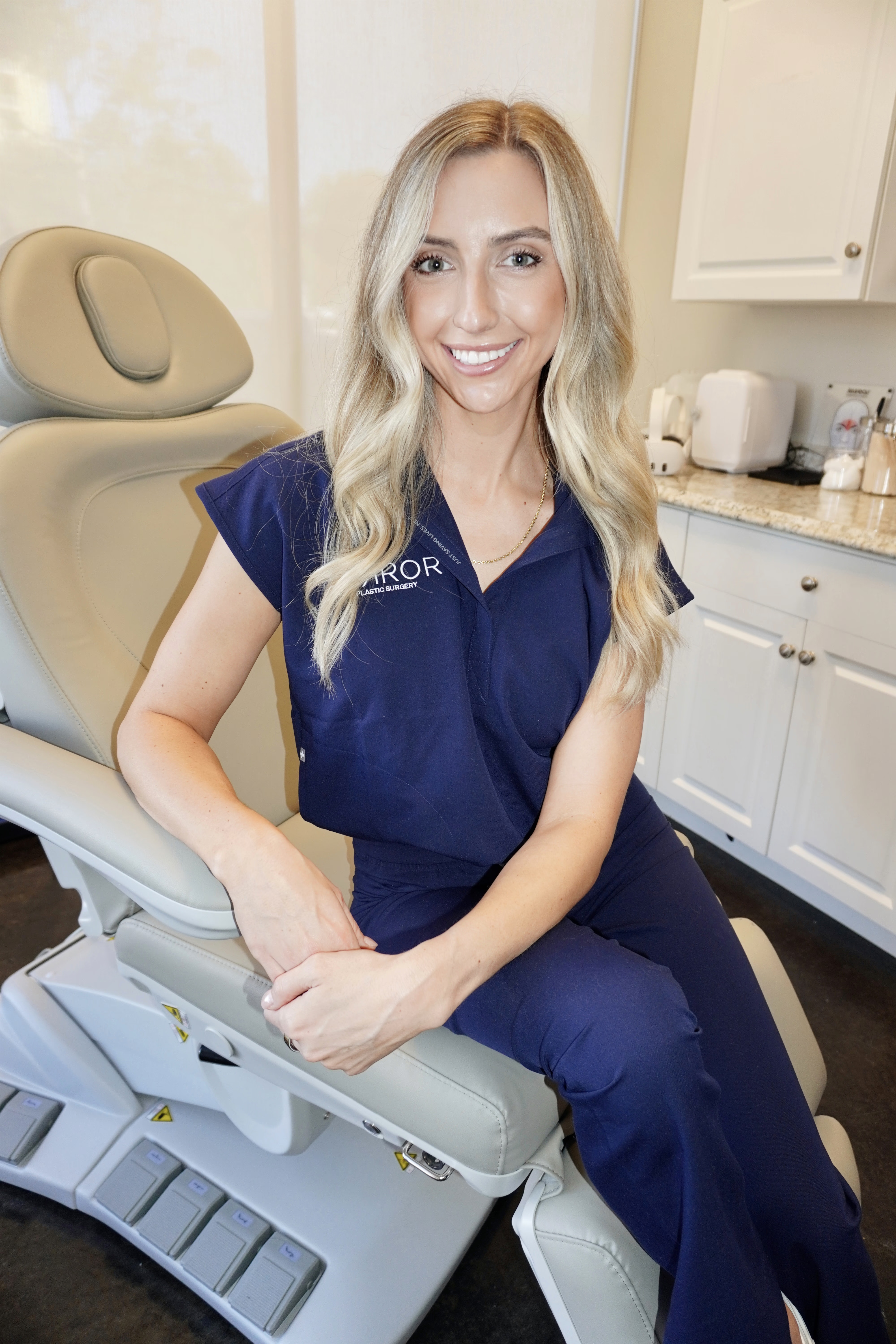
At Mirror Plastic Surgery, every cellulite consultation begins with a standing, top-to-bottom anatomical assessment led by Ellie Pranckevicius, FNP-BC, or Dr. Akash Chandawarkar, MD. Ellie’s dual background in esthetics and advanced nursing, including four years in the Neuroscience ICU at Tampa General Hospital, gives her a precise understanding of both surface and subdermal anatomy. Dr. Akash brings Harvard medical education, Johns Hopkins plastic surgery training, and fellowship-level aesthetic surgery experience from Manhattan Eye Ear & Throat Hospital.
The consultation process includes:
- Open-ended dialogue to understand the patient’s goals and prior treatment history
- Standing physical assessment of septae character, dimple depth, skin laxity, and volume distribution
- Explanation of findings in plain language, including which anatomical factors are driving visible cellulite
- Evidence-based treatment planning that sequences mechanical release and biostimulatory options based on individual anatomy, not a fixed protocol
- Transparent discussion of realistic outcomes, downtime, and maintenance requirements
Mirror Plastic Surgery performs only one to two procedures per day, which allows undivided clinical attention before, during, and after each treatment. This approach contrasts with high-volume practices where rushed assessments increase the likelihood of mismatched treatment selection.
Limits of Today’s Cellulite Evidence
Several limitations apply across the studies cited in this article. The 2026 PLLA-SCA prospective study enrolled 29 participants at a single center, which limits generalizability. The 2026 targeted verifiable subcision plus helium plasma RF trial involved 22 patients and carries a Level of Evidence 4 classification. Most cellulite treatments are not permanent and require ongoing maintenance sessions, so individual adherence to post-care protocols becomes a significant variable.
Individual anatomy, baseline skin quality, BMI trajectory, hormonal status, and lifestyle factors all influence outcomes in ways that no clinical trial fully controls. Results at Mirror Plastic Surgery will vary based on these same individual factors.
Industry Shift Toward Procedure-Based, Transparent Care
RealSelf’s Q1 2026 trend report found that interest in the subcision-based cellulite treatment Cellfina surged 117% quarter-over-quarter, making it one of the fastest-growing noninvasive procedures on the platform. This growth reflects a broader consumer shift away from unproven injectables toward procedures with verifiable mechanisms and documented durability data.
Patients now increasingly request provider transparency about regulatory status, mechanism of action, and realistic outcome timelines before committing to treatment. Mesotherapeutic and other injection-based approaches for cellulite have less convincing standard data and are associated with side effects including swelling, redness, palpable nodules, and skin changes. These drawbacks make them less favored among evidence-oriented practitioners. The market is consolidating around anatomy-first, procedure-based solutions, which is the model Mirror Plastic Surgery follows.
Frequently Asked Questions
What happened to QWO?
QWO (collagenase clostridium histolyticum-aaes) was the first and only FDA-approved injectable for cellulite, cleared in 2020 for moderate-to-severe buttock cellulite in adult women. As detailed earlier in this article, Endo Aesthetics discontinued QWO in late 2022 because of concerns about bruising variability and prolonged skin discoloration. As of 2026, QWO is discontinued and unavailable. Any provider claiming to offer it should be regarded with serious skepticism, as the product is no longer on the market. No replacement injectable has received FDA approval for cellulite treatment as of August 2026.
Are fat-dissolving injections safe for cellulite?
As noted in Finding 2, Kybella (deoxycholic acid) is approved only for submental fat, not for cellulite or any body area beyond the chin. Products such as Aqualyx, Lipodissolve, Lipo Lab, and Kabelline are not FDA-approved, and the FDA has issued active safety warnings about them, documenting reports of permanent scarring, serious infections, skin deformities, cysts, and painful nodules. Off-label use of deoxycholic acid outside the submental region carries additional risks including skin necrosis and nerve injury due to different tissue anatomy. No fat-dissolving injectable has demonstrated efficacy or safety for cellulite reduction in a well-controlled clinical trial, and none holds FDA clearance for that indication.
How does Avéli differ from injections?
Avéli is a minimally invasive, FDA-cleared mechanical device that physically releases the fibrous septae responsible for cellulite dimpling through a process called targeted verifiable subcision. The key distinction is verifiability. The device allows the provider to confirm in real time that the specific band causing a dimple has been released, which is not possible with any injectable approach.
Injectables, whether enzymatic like the discontinued QWO or fat-dissolving, work through chemical mechanisms that cannot be precisely targeted to individual septae and do not provide immediate confirmation of release. Avéli’s multicenter study data show subjects achieving improvement, with the durability profile discussed earlier in this article. No injectable currently available in the U.S. offers a comparable mechanism or evidence base for cellulite.
Can cellulite be fully eliminated?
Cellulite is a structural condition rooted in individual anatomy, including the orientation and density of fibrous septae, skin thickness, volume distribution, and hormonal influences on connective tissue. Current evidence does not support the claim that any treatment fully and permanently eliminates cellulite in all patients. Mechanical release with Avéli produces durable improvement in dimpling for up to three years in appropriate candidates, as described above.1
Biostimulatory fillers such as PLLA-SCA improve skin laxity and surface texture with results sustained through 12 months in clinical studies.1 Most treatments require some degree of maintenance over time, and individual results depend heavily on baseline anatomy, lifestyle, and post-care adherence. An honest anatomical assessment offers the most reliable way to understand what improvement is realistic for a specific patient.
What should I ask during a consultation?
A productive cellulite consultation should cover the following questions:
- What is the primary anatomical driver of my cellulite, such as septae tethering, volume deficit, skin laxity, or a combination?
- Which treatments are FDA-approved or FDA-cleared for cellulite, and which are being used off-label?
- What does the clinical evidence show for the recommended approach in terms of improvement rates and durability?
- What are the realistic risks, downtime, and maintenance requirements for my specific anatomy?
- How will you confirm that the treatment has addressed the structural cause of my dimpling?
- Are there any treatments you would not recommend for my presentation, and why?
At Mirror Plastic Surgery, the consultation is designed to answer all of these questions thoroughly, with no upselling pressure and no commitment required on the day of assessment.
Key Takeaways and Next Steps
- QWO, the only FDA-approved cellulite injectable, was discontinued in 2022–2023 and is unavailable in 2026. No replacement injectable holds FDA approval for cellulite.
- Unapproved fat-dissolving agents and mesotherapy cocktails carry documented risks of permanent scarring, infection, and necrosis, and are not FDA-approved for cellulite.
- Mechanical release with Avéli provides targeted, verifiable subcision of cellulite-causing septae, supported by multicenter evidence and the three-year durability noted above.
- Biostimulatory fillers such as PLLA-SCA are a rational adjunct when skin laxity or volume deficit contributes to cellulite appearance, with 2026 prospective data showing investigator-assessed improvement.
- Patient selection based on standing anatomical assessment, not product availability, determines which approach is appropriate.
- Mirror Plastic Surgery’s concierge model, led by Ellie Pranckevicius and Dr. Akash Chandawarkar, prioritizes safety, function, and anatomical precision over volume-driven treatment protocols.
Disclaimer: Results may vary from person to person. Editorial content, before and after images, and patient testimonials do not constitute a guarantee of specific results.
1 Results may vary from person to person. Editorial content, before and after images, and patient testimonials do not constitute a guarantee of specific results.