
Written by: Ellie Pranckevicius, FNP-BC, Aesthetic Nurse Practitioner & Aesthetic Injector | Facial Restoration & Regenerative Injectable Specialist, Mirror Plastic Surgery | Last updated: July 8, 2026
Key Takeaways for Forehead Botox
- Botox for forehead lines relaxes the frontalis muscle to soften horizontal creases, with results shaped by wrinkle type, skin quality, and injector expertise.1
- The lower forehead is the highest-risk zone, and improper placement or dosing can cause brow heaviness or ptosis that resolves over time.
- Dynamic lines respond well to Botox, while deep static lines often need added treatments such as RF microneedling or laser resurfacing.1
- Standard forehead dosing ranges from 8 to 20 units, and glabella treatment is often added to keep brow position balanced and results natural.
- Schedule your personalized forehead assessment at Mirror Plastic Surgery for anatomy-based dosing and clear, honest guidance from Ellie.
Understanding the 4-Hour Rule for Botox Aftercare
The 4-hour rule describes a standard Botox aftercare guideline. Patients remain upright and avoid lying flat, rubbing the treated area, or doing strenuous activity for at least four hours after injections. This approach helps reduce the chance of the neurotoxin drifting into nearby muscles before it binds where it was placed.
Aftercare instructions for forehead Botox typically include:
- Remain upright for at least four hours after treatment.
- Avoid touching, massaging, or pressing on the injection sites.
- Skip intense exercise, saunas, and hot showers for 24 hours.
- Avoid alcohol for 24 hours to lower bruising risk.
- Delay facials, laser treatments, or microneedling for at least two weeks.
Initial changes usually appear within 3 to 5 days.1 Full results develop around 10 to 14 days.1 Careful aftercare during this window supports even, predictable results.
Why the Lower Forehead Is the Riskiest Place for Botox
The lower forehead is widely considered the highest-risk injection zone for Botox. The frontalis is the only muscle that lifts the brow. When neurotoxin is placed too low on the frontalis, or in excessive units, brow elevation can weaken and create heaviness or true brow ptosis.
Key anatomical considerations include:
- The frontalis starts near the hairline and inserts into the skin and orbicularis oculi close to the brow.
- Injection points within roughly 1 to 2 centimeters of the brow margin carry the greatest risk of affecting brow elevation.
- Patients with a naturally low brow or significant skin laxity face higher risk and need conservative dosing or adjusted placement.
- Brow ptosis and heaviness usually appear within one to two weeks and resolve as the neurotoxin effect fades over the usual timeframe.1
Careful evaluation of brow position before any injection is a required step for safe forehead treatment planning.
Botox in Your 40s: Candidacy and Expectations
Age 40 does not disqualify anyone from forehead Botox. Candidacy depends on wrinkle type, skin quality, brow position, muscle strength, and overall health rather than age alone. Adults in their 40s and 50s commonly receive forehead neuromodulator treatment.
Relevant candidacy considerations across age groups include:
- Younger patients with early dynamic lines may do well with lighter, preventative dosing that slows lines from etching into the skin.
- Patients in their 40s and 50s with moderate dynamic lines often match standard dosing ranges.
- Patients with mostly static lines, which remain visible at rest, may see limited change from Botox alone and often benefit from resurfacing or skin-tightening treatments.
- Good neuromodulator candidates usually have mild to moderate visible aging and understand that results are gradual or limited compared with surgery.
An individualized assessment that considers brow position, skin laxity, and prior treatments remains the most reliable way to confirm candidacy at any age.
How Botox Performs on Deep Forehead Lines
Botox reduces the muscle movement that forms and deepens lines. Dynamic lines, which appear with expression, usually soften well with treatment. Deep static lines that remain visible at rest often show only partial improvement with Botox alone.
This distinction shapes realistic expectations:
- Dynamic lines respond well to neuromodulators because muscle contraction is the main cause.
- Static lines reflect collagen loss, skin thinning, and long-term creasing. Botox can slow further deepening but cannot fully repair existing dermal damage.
- Deep static forehead lines often benefit from added treatments such as radiofrequency microneedling, laser resurfacing, or skin-tightening devices that target texture and collagen.
Non-surgical skin rejuvenation suits patients with mild to moderate concerns who want softer expression lines rather than complete removal of etched folds. Clear counseling before treatment helps align results with goals.
Typical Botox Dosing for Forehead Lines
Forehead Botox dosing varies with anatomy, muscle mass, and goals. Clinical ranges for the frontalis usually fall between 8 and 20 units, although these numbers serve as guides rather than fixed rules. Higher doses do not always create better results, and over-treating the frontalis often causes brow heaviness.
Factors that influence dosing include:
- Frontalis muscle strength and thickness
- Baseline brow position and brow ptosis risk
- Patient age and degree of skin laxity
- Prior treatment history and observed response
- Whether the glabella (11s) is treated at the same time
- Desired outcome, from full relaxation to subtle softening or “baby Botox”
A supplier-neutral practice reviews these variables first, then selects a product and dose tailored to the individual rather than using a single protocol for everyone.
Forehead Botox Before-and-After Results You Can Expect
Realistic forehead Botox results include softer horizontal lines during expression and a smoother look in motion. Patients with mostly dynamic lines may also see improvement at rest. Residual lines at rest remain common, especially in patients with deeper static creases.
Longevity data for forehead Botox include:
- Most patients experience results that last about 3 to 6 months, with maintenance visits often scheduled every 3 to 4 months as movement returns.1
- Consistent treatments over several years can gradually weaken targeted muscles and extend how long results last.1
- High metabolic rate, intense exercise, and strong baseline muscles can shorten duration.
Why Glabella (11s) Treatment Supports Better Forehead Results
The glabella, the area between the brows that forms vertical “11” lines, closely interacts with forehead function. The corrugator supercilii and procerus muscles in this region pull the brow downward and inward. When Botox relaxes the frontalis but leaves these depressor muscles active, patients may notice brow heaviness or asymmetry.
Treating both zones in the same session supports balanced dosing across opposing muscle groups. Glabella treatment with forehead Botox:
- Reduces the downward pull on the brow from depressor muscles
- Allows lower frontalis doses while preserving brow lift
- Lowers the risk of brow heaviness from frontalis over-treatment
- Creates a more natural, harmonious upper-face result
Isolated forehead treatment without glabella assessment often contributes to the brow heaviness patients describe after rushed medspa visits. At Mirror Plastic Surgery, every injection follows a full upper-face evaluation.
How Mirror Plastic Surgery Plans Your Forehead Treatment
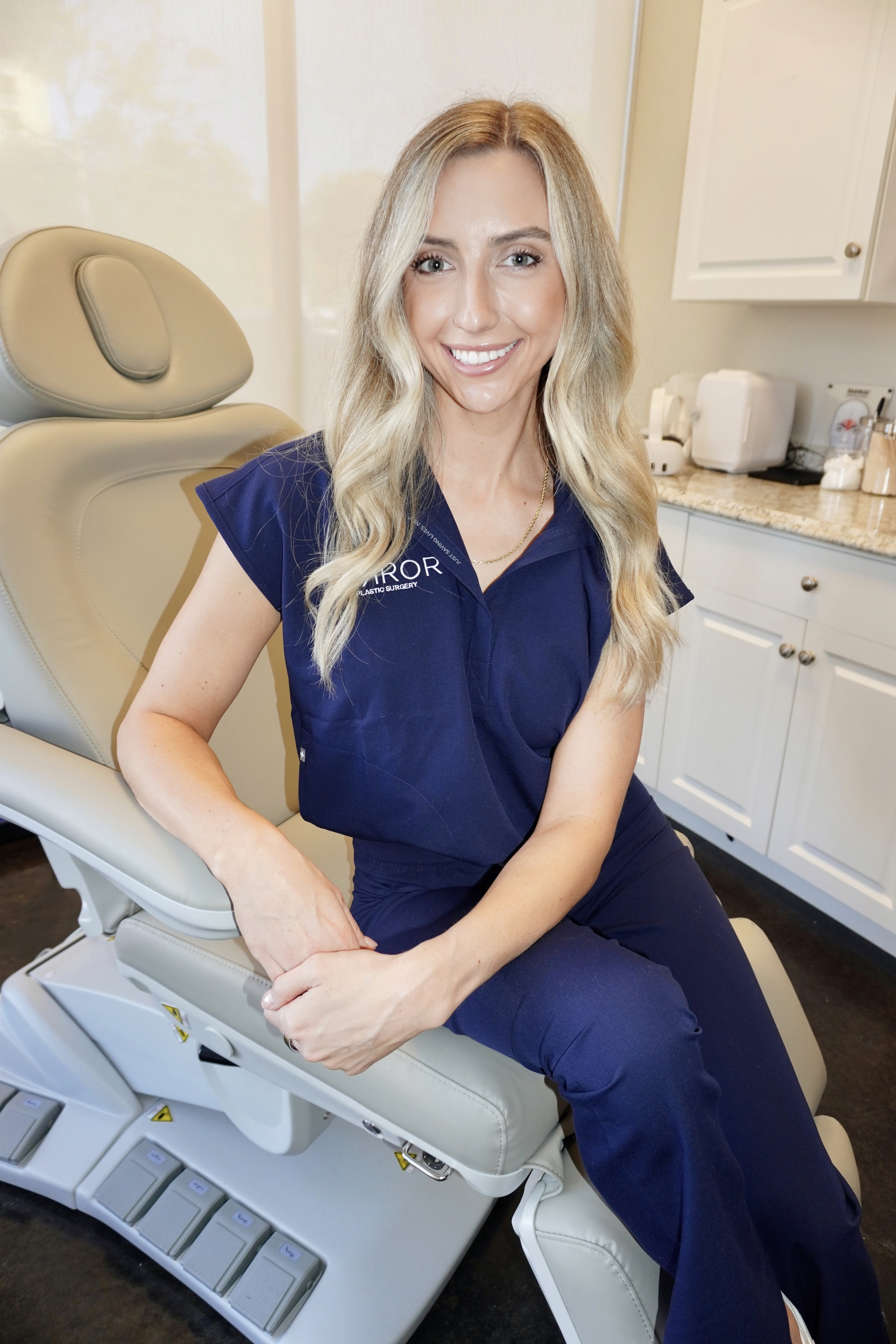
At Mirror Plastic Surgery, forehead Botox planning starts with a comprehensive, up-to-one-hour assessment led by Ellie Pranckevicius, FNP-BC. This visit includes brow position measurement, frontalis strength testing, glabella depressor evaluation, skin laxity grading, and a review of prior treatments and responses.
The assessment framework covers:
- Emotional drivers and long-term aesthetic goals
- Baseline facial symmetry and natural asymmetries
- Continuity across upper, middle, and lower face to avoid imbalance
- Product selection from a supplier-neutral formulary, including Botox, Dysport, Xeomin, Daxxify, or Jeuveau, based on anatomy and goals rather than quotas
Schedule your comprehensive forehead assessment to experience an evaluation that goes beyond a quick glance and a syringe.
Why Injection Technique Strongly Influences Forehead Results
Injection placement within the frontalis varies from patient to patient. The number of injection points, their height relative to the brow, and the unit distribution across each point all shape the outcome. Injections placed too low can cause brow drop, while injections placed too high may leave the lower forehead untreated and waste product.
Technique variables that affect outcomes include:
- Mapping injection points to each person’s frontalis anatomy instead of using a fixed grid
- Adjusting lateral and medial dosing to preserve or enhance the natural brow arch
- Accounting for pre-existing brow asymmetry when choosing placement
- Using conservative initial dosing with a planned follow-up for touch-up instead of heavy dosing at the first visit
Ellie’s neuroscience ICU nursing background and advanced aesthetic training support precise, anatomy-respecting technique that many high-volume medspa settings do not match.
Key Medical and Candidacy Factors for Forehead Botox
Thoughtful patient selection for forehead Botox goes beyond confirming visible wrinkles. A thorough intake process evaluates:
- Current medications, including blood thinners and muscle relaxants
- History of neuromuscular conditions
- Pregnancy or breastfeeding status
- Prior adverse reactions to neuromodulators
- Outcome expectations compared with wrinkle type and depth
This detailed intake supports transparent counseling about what Botox can and cannot achieve. Honest outcome discussions form a core part of every Mirror Plastic Surgery consultation. Ellie often advises patients to delay treatment or choose a different modality when that better serves their long-term goals.
Get an honest assessment of your candidacy to determine whether forehead Botox is the right next step for your skin.
Risks Associated With Forehead Botox
Forehead Botox has a well-described risk profile. Most complications are temporary and resolve within the usual neurotoxin wear-off period.
Documented risks include:
- Brow ptosis or heaviness: Eyebrow ptosis occurs in roughly 1% or less of patients at many practices, yet remains the most discussed forehead complication.
- Eyelid ptosis: True eyelid ptosis involves a drop of the upper lid margin. It usually appears within a few days to two weeks and tends to improve gradually over several weeks. Apraclonidine eye drops can temporarily lift a ptotic lid while the neurotoxin effect fades.
- Asymmetry: Facial asymmetry appears when each side responds differently and often becomes noticeable one to two weeks after treatment. Mild asymmetry is common and often acceptable once patients understand that most faces are naturally asymmetric.
- Variable longevity: Results may wear off faster in patients with high metabolic rates or intense exercise routines.
- Bruising and headache: These effects are usually minor and resolve within a few days.
Aftercare Steps and Long-Term Maintenance
The immediate aftercare steps described earlier form the base of post-treatment care. Beyond the first day, patients usually avoid significant heat exposure and facial manipulation for two weeks while the product fully sets.
Long-term maintenance considerations include:
- Most patients schedule forehead Botox every 3 to 4 months, then adjust based on muscle strength and how quickly movement returns. This standard interval can lengthen over time as repeated treatments gradually weaken the muscle.
- Consistent treatments over several years may extend longevity, allowing some patients to stretch visits to about six months.
- Patients who choose a conservative “baby Botox” style from the start often follow longer intervals because of lighter dosing.
- Two-week follow-up appointments support any schedule by allowing touch-ups and asymmetry correction before the next full cycle.
Comparing Botox With Other Forehead Treatment Options
When static forehead lines remain despite consistent Botox, complementary treatments can address skin changes that neuromodulators cannot reach. Botox and similar products target movement-related lines, while fillers restore volume, Ultherapy supports deeper tightening, and RF microneedling or lasers improve skin quality.
Mirror Plastic Surgery offers several non-surgical options for patients whose forehead concerns extend beyond dynamic lines:
- Radiofrequency and ultrasound skin tightening to address laxity and stimulate collagen
- Microneedling or skin pen resurfacing to improve surface texture and fine lines
- Dermal fillers when volume loss contributes to line depth
The decision to combine modalities occurs during the full-face assessment, not at the injection chair as an upsell. When Botox alone is appropriate, that is the recommendation.
Explore your treatment options to decide whether forehead Botox alone or a combined plan best fits your lines and skin quality.
Conclusion: A Thoughtful Approach to Forehead Botox
Forehead Botox effectively treats dynamic horizontal lines when paired with anatomy-based planning, appropriate dosing, and honest counseling. Results depend on wrinkle type, skin quality, and the injector’s understanding of frontalis and glabella anatomy. Rushed, volume-focused approaches that skip brow and glabella evaluation often cause the brow heaviness and asymmetry that bring patients to Mirror Plastic Surgery for correction.
Mirror Plastic Surgery’s concierge model offers up to one hour of individualized assessment, supplier-neutral product selection, and clear communication led by Ellie Pranckevicius. This approach suits Tampa Bay adults who have moved beyond quick medspa visits and want results that look like themselves, only more refreshed. When surgery becomes appropriate, Ellie’s work pairs seamlessly with Dr. Akash Chandawarkar, a Harvard-educated physician and Johns Hopkins-trained plastic surgeon, to provide continuity across the full spectrum of aesthetic care.
Frequently Asked Questions
How long does Botox for forehead lines last?
Most patients see forehead Botox results last between 3 and 4 months, with some reaching 6 months depending on metabolism, exercise habits, and muscle strength. Consistent treatment over time can gradually weaken the frontalis, which may lengthen the interval between sessions for some people. At Mirror Plastic Surgery, Ellie reviews your individual response at each follow-up and adjusts your schedule rather than using a fixed timeline for everyone.
What is the difference between dynamic and static forehead lines, and does it affect my results?
As discussed earlier, dynamic lines appear with movement, while static lines remain visible at rest. The key difference for results is that Botox targets the muscle contraction behind dynamic lines but cannot fully reverse the dermal damage that creates static wrinkles. Patients with mostly static lines often benefit from added treatments such as radiofrequency microneedling or laser resurfacing. Ellie’s assessment identifies your line type and sets expectations before treatment begins.
Why does treating the glabella matter when I only want my forehead treated?
As explained in the treatment planning section, the frontalis and glabella depressor muscles work in opposition and must stay balanced. Treating only the frontalis leaves the glabella depressors fully active, which can overpower a conservative forehead dose and create the heaviness many patients notice after high-volume medspa visits. Treating both zones in the same session supports balanced dosing, lowers the risk of brow drop, and produces a more natural upper-face result.
What should I look for in a Botox injector for forehead lines?
Look for an injector with a strong grasp of frontalis and glabella anatomy, a habit of checking brow position before injecting, and a commitment to honest counseling about what Botox can and cannot do for your lines. An ideal injector spends adequate time on assessment, starts with conservative dosing plus a follow-up visit, and selects products based on your anatomy rather than supplier quotas. At Mirror Plastic Surgery, Ellie combines esthetics training with advanced nursing experience, including four years in a neuroscience ICU, supported by Dr. Akash Chandawarkar’s surgical expertise when broader planning is needed.
Is there anything that can be done if I experience brow heaviness after Botox?
Brow heaviness after forehead Botox is temporary and improves as the product wears off naturally. When heaviness involves true eyelid ptosis rather than brow position, apraclonidine eye drops can temporarily lift the lid margin by stimulating Müller’s muscle. The most effective long-term solution is prevention through anatomy-based placement and thoughtful dosing from the start. If you have experienced heaviness after treatment elsewhere, Ellie’s assessment at Mirror Plastic Surgery can identify the contributing factors and design a corrective plan for future sessions.
Disclaimer: Results may vary from person to person. Editorial content, before and after images, and patient testimonials do not constitute a guarantee of specific results.
1 Results may vary from person to person. Editorial content, before and after images, and patient testimonials do not constitute a guarantee of specific results.