
Written by: Ellie Pranckevicius, FNP-BC, Aesthetic Nurse Practitioner & Aesthetic Injector | Facial Restoration & Regenerative Injectable Specialist, Mirror Plastic Surgery
Key Takeaways for Laser Hair Removal in St. Petersburg
- Selecting a laser wavelength that matches your Fitzpatrick skin type drives both safety and visible hair reduction.1
- Verified technician credentials, including a current Florida laser safety license and documented clinical hours, matter more than online star ratings.
- Laser hair removal is FDA-cleared for permanent reduction, not permanent removal, so realistic expectations and a maintenance plan are essential.1
- High-volume med-spas often trade device variety, consultation depth, and medical oversight for speed and price.
- Schedule a personalized consultation with Ellie at Mirror Plastic Surgery to review your skin, hair, and goals before starting treatment.
How to Choose the Right Laser Hair Removal Provider in St. Petersburg
Choosing a provider works best when you use clear clinical criteria instead of marketing claims. The framework below helps you compare options in a structured way.
- Skin-type matching: Confirm the clinic uses a laser wavelength appropriate for your Fitzpatrick type. A mismatch is the leading cause of burns, hyperpigmentation, and poor results.1
- Technician credentials: Verify that the person operating the device holds a current Florida laser safety license and has documented clinical hours. Star ratings do not substitute for verifiable credentials.
- Realistic permanence expectations: The FDA clears laser devices for permanent hair reduction, not permanent hair removal. Any provider claiming otherwise is misrepresenting the science.
- Consultation depth: A thorough pre-treatment assessment should cover your hormonal history, medications, skin tone, and hair color, not just the area you want treated.
- Supplier-neutral technology: Providers tied to a single device brand may recommend it regardless of whether it suits your skin type. Supplier-neutral practices select the wavelength that fits the patient.
- Transparent maintenance plan: Ask how many sessions are projected, how far apart, and what annual maintenance looks like. Vague answers are a red flag.
Schedule your personalized assessment at Mirror Plastic Surgery to work through every criterion above with Ellie before any treatment is recommended.
Laser Types by Skin Tone: Matching Wavelength to Fitzpatrick Type
Three primary laser technologies dominate clinical hair removal in 2026. Each operates at a distinct wavelength that determines how selectively it targets melanin in the hair follicle compared with melanin in the surrounding skin. A wavelength that does not match your Fitzpatrick type raises the risk of post-inflammatory hyperpigmentation (PIH), burns, and weak reduction.
| Fitzpatrick Type | Skin Description | Recommended Wavelength(s) | Notes |
|---|---|---|---|
| I–II | Very fair to fair; always burns, rarely tans | 755 nm Alexandrite (preferred) | High melanin absorption, fast visible reduction on dark hair against light skin |
| III–IV | Light to moderate brown; tans easily | 755 nm Alexandrite + 1064 nm Nd:YAG (combined or alternated), 810 nm Diode | Diode’s deeper penetration provides a broader safety margin, conservative settings required |
| V | Dark brown; rarely burns, tans deeply | 1064 nm Nd:YAG (preferred); 810 nm Diode with conservative settings | Longer pulse durations, lower fluence, larger spot sizes, and continuous cooling required |
| VI | Deeply pigmented; never burns | 1064 nm Nd:YAG only | IPL is contraindicated due to elevated PIH risk |
This wavelength-matching approach is supported by recent clinical evidence. A 2026 prospective multi-center study found that simultaneous emission of 755 nm Alexandrite and 1064 nm Nd:YAG can achieve effective hair reduction1, outperforming either wavelength used alone.1 The study supports individualized wavelength selection as both effective and safe.
Hair and Patient Types That Are Poor Laser Candidates
Laser hair removal works by targeting melanin in the hair shaft, so some hair and patient characteristics limit results or increase risk. In these situations, a cautious or alternative approach protects your skin and your budget.
Hair characteristics that limit or prevent effective treatment:
- White, gray, blonde, or red hair: These hairs lack sufficient melanin for the laser to target. Laser only affects dark hair, so light-pigmented hair will not respond regardless of wavelength or settings.
- Very fine vellus hair: The follicles have too little mass to absorb a therapeutic dose of energy.
Patient factors that may contraindicate treatment or require medical clearance:
- Active skin infections, open wounds, or inflammatory conditions in the treatment area
- Recent sun exposure or an active tan in the treatment zone, which raises epidermal melanin and burn risk
- Use of photosensitizing medications, including certain antibiotics, retinoids, or acne medications
- Pregnancy
- History of keloid scarring
- Fitzpatrick V–VI skin being assessed for IPL rather than Nd:YAG, since IPL is not recommended for hair removal in types V–VI due to hyperpigmentation risk
- Active hormonal conditions such as PCOS or thyroid disorders, which may reduce long-term results and require more sessions1
Does Laser Really Remove Hair Permanently? The Maintenance Reality
As noted earlier, the FDA distinction between permanent reduction and permanent removal is clinically significant. The FDA clears laser hair removal devices for “permanent hair reduction,” defined as the long-term, stable reduction in the number of hairs regrowing after a treatment regime, not zero regrowth. Dormant follicles that are inactive during treatment can later be stimulated by hormonal changes, aging, pregnancy, or conditions such as PCOS.
At any given time, approximately 80–85% of hairs on a normal healthy scalp are in the anagen, or active growth, phase when laser energy is effective. This growth-cycle pattern explains why multiple sessions are necessary. Maintenance touch-up sessions every six months to one year can prevent noticeable new hair growth1 after the initial series is complete. Many patients in non-hormonal areas such as underarms go years between maintenance visits, while facial areas often require more consistent upkeep.
Why Technician Credentials Matter More Than Star Reviews
Credentials and clinical experience protect your skin more reliably than online ratings. Star reviews reflect short-term satisfaction, not whether settings were safe for your skin type over the following weeks.
A technician who uses incorrect settings on a Fitzpatrick IV patient may still receive five stars if PIH appears later at home. To reduce this risk, verify the following before treatment:
- Florida laser safety officer (LSO) or laser technician licensure
- Documented supervised clinical hours on the specific device being used
- Demonstrated experience treating your specific Fitzpatrick type
- Oversight by or direct access to a licensed medical professional who can manage adverse events
At Mirror Plastic Surgery, non-surgical treatments are led by Ellie Pranckevicius, FNP-BC, an Aesthetic Nurse Practitioner with 600 hours of hands-on aesthetics training, a Master’s in Nursing from the University of South Florida, and four years in the Neuroscience ICU at Tampa General Hospital. That clinical foundation, combined with the surgical oversight of Harvard-educated, Johns Hopkins-trained plastic surgeon Dr. Akash Chandawarkar, keeps every energy-based treatment within a full medical context rather than a retail one.
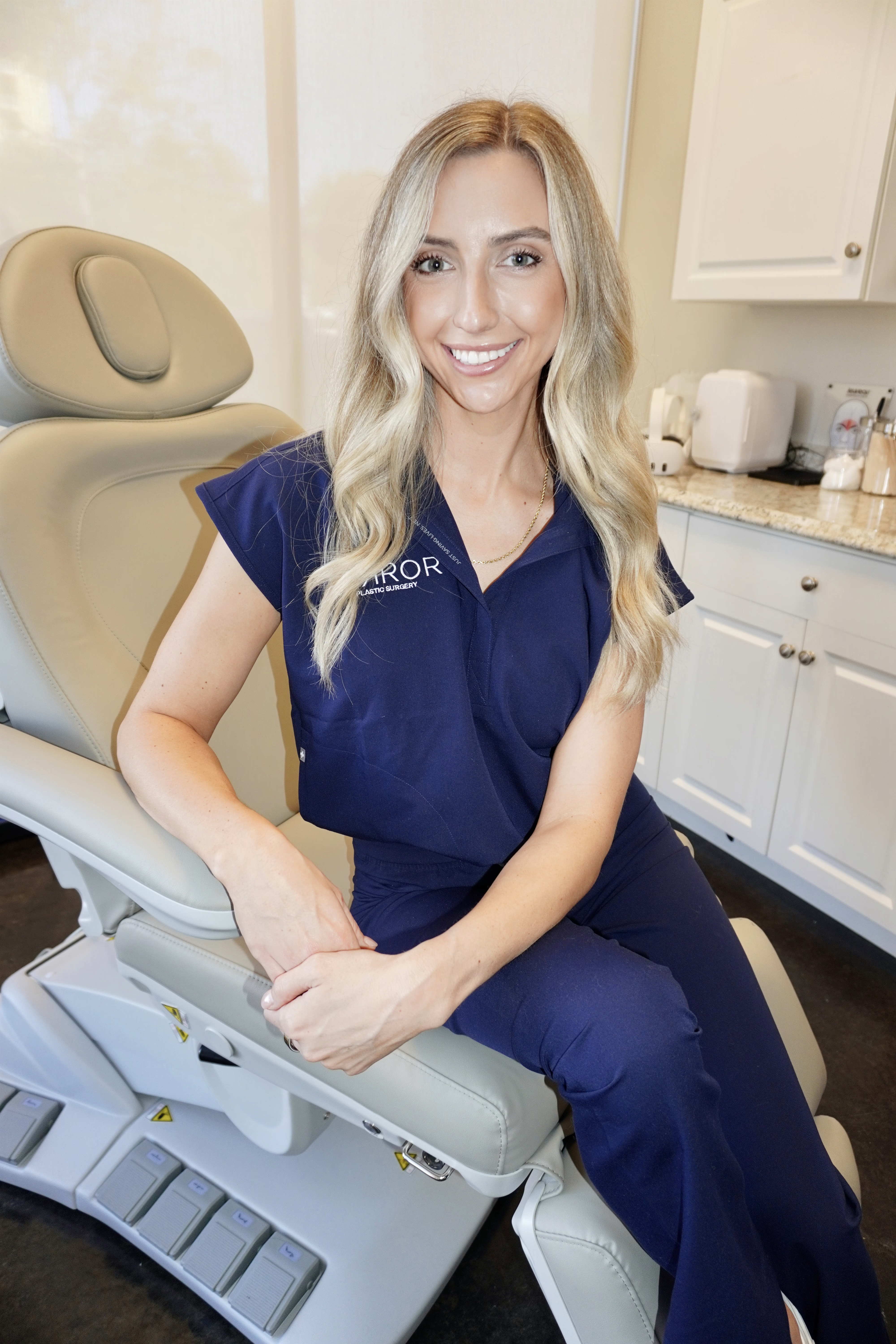
Discuss your case with a clinician whose credentials extend beyond aesthetics. Ellie will review your skin type, hair characteristics, and treatment history in detail.
Downtown Med-Spa vs. Specialized Studio in St. Petersburg
High-volume med-spas and laser studios provide convenience and competitive pricing, yet they often involve trade-offs for patients with complex skin types or prior adverse outcomes. Understanding these differences helps you match the setting to your risk profile.
- Device variety: High-volume clinics often operate a single laser platform. A supplier-neutral practice selects the wavelength that fits the patient rather than the one the clinic owns.
- Consultation depth: Volume-driven models allocate 10–15 minutes per new patient. A concierge model can allocate up to an hour, covering hormonal history, medications, prior treatments, and realistic outcome mapping.
- Medical oversight: Standalone laser studios may lack on-site physician oversight. A plastic surgery practice integrates laser treatments within a full medical framework, with immediate access to clinical management if a complication arises.
- Continuity of care: Med-spa staff turnover is often high. A concierge practice builds a longitudinal patient record, so each maintenance session is informed by every prior one.
Red Flags During a Laser Hair Removal Consultation
The consultation offers the clearest view of a provider’s clinical standards. Several warning signs often appear together and signal that you should leave before committing.
The consultation should begin with a formal Fitzpatrick skin-type assessment. Without this baseline, no wavelength recommendation can be made safely. Once your skin type is established, the provider should name the specific laser wavelength they plan to use and explain why it matches your skin tone. Vague or evasive answers suggest they may be using whatever device they own rather than what your skin needs.
Pay close attention to how permanence is described. Providers who promise complete permanent removal instead of explaining permanent reduction are misrepresenting the science. A careful consultation also reviews contraindications such as recent sun exposure, medications, or hormonal conditions, then tailors the projected number of sessions instead of quoting a fixed package for everyone.
High-pressure sales tactics create another red flag. Pressure to purchase a multi-session package before the consultation is complete, or without access to a licensed medical professional for adverse event management, indicates a retail focus rather than a clinical one.
Experience an evidence-based consultation that addresses every item on this list at Mirror Plastic Surgery, located at 780 4th Ave S, St. Petersburg, FL 33701, before any treatment is recommended.
Frequently Asked Questions
What hair cannot be lasered?
As discussed in the candidacy section above, laser hair removal relies on melanin in the hair shaft to absorb energy and disable the follicle. White, gray, blonde, and red hair lack the melanin needed for effective targeting, and very fine vellus hair has too little follicle mass to absorb a therapeutic dose. If you have mixed hair colors in a treatment area, a thorough consultation can clarify which follicles are likely to respond and set expectations for partial versus full reduction.
Does laser really remove hair permanently?
As explained in the maintenance section, the FDA clears these devices for permanent reduction, not removal. This distinction matters because dormant follicles and hormonal changes can stimulate new growth even after a full treatment series. Most patients see substantial reduction and then maintain results with periodic touch-up sessions. For the full clinical explanation, review the maintenance reality section above.
Who is not a good candidate for laser hair removal?
Several factors can contraindicate treatment or require medical clearance before you proceed. Patients with white, gray, blonde, or red hair are unlikely to see meaningful results. Active skin infections, open wounds, or inflammatory conditions in the treatment area must resolve before treatment begins.
Recent significant sun exposure or an active tan raises the risk of burns and hyperpigmentation, particularly in Fitzpatrick III–VI skin. Photosensitizing medications, including certain antibiotics, retinoids, and acne treatments, often require a washout period. Pregnancy is a standard contraindication, and a history of keloid scarring increases scarring risk.
Patients with active hormonal conditions such as PCOS or thyroid disorders may see reduced long-term results.1 These patients benefit from a detailed discussion of realistic expectations with a clinician before committing to a full series.
How many sessions will I need?
The number of sessions depends on the treatment area, hair color and density, Fitzpatrick skin type, hormonal status, and the laser technology used. Most patients require six to eight sessions spaced four to six weeks apart to treat the majority of follicles across their natural growth cycles.1
Underarms and bikini areas often need eight to twelve sessions, and legs typically require eight to ten. Hormonal areas such as the face and chin may need more sessions and more frequent maintenance. After the initial series, many patients benefit from one to two maintenance sessions per year. A thorough pre-treatment assessment, not a standardized package, remains the only reliable way to project the number of sessions your specific situation requires.
Disclaimer: Results may vary from person to person. Editorial content, before and after images, and patient testimonials do not constitute a guarantee of specific results.
1 Results may vary from person to person. Editorial content, before and after images, and patient testimonials do not constitute a guarantee of specific results.
