
Written by: Dr. Akash Chandawarkar, Board Certified Plastic Surgeon, Mirror Plastic Surgery | Last updated: September 9, 2026
Facial Volume Loss And How To Restore It Naturally
Facial aging affects bone, fat, and skin at the same time. Bone resorption in the midface and jawline reduces the scaffold that supports the overlying tissue. Fat compartments descend and deflate, which creates hollowness in the cheeks, temples, and under-eyes. Collagen and elastin decline, so the skin thins and loses resilience. These changes deepen nasolabial folds, form marionette lines, and shift the face away from its youthful triangular shape.
Treating one line or fold without addressing the structure behind it often creates an overfilled or “done” look. A 2026 review in the Journal of Cosmetic Dermatology by Margarella and Shin links overfilled syndrome to “inappropriate indication, excessive medial filling, poor sequencing, and insufficient analysis of the ligament-fat compartment support system,” rather than the filler material itself.
Subtle, natural restoration treats the face as one connected structure. At Mirror Plastic Surgery, Dr. Akash begins with a top-to-bottom assessment of every facial zone before planning injections. He focuses on restoring your inherent facial characteristics first, then adds volume only where it supports balance and harmony.
Dermal Filler Types For Soft, Natural Volume
Two main filler families restore facial volume: hyaluronic acid (HA) fillers and biostimulatory fillers. Each works differently, has its own timeline, and suits specific patterns of volume loss. The best choice matches the mechanism of the filler to your anatomy and goals.
Hyaluronic Acid Fillers: Immediate, Adjustable Results
HA fillers are the most common option for subtle volume restoration because they can be dissolved with hyaluronidase. This reversibility offers a key safety net for patients who prefer a conservative, adjustable approach. Different crosslinking technologies give each HA filler distinct behavior in the tissue. Matching those properties to the treatment area is central to natural-looking results.
The major HA options for volume restoration include:
- Juvéderm Voluma XC (VYC-20L): A higher-cohesivity, higher-G′ gel designed for deep structural support in the cheeks and midface. It has been FDA-approved for age-related cheek volume loss since 2013 and for temple hollowing since March 2024. A randomized controlled trial for temple hollowing found about 90% of patients were satisfied or very satisfied with the natural look and feel at 3 months1.
- Restylane Contour (XpresHAn/OBT technology): Designed to integrate with facial tissue while staying flexible for natural movement. It is FDA-approved for cheek augmentation and, as of March 2026, temple hollowing. Clinical data show 91% of patients were treatment responders at 3 months, with more than 85% maintaining response at 18 months and over 84% remaining satisfied with their temple appearance across the full 18-month follow-up1.
- RHA (Resilient Hyaluronic Acid) Collection: Uses PRESERVED Network technology to keep HA closer to its natural state in skin, allowing the gel to stretch and return to shape with facial expression. It is the first filler collection with FDA approval specifically for dynamic wrinkles and folds. RHA 3 and RHA 4 suit midface volume restoration where movement is constant and can last up to 15 months1.
- Evolysse: FDA-approved in February 2025 with COLD-X™ crosslinking technology and a pivotal trial showing non-inferiority to Restylane-L. Its main differences lie in tissue integration and manufacturing approach rather than entirely new treatment uses.
Product selection for HA fillers should account for plane, function, elastic modulus (G′), cohesivity, viscosity, swelling tendency, and vascular risk. High G′ with strong swelling tendency can be problematic in thin-skinned or periorbital regions.
Biostimulatory Fillers: Gradual Collagen Renewal
Biostimulatory fillers trigger your own collagen production for gradual, natural-looking results that develop over weeks to months. They work well for diffuse, global volume loss rather than isolated depressions. These products are not reversible, so injector expertise and planning carry even more weight.
- Sculptra (poly-L-lactic acid / PLLA): PLLA microspheres can provide soft-tissue enhancement for up to 2 years, with some studies showing benefits for as long as 4 years, especially in individuals with thin dermis1. A 2026 prospective study found that PLLA injected at outer facial contour points improved nasolabial folds, marionette lines, and jawline contour in over 90% of participants, with more than 95% rated as improved on the Global Aesthetic Improvement Scale1.
- Radiesse (calcium hydroxylapatite / CaHA): CaHA provides immediate volumetric support from its gel carrier while its microspheres attract fibroblasts and promote ongoing collagen production, with effects lasting at least 6 months1. This creates a hybrid immediate-plus-biostimulatory effect. Dr. Akash serves on the advisory board for Merz Aesthetics, the maker of Radiesse, which keeps him closely involved with its evolving clinical use.
HA fillers and biostimulators play complementary roles. HA offers immediate, reversible, contour-specific support, while biostimulators provide delayed, collagen-driven tissue remodeling. The right choice depends on whether your main concern is focal support loss or overall tissue quality.
Filler Comparison At A Glance
The table below highlights how leading fillers differ in technology, best uses, and duration, so you can quickly compare options.
| Filler | Technology | Best For | Duration |
|---|---|---|---|
| Juvéderm Voluma XC | VYCROSS (VYC-20L) | Midface and cheek structural lift; temple hollowing | Up to 24 months |
| Restylane Contour | XpresHAn (OBT) | Cheek contour; temple hollowing (approved March 2026) | Up to 18 months1 |
| RHA Collection | PRESERVED Network | Dynamic areas such as smile lines and midface | Up to 15 months1 |
| Sculptra (PLLA) | Poly-L-lactic acid microspheres | Diffuse, gradual collagen stimulation | Up to 2+ years1 |
Duration data sourced from FDA approvals and manufacturer clinical trials as cited. Individual results vary.
Strategic Filler Placement For Natural Harmony
A 2026 Journal of Cosmetic Dermatology review recommends treating deeper lateral or structural support zones, such as the zygomatic and SOOF-related areas, before central or medial volumization. This approach can reduce total filler volume and create more natural contours. Treating the cheeks and temples first often lifts and supports the midface, which softens nasolabial folds and marionette lines with less product.
The authors describe this framework as “a rationale for using less filler more intelligently, with clearer anatomical intent, more conservative sequencing, and greater attention to vascular safety”. The future of HA filler treatment focuses on better-directed HA rather than simply using more of it.
This structural sequencing guides every treatment plan at Mirror Plastic Surgery. Dr. Akash aims to revive your natural facial character first. He then fine-tunes volume so your face looks refreshed and balanced instead of altered.
How To Choose The Right Filler For Your Face
Skin thickness, age, desired longevity, and the pattern of volume loss all influence product choice. A few general guidelines can help frame the discussion during your consultation.
- Thinner skin: Common in patients over 50 and in delicate areas. Softer, more flexible HA fillers like RHA move naturally and are less likely to look lumpy or create visible irregularities.
- Structural lift needs: Significant cheek volume loss or temple hollowing may benefit from firmer products like Juvéderm Voluma XC or Restylane Contour, placed deeply on the bone in the supraperiosteal plane.
- Diffuse, gradual volume loss: Global hollowing across the face may respond better to biostimulators like Sculptra, which rebuild collagen over time for a subtle, cumulative effect.
Because product selection depends on factors such as plane, function, elastic modulus, cohesivity, viscosity, swelling tendency, and vascular risk, a one-size-fits-all approach does not work. Dr. Akash’s hour-long consultations at Mirror Plastic Surgery allow this level of individualized assessment, so each filler choice aligns with your unique anatomy.
Schedule your personalized consultation to receive a filler plan tailored to your features, goals, and long-term facial health.
Why Injector Expertise Matters More Than Brand
A 2026 narrative systematic review in Aesthetic Intelligence found that operator training, regulatory environment, and clinic protocols are the main drivers of filler-related harm. Product brand, patient demographics, and treatment site played a smaller role. The safest outcomes occurred in regulated, clinician-led settings with written complication plans, in-date hyaluronidase, and ongoing training.
A board-certified plastic surgeon brings surgical-level knowledge of facial layers, blood vessels, and muscle movement. This expertise supports safer placement, fewer complications, and more natural results. Research also notes that material selection alone cannot guarantee ideal outcomes; anatomical knowledge, personalized evaluation, and skilled technique are equally important.
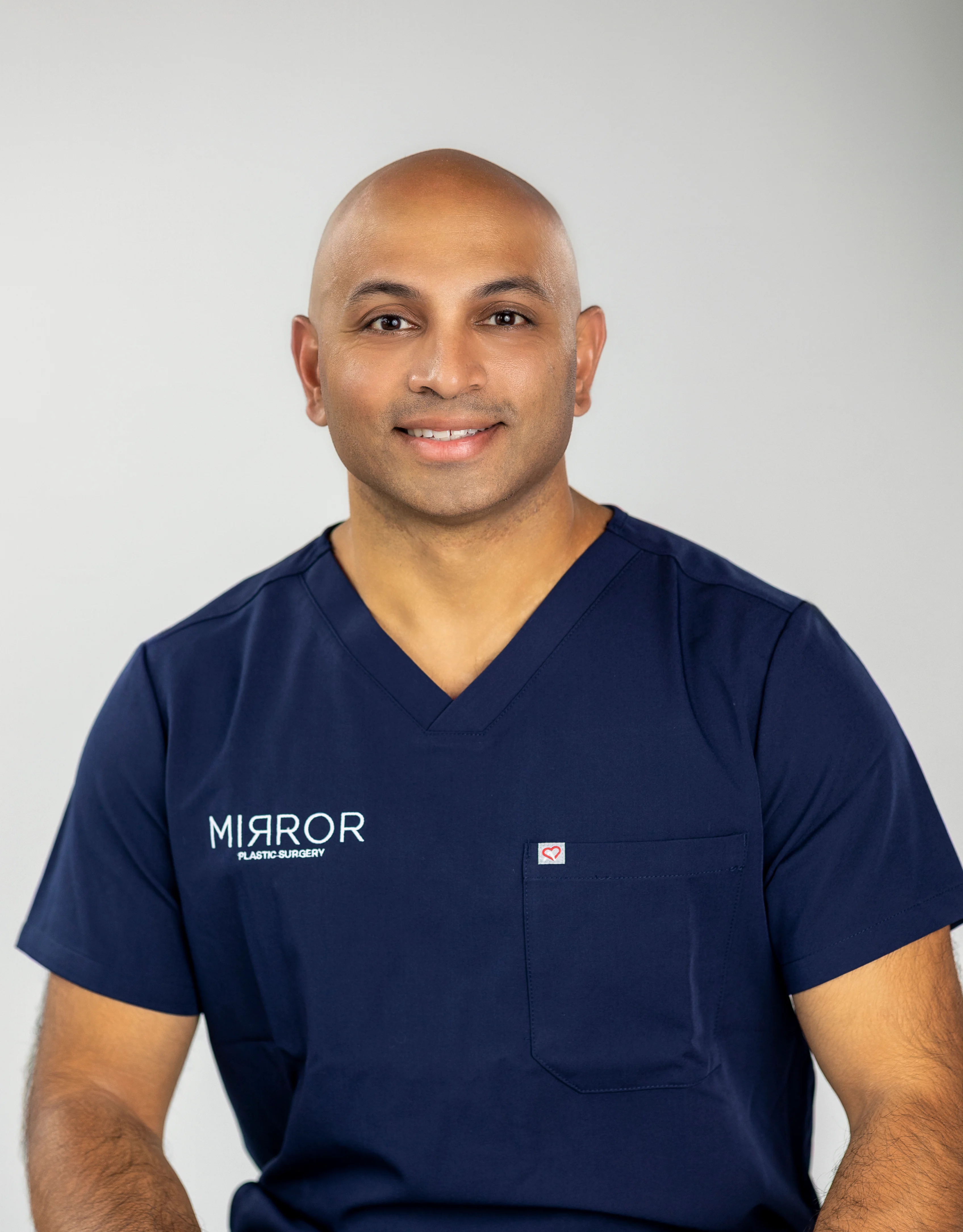
Dr. Akash Chandawarkar is a Harvard-educated, Johns Hopkins-trained, board-certified plastic surgeon who personally performs every injection at Mirror Plastic Surgery. He serves on advisory boards for Merz Aesthetics and Tiger Aesthetics, keeping him closely involved with filler innovation. His safety-first philosophy means every injection follows a thorough review of your medical history and facial anatomy.
Safety, Side Effects, And Recovery
Minor side effects such as bruising, swelling, and temporary redness occur in about 10–35% of HA filler treatments and usually resolve on their own1. More concerning issues like clinically meaningful nodules and persistent inflammation occur in 0.5–5% of treatments, depending on product, plane, and injector1.
The most serious complication, vascular occlusion, occurred in 1 in 6,410 syringes with needles and 1 in 40,882 syringes with microcannulas in a large US cohort published in JAMA Dermatology in 20211. Microcannulas were associated with a 77.1% lower odds of occlusion.
HA fillers can be dissolved with hyaluronidase if results are unsatisfactory, which supports a subtle and conservative approach. Biostimulators cannot be reversed, so they require careful planning and an experienced injector. Mirror Plastic Surgery maintains strict safety protocols, including in-date hyaluronidase on site and a detailed pre-treatment medical review for every patient.
Most patients return to normal activities right after treatment. Mild swelling and bruising usually settle within a few days. Final HA filler results appear within one to two weeks as swelling resolves. Biostimulatory fillers build collagen over several weeks to months, often across a series of sessions. Patients should avoid strenuous exercise and significant heat for 24 hours after injections.
Choosing The Best Filler Strategy For Volume Restoration
The most effective filler plan is a strategy, not a single product. HA fillers such as Juvéderm Voluma XC, Restylane Contour, and RHA offer immediate, reversible refinement. Biostimulators like Sculptra and Radiesse support gradual collagen renewal and longer-lasting structure. As discussed earlier, the goal is better-directed HA and thoughtfully placed biostimulators that match your anatomy and goals.
The right combination depends on your facial structure, skin quality, and comfort with reversibility and timeline. A consultation with a board-certified plastic surgeon is the safest way to align product properties with your unique needs.
Frequently Asked Questions
What Is The Most Natural-Looking Facial Filler?
Hyaluronic acid fillers like Juvéderm Voluma XC and Restylane Contour often look very natural because they integrate with tissue, move with expression, and can be dissolved if needed. Natural results, however, depend more on injection strategy and injector skill than on brand. A board-certified plastic surgeon who treats the face as a whole and restores structure before filling lines will usually achieve the most subtle outcome.
How Long Do Dermal Fillers Last For Volume Restoration?
Longevity varies by product, area, and individual factors. Juvéderm Voluma XC can last up to 24 months in the cheeks and up to 13 months in the temples with optimal treatment1. Restylane Contour maintains results for up to 18 months1. RHA fillers can last up to 15 months in dynamic areas1. Sculptra can produce results that last two years or more as collagen gradually builds1. Metabolism, lifestyle, and the amount of product used all influence duration. Imaging studies also suggest that HA fillers may persist in tissue beyond labeled timelines, so repeat treatments may require lower volumes.
Can Fillers Be Dissolved If I Do Not Like The Results?
Yes. Hyaluronic acid fillers can be dissolved with hyaluronidase, an enzyme that breaks down HA. This reversibility is one reason HA fillers are a common starting point for patients who want flexibility. Biostimulatory fillers like Sculptra and Radiesse cannot be dissolved, so choosing an experienced, board-certified injector is especially important when considering them. At Mirror Plastic Surgery, Dr. Akash keeps hyaluronidase on site and follows a written complication protocol for every patient.
Are Biostimulatory Fillers Better Than Hyaluronic Acid For Subtle Results?
Each category offers different advantages. HA fillers provide immediate, precise, reversible results that can be adjusted, which suits patients who want to see change quickly and keep options open. Biostimulators like Sculptra create gradual collagen renewal that many patients find very subtle, especially for diffuse facial volume loss. The right choice depends on whether you need focal structural support or broad tissue quality improvement, which your surgeon can determine during a detailed facial assessment.
What Is The Recovery Time After Filler Injections?
Most patients resume daily activities right away. Mild swelling or bruising can appear and usually fades within a few days. HA filler results settle within one to two weeks. Biostimulatory fillers require several weeks to months for full collagen effects to appear, often after multiple sessions. Your injector will typically recommend avoiding strenuous exercise and intense heat for 24 hours after treatment.
Ready To Explore Subtle, Natural Facial Volume Restoration?
If you are ready to explore subtle, natural facial volume restoration with a board-certified plastic surgeon, contact Mirror Plastic Surgery in St. Petersburg, FL, to schedule your personalized consultation with Dr. Akash Chandawarkar. Call or text 727-361-6515 or email hello@mirrorplasticsurgery.com.
Book your consultation with Ellie today and take the next step toward a refreshed, natural look.
Disclaimer: Results may vary from person to person. Editorial content, before and after images, and patient testimonials do not constitute a guarantee of specific results.
1 Results may vary from person to person. Editorial content, before and after images, and patient testimonials do not constitute a guarantee of specific results.