
Written by: Dr. Akash Chandawarkar, Board Certified Plastic Surgeon, Mirror Plastic Surgery | Last updated: September 9, 2026
Key Principles For Natural, Subtle Filler Results
- Natural facial volume restoration starts with an anatomy-first approach that prioritizes structural support over aggressive filling.
- Global facial assessment keeps the face in balance because every region connects to the others.
- Product selection should match filler properties to tissue depth and regional needs rather than defaulting to familiar brands.
- Conservative volumes, staged treatment, and reassessment at 2–4 weeks support balanced, natural outcomes and vascular safety.1
- Micro-aliquot delivery and slow, low-pressure injection, as detailed in the safety section, reduce the risk of vascular complications.
- Choosing a board-certified plastic surgeon at Mirror Plastic Surgery provides safety-first protocols and anatomy-guided planning for lasting results.1
Global Facial Assessment: Treating The Face As One Connected Structure
A top-to-bottom holistic assessment sets the stage for natural results.1 The surgeon evaluates the upper, middle, and lower face as interdependent units and considers skeletal remodeling, fat-compartment deflation, and soft-tissue descent together. Peer-reviewed evidence establishes that facial aging is a multilayered process involving skeletal remodeling, fat-compartment deflation and redistribution, dermal thinning, altered tissue elasticity, and changes in ligament-associated support systems. Visible depressions or folds often reflect structural or positional problems rather than isolated volume loss.
Treating one region in isolation often creates imbalance. The deep medial cheek fat compartment deflates early, pulling the midface down and creating the nasolabial fold. Injecting the fold alone rarely resolves the issue if the upstream structural deficit remains untreated. Ultrasound research published in Modern Aesthetics (2026) shows that facial anatomy, injection technique, tissue resistance, and filler volume primarily determine where product redistributes over time. Technique and planning therefore come before product selection.
A surgeon also considers a patient’s emotional drivers and long-term goals. This depth of consultation supports a staged, conservative plan that respects both anatomy and personal preferences.1 The hour-long, top-to-bottom assessment that defines Mirror Plastic Surgery’s concierge model separates expert practices from high-volume clinics where single-area injections often create the “overdone” appearance patients want to avoid.
Regional Anatomy: How Each Area Shapes Safety And Natural Results
A surgeon’s command of subdermal anatomy is the main safeguard against complications. There are no universally safe facial filler zones, and vascular anatomy varies among individuals. A structurally logical injection site is not automatically vascularly safe. The following regions progress from the upper face downward and highlight key vascular structures, injection planes, and typical volume-loss patterns.
Temple: The superficial temporal artery runs through this region, so plane selection matters. Supraperiosteal or deep temporal fascia placement reduces vascular risk and restores the hollowing that accompanies skeletal remodeling and fat-compartment deflation. This deep-plane strategy in the temple sets the tone for support-focused treatment in the midface.
Midface (Cheek): The facial and transverse facial arteries course through this zone. Deep supraperiosteal placement at the malar eminence, with attention to zygomatic ligament support zones, addresses the structural deficiency that drives medial cheek descent. A support-first strategy should be prioritized over central filling when structural deficiency dominates. Repeated medial cheek or nasolabial filler can increase fullness without improving support. This midface support then influences how the tear trough appears.
Tear Trough: The angular artery and infraorbital foramen define the vascular risk in this delicate area. The periorbital region has a thin dermis of approximately 0.5 mm, complex vascularity, and a tendency toward edema and contour irregularities. Conservative supraperiosteal placement with a soft, cohesive product suits this region. Superficial placement risks the Tyndall effect, a bluish discoloration that hyaluronidase can correct but is best avoided. From here, attention moves centrally to the nasolabial folds.
Nasolabial Folds: The facial artery runs nearby, so depth control is critical. Deep subcutaneous injection softens the fold while preserving natural expression. The goal is harmonization and support rather than complete erasure. Addressing midface support first usually creates a more natural improvement in this area and sets up balanced transitions toward the lips and lower face.
Lips: The superior and inferior labial arteries define the vascular risk here. Small, staged injections preserve natural contour and movement. A natural lip result focuses on restoring shape, hydration, and support instead of obvious size increases. Once lip balance is restored, attention can shift to the jawline and chin for overall facial framing.
Jawline and Chin: The facial and mental arteries require careful respect. Supraperiosteal placement defines the mandibular angle and supports the lower face. The zygomatic and mandibular ligaments contribute to lower-face contouring and the prejowl transition, tying the jawline back to midface and temple support for a cohesive profile.
Product Selection: Matching Filler Properties To Each Facial Layer
Natural results depend on matching material properties to tissue depth, regional dynamics, and desired longevity.1 A 2026 narrative review in Gels confirms that G′ reflects elastic support and shape retention, while G″ reflects viscous dissipation and flow. These properties explain why some fillers excel at structural support and others at softer, more diffused correction.
Hyaluronic acid (HA) fillers are reversible with hyaluronidase and work well in dynamic areas that require precision. A 2026 Journal of Cosmetic Dermatology framework classifies HA indications into five categories: contouring, volumization, smoothening, lifting, and revitalization. Each category requires specific rheological profiles. High-G′ granular fillers suit deep structural contouring. Low-G′, highly cohesive gel fillers suit volumization in projected areas like the midface. Ultra-small particle or non-crosslinked HA suits intradermal revitalization.
Biostimulatory fillers, including Radiesse (calcium hydroxylapatite) and AlloClae, stimulate collagen-mediated tissue remodeling and suit structural support where delayed, longer-lasting effects are desired. Dr. Akash Chandawarkar serves on the advisory boards of Merz Aesthetics (Radiesse) and Tiger Aesthetics (AlloClae), giving Mirror Plastic Surgery direct access to the clinical evidence guiding these products. For body contouring applications such as the non-surgical BBL, biostimulatory fillers like Radiesse and AlloClae are the preferred, safe methods. HA and biostimulatory fillers have complementary roles. HA provides immediate, reversible, contour-specific structural modification, while biostimulators provide delayed collagen-mediated remodeling. The choice depends on whether the main problem is focal support deficiency or diffuse tissue quality deterioration.
Injection Techniques By Region: A Practical Framework
This framework outlines recommended tools, injection planes, and typical volume ranges by region. A landmark study analyzing over 1.7 million individual syringe injections found that cannula injections carried 77.1% lower odds of vascular occlusion than sharp needles, with roughly 1 occlusion per 40,882 cannula injections versus 1 per 6,410 needle injections. Both tools have specific roles depending on region and indication.
- Temple: Cannula; supraperiosteal or deep temporal fascia plane; 0.5–1 mL per side.
- Midface/Cheek: Cannula or needle; deep supraperiosteal at malar eminence; 0.5–1 mL per side.
- Tear Trough: Needle or cannula; conservative supraperiosteal placement; 0.2–0.5 mL per side with a soft, cohesive product.
- Nasolabial Folds: Cannula; deep subcutaneous; 0.3–0.5 mL per side.
- Lips: Needle; small staged injections preserving natural contour; 0.3–0.5 mL total.
- Jawline/Chin: Cannula or needle; supraperiosteal; 0.5–1 mL per side.
A 2026 systematic review in Aesthetic Plastic Surgery recommends choosing between cannulas and needles based on facial anatomy and risk profile rather than assuming one tool is always safer. Cannulas are preferred in high-risk vascular areas. Needles allow precise placement in superficial regions but require careful aspiration and slow linear threading. Across all regions, slow injection, the least volume necessary, and continuous tissue observation form the foundation of safe, natural results.
Discuss your anatomy and goals with our team to see which techniques and tools fit you best.
Safety Protocols And Complication Management
Vascular occlusion is the most feared complication of dermal filler injection. Warning signs include skin blanching, disproportionate pain, mottled or dusky discoloration, and delayed capillary refill exceeding two seconds. Neuronal and retinal tissue can sustain permanent damage within 15 minutes of ischemia, while skin tolerates more prolonged ischemia before necrosis. Immediate recognition and action therefore determine the outcome.
The management protocol is straightforward and urgent. The injector stops immediately at the first sign of vascular compromise, then floods the affected vascular territory with high-dose pulsed hyaluronidase, 450–1,500 units per affected area repeated hourly until clinical reperfusion, for HA fillers. Adjunctive measures include warm compresses, massage, and aspirin. If ischemia progresses or vision is affected, the patient requires urgent escalation to emergency ophthalmological services. Every aesthetic clinic should stock hyaluronidase on-site and maintain a written, rehearsed emergency protocol.
Choosing a board-certified plastic surgeon reduces risk through deep anatomical knowledge and practiced emergency responses. Preventative strategies with the strongest evidence base include knowledge of vascular anatomy, slow low-pressure injection of micro-aliquots instead of large bolus deposits, aspiration before injection in high-risk zones, and use of cannulas in anatomically complex areas. FDA-approved products and sterile technique serve as baseline requirements.
Avoiding The Overfilled Look With Conservative Planning
Natural outcomes come from a conservative, staged approach.1 Overuse of dermal fillers can stretch the skin and alter the natural proportions of the face. Same-day judgment after filler is unreliable because of swelling. Reassessment at 2–4 weeks allows swelling to resolve before deciding whether refinement is appropriate.
A skilled injector knows when to stop and may recommend against unnecessary treatment. This approach aligns with the Mirror Plastic Surgery philosophy that restoration, rather than augmentation, defines success. Dr. Chandawarkar is known for his transparency and sometimes advises patients that an expensive service is not yet necessary for them. This honesty builds the deep trust that supports long-term patient relationships. The future of HA filler treatment lies in better-directed HA: appropriate patient selection, anatomy-guided planning, conservative dosing, and region-specific product selection.
Frequently Asked Questions
What Is The Best Facial Filler For Restoring Lost Volume?
The best filler depends on the region, depth of placement, and desired outcome. Hyaluronic acid fillers are reversible and work well in dynamic areas that need precision and immediate correction. Biostimulatory fillers such as Radiesse and AlloClae stimulate collagen production over time and suit structural support and broader tissue remodeling. A board-certified plastic surgeon matches the material to the specific anatomical need rather than relying on a single brand.
How Do I Avoid An Overfilled Look?
The most reliable strategy is choosing a provider who emphasizes global facial assessment, conservative volumes, and staged treatment. An overfilled appearance most often results from treating isolated regions without addressing upstream structural deficits, using excessive volume, or choosing a product whose rheological properties do not match the injection plane. Starting with less, reassessing after swelling resolves, and adding product only when truly needed produces results that age gracefully and remain natural over time.
Is A Cannula Safer Than A Needle?
Both tools have defined roles, and neither works as a universal solution. Cannulas carry the 77.1% lower occlusion odds mentioned earlier in high-risk vascular areas such as the temples, nasolabial folds, and tear troughs, and they reduce bruising by avoiding vessel puncture. Needles allow precise superficial placement in areas like the vermilion border and chin where anatomical accuracy is critical. Safe technique depends on anatomical knowledge, instrument selection, injection depth, pressure, product volume, and continuous observation of tissues, not the tool alone.
What Is The Most Natural Filler For The Face?
Natural results come from technique rather than a specific product. No filler produces natural results on its own. The most natural-looking outcomes come from an injector who performs a thorough global assessment, sequences treatment from structural support to surface refinement, matches product rheology to tissue depth and regional dynamics, and uses conservative volumes with staged follow-up. The injector’s anatomical expertise and restraint influence the result far more than the brand in the syringe.
How Long Do Dermal Fillers Last?
Duration varies by product type, facial region, and individual metabolism. Hyaluronic acid fillers typically last 6–18 months depending on the product and area treated, with more dynamic regions metabolizing filler more quickly. Biostimulatory fillers such as Radiesse and AlloClae last longer because their effects come from collagen stimulation rather than direct volumization, although they are not reversible with hyaluronidase. A staged treatment plan accounts for longevity differences across products and regions to maintain consistent, natural results over time.
The Surgeon’s Standard For Natural Results
Natural facial volume restoration blends art and science and relies on deep anatomical understanding, a conservative philosophy, and an unwavering commitment to safety.1 The most reliable results come from a provider who treats the face as an interconnected structural system, prioritizes function and safety over aggressive aesthetics, and has the surgical training to carry out that philosophy with precision. Technique, not product alone, determines natural, lasting outcomes.
Your Next Step: Consult A Board-Certified Plastic Surgeon
Dr. Akash Chandawarkar, MD, is a Harvard-educated, Johns Hopkins-trained, board-certified plastic surgeon and the founder of Mirror Plastic Surgery in St. Petersburg, Florida. He completed fellowship training in aesthetic surgery at the Manhattan Eye Ear & Throat Hospital/Lenox Hill Hospital and medical innovation training at Stanford University. Dr. Chandawarkar personally performs every injectable treatment at Mirror Plastic Surgery, bringing a surgeon’s command of facial and subdermal anatomy to every neuromodulator and dermal filler placement. He serves on the advisory boards of Merz Aesthetics and Tiger Aesthetics, keeping the practice at the forefront of injectable innovation.
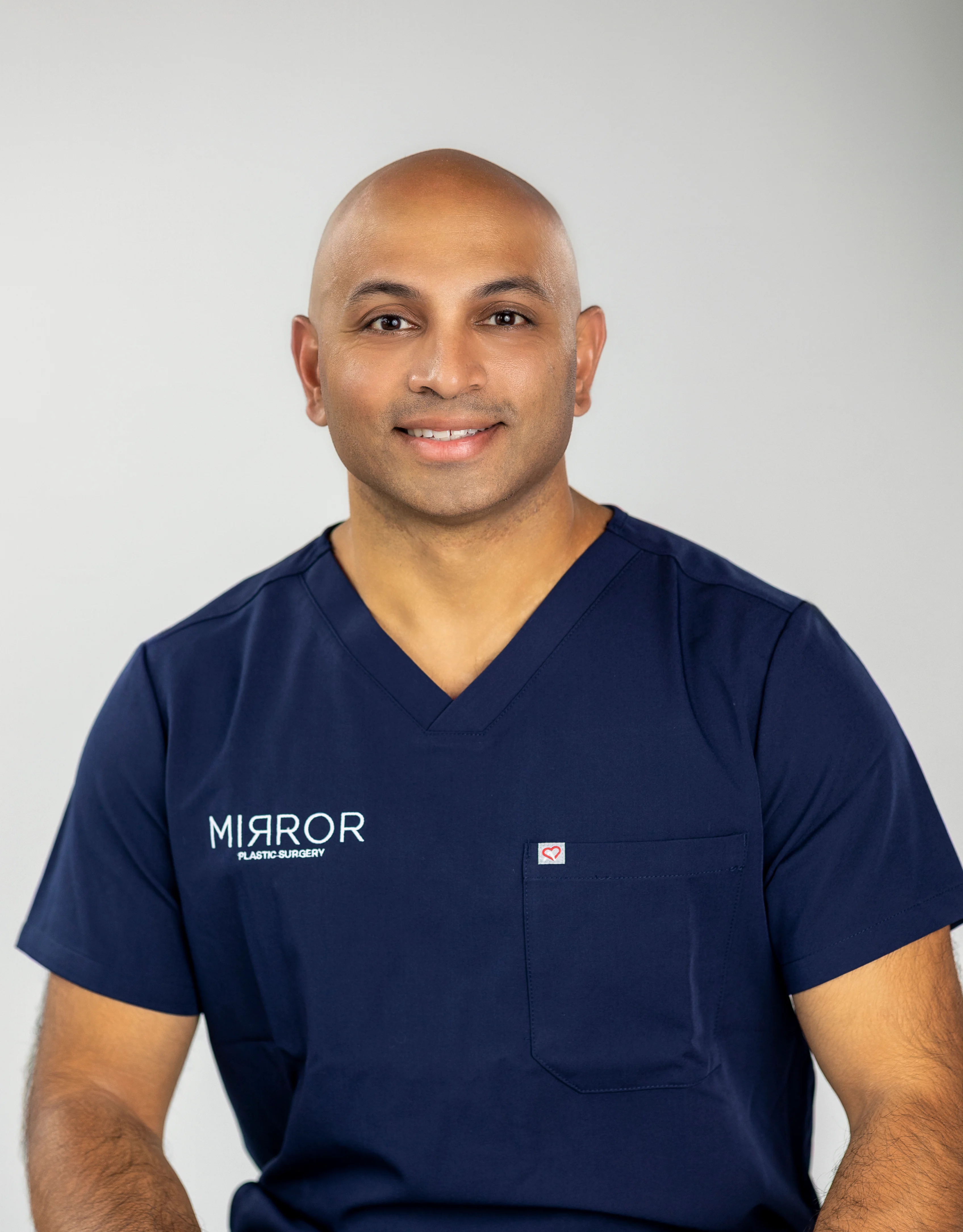
Consultations at Mirror Plastic Surgery are hour-long, top-to-bottom assessments that are supplier-neutral, evidence-based, and focused on your anatomy and long-term goals rather than volume-driven upselling. Dr. Chandawarkar is currently welcoming new patients seeking full-face restorative treatments and non-surgical BBL services.
Reach Mirror Plastic Surgery at 780 4th Ave S, St. Petersburg, FL 33701. Call or text 727-361-6515, or email hello@mirrorplasticsurgery.com.
Schedule your consultation with Ellie and take the first step toward natural, anatomy-guided facial volume restoration.
Disclaimer: Results may vary from person to person. Editorial content, before and after images, and patient testimonials do not constitute a guarantee of specific results.
1 Results may vary from person to person. Editorial content, before and after images, and patient testimonials do not constitute a guarantee of specific results.