
Written by: Ellie Pranckevicius, FNP-BC, Aesthetic Nurse Practitioner & Aesthetic Injector | Facial Restoration & Regenerative Injectable Specialist, Mirror Plastic Surgery | Last updated: June 27, 2026
Key Points About Hip Dip Treatment Options
- Hip dips come from bone structure and fat distribution, so workouts alone rarely smooth them out.
- Surgical BBL uses your own fat to fill hip dips, but involves real recovery time, variable fat survival, and surgical risk.
- Non-surgical biostimulatory fillers like Radiesse and AlloClae offer a lower-risk option with minimal downtime and maintenance visits.
- Long-term results differ. Surviving surgical fat behaves like your own tissue and changes with weight, while fillers need ongoing upkeep to keep collagen active.
- The right plan depends on your anatomy, goals, and schedule. Schedule a personalized visit at Mirror Plastic Surgery to review your options.
How a BBL Addresses Hip Dips
A surgical Brazilian Butt Lift (BBL) fills hip dips through autologous fat transfer. The procedure follows three main steps. First, liposuction removes fat from donor areas such as the abdomen, flanks, or thighs. Next, the fat is purified through centrifugation or filtration to isolate healthy adipocytes. Finally, the surgeon injects the purified fat in small, layered passes into the lateral hip and gluteal region to soften the trochanteric depression.
Fat survival never reaches 100%. A portion of the transferred fat resorbs during the weeks after surgery. Survival rates depend on injection technique, graft volume, blood supply, and how well post-operative pressure is managed. Patients usually avoid direct pressure on the treated area, including prolonged sitting, for several weeks to protect grafts during the early healing phase.
Patients with enough donor fat and realistic expectations can see meaningful, long-lasting volume in the hip dip area from a surgical BBL.1 The tradeoff is higher risk and a significant recovery period. Careful candidacy evaluation remains essential before moving forward.
Hip Dip Correction Costs: Surgical vs Non-Surgical
Pricing for hip dip correction varies widely because each plan is customized. Surgical fat transfer costs depend on how many areas need liposuction, anesthesia fees, facility charges, and the complexity of fat placement. Non-surgical biostimulatory filler pricing depends on how many syringes or vials are needed, which product is chosen, and whether treatment is staged over multiple sessions.
Neither option has a one-size-fits-all price. An in-person evaluation is the only reliable way to determine the volume, product, and technique your body needs, and what that means for your total investment.
Liquid BBL vs Surgical BBL: Side-by-Side Comparison
To clarify how these approaches differ beyond cost, the table below compares surgical fat transfer and non-surgical biostimulatory filler treatment across key decision points. Hyaluronic acid fillers are not considered safe or appropriate for buttock augmentation and are excluded. The non-surgical column reflects biostimulatory agents such as Radiesse and AlloClae.
| Factor | Surgical BBL (Fat Transfer) | Non-Surgical BBL (Biostimulatory Fillers) |
|---|---|---|
| Candidacy | Requires adequate donor fat and fitness for general anesthesia | Works for patients with limited donor fat or those avoiding surgery |
| Longevity | Surviving fat graft is long-lasting, with partial resorption in early months | Results maintained with periodic touch-ups, not permanent |
| Downtime | Several weeks of recovery, with sitting restrictions during engraftment | Minimal downtime, most patients resume normal activity within 24–48 hours |
| Risks | Fat embolism, infection, asymmetry, contour irregularity, anesthesia risks | Bruising, swelling, nodule formation, rare vascular events with poor technique |
| Maintenance | Touch-up fat transfer possible if volume loss occurs, but not routine | Planned maintenance sessions recommended to sustain collagen stimulation |
Hip Dip Results Over 10 Years
Long-term behavior differs clearly between surgical fat and biostimulatory fillers. Surgically transferred fat that successfully integrates acts like native adipose tissue. It responds to weight changes and ages along with the rest of the body. Patients who keep a stable weight usually maintain more of their grafted volume over a decade.1 Major weight loss after surgery can reduce the correction.1
Biostimulatory fillers such as Radiesse stimulate your own collagen rather than simply adding bulk. AlloClae, a newer biostimulatory option, also promotes tissue regeneration. These effects do not last forever, so a structured maintenance plan is needed to keep results over time.1
| Timeframe | Surgical Fat Transfer | Biostimulatory Fillers (Radiesse / AlloClae) |
|---|---|---|
| 0–3 months | Initial swelling settles, fat resorption occurs, final shape begins to appear | Collagen stimulation starts, initial volume becomes visible |
| 3–12 months | Grafted fat stabilizes and results become more predictable | Peak collagen response, results most visible, touch-up needs assessed |
| 1–3 years | Volume remains stable if weight stays consistent | Maintenance session typically recommended to maintain correction |
| 3–10 years | Volume follows body weight changes with gradual natural aging | Ongoing periodic maintenance sessions preserve the collagen matrix |
Who Is a Better Fit for Surgical or Non-Surgical Treatment?
The right approach depends on your anatomy, volume goals, skin quality, and tolerance for downtime. General preference for or against surgery should not drive the decision alone.
Non-surgical biostimulatory fillers usually suit patients with mild to moderate hip dip depth, limited donor fat, or a strong preference for minimal recovery. They also work well for patients who want to see how a subtle change feels before committing to surgery.
Surgical fat transfer usually fits patients with deeper hip dips that need more volume, adequate donor fat at harvest sites, and the health and lifestyle flexibility to manage a multi-week recovery with sitting restrictions.
Skin laxity adds another layer. Patients with reduced elasticity may not get ideal contouring from volume alone. This factor must be reviewed during a detailed physical examination before any recommendation.
Common Misconceptions About Longevity and “Permanent” Results
Many people assume non-surgical fillers are inferior because they are not permanent. That framing misses how these products work. Biostimulatory fillers trigger new collagen within your own tissue, which creates a regenerative effect that outlasts the filler material itself. The need for maintenance reflects a different biological pathway, not a weaker result.
Surgical fat transfer also does not offer absolute permanence. As discussed earlier, surgical fat transfer involves partial resorption, and the surviving volume responds to weight changes over time. A patient who loses a large amount of weight after surgery may see less correction. In aesthetic surgery, permanence always exists within the context of ongoing changes in the body.
Get Ellie’s honest, anatomy-based guidance on which approach fits your long-term goals.
Risks, Limits, and Why Anatomical Skill Matters
Surgical BBL carries well-documented risks. Fat embolism, where fat enters the bloodstream, is the most serious complication and has driven major changes in injection guidelines across the field. Other risks include infection, seroma, contour irregularity, and asymmetry. Revision surgery can address some issues but adds more complexity and cost.
Non-surgical biostimulatory fillers have a lower overall risk profile, yet they still carry limits and potential complications. Poor injection depth or technique can cause nodules, uneven distribution, or rare vascular problems. The injector’s understanding of anatomy is the main safety factor in this category. Product choice matters as well. Radiesse and AlloClae are the evidence-supported options for this use, while other filler types are not appropriate for the gluteal region.
Across both categories, the provider’s depth of anatomical training strongly influences outcomes and complication rates. A rushed consultation that skips careful review of tissue quality, vascular patterns, and medical history raises risk regardless of the chosen method.
Decision Guide: Matching Treatment to Your Goals
Patients can use the criteria below to narrow options before a formal consultation. These factors work together. For example, needing significant volume but having limited donor fat often points toward a non-surgical plan.
- Volume needed: Mild to moderate correction is often achievable non-surgically. Larger volume changes usually require fat transfer.
- Donor fat availability: Patients with limited fat at harvest sites are not ideal surgical candidates and often do better with biostimulatory fillers.
- Downtime tolerance: Surgical BBL requires a multi-week recovery with activity limits. Non-surgical options cause far less disruption.
- Commitment level: Non-surgical treatment offers a lower-commitment starting point and lets patients experience results before considering surgery.
- Skin quality: Significant laxity may call for a combined or staged approach, which requires expert evaluation.
- Long-term maintenance: Both paths need some long-term management. Surgery relies on weight stability, while non-surgical plans rely on periodic sessions.
No checklist replaces an in-person evaluation. The variables that shape the right plan are specific to each patient’s body, health history, and goals.
Frequently Asked Questions
Can hip dips be permanently fixed without surgery?
Hip dips cannot be permanently removed without surgery because bone structure sets their depth. Non-surgical biostimulatory fillers such as Radiesse and AlloClae can significantly soften hip dips by stimulating collagen and adding soft tissue volume along the lateral hip. These results are not permanent and need periodic maintenance, yet they can create meaningful, natural-looking improvement without surgical risk or recovery. Many patients feel satisfied enough with non-surgical results that they never pursue surgery.
How many non-surgical BBL sessions are needed for hip dip correction?
The number of sessions depends on hip dip depth, existing tissue quality, and desired volume change. Some patients reach their goal in a single visit. Others benefit from a staged plan with a follow-up session several months later, after the first collagen response matures. A detailed consultation that includes a hands-on evaluation of the lateral hip is the only reliable way to estimate session count and product volume for a specific patient.
Is the non-surgical BBL at Mirror Plastic Surgery safe?
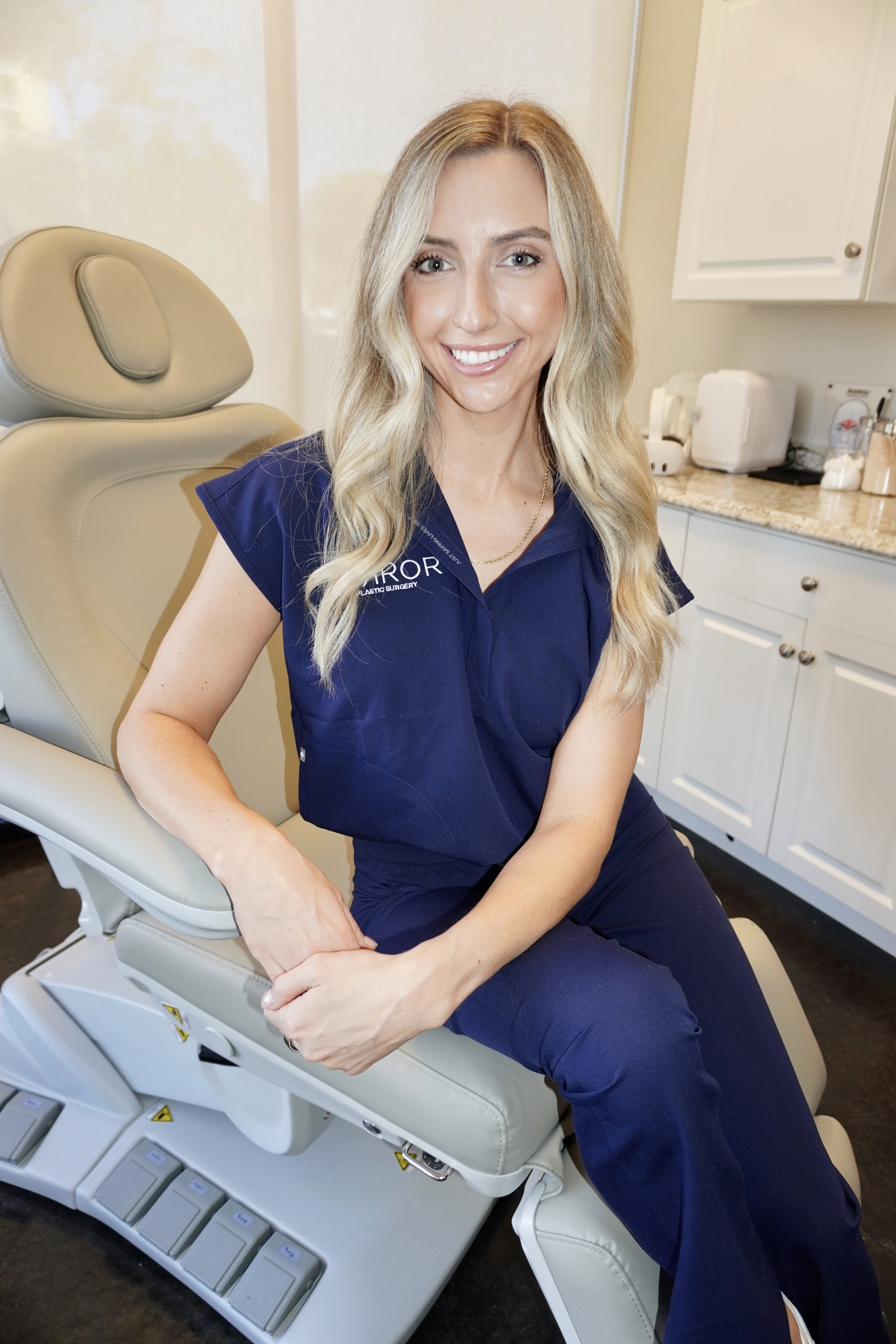
Mirror Plastic Surgery’s non-surgical BBL services are performed by Ellie Pranckevicius, FNP-BC, an Aesthetic Nurse Practitioner with advanced training in surface and subdermal anatomy. Ellie uses a combination of biostimulatory fillers for non-surgical BBL. The practice follows a safety-first philosophy, so every treatment starts with a comprehensive clinical examination, and no procedure is offered unless it fits the patient’s anatomy, health history, and goals. Mirror Plastic Surgery also limits itself to one to two surgeries per day.
What is the difference between Radiesse and AlloClae for hip dip correction?
Radiesse and AlloClae are both biostimulatory agents used in Mirror Plastic Surgery’s non-surgical BBL protocol, but they act through different mechanisms. Radiesse is a calcium hydroxylapatite-based filler that gives immediate volume and stimulates collagen over time. AlloClae is a regenerative biostimulatory product that supports tissue remodeling and collagen synthesis. The choice between them, or a blend of both, depends on tissue characteristics, the degree of correction needed, and the provider’s clinical judgment. Ellie evaluates each patient individually and selects the product plan that best matches their anatomy and goals.
How does Mirror Plastic Surgery’s consultation process differ from other providers?
Mirror Plastic Surgery follows a concierge medicine model. Initial consultations often last up to an hour and include a top-to-bottom structural evaluation rather than a quick intake focused on a single concern. Ellie takes time to understand each patient’s motivations, long-term goals, and anatomical realities before suggesting any treatment. This approach contrasts with high-volume practices where visits are brief and plans are standardized. Mirror Plastic Surgery is also supplier-neutral, so product choices are based on clinical fit rather than brand relationships or volume incentives. Patients leave with a clear explanation of what is recommended and why.
Disclaimer: Results may vary from person to person. Editorial content, before and after images, and patient testimonials do not constitute a guarantee of specific results. The information in this article is for educational purposes only and does not constitute medical advice. Consult a qualified provider for personalized recommendations.
1 Results may vary from person to person. Editorial content, before and after images, and patient testimonials do not constitute a guarantee of specific results.