Written by: Dr. Akash Chandawarkar, Board Certified Plastic Surgeon, Mirror Plastic Surgery | Last updated: September 9, 2026
Key Takeaways
- A non-surgical BBL for hip dips usually takes 30–90 minutes per session, with most patients needing 1–3 sessions.
- Recovery is brief, and most people return to desk work within 24–48 hours and full activity in 1–2 weeks.
- Radiesse gives immediate volume, while other biostimulatory fillers build results over 2–4 months and can last 1–3 years.1
- Board-certified plastic surgeon Dr. Akash Chandawarkar performs every injection at Mirror Plastic Surgery for safety and precision.
- Ready for a personalized plan? Schedule your consultation with Ellie at Mirror Plastic Surgery.
Why Surgeon Expertise Comes First
Your injector’s training shapes both your safety and your final result. At Mirror Plastic Surgery, every non-surgical BBL is performed by Dr. Akash Chandawarkar, not delegated to a non-physician provider.
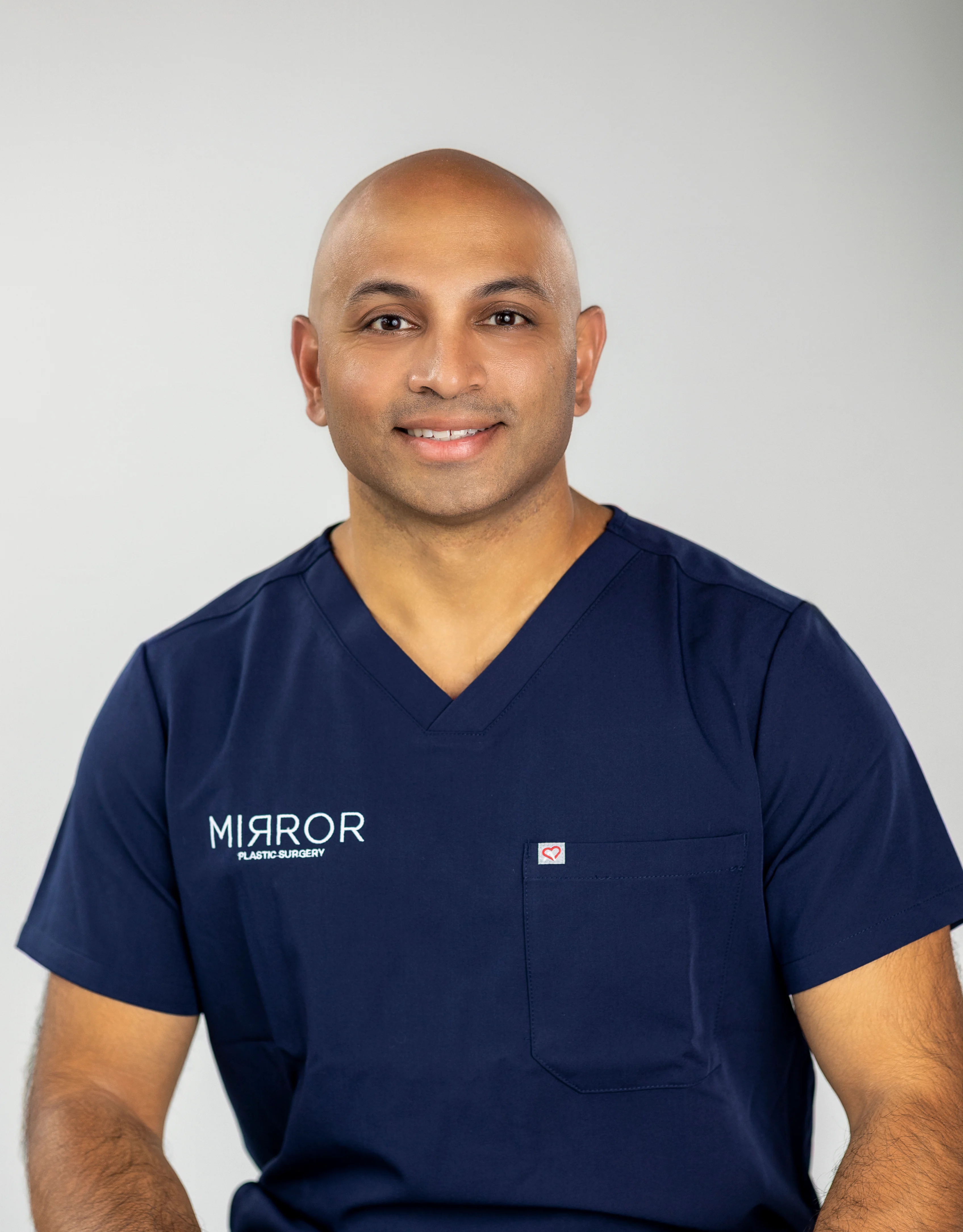
- Harvard-educated physician and Johns Hopkins-trained plastic surgeon, board-certified by the American Board of Plastic Surgery
- Fellowship-trained in aesthetic surgery at Manhattan Eye Ear & Throat Hospital (MEETH)/Lenox Hill Hospital, with surgeon-level command of gluteal anatomy
- Advisory board member for Merz Aesthetics (Radiesse) and Tiger Aesthetics (AlloClae), with access to the latest evidence-based techniques
- Concierge philosophy: you get up to an hour in consultation, a maximum of one to two procedures per day, and direct access to your physician throughout your care
Mirror Plastic Surgery limits its daily schedule so each patient receives focused, unhurried care. For a detailed comparison of filler options, review Mirror Plastic Surgery’s guide on the Best Filler for Hip Dips: Sculptra, Radiesse & More.
What Happens During Your Appointment: A Minute-By-Minute Breakdown
Each 30–90 minute session includes careful planning, numbing, injection, and contour checks. The visit follows a consistent, safety-focused sequence.
- Consultation and anatomical mapping (10–15 minutes): The injector assesses hip dip depth, skin quality, and symmetry, then maps injection sites and designs your treatment plan.
- Numbing and preparation (30–45 minutes): Topical anesthetic is applied and allowed to take full effect before injections begin.
- Injection phase (20–45 minutes): Filler is placed using a blunt-tip cannula technique, which reduces bruising, limits entry points, and allows the injector to feel tissue resistance to avoid blood vessels.
- Massage and contour assessment: Product is smoothed, and symmetry is checked from multiple angles before you leave.
A careful injector may take a bit longer because each pass is deliberate and precise. At Mirror Plastic Surgery, Dr. Chandawarkar brings a plastic surgeon’s understanding of gluteal anatomy to every session.
Get your customized non-surgical BBL timeline with Ellie based on your anatomy and goals.
Why Procedure Time Varies
Session length changes from patient to patient based on your anatomy, goals, and filler choice. Knowing these factors helps you plan your schedule.
- Volume of filler needed: Deeper or longer hip dips require more product, which increases injection time.
- Filler type: Biostimulatory fillers such as Radiesse (calcium hydroxyapatite) require specific dilution and detailed techniques described in consensus guidelines, though current evidence does not address AlloClae specifically.
- Provider technique: A physician with deep gluteal anatomy knowledge spends extra time on precise placement and symmetry checks, which supports safer outcomes.
- Patient anatomy: Skin laxity, fat distribution, and existing contour shape the number of injection points and overall complexity.
Filler Selection: How Your Choice Affects Time and Results
Filler selection shapes your appointment length, how quickly you see changes, and how long results last. Mirror Plastic Surgery uses two evidence-based biostimulatory options for gluteal enhancement.
Radiesse: Immediate Structure With Collagen Stimulation
Radiesse (calcium hydroxylapatite) gives instant volume from its carrier gel and then stimulates your own collagen. A typical session lasts 60–90 minutes. You see volume right away, and results continue to improve over 2–3 months as collagen develops, with 12–18 months of typical longevity.1 Dr. Chandawarkar serves on the advisory board for Merz Aesthetics, the maker of Radiesse, and follows current evidence-based protocols.
AlloClae: Adipose-Derived Natural Enhancement
AlloClae is an adipose-derived filler that blends with your existing tissue. Sessions usually last 30–60 minutes, and some extend to one to two hours when multiple areas are treated. AlloClae results are immediate initially, but full results develop over 3–6 months as the product integrates. Longevity generally lasts 12–24 months, and some patients may see results for several years.1 As an advisory board member for Tiger Aesthetics, Dr. Chandawarkar stays current on technique refinements for AlloClae.
Why Hyaluronic Acid Fillers Are Not Recommended For Buttocks
Hyaluronic acid fillers are sometimes promoted for non-surgical BBL, yet they are not considered a safe choice for the buttocks. The volumes required, often 10 to 30 or more syringes, make treatment impractical and extremely costly. Migration risk also increases in areas that bear weight and experience frequent movement. Mirror Plastic Surgery therefore uses only Radiesse and AlloClae for gluteal enhancement.
The table below summarizes key differences between Radiesse and AlloClae so you can compare session time, results, and longevity at a glance.
| Attribute | Radiesse | AlloClae |
|---|---|---|
| Mechanism | Calcium hydroxylapatite, immediate volume plus collagen stimulation | Adipose-derived, integrates with existing tissue |
| Typical Session Time | 60–90 minutes | 30–60 minutes |
| Results Timeline | Immediate volume, improves over 2–3 months | Immediate initially, full results over 3–6 months |
| Longevity | 12–18 months | 12–24 months |
How Many Sessions Will You Need For Hip Dip Correction?
Most patients need 1 to 3 sessions for initial correction, spaced 4 to 8 weeks apart.1 Your exact plan depends on several factors.
- Severity of hip dips: Deeper or longer indentations usually require more sessions.
- Desired volume and contour: Subtle smoothing often needs fewer visits than a more dramatic hourglass shape.
- Filler type: Biostimulators build collagen gradually, so your response across sessions shapes the final result more than a single large treatment.
Mirror Plastic Surgery’s comprehensive assessment supports a tailored plan rather than a template approach. Schedule a consultation with Ellie to map out your session plan based on your anatomy.
Recovery Timeline: What To Expect After Each Session
Non-surgical BBL involves significantly less downtime than surgical BBL. Most patients return to light daily activities the same day or the next day. The recovery window typically follows this pattern.
- Immediately after: Mild swelling, redness, or bruising can appear at injection sites. You may sit and drive right away because there are no surgical sitting restrictions.
- 24–48 hours: Most patients feel ready to return to desk work and routine tasks.
- 3–7 days: Bruising and soreness fade. Avoid strenuous lower-body workouts and long periods on hard surfaces.
- 1–2 weeks: Most people resume full activity, including exercise.
- 2–4 weeks: Swelling settles, and early contour changes become clearer.
Practical aftercare is straightforward. Sit on a cushion during long periods to reduce pressure on the treated area. Skip hot tubs and saunas for 48 hours to prevent irritation. Follow your provider’s aftercare instructions closely to protect your results. For biostimulatory fillers, the 5-5-5 massage protocol (5 minutes, 5 times daily, for 5 days) lowers the risk of nodules and helps distribute product evenly.
For a deeper comparison of recovery between non-surgical and surgical options, see Mirror Plastic Surgery’s guide on Recovery Time: Non-Surgical BBL vs. Hip-Dip Fillers.
When Will You See Final Results?
Your results timeline depends on the filler used and your body’s collagen response.
- Immediate: Radiesse provides instant volume, although early swelling can temporarily blur the final contour.
- Gradual: Biostimulatory fillers trigger collagen production, so results build over 2–4 months. Most patients notice clear change at 8–12 weeks and mature results at 16–20 weeks.1
Patience supports better decisions. Wait at least 12 weeks before judging your outcome or adding more product. The visible volume at that point reflects your own collagen, which often continues to improve into the fourth month.
How Long Do Results Last?
Most patients enjoy 1 to 3 years of improvement, depending on filler type and metabolism.1 In clinical practice, Radiesse often lasts 12–18 months, and manufacturer information notes potential longevity up to 2 years. AlloClae results are generally expected to last 1–3 years, with some sources describing several years of benefit. Maintenance sessions every 12–24 months help sustain your shape over time.
These results fade gradually and remain natural-looking with periodic touch-ups. Stable weight and healthy habits support longer-lasting outcomes. For more detail, see Mirror Plastic Surgery’s article on How Long Do Non-Surgical BBL and Hip Dip Fillers Last?
Frequently Asked Questions
Will a Non-Surgical BBL Fix Hip Dips?
Yes. Injectable fillers placed along the outer hip can smooth the indentation and create a more continuous curve from waist to thigh. Results depend on hip dip severity and filler volume. Mild to moderate dips often respond especially well to biostimulatory fillers, which build natural-feeling volume over time.
How Many Sessions Are Needed for Hip Dip Filler?
Most patients need 1 to 3 sessions, spaced 4 to 8 weeks apart. The number of visits varies with hip dip depth and your desired contour. Because biostimulatory fillers build collagen gradually, results accumulate across sessions, and staying with the same provider supports symmetry.
What Is the Recovery Time for a Non-Surgical BBL?
Recovery is brief for most patients. Many return to desk work within 24 to 48 hours. Avoid strenuous lower-body exercise and prolonged sitting pressure for 1 to 2 weeks. Bruising usually resolves within 7 to 10 days, and minor swelling clears within about a week. Unlike surgical BBL, you may sit immediately after treatment.
How Long Do Results Last?
Results typically last 1 to 3 years, depending on filler type, metabolism, and lifestyle.1 Radiesse often lasts 12 to 18 months in practice, with manufacturer data noting up to 2 years. AlloClae is generally expected to last 1 to 3 years, and some patients maintain results for several years. Maintenance sessions every 12 to 24 months help preserve your outcome, while intense training and major weight shifts can shorten longevity.
Is the Procedure Painful?
Most patients rate discomfort around 2 to 3 out of 10. Topical numbing cream is applied before treatment, and lidocaine mixed into the filler reduces pain during injection. The blunt-tip cannula technique used at Mirror Plastic Surgery further decreases discomfort compared with sharp needles, so most people describe a feeling of pressure rather than pain.
Conclusion: Your Timeline Starts With A Consultation
Your non-surgical BBL journey usually spans several months from first visit to full results, with brief sessions and minimal downtime along the way. Choosing a board-certified plastic surgeon is the single most important safety decision in this process. Your time is valuable, so partner with a provider who understands your anatomy, your goals, and the safest ways to reach them.
Ready to plan your non-surgical BBL timeline? Arrange your consultation with Ellie at Mirror Plastic Surgery in St. Petersburg, FL by calling or texting 727-361-6515 or emailing hello@mirrorplasticsurgery.com.
Disclaimer: Results may vary from person to person. Editorial content, before and after images, and patient testimonials do not constitute a guarantee of specific results.
1 Results may vary from person to person. Editorial content, before and after images, and patient testimonials do not constitute a guarantee of specific results.