Written by: Dr. Akash Chandawarkar, Board Certified Plastic Surgeon, Mirror Plastic Surgery | Last updated: September 9, 2026
Understanding Non-Surgical BBL and Hip Dip Filler
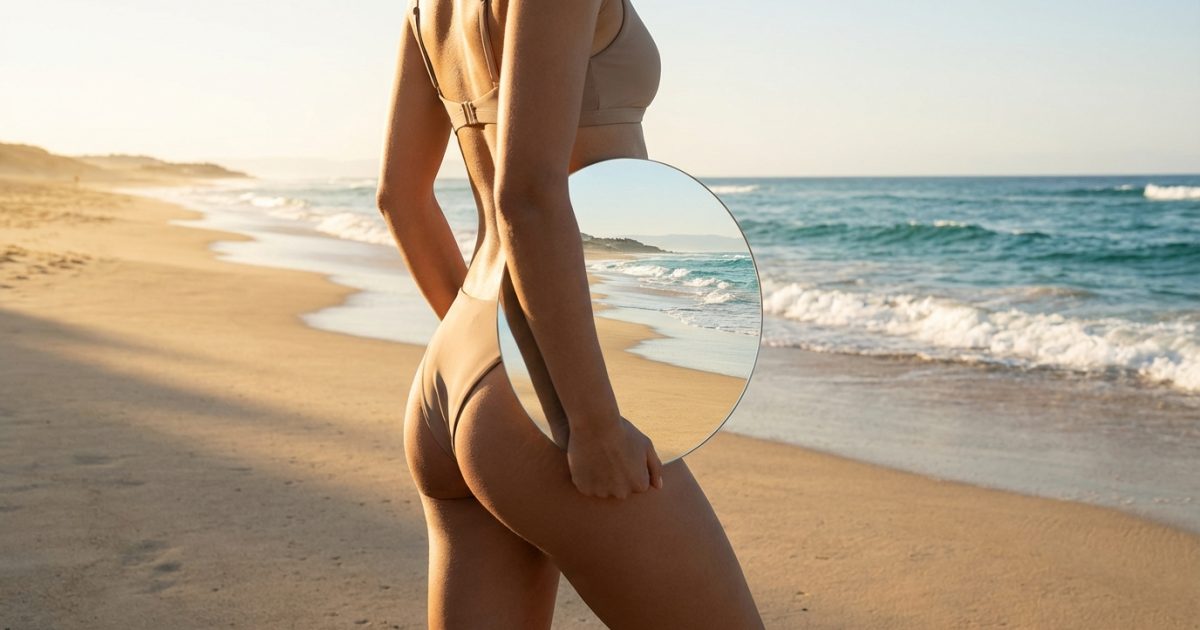
Non-surgical BBL and hip dip filler describe the same injectable body contouring approach. Both treatments use biostimulatory fillers to add volume, smooth contours, and soften the inward curve below the hip bone, known as the hip dip or lateral trochanteric depression.
The procedure places product in the subcutaneous layer above the muscle fascia, usually with a blunt-tipped cannula instead of a sharp needle. A cannula glides through tissue, which reduces trauma, bruising, and discomfort. Treatment happens in-office, typically takes 45 to 90 minutes, and does not require general anesthesia or incisions.
These injectables offer a non-surgical alternative to a traditional Brazilian Butt Lift, which uses liposuction to harvest fat and transfer it to the buttocks. This difference shapes expectations around pain, recovery, and results.
Now that the basics are clear, it helps to look closely at what the procedure feels like in real time.
Schedule a Non-Surgical BBL Consultation to review your anatomy and goals with Dr. Akash Chandawarkar, a Harvard-educated, Johns Hopkins-trained board-certified plastic surgeon.
Pain During the Procedure: What You Will Actually Feel
Most patients describe non-surgical BBL injections as pressure or mild pinching rather than sharp pain.1 The experience depends heavily on the numbing plan, product preparation, and technique your provider uses.
Here is what typically happens during treatment:
- Numbing cream: A topical anesthetic usually goes on 20 to 30 minutes before injections to desensitize the skin.
- Lidocaine in the product: Both Sculptra and Radiesse are commonly mixed with lidocaine, a local anesthetic that significantly reduces discomfort as the filler is placed.
- Cannula instead of needle: A blunt-tipped cannula pushes blood vessels aside instead of piercing them, which reduces both pain and bruising. A 2026 retrospective study of gluteal augmentation with blunt cannula technique found minimal procedure-related discomfort, and no patient required extra anesthesia or stopped treatment.
- Pressure and stretching: As volume is added, most patients feel deep pressure or stretching in the tissue rather than sharp pain.
The injector’s skill strongly influences comfort. A board-certified plastic surgeon with detailed anatomical knowledge knows where to place product to avoid sensitive structures and minimize discomfort. At Mirror Plastic Surgery, Dr. Akash Chandawarkar personally performs every injectable treatment, using his surgical-level understanding of subdermal anatomy to improve both safety and precision compared with typical high-volume med spas.
Non-Surgical BBL Recovery Pain Timeline
Recovery after non-surgical BBL or hip dip filler feels very different from surgical BBL. Most patients compare it to a deep bruise or post-workout soreness that responds well to over-the-counter pain relievers.
Here is the typical recovery timeline:
- First 24–48 hours: Soreness, swelling, and tenderness at injection sites usually peak during this window. Most patients still rate discomfort as mild to moderate.1
- First week: Bruising may appear and then fade. The treated area can feel firm as the product settles, and sitting or lying on the area may feel uncomfortable.
- Weeks 2–4: Swelling decreases, bruising resolves, and residual tenderness fades. Most patients feel completely normal by week two.1
- Return to activity: Most patients resume normal daily activities within 24 to 48 hours.1 Light walking supports circulation, while strenuous lower-body workouts usually wait 72 hours to one week.
To minimize discomfort during recovery, follow these practical tips:
- Use a cushion when sitting for long periods during the first 48 hours to reduce pressure on the treated area.
- Apply cold packs to decrease swelling and gently numb sore spots, especially during the first day.
- Avoid anti-inflammatory medications like ibuprofen for the first five days, because they can increase bruising. Acetaminophen is usually preferred.
- Follow your provider’s aftercare directions, including any recommended massage routine.
- Drink plenty of water, since good hydration supports your body’s healing response.
Recovery after surgical BBL often involves weeks of strict sitting restrictions and prescription pain medication. Non-surgical recovery usually lasts days instead of weeks. Most patients return to desk work within two to four days1 without major disruption to daily life.
Product-Specific Pain: Sculptra vs. Radiesse for Hip Dips
Sculptra and Radiesse both work well for non-surgical BBL and hip dip correction, yet they feel slightly different during and after treatment. Understanding these differences helps you choose the option that fits your comfort level and goals.
Sculptra (poly-L-lactic acid): This biostimulatory filler triggers your body to build new collagen, so results develop gradually over two to three months. Most patients rate Sculptra BBL discomfort at 4 to 5 out of 10, with pressure and stretching more common than sharp pain.1 Sculptra is reconstituted with 5–8 mL of sterile water for injection, and 1 mL of 2% lidocaine may be added for pain relief. The final suspension appears translucent with some foam. After treatment, swelling and tenderness usually last a few days.1 A specific massage protocol called the “5-5-5 rule” (five minutes, five times daily, for five days) helps prevent lumps.
Radiesse (calcium hydroxylapatite): This filler provides immediate volume and also stimulates collagen over the following months. Patients often notice more firmness in the treated area, especially when sitting or lying down. This firmness typically softens over several weeks as the product integrates with tissue. With good numbing and lidocaine mixing, procedural discomfort is similar to Sculptra.
The table below summarizes key differences in pain and experience:
| Attribute | Sculptra (PLLA) | Radiesse (CaHA) |
|---|---|---|
| Pain during procedure | Mild to moderate, with pressure and pinching | Mild to moderate, with slightly more pressure due to thicker consistency |
| Pain after procedure | Mild soreness, swelling, and tenderness for 2–5 days | Mild soreness plus noticeable firmness that softens over weeks |
| Number of sessions | 2–3 sessions, 4–6 weeks apart | 1–2 sessions, often with significant change after the first treatment and a possible touch-up |
| Results timeline | Gradual over 2–3 months | Immediate volume, with collagen building over 3–6 months |
| Longevity | 2–3 years | 12–18 months |
Newer options such as fat-based fillers like alloClae, derived from donated human adipose tissue, also exist. These products provide immediate volume and lift while acting as a scaffold for your own tissue. Early experience suggests about 90% one-year retention, and patients report minimal injection pain. Dr. Akash Chandawarkar serves on the advisory board for Tiger Aesthetics, the company behind alloClae, which gives Mirror Plastic Surgery direct access to the latest clinical guidance. These products have less long-term data than Sculptra or Radiesse, so your provider will help decide whether they fit your goals.
Regardless of product, technique matters. Dilution, cannula choice, and injection depth all affect comfort, which makes provider expertise just as important as the filler itself.
Safety Considerations and FDA Context
The safety profile of non-surgical BBL depends on the product used and the person performing the injections. The FDA classifies dermal fillers as regulated medical devices, and none currently carry specific approval for buttock augmentation or hip dip correction. Use in these areas is considered off-label, so patients benefit from understanding this context and choosing a highly qualified provider.
The FDA lists unintended injection into blood vessels as the most serious risk with dermal fillers, with potential outcomes such as tissue death, vision changes, or stroke. These events are rare. A large dermatology study reported about one event per 6,410 syringes injected by needle and one per 40,882 syringes injected by cannula, which highlights the value of cannula use and expert technique.
Biostimulatory fillers like Sculptra and Radiesse do not have specific reversal agents. If nodules or overfilling occur, patients rely on natural collagen remodeling or additional interventions. Precise technique and appropriate dilution therefore play a central role in safety.
Overall, non-surgical BBL and hip dip filler have a strong safety record when performed by experienced physicians who follow best practices and understand gluteal anatomy in depth.
Non-Surgical vs. Surgical BBL: Pain and Recovery Compared
Patients deciding between non-surgical and surgical BBL often focus on pain, downtime, and risk. These two approaches differ significantly in each of those areas.
Surgical BBL recovery typically includes:
- Days 1–3 with significant pain and swelling that usually require prescription pain medication.
- Weeks 1–2 in a compression garment worn around the clock, no sitting without a BBL pillow, no driving, and limited mobility.
- Weeks 2–6 with gradual improvement and sitting restrictions easing around weeks 3–4.
- Final results that usually appear around six months after surgery.1
Historical data placed surgical BBL mortality as high as 1 in 3,000 cases due to fat embolism, although updated technique guidelines introduced in 2018 have lowered this risk. Surgical BBL also requires adequate donor fat, so lean patients often do not qualify.
Non-surgical BBL recovery usually looks like this:
- Same-day return to most routine activities.
- Mild swelling and tenderness for 1–3 days.
- No strict no-sitting rule, although avoiding prolonged pressure for the first 48 hours is recommended.
- Results that develop gradually over 2–6 months, depending on the product.1
Most non-surgical patients manage discomfort with over-the-counter pain relievers. Surgical patients usually need prescription medication and weeks of modified activity, which creates a very different day-to-day experience.
Request a Personalized BBL Evaluation to compare non-surgical and surgical options for your specific anatomy and goals.
Frequently Asked Questions
How Long Does a Non-Surgical BBL Take?
Most sessions last 45 to 90 minutes, depending on how many areas are treated and which product is used. Many patients need 2 to 3 sessions spaced 4 to 6 weeks apart for full correction. Because biostimulatory fillers work by building collagen, the final result usually appears 3 to 6 months after the last session.
Can I Sit After a Non-Surgical BBL?
Patients can sit after non-surgical BBL, since there is no strict no-sitting rule. Avoiding long periods of direct pressure on the treated area for the first 48 hours helps reduce discomfort and supports even product distribution. Most people return to desk work within two to four days without major restrictions.
How Do I Choose Between Sculptra and Radiesse?
The right product depends on your timeline, anatomy, and preferences. Sculptra builds volume gradually over 2 to 3 months and typically lasts 2 to 3 years, which works well for patients who want subtle, progressive change and accept multiple sessions. Radiesse offers immediate visible volume with results that usually last 12 to 18 months, which appeals to patients who want earlier improvement. A consultation with a board-certified plastic surgeon provides the clearest guidance for your situation.
When Can I Exercise After Treatment?
Light activity such as walking usually resumes within 24 to 48 hours and supports circulation and healing. Strenuous lower-body exercise should wait at least 72 hours. Activities that place sustained pressure on the treated area, such as cycling, are often paused for 1 to 2 weeks, although some protocols shorten this to 48 hours. Your provider will tailor aftercare instructions to the product used and areas treated.
Are There Long-Term Side Effects?
Serious complications remain rare when an experienced, qualified provider uses proper technique.1 Temporary effects such as bruising, swelling, and tenderness usually resolve within days to weeks. Nodules can develop with Sculptra if massage instructions are not followed, which is why the 5-5-5 massage protocol mentioned earlier is so important. Because biostimulatory fillers like Sculptra and Radiesse cannot be dissolved, choosing an injector with deep anatomical knowledge is the most effective way to reduce long-term risk.
Making Your Decision
Non-surgical BBL and hip dip filler offer a middle path for patients who want more shape without the pain, risk, and downtime of surgery. Most people feel pressure rather than sharp pain during treatment and mild soreness for a few days afterward. Product choice and provider expertise shape both comfort and final results.
At Mirror Plastic Surgery in St. Petersburg, FL, Dr. Akash Chandawarkar performs every non-surgical BBL. He is a board-certified plastic surgeon with fellowship training in aesthetic surgery and advisory roles with companies developing advanced biostimulatory fillers. That level of training and involvement directly supports safer procedures and more consistent outcomes.
Get a Personalized Non-Surgical BBL Plan to review your anatomy, discuss realistic results from injectable body contouring, and design a treatment approach around your goals.
Mirror Plastic Surgery is located at 780 4th Ave S, St. Petersburg, FL 33701. You can reach the practice by calling or texting 727-361-6515, or by emailing hello@mirrorplasticsurgery.com.
Disclaimer: Results may vary from person to person. Editorial content, before and after images, and patient testimonials do not constitute a guarantee of specific results.
1 Results may vary from person to person. Editorial content, before and after images, and patient testimonials do not constitute a guarantee of specific results.