Written by: Dr. Akash Chandawarkar, Board Certified Plastic Surgeon, Mirror Plastic Surgery | Last updated: September 9, 2026
Understanding Cellulite: The Structural Cause
Cellulite is primarily a structural problem in the tissue under the skin. Fibrous bands called septae tether the dermis to the underlying deep fascia while fat lobules herniate upward between them, which creates the familiar dimpled look. In women, these septae run vertically and allow fat to push through. In men, they criss-cross at angles that resist herniation, a pattern that Bass and Kaminer (2020) in Dermatologic Surgery linked to the fact that over 90% of cellulite cases occur in women. Treatments that only address surface texture, fat volume, or circulation, such as creams, massage, and many energy-based devices, leave the fibrous bands intact. Long-lasting improvement requires a treatment that targets these septae directly.
Injectable Cellulite Treatments And How They Work
Cellulite injections are products delivered with a needle into the subcutaneous tissue to address structural causes of dimpling. Three main categories exist, and each behaves differently.
- Collagenase (Qwo): Qwo was the first and only injectable ever FDA-approved for cellulite. It received approval in July 2020 for moderate-to-severe cellulite in the buttocks of adult women. The product contained bacterial enzymes that hydrolyzed collagen in fibrous septae, which functioned as enzymatic subcision. Qwo was withdrawn from the U.S. market in December 2022 by manufacturer Endo International because of commercial performance and tolerability concerns. No FDA-approved enzymatic injectable for cellulite exists in the United States as of 2026.
- Biostimulatory fillers (e.g., Radiesse): These products are used off-label for cellulite. They stimulate collagen production and can improve skin quality and volume. They do not release fibrous bands, which remain the main structural cause of dimpling, and they are not FDA-approved specifically for cellulite.
- Mesotherapy: This approach involves injecting various compounds into the mesoderm. The American Academy of Dermatology reports common side effects such as redness, swelling, tender lumps, and infection, with weak supporting evidence.
Among these options, only collagenase was designed to act directly on the septae, and it is no longer available in the U.S. market.
Schedule a cellulite evaluation with Ellie to review which treatments fit your anatomy and goals.
Evidence For Long-Term Results: Injections Vs. Subcision
Clinical data highlights a clear difference in durability between injectable treatments and mechanical subcision. The central question is how long results last after a single treatment series.
Injectable Evidence:
Qwo’s pivotal RELEASE-1 and RELEASE-2 trials (combined N=1,820) showed statistically significant improvement at day 71. In RELEASE-1, 32.4% of Qwo-treated patients achieved a 2-level composite improvement on the Clinician-Reported Photonumeric Cellulite Severity Scale, compared with 13.9% on placebo. RELEASE-2 showed 30.1% versus 13.5%. Long-term durability data beyond one year remained limited, and Qwo’s discontinuation prevents extended follow-up. A 2024 systematic review of 24 randomized controlled trials covering 2,084 patients found a mean follow-up of only 3.33 weeks across cellulite studies, which is too short to establish long-term durability for any injectable. This lack of durability data also applies to off-label biostimulatory fillers, which may improve skin quality but do not release the fibrous bands that cause dimples.
Subcision Evidence:
Cellfina’s pivotal trial (Kaminer et al., 2017, Dermatologic Surgery) showed that 94% of treated subjects maintained at least a one-grade improvement at one year1. Patient satisfaction reached 96% at two years, and investigators reported no reduction in treatment benefit at three years.1 Once a fibrous septum is cut, it retracts and does not reconnect. Extended follow-up data confirmed durability in 96% of treated dimples at five years1. Avéli’s CONFFIRM study (Stevens et al., 2023, Aesthetic Surgery Journal) found that 93.9% of patients showed improvement on the Global Aesthetic Improvement Scale at 12 months1, and 73.8% achieved at least a one-point reduction on the cellulite severity scale. A 2024 systematic review and meta-analysis (Foppiani et al.) covering 1,254 patients reported side-effect rates for subcision, without concluding that subcision is the single most effective modality, but the durability data remain strong.
The Qwo Discontinuation And Current Injectable Landscape
On December 6, 2022, Endo International announced it would cease production and sale of Qwo. CEO Blaise Coleman stated that Qwo did not represent a viable commercial opportunity for the company. The withdrawal cited the extent and variability of bruising, with 84% of subjects experiencing injection-site bruising in pivotal trials, and the potential for prolonged hemosiderin staining that could last for months. This decision reflected commercial and tolerability concerns rather than a formal safety recall, yet the outcome for patients is the same. No FDA-approved enzymatic injectable for cellulite exists in the United States as of 2026.
Patients offered “cellulite dissolving injections” should ask which product is being used and confirm its FDA approval status. These products may be unapproved, compounded, or imported versions without FDA oversight. Device-based subcision currently offers the closest alternative for directly targeting the fibrous septae that Qwo was designed to dissolve.
Comparing Durability For Cellfina, Avéli, And Energy-Based Devices
The table below compares how leading cellulite treatments work, how long results last in published studies, and which patients benefit most from each option.
A 2026 study that combined Avéli with helium plasma radiofrequency reported improvement through 180 days1. This approach appears promising for treating both dimpling and skin laxity at the same time, although it does not yet match the three-to-five-year durability data of subcision alone.
Safety And Side Effects With Cellulite Treatments
Subcision and injectable approaches share predictable side effects, especially bruising and soreness. In Cellfina’s pivotal trial, bruising was common and usually resolved within 1–3 weeks. Avéli’s CONFFIRM study reported mild-to-moderate bruising in most patients, with soreness and mild edema in roughly half. A 2024 meta-analysis in Plastic and Reconstructive Surgery Global Open found bruising in 99% of subcision patients and 89% of collagenase injection patients, with pain requiring analgesia in 60% and 74%, respectively.
Provider expertise strongly influences safety. A board-certified plastic surgeon with deep anatomical knowledge can reduce risks through precise technique. This includes knowing where fibrous bands lie, how deep to cut, and how to avoid collateral tissue damage. This safety-first approach explains why choosing the right provider matters as much as choosing the treatment itself.
How To Choose A Treatment For Your Cellulite Type
Cellulite patterns vary from person to person, so treatment should match the dominant structural issue. A 2023 evidence-based review by Menon et al. in Aesthetic Plastic Surgery suggested lifestyle measures for mild cellulite, noninvasive options for moderate cellulite, and minimally invasive approaches such as subcision for severe cellulite.
For Dimpled, “Mattress” Cellulite Caused By Fibrous Bands (discrete dimples visible when standing), subcision with Cellfina or Avéli remains the gold standard. Many patients see results that last 1–3 or more years from a single session.1
For Skin Laxity Or Volume Loss With Cellulite, biostimulatory fillers or energy-based devices can support subcision as adjunct treatments. These options focus on skin quality and contour while the subcision releases the bands.
For Patients Seeking A Non-Invasive Option, energy-based devices such as radiofrequency and acoustic wave therapy may offer modest improvement. These treatments usually require maintenance sessions every 3–6 months and do not release fibrous bands.
To summarize the key differences between injections and subcision, consider the following five points:
- Subcision physically cuts fibrous bands, while injections (when available) either dissolve them enzymatically or stimulate collagen without releasing bands.
- Subcision often provides 2–5 years of durability from one session, whereas injectables have limited long-term data1.
- Qwo, the only FDA-approved cellulite injectable to date, is discontinued in the United States as of 2026.
- Subcision is FDA-cleared for cellulite on the buttocks and thighs, while biostimulatory fillers remain off-label for cellulite.
- Bruising occurs with both approaches, and subcision bruising typically resolves within 1–3 weeks.
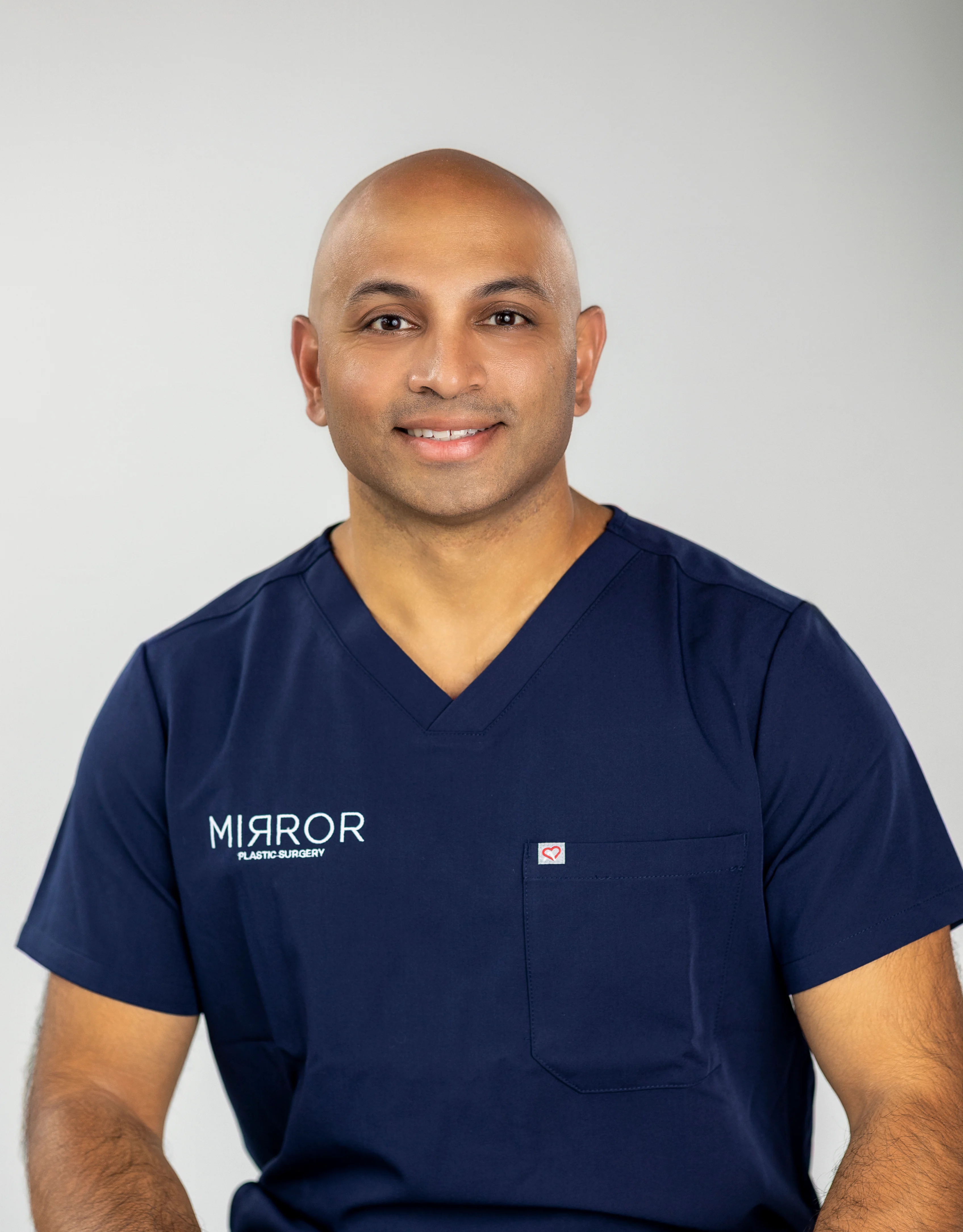
At Mirror Plastic Surgery, Dr. Akash Chandawarkar, a Harvard-educated, Johns Hopkins-trained plastic surgeon and advisory board member for Tiger Aesthetics (Avéli), performs a detailed, hour-long assessment. This visit matches your specific cellulite type to the treatment with the strongest evidence for your anatomy and goals.
Frequently Asked Questions
How Long Do Cellulite Injections Last?
Longevity depends on the product. Qwo, the only FDA-approved injectable ever designed for cellulite, showed improvement at one year in clinical trials but is no longer available in the United States. Biostimulatory fillers used off-label may improve skin quality but do not release the fibrous bands that cause dimpling. Mesotherapy lacks strong long-term evidence and carries a meaningful side-effect profile. Because no FDA-approved injectable replacement for Qwo exists as of 2026, patients researching “cellulite injections” should recognize that the injectable landscape has changed significantly since 2022.
What Is The Most Successful Treatment For Cellulite?
Mechanical subcision with Cellfina or Avéli has the strongest long-term clinical evidence of any cellulite treatment. Cellfina’s pivotal trial showed patient satisfaction of 96% at two years and no reduction in treatment benefit at three years, with five-year follow-up confirming durability in 96% of treated dimples. Avéli’s CONFFIRM study demonstrated clinically significant improvement sustained at 12 months, with multi-year data still accumulating. Both treatments work by cutting the fibrous bands that cause dimpling, which creates a structural change that does not reverse because cut septae retract and do not reconnect. No topical, energy-based, or currently available injectable treatment matches this durability profile.
Are Cellulite Injections Worth It?
For most patients in 2026, cellulite injections offer limited value. The only FDA-approved injectable for cellulite, Qwo, is no longer commercially available. Off-label options such as biostimulatory fillers do not address the main structural cause of dimpling and lack robust long-term cellulite data. Patients who encounter clinics promoting “collagenase injections” or products described as similar to Qwo should request specific FDA approval documentation, because no equivalent has been cleared. Subcision usually offers better long-term value through a single session, durable results that last years, and a well-characterized safety profile supported by the largest body of cellulite treatment evidence.
Does Cellfina Last Longer Than Avéli?
Both Cellfina and Avéli are subcision devices that cut fibrous bands and provide durable improvement. Cellfina currently has the longer published follow-up record, with three-year pivotal data and five-year extended follow-up, which makes it the benchmark for long-term durability in cellulite treatment. Avéli has robust 12-month pivotal data, and multi-year evidence is still emerging. Cellfina uses vacuum-assisted, fixed-depth cutting, while Avéli uses a light-guided hook with real-time visual confirmation of band release, which may reduce bruising and speed recovery. The best choice depends on your anatomy, cellulite pattern, and recovery preferences, which a thorough consultation can clarify.
Can Cellulite Come Back After Treatment?
Treated dimples usually do not recur because cut fibrous bands retract and do not reconnect. New dimples can appear in untreated areas over time due to aging, weight changes, or hormonal shifts, which can cause previously unaffected septae to shorten and tether. Subcision therefore treats existing dimples durably but does not stop the natural progression of cellulite in nearby tissue. Some patients may need maintenance for new areas, and combining subcision with skin-quality treatments may slow the appearance of new texture changes.
Key Takeaways
- Subcision with Cellfina or Avéli is the evidence-backed gold standard for long-term cellulite reduction, with Cellfina showing five-year durability in most treated dimples.
- Injectable cellulite treatments have limited long-term data, and Qwo, the only FDA-approved injectable, was discontinued in the United States in December 2022 with no approved replacement as of 2026.
- Energy-based devices provide modest, shorter-lived improvement and work best for skin laxity or as adjuncts to subcision rather than as stand-alone treatments for dimpling.
- Treatment should match your cellulite type, with discrete dimples responding best to subcision and diffuse texture often benefiting from energy-based approaches as an adjunct.
- Provider expertise is crucial, and a board-certified plastic surgeon with deep anatomical knowledge can deliver safer, more precise outcomes than high-volume generalist providers.
Disclaimer: Results may vary from person to person. Editorial content, before and after images, and patient testimonials do not constitute a guarantee of specific results.
1 Results may vary from person to person. Editorial content, before and after images, and patient testimonials do not constitute a guarantee of specific results.