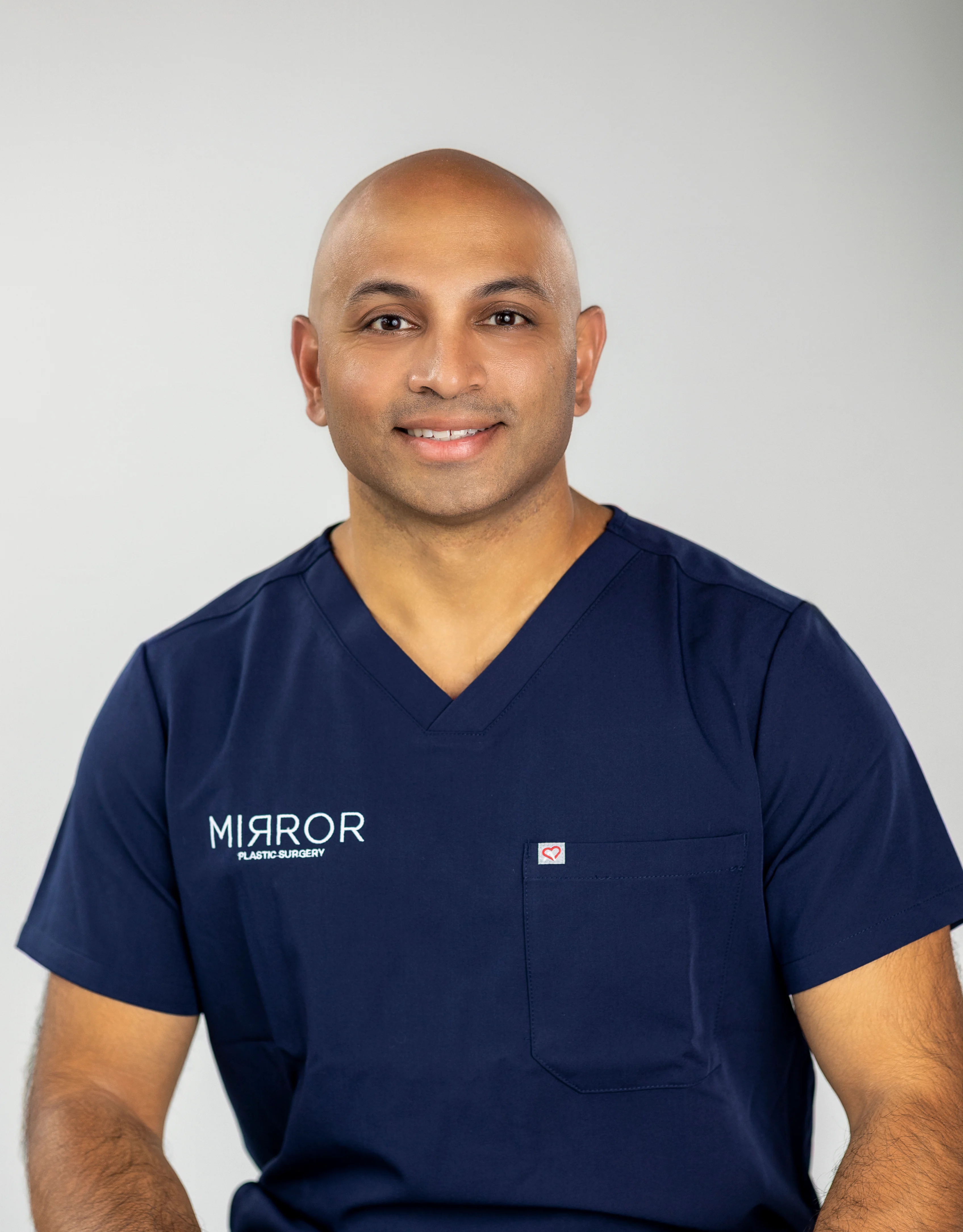
Written by: Dr. Akash Chandawarkar, Board Certified Plastic Surgeon, Mirror Plastic Surgery | Last updated: September 9, 2026
Key Takeaways
- The pubic region (Brazilian/bikini), upper lip, and underarms feel most painful because of thin skin, dense nerves, and coarse hair.
- Recent clinical research shows mean pain scores stay below 3 out of 10 with modern cooling and updated treatment protocols.1
- Pain perception changes with hair thickness, hormones, skin type, and hydration, and skilled providers adjust settings in real time.
- Evidence-based tools like prescription numbing cream, integrated cooling, and smart scheduling around menstruation lower pain scores.1
- Care from a board-certified plastic surgeon supports safer, more comfortable treatment. Schedule your consultation at Mirror Plastic Surgery to plan a tailored pain-management approach.
The Direct Answer: Areas That Typically Hurt Most
Clinical consensus and 2026 research identify the pubic region (Brazilian/bikini), upper lip, and underarms as the most painful areas for laser hair removal. These zones combine thin skin, high nerve density, and coarse, dense hair follicles, which makes each pulse feel more intense.
- Pubic Region (Brazilian/Bikini): Highest reported pain due to thin, sensitive skin, dense nerve endings, and coarse hair, especially near the labia and perianal areas.
- Upper Lip: Very thin skin and close proximity to nasal nerve endings create a sharp, radiating sting with each pulse.
- Underarms: Thin skin, many superficial nerve endings, and dense follicles close to the surface increase sensation.
A 2026 prospective multi-center study published in Lasers in Surgery and Medicine reported a mean pain score of 2.63 out of 10 across all treated areas.1 This finding shows that even though some zones feel more sensitive, overall discomfort remains manageable with current techniques.
Schedule A Laser Hair Removal Consultation to review your treatment areas and create a personalized pain management plan with Dr. Akash Chandawarkar.
How This Clinical Report Was Compiled
This report draws on peer-reviewed clinical studies published in 2025–2026. Key sources include a prospective multi-center trial by Ugonabo et al. in Lasers in Surgery and Medicine (53 subjects, 230 treatment sites), a randomized split-body study by Fernández Santos et al. in the Journal of Cosmetic Dermatology, and a comparative study by Zorman et al. in the same journal (61 paired treatment areas, 31 patients). Pain was measured using the Visual Analogue Scale (VAS), a standard 0–10 tool in clinical pain research. These findings describe population averages, and individual experiences can differ.
Most Painful Areas: Anatomy And Clinical Data
The table below summarizes VAS pain ranges by body area, based on the 2026 clinical studies cited throughout this report.
| Body Area | Typical VAS Range (0–10) | Key Anatomical Factors | Clinical Study Reference |
|---|---|---|---|
| Brazilian/Bikini | 5–8 | Thin skin, high nerve density, coarse hair | Zorman et al., 2026 |
| Upper Lip | 4–7 | Very thin skin, proximity to nasal nerves | Fernández Santos et al., 2026 |
| Underarms | 3–6 | Thin skin, dense follicles, superficial nerve endings | Zorman et al., 2026 |
| Chest/Abdomen | 3–5 | Moderate skin thickness, variable hair density | Ugonabo et al., 2026 |
| Legs/Arms/Back | 2–4 | Thicker skin, lower nerve density | Fernández Santos et al., 2026 |
Pubic Region (Brazilian And Bikini Line)
The pubic region consistently ranks among the most painful areas because several anatomical factors overlap. Thin, sensitive skin, a high density of nerve endings, and coarse, dark hair that absorbs more laser energy all increase sensation. The 2026 Zorman study found the largest pain differences between delivery techniques in the bikini area (p < 0.01), which confirms this region’s heightened sensitivity. Pain peaks near the labia and perianal areas, where skin is thinnest and nerves are most concentrated. Many first-time patients describe the Brazilian as the most challenging area, yet sessions usually last 15–20 minutes, and discomfort often drops by the third or fourth session as hair thins.
Upper Lip
The upper lip feels intense because it is a small area with extremely thin skin and many nearby nasal nerve branches. Each pulse can create a sharp, radiating sting. Total treatment time remains very short, often under two minutes, which limits overall distress. The 2026 Fernández Santos study showed that low-fluence, high-frequency protocols reduced pain by nearly three points on the VAS scale, making this facial area much more tolerable.
Underarms
Underarms rank highly for many patients because the skin is thin and hair follicles are dense and often coarse. The area also contains many superficial nerve endings. Interestingly, the 2026 Ugonabo study found the axillae were among the least painful areas in their cohort. This result highlights how individual pain perception varies. Underarm sensitivity depends heavily on hair coarseness and density, which differ between patients. The same study reported that hair removal was less effective in the axillae than in the bikini area or legs (p < 0.0001), so more sessions may be needed, extending total exposure to treatment sensations.
Moderately Painful Areas
The bikini line, nipples and areola, and inner thighs usually fall in a moderate pain range. The bikini line shares the pubic region’s thin skin and coarse hair but has slightly lower nerve density. The nipples and areola feel sensitive because of concentrated nerves, although treatment there is brief. Inner thighs have thinner skin than outer thighs, yet they remain less sensitive than the central pubic region.
Least Painful Areas
Legs, arms, and back usually feel least painful because they have thicker skin and lower nerve density. The 2026 Ugonabo study found the neck among the least painful areas, and the Fernández Santos study reported that 69.23% of areas treated with low-fluence linear protocols had zero discomfort (VAS = 0). Bony regions such as the shins and ankles can feel sharper because heat is more noticeable over bone, even when the skin itself is thicker.
Factors That Influence Pain Beyond Location
Pain during laser hair removal increases with hair thickness, darkness, and density, because coarser, darker hair absorbs more laser energy and generates more heat. The 2026 Ugonabo study confirmed this relationship. Hormonal cycles also affect sensitivity. A 2025 clinical study found pain scores peaked in the days before menstruation (4.8 ± 3.06 VAS) and were lowest during the first three days of the period (4.3 ± 3.48 VAS).
Beyond hair and hormones, skin sensitivity rises with recent sun exposure or tanning, and dehydration can lower pain tolerance. Fitzpatrick skin type guides laser selection. Darker skin typically requires an Nd:YAG wavelength, which penetrates deeper and may feel like a “hot thud” rather than a sharp snap.
Evidence-Based Strategies To Reduce Pain
Several clinically tested strategies work together to lower pain scores and make treatments more comfortable.
- Numbing Cream: A split-face trial by Asilian et al. (2014) found that a lidocaine 7%/tetracaine 7% cream applied 30 minutes before treatment reduced average VAS pain from 8.4 to 3.6 out of 10. Prescription-strength numbing cream is appropriate for sensitive areas when used under provider supervision. The FDA has warned against high-strength OTC products (10–40% lidocaine) because of cardiac and neurological risks.
- Cooling Technology: Modern laser systems use contact cooling with chilled tips, cryogen sprays, or forced cold air to protect the skin. A 2011 study by Zhou et al. found that a diode laser with an integrated cooling tip produced significantly lower pain scores (5.71 vs. 6.86 VAS) than the same wavelength without cooling. The 2026 Zorman study linked its low overall pain scores (2.2–2.7 VAS) to dry molecular cooling technology.
- Treatment Protocol: Low-fluence, high-frequency “in-motion” techniques cause less pain than traditional high-fluence stamping. The 2026 Fernández Santos study reported mean VAS scores of 0.77 vs. 3.69, and the 2026 Zorman study found brushing produced a mean VAS of 2.2 vs. 2.7 for stamping.
- Timing Around Menstrual Cycle: Schedule sessions during or just after menstruation, when a 2025 study found pain scores were lowest.
- Avoid Stimulants: Skip caffeine for 2–3 hours before treatment and stay well-hydrated in the 24 hours prior to support better tolerance.
- Shave Before The Session: Shaving 24–48 hours before treatment prevents surface hair from singeing, which adds extra heat and discomfort.
- Over-The-Counter Pain Relief: Acetaminophen or ibuprofen taken 30–60 minutes before the session can reduce baseline sensitivity when no contraindications exist.
- Communicate With Your Provider: A skilled provider can adjust fluence, pulse width, and cooling settings in real time. The 2026 Zorman study recommends starting with brushing protocols for sensitive patients and transitioning to stamping as hair density decreases.
Laser Hair Removal Compared With Other Hair Removal Methods
Laser hair removal usually feels less painful than waxing. One study found first-treatment laser pain averaged 2.8/10 versus 5.0/10 for sugaring, and second-treatment soft waxing reached 7.8/10 versus 2.5/10 for laser. Waxing creates a sustained tearing sensation that stays similar across sessions. Laser discomfort often decreases by the fourth or fifth session as hair becomes finer.
IPL devices use broad-spectrum light rather than a focused laser beam. They deliver less precise energy that can feel hotter and more uncomfortable. Modern diode and Nd:YAG lasers with integrated cooling systems are significantly more comfortable than IPL devices, which can feel hotter and less targeted.
Talk With Our Team About Hair Removal Options to choose the method that best fits your skin type, hair characteristics, and comfort level.
What You Can Expect During And After Treatment
Most patients describe the sensation as a quick rubber band snap against the skin followed by a brief flash of warmth. Sessions are relatively short. Underarms usually take about 10 minutes, and bikini treatments often take 15–20 minutes, so the total time spent feeling active pulses is brief.
After treatment, expect mild redness and swelling similar to a light sunburn, which usually resolves within 1–3 days. The 2026 Ugonabo study reported trace to mild erythema in 51.1% of treated areas and trace to mild edema in 36.5%, all resolving within 24 hours. Only five treatment-related adverse events occurred across 230 sites, and none were serious.
Why Choose Mirror Plastic Surgery For Laser Hair Removal
Laser hair removal is a medical procedure that requires physician expertise, and provider skill directly affects both comfort and results. A board-certified plastic surgeon brings detailed anatomical knowledge that supports precise energy delivery, appropriate wavelength selection, and real-time protocol adjustments that reduce pain.
Dr. Akash Chandawarkar is a Harvard-educated, Johns Hopkins-trained plastic surgeon with fellowship training in aesthetic surgery at MEETH/Lenox Hill Hospital. At Mirror Plastic Surgery, Dr. Akash personally performs all treatments, and the practice limits daily procedures to provide focused, unhurried care. Consultations in St. Petersburg and the greater Tampa, Florida area include a comprehensive assessment and a treatment plan tailored to your pain tolerance, skin type, and hair characteristics.
Frequently Asked Questions
Is It Worth Lasering Pubic Hair?
For most patients, pubic laser hair removal offers significant long-term benefits. The pubic region ranks among the most painful areas, yet clinical data shows strong effectiveness there. One 2026 multi-center study reported mean hair reduction reaching 84.6% at 12 months using simultaneous emission technology, with better results in the bikini area than in the axillae.1 Pain often decreases by the third or fourth session as hair thins, and modern cooling and numbing protocols help most patients tolerate treatment well.
How Many Sessions Will I Need?
Most body areas require 6–8 sessions spaced 4–8 weeks apart. Facial areas may need 8–10 sessions because hormones influence hair growth cycles. Underarms can require additional treatments, since clinical studies show axillary hair removal responds less efficiently than other regions. One 2026 randomized study achieved 83–91% hair clearance after eight sessions across multiple body areas.1
Can I Get Laser Hair Removal If I Have Sensitive Skin?
Patients with sensitive skin can safely receive laser hair removal when they work with an experienced provider. Modern lasers with integrated cooling and low-fluence protocols are designed for comfort across a wide range of skin types. One 2026 randomized study found that low-fluence, high-frequency protocols produced mean VAS scores of 0.77 out of 10 across skin phototypes II–IV. Your provider should perform a patch test, adjust settings, and review contraindications such as active tanning, open wounds, active skin infections, or recent use of photosensitizing medications like oral isotretinoin.
Does Laser Hair Removal Hurt More On Certain Parts Of The Body?
Clinical data confirms that the pubic region, upper lip, and underarms are the most sensitive areas because of thin skin, high nerve density, and coarse hair. Technique also plays a major role. Brushing protocols reduced pain by an average of 0.48 VAS points compared with stamping, with the largest differences in the bikini area and underarms. The right provider and protocol can significantly reduce discomfort even in these sensitive zones.
What Is The Best Way To Prepare For My First Session?
Shave the area 24–48 hours before treatment, avoid sun exposure and self-tanner for at least two weeks, skip caffeine on the day of treatment, and stay well-hydrated in the 24 hours before your appointment. If you menstruate, consider scheduling your session during or just after your period, when clinical data shows pain sensitivity is lowest. Discuss numbing cream options with your provider, since prescription-strength formulations applied 30 minutes before treatment have reduced pain by more than half in trials. You can also take acetaminophen or ibuprofen 30–60 minutes before the session if your medical history allows.
Plan Your Laser Hair Removal With Mirror Plastic Surgery
Laser hair removal requires careful technique, especially in sensitive areas like the bikini region, upper lip, and underarms. At Mirror Plastic Surgery, Dr. Akash Chandawarkar personally oversees every treatment and focuses on both safety and comfort. The team designs each plan around your goals, pain tolerance, skin type, and hair pattern.
Request Your Laser Hair Removal Appointment to discuss your goals and receive a comprehensive, top-to-bottom assessment.
- Phone: 727-361-6515
- Email: hello@mirrorplasticsurgery.com
- Address: 780 4th Ave S, St. Petersburg, FL 33701
Disclaimer: Results may vary from person to person. Editorial content, before and after images, and patient testimonials do not constitute a guarantee of specific results.
1 Results may vary from person to person. Editorial content, before and after images, and patient testimonials do not constitute a guarantee of specific results.