
Written by: Dr. Akash Chandawarkar, Board Certified Plastic Surgeon, Mirror Plastic Surgery | Last updated: September 9, 2026
Hip dip filler results can last from about 12 months to several years, depending on the product, your anatomy, and your maintenance plan.1 This guide explains what affects longevity, why biostimulatory fillers often last longest, and how to choose a safe, effective treatment approach.
Key Takeaways
- Hip dip filler longevity ranges from 12 months to 5 years, with biostimulatory products like Sculptra and Radiesse often delivering the longest results through collagen stimulation.1
- Product choice, individual metabolism, treatment volume, injection technique, lifestyle factors, and maintenance schedule all significantly influence how long results last.
- Biostimulatory fillers often outperform traditional hyaluronic acid options because they trigger the body to produce its own collagen rather than simply occupying space with gel.1
- Proper provider selection, specifically a board-certified plastic surgeon with body contouring expertise, is the most critical factor for both safety and long-lasting results.
- Consulting a board-certified plastic surgeon is essential for a personalized treatment plan and safe, realistic outcomes.
Hip Dip Filler Duration By Product Type
The question of how long hip dip filler lasts has a product-specific answer.1 Biostimulatory fillers are the preferred choice for hip dip correction because they build the patient’s own collagen, creating results that outlast traditional gel fillers by a significant margin.1 Dr. Akash Chandawarkar, board-certified plastic surgeon and founder of Mirror Plastic Surgery in St. Petersburg, FL, specializes in biostimulatory protocols for hip dip correction and non-surgical body contouring. The table below compares the main filler types by duration and key considerations.
| Filler Type | Examples | Typical Duration | Key Considerations |
|---|---|---|---|
| Biostimulatory (PLLA) | Sculptra | 24–36 months; some patients report 2–5 years | Builds collagen gradually over 3–6 months; results develop slowly but last longest; not reversible |
| Biostimulatory (CaHA) | Radiesse | 12–24 months | Immediate volume plus collagen stimulation; not reversible |
| Hyaluronic Acid (HA) | Juvederm, Restylane | 6–18 months | Immediate results; reversible with hyaluronidase; shorter duration and less commonly recommended for hip dips |
Get a personalized longevity assessment and product recommendation from Dr. Akash.
Why Biostimulatory Fillers Last Longer For Hip Dips
The biological mechanism behind biostimulatory fillers explains their superior longevity. Sculptra’s PLLA microparticles trigger a localized inflammatory response that stimulates fibroblasts to deposit new Type I collagen over 3 to 6 months. The PLLA particles dissolve within 9 months, while the collagen matrix often remains stable for 2 years or longer. The result is the patient’s own tissue, which integrates naturally.
Radiesse provides immediate volume through its carboxymethylcellulose gel carrier. Meanwhile, CaHA microspheres stimulate neocollagenesis and elastogenesis over subsequent weeks, supporting long-term structural remodeling. The gel carrier resorbs over approximately 3 months, and the collagen response it initiates typically persists for 12–24 months.
Hyaluronic acid fillers act as physical space-occupiers. The body’s endogenous hyaluronidase enzymes gradually break down the HA gel over time, producing shorter-lived results that require more frequent retreatment.
Dr. Akash serves as an advisory board member for Merz Aesthetics (Radiesse), giving him direct insight into product science and best-practice injection protocols that most injectors do not have access to.
6 Factors That Determine Your Personal Results
- Product Selection: Sculptra (PLLA) can outlast HA fillers by about 2x, while Radiesse (CaHA) has a similar duration to many HA fillers (around 12–18 months).1 The body maintains its own collagen longer than it maintains injected gel or calcium particles, which gives Sculptra a longevity advantage.
- Metabolism: Higher metabolic rates break down filler faster. Younger patients and athletes often metabolize filler more quickly, which can shorten the duration of hip dip fillers.1
- Treatment Volume: Larger initial treatment volumes may last longer because there is more product to metabolize.1 This reality supports a staged correction strategy rather than minimal single-session dosing.
- Injection Technique: Proper placement in the deep subcutaneous plane by an experienced injector helps prevent migration and supports product integration. Providers should use a long, blunt-tipped 18-gauge or 22-gauge cannula (typically 70 mm) and keep injections strictly in the subcutaneous fat layer above the muscle fascia.
- Lifestyle Factors: Smoking and ultraviolet exposure damage collagen and speed visible skin aging, which can shorten the useful cosmetic result of dermal fillers. Significant weight fluctuations also affect longevity.
- Maintenance Schedule: Scheduling re-treatment when volume has decreased to about 50% of its original effect maintains a smooth contour more consistently and often requires less product than restarting after full regression.
How To Make Hip Dip Filler Last Longer: Maintenance Protocol
Given these factors, a structured maintenance approach is key to extending your results. Clinical best practices recommend the following steps.
- Schedule touch-ups when volume fades to approximately 50–60% of the original effect, rather than waiting for complete disappearance. For Sculptra, this typically means re-treatment about every 2 years; for Radiesse, every 12–18 months.
- Maintain a stable weight and avoid crash dieting or rapid weight gain, since significant fluctuations affect subcutaneous tissue volume.
- Protect skin from excessive sun exposure and avoid smoking, because both habits accelerate collagen degradation.
- Follow the “5-5-5 rule” after Sculptra: massage 5 minutes, 5 times daily, for 5 days to help prevent nodule formation and support even product distribution.
- Work with a provider who creates a personalized maintenance plan tailored to your anatomy and lifestyle.
Cost Per Year: Evaluating Hip Dip Filler As An Investment
Cost-per-year analysis offers the clearest way to evaluate hip dip filler value. Biostimulatory fillers usually carry a higher initial investment, yet their longer duration often makes them more economical over time.
A complete Sculptra treatment plan for hip dips typically requires 10–20 total vials across 2–3 sessions. HA treatments for comparable correction may require 10–30 mL of product. Sculptra generally lasts longer, which produces a lower cost-per-year despite similar or lower upfront investment.
Mirror Plastic Surgery focuses on using the right amount of the most appropriate product for each patient’s anatomy and goals. A personalized quote is provided during consultation, based on individual hip dip depth, skin quality, and desired outcome.
Request your cost-per-year estimate and anatomy-based treatment plan with Dr. Akash.
Hip Dip Filler Vs. BBL: Longevity And Trade-Offs
Patients often compare non-surgical filler with a surgical Brazilian Butt Lift (BBL), since both approaches can address hip dips but differ in invasiveness, longevity, safety, and candidacy.
Invasiveness: Hip dip filler is minimally invasive with no general anesthesia and no meaningful downtime. BBL requires surgery, anesthesia, and 2–3 weeks of restricted activity.
Longevity: Between 20 and 40% of transferred fat in a BBL may not survive long term. Biostimulatory fillers deliver predictable, staged results that can last several years with proper maintenance.1
Safety: Hip dip filler is anatomically safer than BBL. The lateral trochanteric depression contains only tiny superficial vessels averaging under 0.9 mm in diameter. BBL fat embolisms occur when fat is injected deep into gluteal muscles where veins can reach 13.65 mm in diameter. The BBL mortality rate is estimated at 1 in 3,000 to 1 in 15,000 surgeries, with deaths caused by fatal pulmonary fat embolism.
Best Candidates For Filler: Patients with insufficient donor fat for a meaningful surgical transfer often benefit most from filler-based correction. Filler also suits patients seeking subtle enhancement without surgery or those who prefer a reversible or staged approach.
Risks And Side Effects: What To Know Before Treatment
Clear discussion of risks forms a core part of Dr. Akash’s concierge approach. Common and rare complications are addressed transparently during every consultation.
Common, temporary effects include:
- Swelling, bruising, and tenderness that typically peak in the first 48–72 hours and resolve within about a week
- Temporary firmness or asymmetry as filler integrates, typically softening over 2–4 weeks
Rare complications include:
- Nodules, reported in only 0.2% of subjects in a 2026 multicenter US study of nonfacial PLLA-SCA use when proper dilution protocols are followed
- Vascular occlusion, with reported incidences below 0.1%
- Asymmetry, which is addressable with staged correction and follow-up assessment
An important regulatory note: the FDA has approved zero dermal fillers for injection into the hips, thighs, or buttocks for cosmetic volume, so all fillers used for hip dip correction are off-label. This reality makes choosing a board-certified plastic surgeon with deep anatomical knowledge the single most important factor in minimizing risk. Biostimulatory fillers cannot be dissolved, which makes provider expertise and conservative dosing essential.
How To Choose The Right Provider For Hip Dip Filler
Injector expertise strongly influences both safety and longevity. The following criteria matter when evaluating a provider.
- Board certification in plastic surgery or dermatology, rather than general “aesthetic medicine” credentials
- Demonstrated body contouring experience with a portfolio of before-and-after photos specific to hip dip correction
- Use of blunt cannulas and proper dilution protocols, particularly for Sculptra
- Hour-long consultations that prioritize education and honest, unbiased recommendations over sales pressure
- Specific body contouring training, since skill with lip filler does not qualify a provider for safe hip dip injection
Dr. Akash Chandawarkar is a Harvard-educated, Johns Hopkins-trained, board-certified plastic surgeon with fellowship training in aesthetic surgery at the Manhattan Eye Ear & Throat Hospital/Lenox Hill Hospital. He serves as an advisory board member for Merz Aesthetics (Radiesse) and Tiger Aesthetics, and personally performs every injectable treatment at Mirror Plastic Surgery. His concierge philosophy prioritizes safety first, function second, and aesthetics third, and he provides direct, honest guidance about whether filler suits your anatomy.
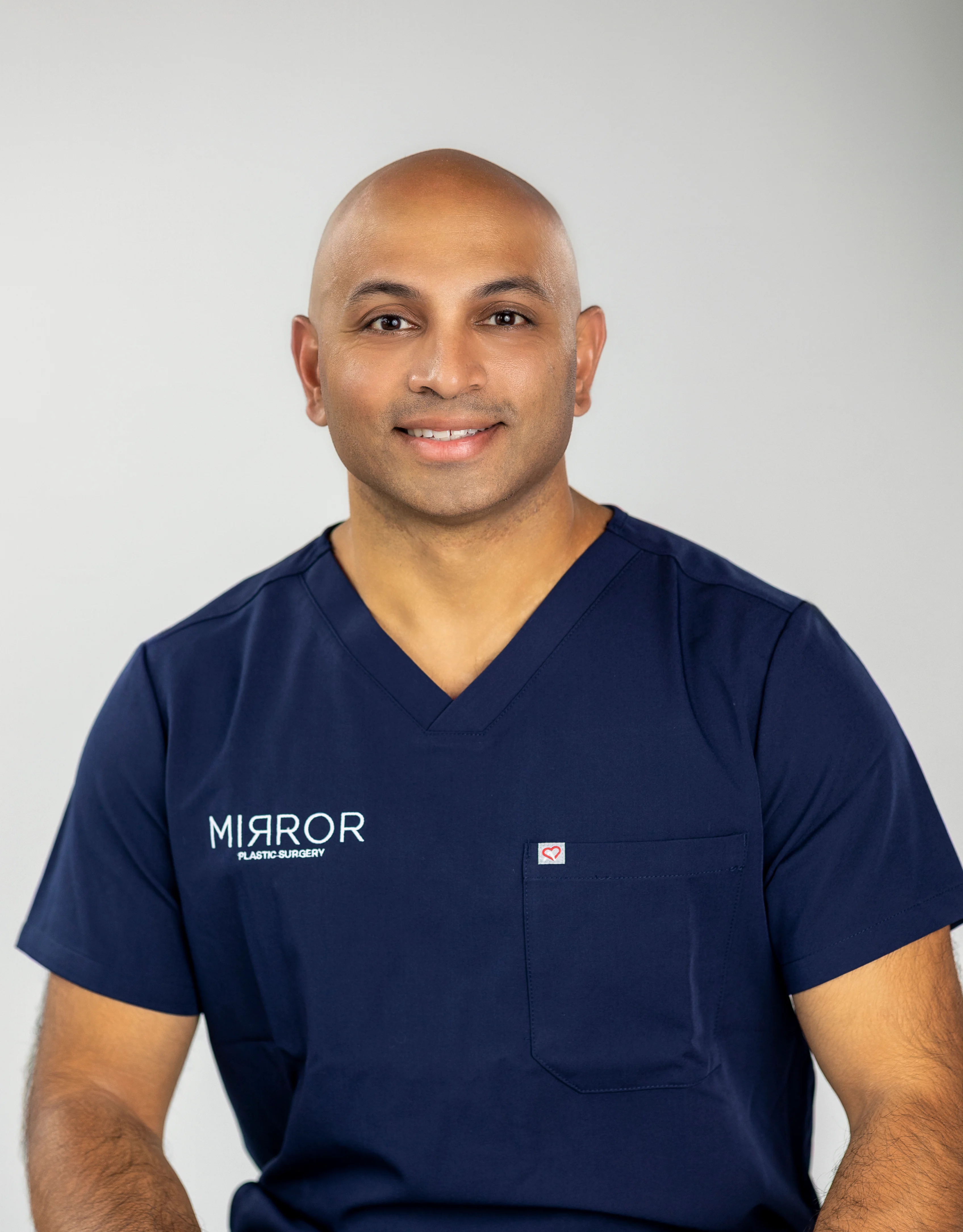
Meet with Dr. Akash for a hip dip filler consultation and experience the difference a board-certified plastic surgeon’s anatomical expertise makes.
Frequently Asked Questions
Below are answers to common questions about hip dip filler.
Is Hip Dip Filler Worth It?
For patients seeking non-surgical correction of mild-to-moderate hip dips, biostimulatory fillers offer multi-year results with no surgery, no general anesthesia, and minimal downtime.1 When evaluated on a cost-per-year basis, Sculptra in particular delivers strong value compared to shorter-lasting alternatives.1 Candidacy depends on individual anatomy, including hip dip depth, skin elasticity, and subcutaneous fat baseline. A thorough consultation determines whether filler is the right solution or whether another approach better serves your goals.
What Are The Risks Of Hip Dip Filler?
Common side effects include temporary swelling, bruising, and tenderness that typically resolve within 1–2 weeks. Rare complications include nodules and vascular occlusion, with low rates described in the risks section above. All fillers used for hip dip correction are off-label, since no dermal filler holds FDA approval for this indication. Choosing a board-certified plastic surgeon with deep anatomical knowledge and experience in body contouring is the most effective way to minimize these risks. Biostimulatory fillers cannot be reversed, so conservative dosing and provider expertise remain essential.
How Many Sessions Are Needed?
Most patients require 2–3 sessions spaced 4–8 weeks apart for biostimulatory fillers, which allows collagen to build gradually and enables the provider to assess and refine results at each stage. Approximately 60–70% of the recommended volume is typically administered in the first session, with the remainder added in a follow-up session for fine-tuning. The number of sessions and vials depends on hip dip depth, individual anatomy, and the degree of correction desired. A personalized treatment plan is developed during consultation.
Can Hip Dip Filler Be Reversed?
Hyaluronic acid fillers can be dissolved with hyaluronidase if the patient is dissatisfied with results or experiences a vascular complication. Biostimulatory fillers such as Sculptra and Radiesse cannot be reversed. If nodules form or overfilling occurs with a biostimulatory product, the patient must wait for the body to naturally remodel the stimulated collagen over time. This irreversibility highlights the importance of provider expertise, conservative dosing, and proper dilution protocols when choosing biostimulatory options.
What Is The Recovery Time After Hip Dip Filler?
Most patients return to work the following day. Swelling and bruising typically peak within the first 48–72 hours and resolve within 1–2 weeks. Strenuous exercise should be avoided for 48–72 hours post-treatment. Massage, sauna use, and heat therapy are generally avoided for approximately 2 weeks. If Sculptra is used, the 5-5-5 massage protocol, 5 minutes, 5 times daily, for 5 days, is recommended to help prevent nodule formation and support even product distribution. Final results from biostimulatory fillers develop gradually, with peak collagen deposition visible around month 6.1
Conclusion: Your Next Step Toward Lasting Results
Hip dip filler longevity depends on product choice, individual biology, and injector expertise. Biostimulatory fillers like Sculptra and Radiesse offer the longest-lasting non-surgical hip dip correction available when properly administered and maintained.1 Evaluated on a cost-per-year basis, they often represent an economical and effective non-surgical option for many patients.
Mirror Plastic Surgery’s commitment to safety, function, and aesthetics means every patient receives an honest assessment of whether hip dip filler is appropriate for their anatomy, which product will best support their goals, and what a realistic maintenance schedule looks like. Dr. Akash’s concierge approach ensures you receive thoughtful guidance and individualized care from consultation through follow-up. Schedule your personalized hip dip filler consultation or contact the practice at 727-361-6515 or hello@mirrorplasticsurgery.com to learn more.
Disclaimer: Results may vary from person to person. Editorial content, before and after images, and patient testimonials do not constitute a guarantee of specific results.
1 Results may vary from person to person. Editorial content, before and after images, and patient testimonials do not constitute a guarantee of specific results.