
Written by: Dr. Akash Chandawarkar, Board Certified Plastic Surgeon, Mirror Plastic Surgery | Last updated: September 9, 2026
Hip dips are a common concern, and many people feel unsure where to start. This guide explains what causes hip dips, which treatments actually work, and how to choose the safest option for your body.
Key Takeaways
Before you dive into the details, keep these key points in mind:
- Hip dips are a normal anatomical variation caused by pelvic bone structure and do not disappear with exercise or diet alone.
- Exercise can build surrounding gluteal muscles but cannot fill the lateral hip depression or change the underlying skeletal architecture.
- Non-surgical biostimulatory fillers like Radiesse offer a minimally invasive option that adds volume and stimulates collagen for results that typically last 12–18 months.1
- Surgical fat transfer or BBL can provide permanent correction for patients with adequate donor fat, with longer recovery and higher upfront costs.1
- Schedule your personalized consultation at Mirror Plastic Surgery to explore the safest, most effective hip dip correction plan for your anatomy.
Can Exercise Get Rid Of Hip Dips?
Exercise cannot fix hip dips because the depression sits over a region of the pelvis where there is no muscle to grow into the gap. Glute exercises such as squats and hip thrusts build muscles that sit posteriorly and superiorly and do not fill the lateral hip depression. The lateral trochanteric depression is a zone of naturally thin subcutaneous fat that cannot be spot-gained through diet or training.
Targeted movements such as side-lying leg raises, clamshells, fire hydrants, and hip abduction exercises can build the gluteus medius and minimus. This extra muscle may soften the look of mild dips by adding volume around the area. However, gluteus medius muscle growth typically accentuates the shape of the muscle above and below, sometimes making the bony dip appear more defined rather than less. Exercise supports strength and health, but it rarely eliminates hip dips.
Non-Surgical Hip Dip Correction: How Fillers Work
Biostimulatory fillers give patients meaningful improvement without surgery. These injectables add volume to the trochanteric depression and stimulate the body’s own collagen production, creating a gradual, natural-looking improvement in the hip-to-thigh transition.
Hip Dip Filler: What To Expect
Biostimulatory fillers such as Radiesse (calcium hydroxylapatite) and AlloClae trigger a controlled collagen-building response in the subcutaneous tissue overlying the hip dip. Radiesse provides immediate volume via its carboxymethylcellulose gel carrier while its calcium hydroxylapatite microspheres stimulate collagen that lasts 12 to 18 months.1 Results from biostimulatory fillers develop gradually over three to six months as new collagen accumulates, with effects typically lasting one to two years.1
Injection technique strongly affects both safety and outcome. Safe hip dip filler placement requires a long, blunt-tipped cannula that deposits product strictly in the subcutaneous fat layer, above the muscle fascia, a plane devoid of vessels larger than 2 mm. This anatomical positioning makes the procedure substantially safer than surgical fat grafting to the deeper gluteal planes.
No dermal filler currently holds FDA approval for injection into the hips or buttocks. All fillers used for hip dip correction, including Radiesse, are used off-label. Provider expertise and detailed anatomical knowledge therefore play a central role in achieving safe, effective results.
Is Hip Dip Filler Worth It?
Compared to surgery, biostimulatory fillers offer no general anesthesia, no incisions, and a return to normal daily activities within 24 to 48 hours. Results are adjustable over time, and treatment can be refined session by session as collagen builds.
Longevity is the main trade-off. Biostimulatory fillers require maintenance sessions every one to two years to sustain results. Biostimulatory fillers such as Radiesse are not reversible, unlike hyaluronic acid fillers which can be dissolved with hyaluronidase. Conservative dosing and an experienced injector matter from the very first session.
At Mirror Plastic Surgery, Dr. Akash Chandawarkar personally performs every injection. As a board-certified plastic surgeon with advisory board roles at Merz Aesthetics (Radiesse) and Tiger Aesthetics (AlloClae), he brings a surgeon’s command of subdermal anatomy to each treatment. This precision supports lower risk and natural-looking results.
Surgical Options: Fat Transfer Vs. BBL
Some patients prefer a more permanent or dramatic change. For those patients, surgical approaches such as fat transfer and BBL provide different benefits and risks than fillers.
Fat Transfer To Hip Dips
Fat transfer involves harvesting fat via liposuction from donor sites such as the abdomen, flanks, or thighs, purifying it, and injecting it in fine, layered passes into the trochanteric depression. Approximately 60–80% of transferred fat survives long-term; surgeons inject more than the desired final volume to account for this resorption, and fat that survives the first 3–6 months is generally permanent.1
Recovery requires avoiding direct pressure on the hips for the first two weeks. Most patients return to desk work between weeks two and three, with resistance training and high-impact activity resuming around weeks six to eight with surgeon clearance. Final contour usually appears between three and six months, once swelling resolves and graft survival stabilizes.
Key risks of hip dip fat transfer include under-correction, asymmetry, palpable lumps and oil cysts from fat necrosis, donor-site irregularity, and results that fluctuate with body weight. Very lean patients may lack sufficient donor fat for a meaningful result and may benefit more from non-surgical options.
Brazilian Butt Lift (BBL) For Hip Dips
A BBL addresses hip dips as part of broader gluteal contouring, adding volume to both the buttocks and the lateral hip depression in a single surgical session. The 2022 multi-society Practice Advisory on Gluteal Fat Grafting, issued by the ASPS, ASAPS, and ISAPS, established subcutaneous-only fat injection as the global standard of care for BBL, as fat placed above the gluteal muscle cannot enter large gluteal veins, eliminating the primary mechanism behind pulmonary fat embolism.
Most patients can resume light activity within two to three weeks and normal sitting within six to eight weeks, with final results visible at three to six months. BBL requires significant donor fat and a longer recovery period than non-surgical approaches and carries the inherent risks of general anesthesia, infection, scarring, and contour irregularities.
Surgery can offer permanent results once fat establishes a blood supply. Patients and surgeons still need to weigh the larger investment in recovery time and risk against individual goals and anatomy.
Risks And Side Effects Of Hip Dip Correction
What Are The Risks Of Hip Dip Fillers?
Common, temporary side effects of biostimulatory fillers include swelling, bruising, redness, and tenderness at injection sites. Injection-site swelling typically lasts two to five days, bruising five to ten days, and tenderness two to seven days. These effects usually resolve on their own.
Delayed-onset nodule formation represents a more product-specific risk. With modern dilution practices, proper injection depth, and the 5-5-5 massage protocol, Sculptra nodule rates have decreased from as high as 10–44% in early studies to approximately 1–5% in published series; Radiesse nodule rates are generally lower at less than 1–3%. Conservative dosing and an experienced injector matter from the very first session.
Because biostimulatory fillers cannot be dissolved, any complication becomes difficult to reverse. This reality makes provider expertise essential. Choosing a board-certified plastic surgeon with deep anatomical knowledge significantly reduces the risk of complications and the likelihood of needing corrective treatment.
Surgical Risks
Fat transfer and BBL carry the risks associated with any surgical procedure under general anesthesia, including infection, scarring, contour irregularities, fat necrosis, and anesthesia-related events. A 2017 survey-based report in Aesthetic Surgery Journal estimated the mortality of gluteal fat grafting at about one in three thousand cases, prompting a multi-society task force to mandate subcutaneous-only placement and strict cannula protocols; a 2020 follow-up estimated mortality at closer to one in fifteen thousand after these protocols were adopted. Adherence to current subcutaneous-only injection standards is the single most important safety factor in surgical fat grafting. Patients evaluating surgical providers should confirm that the surgeon follows post-multi-society task force protocols and performs fat placement exclusively above the gluteal fascia.
Realistic Expectations: What Hip Dip Correction Can Do
Hip dips are anchored to bone. Complete elimination of hip dips is impossible because the depression is anchored to bone; patients should expect softening of the hip-to-thigh transition, not a perfectly straight line.1 The goal of any correction, surgical or non-surgical, is a smoother lateral contour rather than an anatomically impossible result.
A responsible provider will help you set realistic goals and may advise against treatment if it does not suit your anatomy or psychological readiness. Patients with pre-existing psychological disorders such as Body Dysmorphic Disorder tend to experience more limited psychological improvement after cosmetic procedures and may remain dissatisfied even when the outcome is technically optimal. Mirror Plastic Surgery’s philosophy of safety first, function second, and aesthetics third means that Dr. Chandawarkar will always prioritize your long-term well-being over any single procedure.
Hip Dip Correction Cost Comparison
After you understand the clinical options and risks, cost becomes the next major factor. Pricing varies across methods, and the most economical choice depends on how long you plan to maintain results.
Non-surgical biostimulatory filler treatment usually has the lowest upfront cost. Total treatment ranges for Radiesse run $1,200–$4,500 per course, while Sculptra courses range from $1,600–$7,200. These are maintenance treatments rather than one-time permanent corrections, so cumulative costs over a decade can approach or exceed surgical costs.
Surgical fat transfer carries a higher initial fee. A hip dip fat transfer procedure in the United States typically costs $12,000 to $15,000, with a broader range of $8,000 to $20,000 depending on surgeon expertise, geographic market, and the number of donor sites involved. Over a ten-year period, surgery becomes cost-effective relative to ongoing filler maintenance at roughly the five-to-seven-year mark.
The final cost of any approach depends on individual anatomy, treatment extent, and provider expertise. Mirror Plastic Surgery provides personalized quotes during consultation and does not use one-size-fits-all pricing.
Get a personalized treatment plan and cost estimate based on your anatomy and goals.
Choosing Between Fillers And Surgery: A Decision Framework
The best approach to hip dip correction depends on anatomy, budget, and lifestyle. These points can help you think through your options before a formal consultation:
- Your anatomy: Very lean patients may lack sufficient donor fat for surgery but can still benefit from biostimulatory fillers. Patients with mild-to-moderate dips and good skin elasticity are often strong candidates for non-surgical correction.
- Your budget: Fillers require ongoing maintenance, while surgery involves a larger upfront investment with permanent results once fat integrates. Surgery becomes cost-effective relative to cumulative filler costs at roughly the five-to-seven-year mark.
- Your tolerance for downtime: Fillers offer minimal downtime, as noted earlier. Fat transfer requires two or more weeks of restricted activity, and BBL requires six to eight weeks before normal sitting.
- Your desired permanence: Patients who want an adjustable, non-surgical approach often prefer fillers. Patients who want permanent results and have adequate donor fat may be better candidates for surgery.
The most accurate assessment of which approach suits your anatomy comes from an in-person evaluation with a board-certified plastic surgeon who can review your structure, skin quality, and goals.
Frequently Asked Questions About Hip Dip Correction
Is There Any Way To Fix Hip Dips?
Yes. Three categories of correction exist, each with different trade-offs. Targeted exercise can build the gluteus medius and minimus, which may soften the appearance of mild dips, but it cannot change the underlying bone structure that causes them. Non-surgical biostimulatory fillers such as Radiesse and AlloClae add volume to the trochanteric depression and stimulate collagen production, producing gradual improvement over three to six months that lasts one to two years with maintenance. Surgical options, including fat transfer and Brazilian Butt Lift, offer permanent results by grafting the patient’s own fat into the hip dip area, though they require general anesthesia and several weeks of recovery. The best approach depends on your anatomy, available donor fat, budget, and tolerance for downtime and is best determined in a one-on-one consultation with a board-certified plastic surgeon.
Does A Hip Dip Ever Go Away On Its Own?
No. Hip dips are caused by the relationship between the iliac crest and the greater trochanter, a fixed skeletal feature that does not change with age, weight fluctuation, or exercise. Their visual prominence can vary depending on body composition. Weight gain in a gynoid pattern can pad the surrounding tissue and make dips less noticeable, while significant weight loss can make them more pronounced. The underlying anatomical cause remains constant throughout life. Meaningful reduction in the appearance of hip dips comes from muscle building, injectable volume restoration, or surgical fat grafting.
How Long Do Hip Dip Fillers Last?
Longevity depends on the filler type used. Radiesse, a calcium hydroxylapatite biostimulatory filler, typically provides results lasting 12 to 18 months, with immediate volume from its gel carrier and ongoing collagen stimulation from its microspheres. AlloClae, an adipose-based filler, offers a similarly gradual collagen-building effect. As mentioned earlier, results from biostimulatory fillers develop over three to six months and usually require maintenance sessions every one to two years. Because biostimulatory fillers cannot be dissolved, the expertise of the injecting physician directly affects both the quality and safety of the outcome.
Will Hip Dips Come Back After A BBL?
Fat that survives the first three to six months after a BBL or fat transfer is generally considered permanent because it has established its own blood supply and behaves like native fat tissue. Significant weight fluctuations after surgery can still alter results, since grafted fat grows with weight gain and shrinks with weight loss. The underlying bone structure that creates the hip dip does not change, so if a large volume of grafted fat is lost due to weight loss, the dip may become more visible again. Maintaining a stable body weight is the most important patient-controlled factor in preserving long-term surgical results.
What Are The Alternatives To Hip Dip Surgery?
The primary non-surgical alternatives are biostimulatory fillers, specifically Radiesse and AlloClae, which are injected directly into the trochanteric depression using a blunt-tipped cannula. These fillers stimulate the body’s own collagen production while adding immediate volume, gradually smoothing the hip-to-thigh transition over several months. Results last one to two years and require maintenance sessions. Targeted exercise, particularly movements that build the gluteus medius and minimus, can soften the appearance of mild dips in some patients but cannot eliminate the skeletal depression. For patients who are not surgical candidates due to insufficient donor fat, lean body composition, or preference for a non-invasive approach, biostimulatory fillers represent the most effective available option.
Why Choose Mirror Plastic Surgery For Hip Dip Correction
Mirror Plastic Surgery in St. Petersburg, Florida, follows a concierge medicine philosophy that differs from high-volume aesthetic practices. Dr. Akash Chandawarkar personally performs every injectable treatment at the practice. He is Harvard-educated, Johns Hopkins-trained, and fellowship-trained in aesthetic surgery at the Manhattan Eye Ear & Throat Hospital/Lenox Hill Hospital.
His board certification by the American Board of Plastic Surgery means that every biostimulatory filler placed for hip dip correction is administered by a physician with a surgeon’s command of subdermal anatomy. Dr. Chandawarkar serves on the advisory boards of Merz Aesthetics (Radiesse) and Tiger Aesthetics (AlloClae), giving the practice direct access to the latest evidence-based biostimulatory products and protocols.
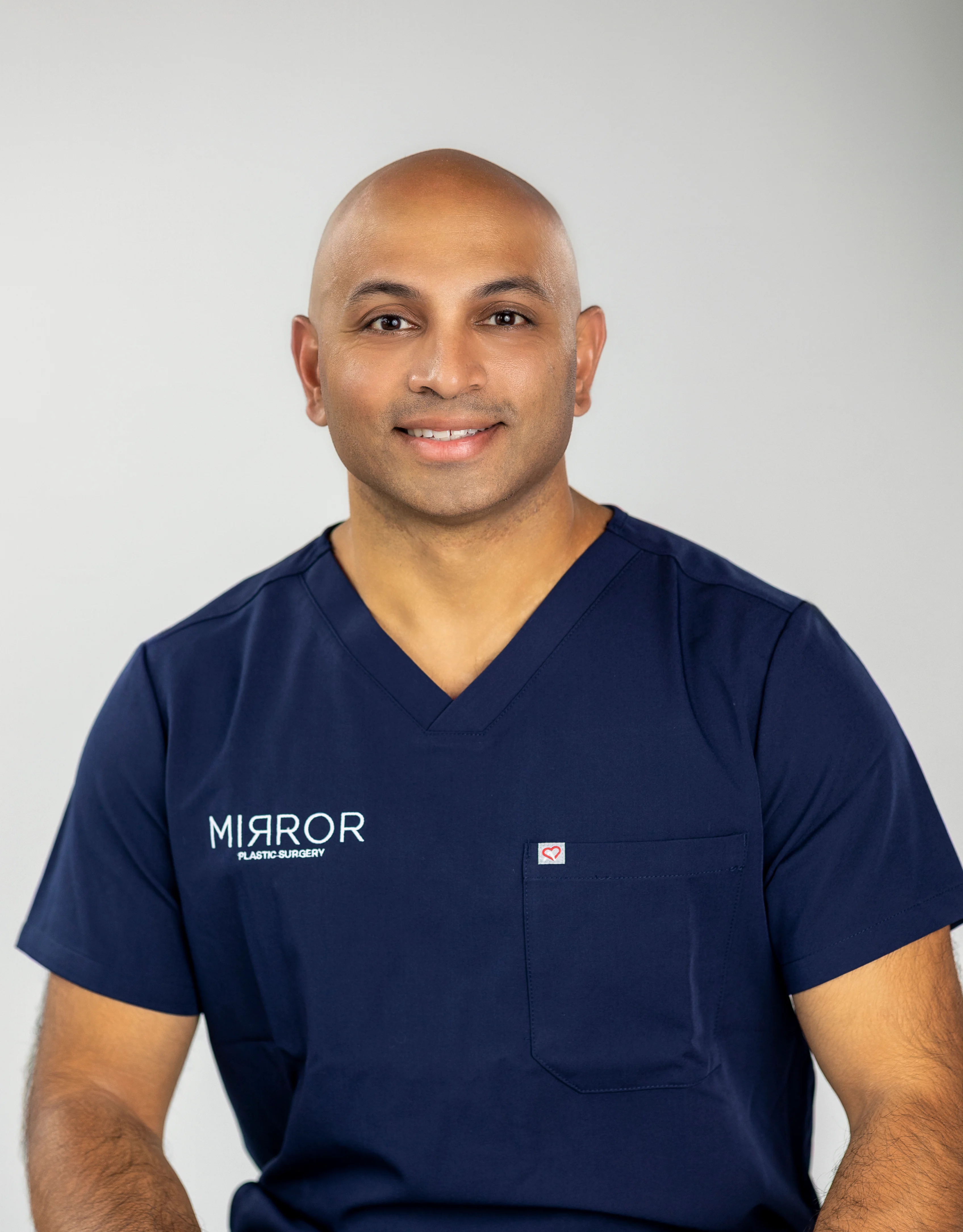
Consultations at Mirror Plastic Surgery can extend up to an hour. This time allows for a thorough top-to-bottom anatomical assessment, an honest discussion of realistic outcomes, and a personalized treatment plan that prioritizes your safety. Mirror Plastic Surgery limits itself to one to two procedures per day so every patient receives the team’s full attention before, during, and after treatment.
Mirror Plastic Surgery is located at 780 4th Ave S, St. Petersburg, FL 33701. You can reach the practice by phone or text at 727-361-6515 or by email at hello@mirrorplasticsurgery.com.
Conclusion: Making An Informed Choice
Hip dips are a normal anatomical feature present in the vast majority of adult bodies. Exercise can support overall gluteal development but cannot alter the skeletal structure that creates the dip. Non-surgical biostimulatory fillers offer meaningful improvement with minimal downtime and no surgery, while fat transfer and BBL provide permanent results for patients with adequate donor fat and the ability to undergo a surgical recovery. Each approach carries a distinct cost, risk, and longevity profile, and the right choice is always individual.
If you are considering hip dip correction, the most helpful first step is an honest, thorough consultation with a board-certified plastic surgeon who can assess your anatomy, explain realistic options, and support a pressure-free decision. At Mirror Plastic Surgery, every patient receives that level of care.
Disclaimer: Results may vary from person to person. Editorial content, before and after images, and patient testimonials do not constitute a guarantee of specific results.
1 Results may vary from person to person. Editorial content, before and after images, and patient testimonials do not constitute a guarantee of specific results.