
Written by: Dr. Akash Chandawarkar, Board Certified Plastic Surgeon, Mirror Plastic Surgery | Last updated: September 9, 2026
Key Takeaways
- Botox and Xeomin are both FDA-approved neuromodulators with similar safety, efficacy, and a typical duration of 3–4 months.1
- The main difference is formulation. Xeomin is the “naked toxin” without complexing proteins, while Botox retains them, and this matters most at high therapeutic doses.
- Natural-looking results depend far more on injector skill, anatomical precision, and full-face assessment than on the brand used.1
- Both products carry the same FDA boxed warning about distant toxin spread, and clinically meaningful migration is extremely rare at cosmetic facial doses.
- Get a personalized recommendation from Ellie at Mirror Plastic Surgery, from a board-certified plastic surgeon who uses both products.
Background: Botox And Xeomin In Cosmetic Practice
Botox Cosmetic (onabotulinumtoxinA), manufactured by Allergan Aesthetics (an AbbVie company), received FDA approval for cosmetic glabellar lines on April 12, 2002. Xeomin (incobotulinumtoxinA), manufactured by Merz Pharmaceuticals, received FDA approval for cosmetic glabellar lines in July 2011.
Both products are forms of botulinum toxin type A, and their formulations differ in one key way. Xeomin is often called the “naked toxin” because its manufacturing process, XTRACT double filtration, removes accessory complexing proteins and leaves only the 150 kDa active neurotoxin. Botox retains these complexing proteins in a roughly 900 kDa molecular complex. Xeomin is not protein-free, because each vial also contains human albumin and sucrose as inactive ingredients. The accurate distinction is “without accessory proteins.”
Key Differences At A Glance: Formulation, Onset, Duration, And Cost
| Feature | Botox (onabotulinumtoxinA) | Xeomin (incobotulinumtoxinA) |
|---|---|---|
| FDA cosmetic approval | 2002 (glabellar lines), 2013 (crow’s feet), 2024 (platysma bands) | 2011 (glabellar lines), July 5, 2024 (upper facial lines: glabellar, forehead, and lateral canthal lines simultaneously) |
| Complexing proteins | Present (~5 ng per 100 units) | Absent (~0.6 ng per 100 units) |
| Labeled onset | 1–2 days, with effect building over the first week | Median 2–7 days |
| Typical duration1 | 3–4 months | 3–4 months, up to 12–16 weeks |
| Storage (unopened) | Refrigerated (2–8°C) | Room temperature (up to 25°C) for up to 36 months |
On unit interchangeability, FDA labels explicitly state that the potency units of Xeomin cannot be compared to or converted into units of any other botulinum toxin product. A 1:1 clinical convention exists for glabellar dosing, with both products using 20 units across five injection sites. This is a clinical practice convention rather than an FDA-established equivalence standard.
On cost, total treatment cost depends on the number of units required for your specific anatomy and goals. A personalized quote is provided after consultation. Discuss your treatment plan with Ellie and receive transparent, unit-based pricing with no upselling.
How Xeomin And Botox Affect Your Look
Clinical trials do not show that either product produces inherently more natural results.1 Both Botox and Xeomin contain the identical active 150 kDa botulinum neurotoxin type A, so no chemical property makes one brand more natural.
Natural-looking outcomes depend on the injector’s anatomical precision, conservative dosing, and full-face assessment.1 A skilled injector achieves natural results with either product. An inexperienced injector can create an “overdone” or “frozen” appearance with both. The “surprised” or “plastic” look patients fear most often results from isolated, single-area treatment that ignores the dynamic relationship between the upper, middle, and lower face. The brand in the vial is rarely the cause.
At Mirror Plastic Surgery, Dr. Akash Chandawarkar starts with a comprehensive top-to-bottom facial assessment before selecting any product. His priority sequence places safety first, function second, and aesthetics third, so neuromodulator placement supports natural facial movement rather than suppressing it.
Safety, Migration, And Eyelid Ptosis
Both products carry a class-wide FDA boxed warning about the theoretical risk of distant toxin spread. At cosmetic facial doses, clinically meaningful migration has not been demonstrated in either product across millions of treatments. Both Botox and Xeomin share this warning, and in cosmetic facial doses it has not been a clinically meaningful concern.
The “naked toxin” formulation difference does not change migration patterns in clinical practice. A 2021 Cochrane systematic review noted that eyelid ptosis may be somewhat more frequent with Botox at standard doses. Experts emphasize that injection technique and dosing play a larger role in preventing ptosis than brand choice. Injector precision and dose selection are the determining factors, rather than the presence or absence of complexing proteins.
Immunogenicity And Resistance Over Time
Xeomin’s potential immunogenicity advantage comes from its lower foreign protein load. The absence of complexing proteins reduces the total protein the immune system encounters and may lower the risk of neutralizing antibody formation over time.
In practice, clinically meaningful antibody resistance remains rare at cosmetic doses. In clinical studies of Xeomin including 2,649 patients, only 0.3% tested positive for neutralizing antibodies after treatment, and true neurotoxin resistance occurs in approximately 0.5% of patients. These figures support the view that resistance is uncommon in aesthetic dosing ranges.
Merz Aesthetics notes that head-to-head studies comparing immunogenicity risk based on accessory proteins have not been performed. The formulation difference alone does not prove a lower rate of neutralizing antibody formation compared to Botox. Evidence for lower immunogenicity appears stronger at high therapeutic doses, such as those used for cervical dystonia and spasticity, than at standard cosmetic doses.
For most aesthetic patients, the practical difference is minimal. For long-term users or those with suspected treatment resistance, Xeomin’s formulation offers a credible, biologically plausible advantage that you can review with your provider.
Choosing Between Botox And Xeomin
The following factors can guide your conversation with a provider who uses both products.
Consider Xeomin If:
- You want to minimize protein exposure over years of treatment
- You have noticed a reduced or shorter response to Botox after years of use, suggesting possible antibody involvement
- You prefer a product that does not require cold-chain refrigeration before reconstitution
- You are treating the upper face and want a product with a single FDA label covering glabellar lines, forehead lines, and crow’s feet simultaneously, an indication Xeomin received on July 5, 2024
Consider Botox If:
- You have a documented history of successful, consistent results with it
- Your provider recommends it based on your anatomy and treatment history
- You are treating areas where Botox holds broader FDA approval, such as platysma bands (approved October 2024), chronic migraine, or hyperhidrosis
The most reliable answer comes from a consultation with a qualified provider who can assess your facial anatomy, muscle patterns, and aesthetic history. Both products perform well in clinical use, and the right choice is the one your injector recommends after a thorough evaluation.1
Schedule your consultation with Ellie at Mirror Plastic Surgery for a personalized, evidence-based recommendation from a board-certified plastic surgeon who works with both products.
Why Injector Expertise Shapes Your Results
Neuromodulator treatments were performed 9,883,711 times in the United States in 2024, up 4% in a single year. This volume makes provider selection more important than brand selection. A skilled injector using either Botox or Xeomin will deliver a better result than a less-experienced injector using the “right” product.
At Mirror Plastic Surgery, Dr. Akash Chandawarkar personally performs all neuromodulator injections. He is a Harvard-educated, Johns Hopkins-trained plastic surgeon with fellowship training in aesthetic surgery at the Manhattan Eye Ear & Throat Hospital. This background gives him a surgeon’s command of facial and subdermal anatomy in every treatment.
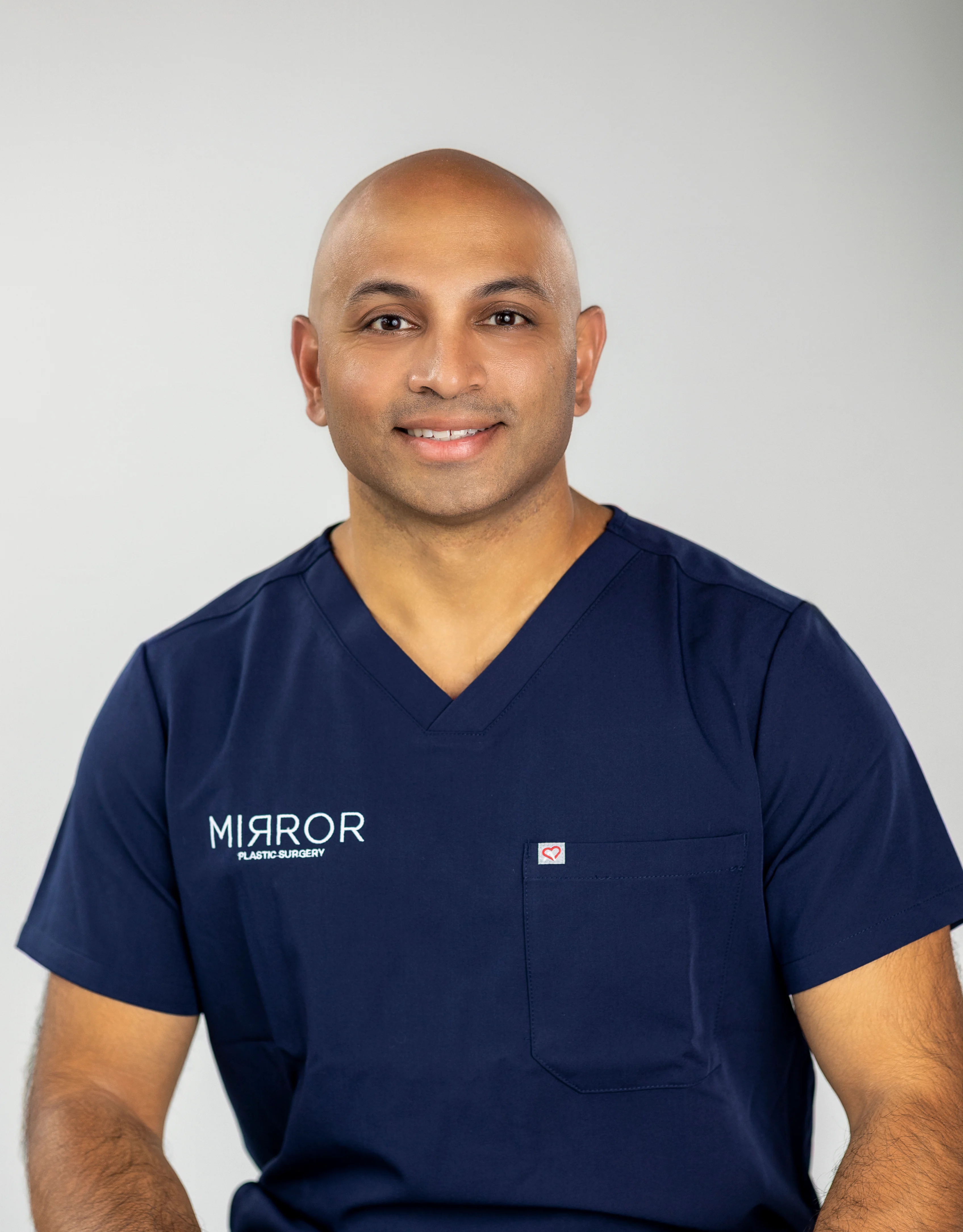
His concierge approach includes a comprehensive, top-to-bottom assessment that often lasts up to an hour. Each plan prioritizes safety first, function second, and aesthetics third. This structure reflects the difference between a surgeon-led practice and a high-volume clinic.
Dr. Akash does not select a product based on brand loyalty or quota incentives. Mirror Plastic Surgery is a supplier-neutral practice. The recommended product is the one that best matches your anatomy, treatment history, and long-term goals.
Conclusion: Putting The Evidence Into Practice
Botox and Xeomin are safe, effective, FDA-approved neuromodulators with comparable efficacy through four months and patient satisfaction above 90% in head-to-head trials.1 The “naked toxin” formulation difference offers a plausible immunogenicity benefit that matters most at higher or long-term dosing. Day-to-day cosmetic outcomes depend far more on injector skill, anatomical knowledge, and full-face assessment than on the brand on the vial.
The most confident choice comes from working with a qualified provider who uses both products and tailors treatment to your anatomy. Request personalized guidance from Ellie at Mirror Plastic Surgery and receive evidence-based recommendations from a board-certified plastic surgeon with every incentive to get your result right.
Frequently Asked Questions
Does Xeomin Look More Natural Than Botox?
As discussed earlier, current studies do not show that Xeomin produces more natural-looking results than Botox. Both products share the same active molecule, so neither is inherently softer or more natural. Natural, expressive results depend on the injector’s anatomical precision, conservative dosing philosophy, and full-face assessment rather than isolated area treatment. An experienced injector achieves natural results with either product. When evaluating a provider, focus on their approach to assessment and dosing strategy instead of the brand they prefer.
Does Xeomin Migrate More Than Botox?
Available evidence does not show that Xeomin migrates more than Botox, and the absence of complexing proteins does not meaningfully affect migration at cosmetic doses. Both products carry the same class-wide FDA boxed warning about the theoretical risk of distant toxin spread. Across millions of cosmetic treatments, clinically meaningful migration has not been demonstrated for either product. Injection depth, injection volume, and injector precision primarily determine unintended spread. Eyelid ptosis, the most commonly cited concern, relates more to technique and dose placement than to brand choice.
Can I Switch Between Botox And Xeomin?
Patients can switch between Botox and Xeomin under professional guidance. Both products use a 1:1 clinical dosing convention for glabellar lines, with 20 units of each product across five injection sites, which makes the transition straightforward in practice. However, FDA labels explicitly state that units of one botulinum toxin product cannot be formally compared to or converted into units of another. Your provider should re-evaluate your dose based on your anatomy and treatment history instead of applying a strict numerical conversion.
You should avoid combining both products in the same treatment area during the same session. If you are switching because of suspected antibody resistance, your provider may recommend waiting at least 12 weeks from your last treatment before evaluating the new product’s performance.
Do Botox And Xeomin Have The Same Side Effects?
Both products have similar side-effect profiles. Common reactions include injection-site bruising, mild swelling, headache, and, rarely, eyelid or brow ptosis. Both carry the same class-wide FDA boxed warning regarding distant spread of toxin effect, which remains extremely rare at cosmetic doses. Adverse reaction rates reported in clinical trials differ slightly between the two products, but those data come from separate trials with different endpoints and patient populations, so they do not represent a direct head-to-head comparison.
Neither product is recommended during pregnancy or breastfeeding. Patients with neuromuscular conditions such as myasthenia gravis or ALS should consult a specialist before treatment with either product.
Why Would A Provider Choose Xeomin Over Botox For Frown Lines?
For frown lines specifically, head-to-head trials show comparable efficacy between Botox and Xeomin. A provider may favor Xeomin for a patient who has experienced progressively shorter duration after years of Botox use, which can suggest early antibody involvement, because Xeomin’s lower protein load theoretically reduces the antigenic stimulus. Xeomin also received FDA approval in July 2024 for the simultaneous treatment of all three upper facial areas, including glabellar lines, forehead lines, and lateral canthal lines, within a single labeled indication. This approval can simplify treatment planning for patients seeking comprehensive upper-face rejuvenation.
For patients with no treatment history or a consistent positive response to Botox, current evidence does not require a switch. The decision should always follow a thorough assessment of your anatomy, muscle patterns, and prior treatment response.
Disclaimer: Results may vary from person to person. Editorial content, before and after images, and patient testimonials do not constitute a guarantee of specific results.
1 Results may vary from person to person. Editorial content, before and after images, and patient testimonials do not constitute a guarantee of specific results.