
Written by: Dr. Akash Chandawarkar, Board Certified Plastic Surgeon, Mirror Plastic Surgery | Last updated: September 9, 2026
Key Takeaways
- Physician oversight is the single most important factor in body contouring outcomes, with board-certified plastic surgeon involvement reducing complication risk and improving aesthetic predictability.1
- Clinical registry data links most reported adverse events to non-dermatology providers, which underscores the value of medical expertise over device selection.
- Surgeon-led practices like Mirror Plastic Surgery offer 60-minute consultations, direct physician management of complications, and evidence-based treatment planning that prioritizes patient safety.
- Non-surgical body contouring options including cryolipolysis, radiofrequency, and injectable procedures carry documented risks that require physician-level anatomical expertise to manage safely.
- Patients in St. Petersburg and Tampa Bay should prioritize surgeon oversight when choosing a body contouring provider, because it strongly predicts safety and outcomes.
The Research Problem: Why Body Contouring Safety Demands More Than a Device
Provider type directly affects body contouring safety and outcomes. A retrospective review of the CAPER registry (Cutaneous Procedures Adverse Events Reporting) was published in Lasers in Surgery and Medicine in September 2026. Covering March 2021 to August 2025, it found that 51% of reported adverse events were associated with procedures performed by non-dermatology providers, even though dermatologists performed 62% of the reported procedures. Among scarring cases specifically, 77% were linked to non-dermatology practitioners.1
A 2025 litigation analysis of 114 body-contouring malpractice cases reported a mean payout of $1,377,822 among plaintiff verdicts. Sepsis and pulmonary embolism were the leading causes of wrongful death.1 The FDA states that non-invasive body contouring reduces only small amounts of fat, results may be temporary, and serious complications including paradoxical adipose hyperplasia (PAH), burns, and nerve injury are documented risks. Body contouring is a medical procedure that demands medical expertise.
Key Evaluation Criteria For Body Contouring Specialists
Based on this research, patients need a clear way to evaluate providers before booking any treatment. Use this checklist to vet any body contouring specialist:
- Board certification by the American Board of Plastic Surgery (ABPS), the only plastic surgery board recognized by the American Board of Medical Specialties
- Consultation depth of 60 or more minutes, with time for history, examination, and questions
- Device-agnostic treatment planning instead of single-device quotas
- Documented complication management protocols with clear escalation pathways
- Before-and-after evidence matched to your body type and treatment area
- Transparent communication about risks, limitations, and alternatives, including when surgery is the more appropriate option
Research Findings: Comparing Provider Types In St. Petersburg And Tampa
Three provider categories operate in the Tampa Bay market. As the table below shows, surgeon-led practices like Mirror Plastic Surgery are the only category that consistently meets every safety and quality criterion, from board-certified oversight to direct complication management.
| Evaluation Criterion | High-Volume Med Spas | Boutique Aesthetic Clinics | Surgeon-Led Practices (e.g., Mirror Plastic Surgery) |
|---|---|---|---|
| Board-certified plastic surgeon oversight | Often nominal or absent | Variable; may lack surgical expertise | Always present, ABPS-certified |
| Consultation depth | 10–15 minutes, device-focused | 20–30 minutes, personalized | Up to 60 minutes, top-to-bottom assessment |
| Treatment philosophy | Device quotas, package upselling | Personalized but may lack anatomical depth | Safety-focused care that considers function and aesthetics together |
| Complication management | Limited escalation pathways | Variable | Direct physician management with hospital-level protocols |
High-Volume Med Spas are characterized by speed, device quotas, and rushed consultations. The CAPER registry finding mentioned earlier is consistent with this model. These clinics frequently push a single device regardless of patient anatomy, a pattern that the American Med Spa Association notes can involve widely variable levels of physician engagement.
Boutique Aesthetic Clinics offer more personalized attention but may lack the surgical training necessary to manage complications or recognize when a patient needs surgical rather than non-surgical intervention. The American Society of Plastic Surgeons notes that nonsurgical fat reduction produces limited results and does not match liposuction for larger-volume concerns.
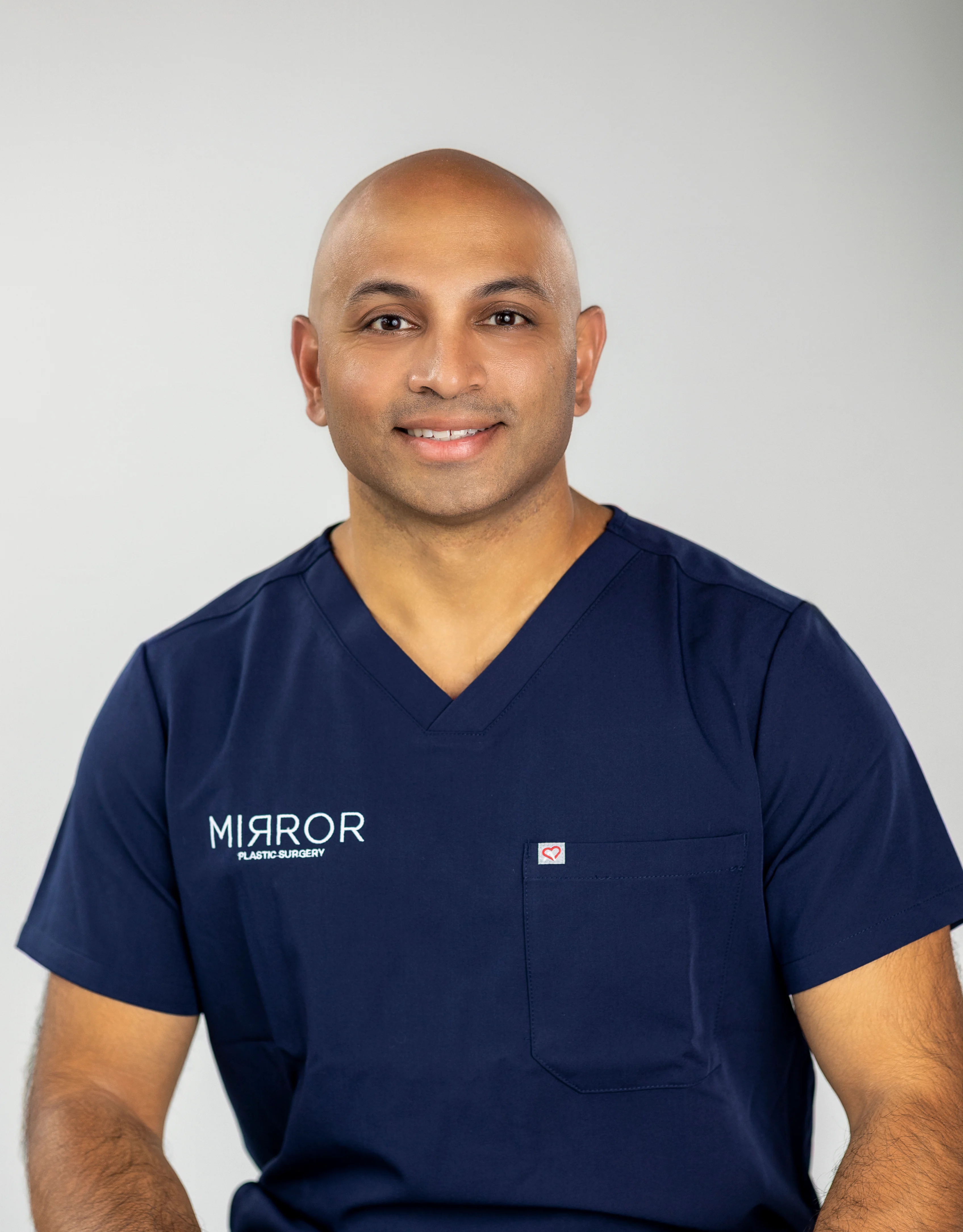
Surgeon-Led Practices represent the highest standard of care. Mirror Plastic Surgery, led by Dr. Akash Chandawarkar, exemplifies this category. He is Harvard-educated, Johns Hopkins-trained, and fellowship-trained at MEETH/Lenox Hill Hospital. The practice limits itself to one or two surgeries per day, which supports concierge-level attention before, during, and after every procedure.
Red Flags In Med Spa Consultations
Clinical guidelines and adverse-event data highlight consistent warning signs during consultations. Leave any consultation where the following occur:
- The provider cannot explain the anatomy involved in your treatment area
- Complication rates and management protocols are not disclosed
- Pressure to book immediately or purchase package deals is applied
- A single-device focus replaces individualized assessment
- No thorough medical history review is conducted, including medications, implants, and conditions such as Raynaud’s disease or cold urticaria, which are documented contraindications for specific energy-based devices
- The provider cannot confirm device manufacturer, model, service history, and operator competency, steps a 2026 review by Dr. Fowad Shahzad identifies as essential to safe, reproducible outcomes
Non-Surgical Body Contouring Options: Evidence-Based Considerations
Cryolipolysis (CoolSculpting) is the most studied non-surgical fat reduction technology. A 2015 systematic review in Aesthetic Surgery Journal documented fat reduction of 14.67%–28.5% per treated area. However, PAH, a complication in which treated fat enlarges rather than shrinks, occurs in approximately 1 in 455 treatments per a 2025 meta-analysis and requires surgical correction.1 This risk has contributed to a 40% year-over-year decline in noninvasive fat reduction procedures in 2024, from 745,957 to 439,032, alongside the rise of GLP-1 medications and eroding consumer confidence following high-profile PAH litigation.
Radiofrequency and HIFEM (Emsculpt Neo) combine muscle stimulation with fat reduction. A 2022 randomized controlled trial in Plastic and Reconstructive Surgery reported 28.3% fat reduction and 24.2% muscle increase at three months.1 Multiple sessions are required. This technology works best as a muscle-toning adjunct rather than a primary fat-reduction modality.
Injectable Body Contouring (Non-Surgical BBL) is an advanced option that few providers in the Tampa Bay area offer. Dr. Akash Chandawarkar performs non-surgical BBL using a combination of biostimulatory fillers, and he has advisory roles with Merz Aesthetics (Radiesse) and Tiger Aesthetics (AlloClae). A 2022 expert consensus in the Journal of Drugs in Dermatology states that gluteal enhancement injections should only be performed by physicians with advanced training in gluteal anatomy, a standard that Dr. Akash’s surgical background directly satisfies.
Across all modalities, the FDA is consistent. Non-invasive contouring is not intended to treat obesity or produce weight loss. Ideal candidates are often described as within 10–30 pounds of their goal weight with localized fat deposits, though this range is not specified by the FDA.
The Concierge Advantage: Mirror Plastic Surgery’s Evidence-Based Approach
Mirror Plastic Surgery’s consultation process runs up to 60 minutes and explores emotional drivers, medical history, and long-term goals before any treatment is recommended. The practice follows a safety-first philosophy that aligns with the position articulated in a patient-safety guide on elective cosmetic care: “Elective cosmetic surgery should be managed as a complete clinical pathway rather than as a transactional procedure.”
Dr. Akash personally performs all injectable treatments, which ensures physician-level precision and accountability at every step. His advisory roles with Merz Aesthetics (Radiesse) and Tiger Aesthetics (AlloClae) reflect a commitment to evidence-based innovation. This depth of expertise shows in the consultation. Patients who have experienced rushed visits elsewhere consistently find that Mirror’s hour-long assessment reveals anatomical nuances such as asymmetry, volume loss patterns, and skin quality. These details shape a treatment plan that prioritizes foundational restoration over immediate volume augmentation.
Schedule your 60-minute assessment with Ellie to see how surgeon-led care differs from a typical high-volume med spa visit.
Questions To Ask Every Provider Before Booking
- “Are you certified by the American Board of Plastic Surgery?” The phrase “board certified” alone is unprotected and can reflect very different training backgrounds.
- “How many body contouring procedures do you perform monthly, and what is your complication rate?”
- “Can you show me before-and-after photos of patients with my body type and treatment area?”
- “Do you offer a personalized treatment plan or a standard package for everyone?”
- “Who is responsible for managing complications, and what is your escalation protocol?”
Frequently Asked Questions
What Is The Difference Between A Med Spa And A Plastic Surgeon’s Office For Body Contouring?
Med spas typically operate under nominal physician oversight, with treatments performed by non-physician providers such as registered nurses or aestheticians. The quality of that oversight varies significantly, and in some cases a medical director is present on a license but absent from daily clinical operations. A plastic surgeon’s office led by an ABPS-certified surgeon like Dr. Akash Chandawarkar offers direct physician involvement in assessment, treatment planning, and execution. Every injectable treatment at Mirror Plastic Surgery is performed by Dr. Akash himself, which brings a surgeon’s command of subdermal anatomy to procedures that carry real anatomical risk. Complication management follows hospital-level protocols rather than ad hoc escalation.
Are Non-Surgical Body Contouring Results Permanent?
Fat cells destroyed through cryolipolysis, radiofrequency, or laser treatments are permanently eliminated via the lymphatic system. Remaining fat cells can still expand with weight gain, and the FDA notes that results may be temporary and often require more than one treatment to achieve and maintain. Skin tightening results from RF-based treatments typically last 12 to 18 months as newly formed collagen matures, with annual maintenance sessions recommended to preserve firmness.1 Patients benefit most when they reach a stable weight, ideally for three to six months, before starting body contouring, particularly after GLP-1 weight loss.
How Do I Know If I’m A Good Candidate For Non-Surgical BBL?
Ideal candidates are near their goal weight with adequate skin elasticity and specific aesthetic concerns such as hip dips, gluteal volume loss, or cellulite. Non-surgical BBL using biostimulatory fillers like Radiesse and AlloClae is not appropriate for every patient, and candidacy depends on a thorough anatomical assessment. A 2022 expert consensus in the Journal of Drugs in Dermatology is explicit that gluteal enhancement injections should only be performed by physicians with advanced training in gluteal anatomy. A consultation with Dr. Akash, which includes a top-to-bottom physical assessment and review of your medical history, is the appropriate first step to determine whether injectable body contouring, an energy-based modality, or a surgical approach best serves your goals.
Why Is A Plastic Surgeon Better For Injectable Body Contouring?
Injectable body contouring requires precise understanding of subdermal anatomy to avoid vascular compromise, necrosis, or asymmetry. The margin for error in the gluteal region is particularly narrow because of the proximity of vascular structures. A board-certified plastic surgeon’s training encompasses years of surgical anatomy, complication management, and hands-on tissue work that non-physician injectors do not receive. Dr. Akash’s surgical background, including fellowship training at MEETH/Lenox Hill Hospital, provides the anatomical depth that safe injectable body contouring demands. His advisory role with Tiger Aesthetics (AlloClae) also keeps him aligned with current evidence on product behavior and technique.
Conclusion: Why Surgeon-Led Care Should Guide Your Choice
Across clinical registries, litigation analyses, FDA guidance, and expert consensus, one pattern stands out clearly. Provider qualifications and anatomical expertise influence body contouring safety and results more than any specific device or brand. Patients in St. Petersburg and Tampa who prioritize surgeon oversight place themselves in the category most likely to experience predictable, safe outcomes.1
Mirror Plastic Surgery, under the leadership of Dr. Akash Chandawarkar, delivers a concierge, surgeon-led model that aligns with current safety guidelines and clinical evidence. Book your consultation with Ellie to take the first step toward results you can trust.
Disclaimer: Results may vary from person to person. Editorial content, before and after images, and patient testimonials do not constitute a guarantee of specific results.
1 Results may vary from person to person. Editorial content, before and after images, and patient testimonials do not constitute a guarantee of specific results.