
Written by: Ellie Pranckevicius, FNP-BC, Aesthetic Nurse Practitioner & Aesthetic Injector | Facial Restoration & Regenerative Injectable Specialist, Mirror Plastic Surgery
Key Takeaways
- Board-certified plastic surgeon oversight is the strongest safety factor for body contouring outcomes.
- High-volume med spas that see many patients per day cannot match the individualized attention of a concierge model with tightly limited daily volume.
- Hour-long, top-to-bottom anatomical assessments help identify skin quality, tissue elasticity, and post-GLP-1 changes that shape treatment planning.
- Supplier-neutral product selection keeps recommendations focused on patient anatomy instead of vendor quotas or commissions.
- Schedule your personalized consultation at Mirror Plastic Surgery to access anatomical expertise and safety-focused care in the St. Petersburg/Tampa Bay area.
How Plastic-Surgeon Oversight Improves Safety
The American Board of Plastic Surgery (ABPS) is the only board recognized by the American Board of Medical Specialties (ABMS) to certify surgeons in plastic surgery. That distinction matters in body contouring. A University of Florida 2023 study of 286,826 procedures by board-certified plastic surgeons found low complication rates with no significant safety differences between ambulatory surgery centers and office-based facilities. Outcomes remained consistent when ABPS-certified surgeons who are American College of Surgeons members oversaw care.1
Oversight shapes outcomes through clinical protocol setting, patient selection, and complication escalation. The 2023 Aesthetic Surgery Journal study of 41,775 HA filler cases found that 6 of 29 early complications (≈21 %) occurred with injectors having less than 1 year of experience. This finding highlights why the supervising physician’s credentials and active presence matter. Plastic surgeon Alan Durkin, MD notes that patients who attend medspas owned and operated by plastic surgeons on-site experience markedly safer care with broader treatment options, especially in regenerative aesthetics.1
The regulatory environment increases this risk. As of 2026, 36 states still lack meaningful regulatory oversight of med spas according to the American Medical Association. Patients must therefore verify board-certified physician supervision themselves. Florida maintains moderate regulatory oversight of med spas as of 2026 through existing rules and active enforcement, despite gaps and failed attempts at new legislation, so independent due diligence remains essential for Tampa Bay residents.
The post-GLP-1 patient population adds further complexity. A Duke University study analyzing more than 500 abdominal body contouring procedures found that patients who lost weight through a combination of bariatric surgery and GLP-1 medications faced the highest surgical complication rates, including a 29.6% return-to-OR rate compared with 5.1% among patients without medical weight loss. Duke surgeon Ash Patel, MBChB explains that these patients’ bodies undergo rapid, profound changes that affect healing. That reality calls for anatomical expertise instead of a standardized device protocol.
Comparing Surgeon-Led and High-Volume Med-Spa Models
The table below compares four operational dimensions that directly affect patient safety and outcome quality. No competitor names appear; the comparison reflects documented industry practices.
| Evaluation Dimension | Surgeon-Led Concierge Model | Boutique Aesthetic Practice | High-Volume Med-Spa Model |
|---|---|---|---|
| Daily procedure volume | Low daily volume, preserving full team focus per patient | Typically 3–6 procedures per day depending on staffing | High-volume throughput model (see volume data in Key Takeaways), prioritizing efficiency over individualized attention |
| Consultation depth | Up to 60-minute top-to-bottom anatomical assessment covering emotional drivers, tissue quality, skin elasticity, and long-term goals | 20–40 minutes, with anatomy review varying by provider | Often abbreviated, sometimes omitting skin elasticity, contraindication screening, or lifestyle review |
| Medical director oversight | Named ABPS board-certified plastic surgeon actively on-site, setting protocols and available for escalation | Board-certified physician director, with variable active presence | Medical director may be infrequently present, which this report identifies as a documented red flag |
| Product and device selection | Supplier-neutral, with products chosen based on individual anatomy, not vendor quotas or commissions | May carry multiple brands, with selection criteria that vary | Device selection often driven by capital equipment investment rather than patient-specific anatomical suitability |
Understanding practice models helps patients evaluate provider credentials. Patients also need clarity on which treatment options those providers offer and the clinical evidence behind each choice.
Evidence-Backed Injectable Body Contouring Options
The injectable body contouring landscape has matured through 2025–2026, with biostimulatory agents now supported by peer-reviewed outcome data. The most clinically validated options for the buttocks, hip dips, and cellulite use agents that stimulate collagen and elastin production instead of simply adding volume.
Hyperdilute Calcium Hydroxylapatite (CaHA / Radiesse): A 2026 review synthesizing consensus recommendations and emerging clinical data demonstrates favorable safety and efficacy for hyperdilute CaHA at off-face sites including the glutes, arms, and abdomen.1 When diluted, CaHA reduces immediate volumizing effects and enhances fibroblast interaction. This shift emphasizes long-term neocollagenesis, neoelastogenesis, and extracellular matrix remodeling over larger treatment fields.
Poly-L-Lactic Acid (PLLA / Sculptra and equivalents): A 2026 prospective, randomized, blinded split-arm trial of 20 adults found that PLLA formulations produced statistically significant increases in dermal thickness and skin elasticity by Day 90–120 for upper-arm contouring, with histological analysis confirming no granuloma formation after 120 days.1 The 2024 ISAPS report recorded 642,566 PLLA procedures performed worldwide, reflecting growing clinical adoption.
AlloClae: Mirror Plastic Surgery offers AlloClae as an in-office injectable option for the buttocks, hip dips, and breasts, performed under direct physician and nurse practitioner oversight. This regenerative approach aligns with the practice’s philosophy of prioritizing long-term structural improvement over short-term volumization.
At Mirror Plastic Surgery, biostimulatory agents such as Radiesse and AlloClae are the preferred approach for non-surgical buttock and hip contouring. These options provide a more established safety and efficacy profile for these anatomical areas.1
An estimated 31 million Americans were taking GLP-1 medications as of late 2025, and patients should reach a stable weight for 3–6 months after GLP-1 treatment before initiating non-invasive body contouring procedures. Weight stability supports more predictable and durable results.1
Five Questions to Ask Every Body Contouring Provider
Patients in St. Petersburg or Tampa can protect themselves by asking these five questions directly before committing to a body contouring provider.
- Who is the named medical director, and are they board-certified by the ABPS? A legitimate med spa must have a named, board-certified medical director who actively supervises the facility by establishing written treatment protocols, reviewing complex cases, and remaining available during operating hours.
- How many procedures does this practice perform per day? Daily volume directly affects the attention available to each patient before, during, and after treatment.
- How long is the initial consultation, and does it include a full anatomical assessment? A strong consultation should review treatment goals, health history, skin quality, body composition, contraindications, and the type of technology being considered.
- Is the practice supplier-neutral, or does it have vendor agreements that influence product recommendations? Commission-driven product selection is a documented source of overtreatment and suboptimal outcomes.
- What is the long-term maintenance plan, and what happens if results are unsatisfactory? Providers focused on durable outcomes use a structured follow-up protocol instead of a one-off treatment model.
Red Flags During Med-Spa Consultations
The patterns below suggest a provider prioritizes volume over individualized care.
- Opaque or package-based pricing presented before assessment. Pricing before anatomy review usually reflects a standardized protocol instead of a personalized plan.
- Consultations under 20 minutes. A high-quality consult must assess localized fat distribution, skin elasticity, prior scars or implants, tissue abnormalities, and realistic expectations. This process requires more than a brief appointment.
- Absence of a top-to-bottom assessment. Treating an isolated area without evaluating surrounding anatomy increases the risk of asymmetry and unnatural results.
- Medical director who is infrequently on-site. This pattern matches the red flag described earlier regarding limited physician presence and weaker oversight.
- One-size-fits-all device protocols. Expert providers match technologies to the patient’s specific concerns rather than applying a uniform approach, because fat reduction, muscle atrophy, skin laxity, and cellulite each require different strategies.
- No discussion of contraindications or GLP-1 weight-loss history. Clients with significant medical risk, severe laxity, or poor wound-healing history should receive medical clearance or referral instead of immediate treatment booking.
Ranked St. Petersburg/Tampa Body-Contouring Specialists (2026)
The practices below are ranked by depth of medical leadership, consultation quality, and anatomical oversight. These three criteria most strongly predict safe, natural, and durable body contouring outcomes.
- Mirror Plastic Surgery — St. Petersburg, FL
Mirror Plastic Surgery ranks first by every criterion in this report. The practice is founded and overseen by Dr. Akash Chandawarkar, MD, a Harvard-educated physician, Johns Hopkins-trained plastic surgeon, and fellowship-trained aesthetic surgeon at the Manhattan Eye Ear & Throat Hospital (MEETH)/Lenox Hill Hospital, with additional medical innovation training at Stanford University. This credential stack represents the highest tier of ABPS-recognized training available in aesthetic plastic surgery.
Non-surgical body contouring is led by Ellie Pranckevicius, FNP-BC. Her dual background as a licensed esthetician (600 hours of hands-on training) and advanced nurse practitioner (BSN and MSN from the University of South Florida) is complemented by four years in the Neuroscience ICU at Tampa General Hospital. Ellie specializes in non-surgical BBL services using biostimulatory fillers including Radiesse and AlloClae for gluteal contouring, hip dip correction, and cellulite reduction, with each plan tailored to individual anatomy and goals.
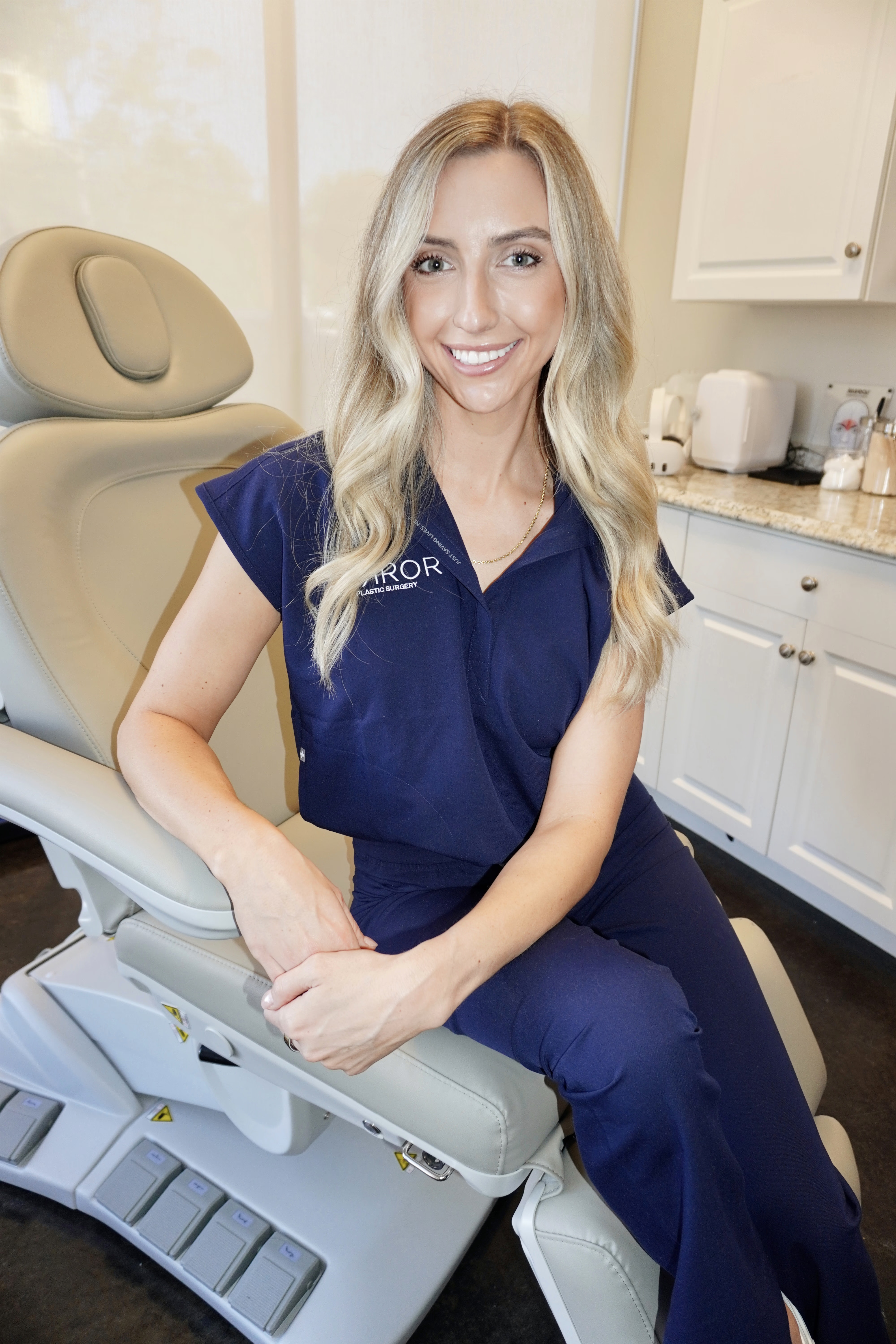
Ellie Pranckevicius, FNP-BC The practice maintains the low daily volume described earlier, conducts consultations of up to one hour using a structured top-to-bottom assessment framework, and operates as a supplier-neutral practice. Product selection is driven exclusively by patient anatomy, not vendor agreements. When non-surgical results cannot safely meet a patient’s goals, Dr. Akash’s surgical expertise provides a direct, in-house escalation pathway that standalone med spas cannot offer.
Several boutique practices in the Tampa Bay market operate under named board-certified physician directors who are present during treatments. These practices offer more personalized care than high-volume models but may not match the MEETH fellowship-level aesthetic training or the concierge daily volume limits that define Mirror Plastic Surgery’s model.
Practices led by board-certified dermatologists provide meaningful medical oversight for energy-based and injectable treatments. Plastic surgeon Philippe A. Capraro, MD notes that board-certified dermatologists represent an appropriate medical director tier for injectable and device-based treatments, though their anatomical training in body contouring is less comprehensive than that of plastic surgeons.
Clinics where a nurse practitioner or physician assistant performs treatments under documented, active physician supervision represent a middle tier. Outcome quality depends heavily on the supervising physician’s credentials and the frequency of their on-site presence. Patients must verify these factors independently given Florida’s current regulatory environment.
High-volume med spas with infrequently present medical directors have been associated with higher complication rates for non-surgical body contouring. Non-accredited medspa or office settings lack mandatory equipment, staffing, anesthesia credentialing, emergency protocols, and external audits required by AAAASF, AAAHC, or Joint Commission accreditation, resulting in dramatically higher complication rates than accredited, surgeon-led facilities.
Conclusion and Next Steps for Tampa Bay Patients
The evidence in this report highlights three non-negotiable criteria for safe, effective body contouring in the St. Petersburg and Tampa Bay market.1 Patients benefit most from active ABPS board-certified plastic surgeon oversight, a daily procedure volume that preserves individualized attention, and a consultation long enough to complete a full anatomical and medical history assessment. The global non-invasive body contouring market was valued at USD 4.53 billion in 2025 and continues to grow quickly, bringing a wider range of provider models and oversight structures.
Post-GLP-1 patients, patients with skin laxity or muscle atrophy, and anyone who has experienced rushed or upsell-driven consultations elsewhere often benefit from Mirror Plastic Surgery’s concierge model. Low daily volume, hour-long top-to-bottom assessments, supplier-neutral product selection, and direct access to a MEETH fellowship-trained plastic surgeon together create a high standard of care in the region.
Disclaimer: Results may vary from person to person. Editorial content, before and after images, and patient testimonials do not constitute a guarantee of specific results.
Frequently Asked Questions
How does Mirror Plastic Surgery differ from other Tampa Bay med spas?
Mirror Plastic Surgery follows a concierge medicine model that differs from high-volume med spas in three measurable ways. The practice maintains low daily volume so the clinical team can stay focused on each individual patient before, during, and after treatment. Every patient receives a consultation of up to one hour that follows a structured top-to-bottom anatomical assessment framework, covering emotional drivers, tissue quality, skin elasticity, medical history, and long-term goals. All non-surgical protocols are overseen by Dr. Akash Chandawarkar, MD, a Harvard-educated, Johns Hopkins-trained, MEETH fellowship-trained plastic surgeon, which provides a level of anatomical expertise and complication-management capability that standalone med spas cannot match. Non-surgical body contouring is performed by Ellie Pranckevicius, FNP-BC, whose dual esthetician and advanced nursing background supports a detailed understanding of both surface and subdermal anatomy.
Which injectable options are available for buttock contouring and hip dips?
Mirror Plastic Surgery offers non-surgical BBL services using biostimulatory fillers, specifically Radiesse (hyperdilute calcium hydroxylapatite) and AlloClae, for gluteal contouring, hip dip correction, cellulite reduction, and stretch mark improvement. These agents stimulate the body’s own collagen and elastin production, producing gradual, natural-looking structural improvement instead of simple volumization.1 Ellie Pranckevicius tailors each treatment plan to the individual client’s goals, whether they want significant volume, subtle enhancement, or correction of specific asymmetries. The practice does not use hyaluronic acid fillers as a primary approach for buttock augmentation, because biostimulatory agents offer a more established safety and efficacy profile for these anatomical areas.1 AlloClae procedures take place as in-office minor procedures under direct physician and nurse practitioner oversight.
How should GLP-1 patients prepare for a body contouring consultation?
Patients who have used GLP-1 medications should plan to discuss their full weight-loss history, current medication status, and the timeline of their weight change during the consultation. As noted earlier in this article, patients should achieve weight stability for several months after GLP-1 treatment before beginning body contouring. At Mirror Plastic Surgery, the hour-long top-to-bottom assessment evaluates post-weight-loss anatomy in detail, including skin laxity, muscle atrophy, residual fat distribution, and tissue quality. This evaluation helps determine which non-surgical options are appropriate and whether a surgical consultation with Dr. Akash would better serve the patient’s goals. Patients should bring relevant medical records, a list of current medications, and a clear description of their aesthetic priorities.
Which red flags matter most when choosing a Tampa Bay provider?
The most significant red flags include a medical director who is not board-certified by the American Board of Plastic Surgery or is rarely present on-site, consultations shorter than 20 minutes that cannot realistically cover anatomical assessment and contraindication screening, and package-based pricing presented before any review of individual anatomy. Additional concerns include a one-size-fits-all device protocol applied regardless of whether the primary issue is fat, skin laxity, muscle atrophy, or cellulite, and no discussion of GLP-1 history, wound-healing risk, or weight stability. Florida currently lacks medspa-specific regulatory requirements, so patients must independently verify physician credentials, on-site presence, and oversight protocols before proceeding with treatment.
When is surgery more appropriate than non-surgical body contouring?
Non-surgical injectable and energy-based body contouring works well for patients with localized subcutaneous fat, mild to moderate skin laxity, adequate skin elasticity, stable body weight, and realistic expectations for gradual improvement. It does not replace surgery when the primary concern involves significant excess skin, diastasis recti, structural issues such as hernia, or contour changes that exceed what surface-level devices or injectables can safely deliver. One core advantage of Mirror Plastic Surgery’s model is the seamless collaboration between Ellie Pranckevicius’s non-surgical work and Dr. Akash Chandawarkar’s surgical expertise. The top-to-bottom assessment identifies which patients are best served by non-surgical approaches and which require a surgical consultation, so no patient is undertreated or overtreated.
1 Results may vary from person to person. Editorial content, before and after images, and patient testimonials do not constitute a guarantee of specific results.