
Written by: Dr. Akash Chandawarkar, Board Certified Plastic Surgeon, Mirror Plastic Surgery | Last updated: September 9, 2026
Key Takeaways
- Accreditation by recognized bodies such as AAAHC, QUAD A, or The Joint Commission verifies safety standards, clinical protocols, and emergency preparedness.
- Because injectables carry medical risks like vascular occlusion, clinics must keep hyaluronidase on-site, follow written emergency protocols, and train staff thoroughly.
- Board certification by the American Board of Plastic Surgery confirms extensive specialized training, which directly affects safety and aesthetic results.
- Patients should review accreditation certificates, confirm the medical director’s credentials, and ask about emergency protocols before booking any injectable treatment.
- At Mirror Plastic Surgery, board-certified plastic surgeon Dr. Akash Chandawarkar personally performs every injectable treatment with concierge-level care; start your evaluation with a consultation.
What Accreditation Means For An Aesthetic Clinic
How Accrediting Bodies Evaluate Clinics
Accreditation is voluntary certification by recognized bodies such as AAAHC, QUAD A, or The Joint Commission. These organizations confirm that a facility meets rigorous, independently verified standards for patient safety, quality of care, clinical protocols, and emergency preparedness. For aesthetic clinics, accreditation signals a commitment to medical-grade standards rather than purely commercial ones.
Several distinctions matter. Accreditation applies to the facility, while certification applies to individual staff members. A clinic can employ certified clinicians and still lack facility accreditation, and the reverse can also occur. State licensure is mandatory and entirely separate. Holding a state license does not make a facility accredited. Accreditation is a voluntary, higher bar conferred by a private body.
QUAD A’s MedSpa Accreditation Program, launched in March 2026, requires 100% compliance with defined standards covering medical governance, risk stratification of procedures, clinical protocols, emergency preparedness, infection prevention, personnel training, quality assurance, and truthful marketing. More than 10,000 medical spas operate in the United States, and the overwhelming majority are not accredited. For injectables, accreditation confirms that the facility maintains written, rehearsed protocols for managing complications, including vascular occlusion, with hyaluronidase on-site and staff trained in emergency response.
Why Accreditation Matters For Injectable Safety
Injectables carry real medical risk. Vascular occlusion events from hyaluronic acid filler injections occur at approximately 1 event per 6,410 syringes across the most robust published series. Permanent visual loss attributable to dermal filler has been documented in over 190 published cases globally, and vision rarely recovers regardless of management.
An accredited clinic is more likely to have the infrastructure to manage these events. Every practice that injects filler must keep an in-date hyaluronidase emergency kit physically on site, and injecting filler without on-site hyaluronidase and a rehearsed protocol falls below the standard of care. Specifically, an accredited clinic should maintain:
- Written, rehearsed protocols for vascular occlusion recognition and response
- In-date hyaluronidase emergency kits physically on-site in adequate quantities for a full high-dose pulsed protocol
- Defined escalation pathways to emergency care, including ophthalmology for eye-related emergencies
- Regular emergency drills and documented staff training
- Strict product sourcing from FDA-authorized distributors only
Lower complication rates cluster in regulated, clinician-led settings that have written and rehearsed protocols, in-date hyaluronidase, and defined escalation pathways. Higher rates cluster in unregulated environments where operators are inadequately trained and no on-site emergency capability exists.
This difference becomes even more critical with biostimulatory fillers such as Radiesse and Sculptra. These products are not reversible with hyaluronidase. Their use raises the bar on injector experience and patient selection and reinforces the need for accreditation and qualified oversight.
Given this importance, patients benefit from knowing exactly how to verify a clinic’s accreditation before they book.
How To Verify A Clinic’s Accreditation: A Step-By-Step Guide
Any clinic claiming accreditation should substantiate it immediately. Clinics with nothing to hide answer verification questions without hesitation. Use this checklist before booking with any provider:
- Ask directly. Request the clinic’s accreditation certificates and the name of the specific accrediting body. A legitimate clinic provides this without hesitation.
- Verify with the accrediting body. Check the AAAHC, QUAD A, or Joint Commission websites for a searchable list of accredited facilities.
- Look for visible seals. Accredited clinics display their certification in the office and on their website.
- Verify the medical director’s license. Use the Florida Department of Health’s license verification portal to confirm the medical director is a licensed physician in good standing.
- Ask about the injector. Confirm who performs the injections and verify their credentials. This factor matters as much as facility accreditation.
- Inquire about emergency protocols. Ask specifically about hyaluronidase on-site, the vascular occlusion protocol, and how often the team rehearses it.
Any clinic that deflects, hesitates, or cannot produce documentation should be removed from your list.
Injector Credentials: Board-Certified Plastic Surgeon Vs. Nurse Injector
Facility accreditation covers the environment, while injector credentials determine who holds the syringe. Both safety and outcome quality depend on that person’s training.
A surgeon board-certified by the American Board of Plastic Surgery (ABPS) completes at minimum six years of post-medical-school training, including a full plastic surgery residency, and passes written and oral examinations evaluated by peers. In Florida, injectables may be administered by Nurse Practitioners (NPs/APRNs), Physician Assistants (PAs), and Physicians (MDs/DOs), and the training pathways differ dramatically. A registered nurse in Florida cannot independently perform aesthetic injectables such as Botox, dermal filler, Sculptra, or Kybella. These treatments are reserved for nurse practitioners, physician assistants, or physicians.
The phrase “board certified” requires scrutiny. The question to ask is, “Board certified in what?” Similar-sounding boards do not replicate the requirements of the American Board of Plastic Surgery. In Florida, any licensed physician, including those trained in emergency medicine or family practice, can legally perform cosmetic procedures.
Specialized plastic surgery training builds a deep understanding of anatomical structures. That expertise supports natural-looking results, minimal scarring, structural integrity, and predictable recovery.1 The same anatomical command translates to safer, more precise injectable placement and stronger complication management.
Dr. Akash Chandawarkar, founder of Mirror Plastic Surgery, is board-certified by the American Board of Plastic Surgery with training from Harvard, Johns Hopkins, and a specialized aesthetic surgery fellowship at MEETH/Lenox Hill Hospital. He personally performs every injectable treatment at Mirror Plastic Surgery and does not delegate injections to less-trained staff.
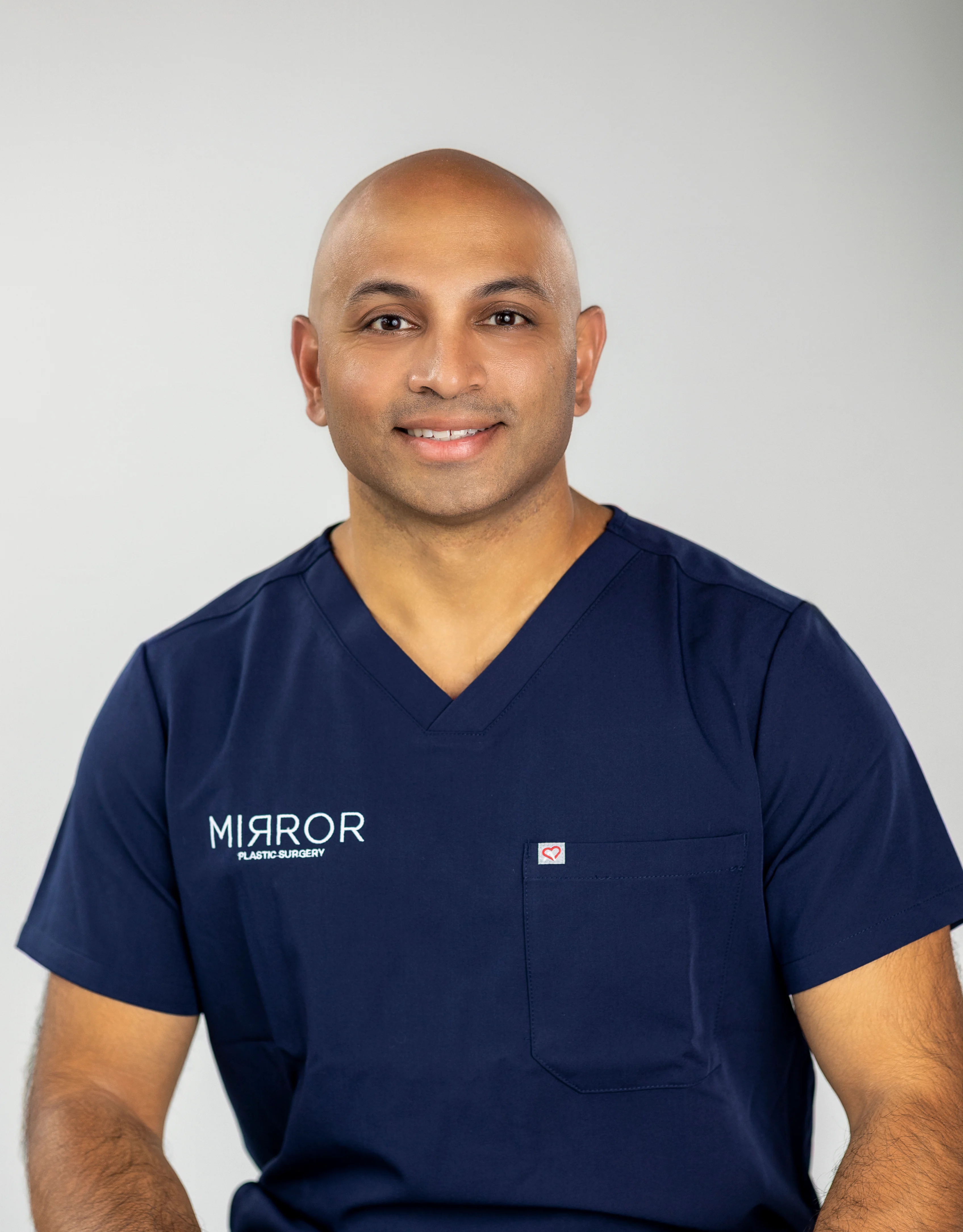
Schedule your consultation with Dr. Chandawarkar to have a board-certified plastic surgeon assess your face, explain the physiology, and design a treatment plan around your anatomy.
Safety Protocols To Look For In An Injectable Clinic
Injector credentials describe who treats you, while operational infrastructure determines how the clinic handles complications. Every practice injecting dermal filler must have a written vascular-occlusion recognition-and-response protocol and hyaluronidase on-site. Non-negotiable safety infrastructure includes:
- Thorough consultation and medical history review lasting at least 30–60 minutes
- Top-to-bottom facial or body assessment before any treatment plan
- Use of FDA-approved products from authorized distributors only
- On-site, in-date hyaluronidase for hyaluronic acid filler emergencies, as noted earlier
- Written emergency protocols for vascular occlusion, anaphylaxis, and vasovagal events
- Sterile technique compliance with OSHA’s Bloodborne Pathogens Standard (29 CFR 1910.1030)
- Product-specific informed consent disclosing risks, including rare but devastating complications
- Documented follow-up at 24 hours, 72 hours, and 2 weeks post-treatment
Mirror Plastic Surgery’s guiding philosophy, “safety first, function second, aesthetics third,” shapes every part of this infrastructure. The practice limits procedures to one or two per day so the entire team can focus on each patient. Dr. Akash’s supplier-neutral stance means every product recommendation is based on the patient’s anatomy and goals rather than commission structures or quota-driven upselling.
How To Choose The Right Clinic: A Practical Checklist
Use this consolidated checklist when evaluating any injectable provider in St. Petersburg or the broader Tampa Bay area. These criteria help you compare clinics objectively.
- Board certification: Is the injector board-certified by the American Board of Plastic Surgery (ABPS), or does the clinic rely on a nurse injector with less anatomical training?
- Accreditation status: Is the facility accredited by AAAHC, QUAD A, or The Joint Commission?
- Consultation quality: Does the consultation last at least 30 minutes, with questions about medical history, emotional motivations, and long-term goals?
- Communication style: Does the provider explain the reasons behind recommendations and advise against treatment when it is not warranted?
- Product range: Does the clinic offer multiple brands such as Botox, Dysport, Xeomin, Daxxify, Juvederm, RHA, Restylane, and Radiesse, or push a limited portfolio?
- Safety infrastructure: Is hyaluronidase on-site, and are emergency protocols written and rehearsed?
- Aftercare support: Can you reach the clinic by phone, text, or email after your treatment?
Mirror Plastic Surgery excels on every point. The practice offers hour-long consultations, a wide range of FDA-approved products from multiple brands, concierge-level communication, and a documented willingness to advise against unnecessary treatments when they do not serve the patient’s best interest.
Why Mirror Plastic Surgery Stands Out In St. Petersburg
The checklist above becomes clearer when you see it applied in real life. Consider a patient who previously visited a high-volume med spa in the area. Her consultation lasted under ten minutes, and the injector recommended three syringes of filler without examining her full face or asking about long-term goals. She left feeling unheard, unsure whether the treatment was right for her, and anxious about the results.
When she came to Mirror Plastic Surgery, Dr. Akash spent a full hour understanding her concerns and explaining the physiology of her facial aging in clear language. He recommended a conservative, staged approach she could maintain over time. The result was natural-looking rejuvenation and a trusted long-term relationship built on transparency.1
That experience reflects every differentiator Mirror Plastic Surgery offers:
- The injector: As detailed earlier, Dr. Akash Chandawarkar’s ABPS certification and elite training support precise, safe injectable treatments. He personally performs all injectable procedures.
- The philosophy: Concierge medicine built on safety first, function second, aesthetics third. Hour-long consultations, top-to-bottom assessment, and honest communication, including clear guidance when a treatment is not yet necessary.
- The approach: Supplier-neutral recommendations that focus on the right amount of the right product for each patient. Facial aesthetic injectables are associated with improvements in psychological, social, and quality-of-life outcomes when patient selection and treatment quality are appropriate.1
- Location: 780 4th Ave S, St. Petersburg, FL 33701
- Contact: 727-361-6515 (call or text) | hello@mirrorplasticsurgery.com
Conclusion: Your Safety Is Worth The Due Diligence
Accreditation verifies safety infrastructure. Injector credentials confirm anatomical expertise that shapes both safety and outcomes. Safety protocols ensure that rare complications receive immediate, rehearsed responses. For patients in St. Petersburg seeking an accredited concierge aesthetic clinic for injectables, Mirror Plastic Surgery offers a board-certified plastic surgeon, a concierge philosophy, and a consistent focus on safety, function, and aesthetics in that order.
The due diligence described in this guide takes time and attention. That investment protects your health, your appearance, and your long-term confidence.
Ready To Experience The Mirror Difference?
Book your comprehensive consultation today with Dr. Akash Chandawarkar. Call or text 727-361-6515 or email hello@mirrorplasticsurgery.com. Visit the clinic at 780 4th Ave S, St. Petersburg, FL 33701.
Frequently Asked Questions
Here are answers to common questions about concierge aesthetic clinics, accreditation, and injectable safety.
Is A Concierge Med Spa Worth The Cost?
For patients who prioritize safety, personalized care, and natural long-term results over the lowest price, a concierge aesthetic clinic is worth the investment. Concierge practices invest in extended consultations, comprehensive assessments, and robust safety infrastructure, which reduce the risk of complications and unsatisfactory outcomes.1 A rushed, low-cost injectable appointment that leads to asymmetry, overcorrection, or a complication requiring corrective treatment often costs more over time than a thorough, physician-led consultation from the start. The value of a concierge practice lies in both the treatment and the ongoing relationship with a provider who knows your anatomy, tracks your results, and advises you honestly about what you need and what you can skip.
What Is An Aesthetic Concierge Practice?
An aesthetic concierge practice provides personalized, high-touch care that includes extended consultation time, direct access to the physician, comprehensive top-to-bottom assessment, and communication beyond typical office hours. This model contrasts with high-volume “mill” practices that prioritize speed and patient turnover over individualized attention. At a true concierge practice like Mirror Plastic Surgery, the consultation itself functions as a clinical service rather than a sales pitch. The provider takes time to understand your emotional motivations, assess your anatomy, explain the physiology behind aging and treatment, and design a plan tailored to your long-term goals.
What Are The Risks Of Choosing A Non-Accredited Injector?
Choosing a non-accredited clinic or an inadequately trained injector increases the risk of vascular occlusion, infection, asymmetry, and poor aesthetic outcomes. Beyond clinical risks, non-accredited settings are more likely to use counterfeit or gray-market products, lack written emergency protocols, and operate without on-site hyaluronidase if a filler complication occurs. In Florida, any licensed physician, regardless of specialty, can legally perform cosmetic procedures, so the title “doctor” alone does not guarantee relevant training. The safest approach is to verify board certification with the American Board of Plastic Surgery, confirm facility accreditation directly with the accrediting body, and ask explicitly about emergency preparedness before any treatment begins.
What Is The Downside Of Concierge Aesthetic Medicine?
The primary downside is cost. Concierge practices invest more time and resources per patient, including longer consultations, more thorough assessments, higher-quality products, and more robust safety infrastructure, and their fees reflect that investment. For patients whose main priority is the lowest possible price, a concierge practice may not be the right fit. Patients who prioritize safety, natural results, and a long-term relationship with a provider who knows their anatomy often find that the cost difference pays for itself by reducing corrective treatments and supporting results that hold up over time.1 Mirror Plastic Surgery does not publish pricing because every treatment plan is personalized, and the consultation is where that conversation begins.
How Do I Verify A Surgeon’s Board Certification Before Booking?
The most reliable method is the American Board of Medical Specialties’ free “Certification Matters” database at certificationmatters.org, which takes under 60 seconds to search and confirms whether a surgeon holds certification from an ABMS-recognized board. For plastic surgery, the key credential is certification from the American Board of Plastic Surgery (ABPS), the only ABMS-recognized board that certifies surgeons in the full spectrum of plastic surgery of the face and body. Several non-ABMS organizations sell certifications with minimal requirements, so if a surgeon lists a board not found on the ABMS website, treat it as a red flag. You can also verify a physician’s Florida medical license through the Florida Department of Health’s online license verification portal, which confirms licensure status and any disciplinary history.
Disclaimer: Results may vary from person to person. Editorial content, before and after images, and patient testimonials do not constitute a guarantee of specific results.
1 Results may vary from person to person. Editorial content, before and after images, and patient testimonials do not constitute a guarantee of specific results.