

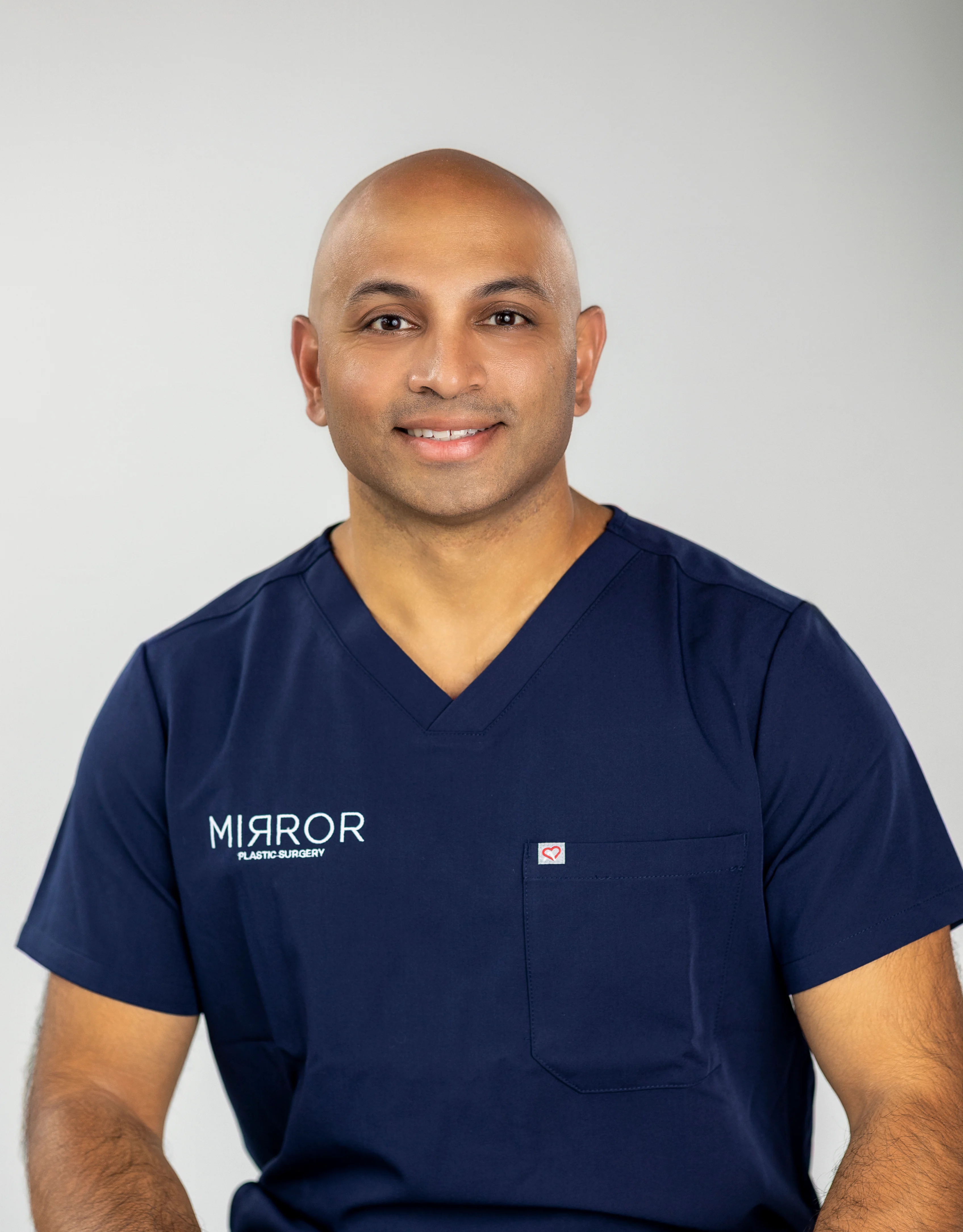
Written by: Dr. Akash Chandawarkar, Board Certified Plastic Surgeon, Mirror Plastic Surgery | Last updated: September 9, 2026
Key Takeaways
- Concierge aesthetic medicine is a physician-led model that limits patient panels to deliver extended consultations, continuity of care, and anatomy-based treatment planning.
- Concierge practices prioritize safety, natural results, and individualized planning instead of treatment throughput and product sales.
- Board-certified plastic surgeons bring surgical-level anatomical knowledge that significantly reduces complication risks during injectable treatments.1
- At Mirror Plastic Surgery, Dr. Akash personally performs every injectable treatment after comprehensive top-to-bottom facial assessments lasting up to an hour.
What Concierge Aesthetic Medicine Really Means Beyond The Luxury Label
The word “concierge” often appears in marketing, yet the true model has a specific, clinically meaningful structure. Concierge aesthetic practices limit patient panels to 100–600 patients, compared to 2,500 or more in traditional primary care settings. That smaller panel enables same-day or next-day appointments, direct provider access, and, most importantly, consultations that run 30–60 minutes instead of the 12–18 minute industry average.
At Mirror Plastic Surgery in St. Petersburg, Florida, this philosophy shapes the daily schedule. The practice limits itself to one to two surgical procedures per day and dedicates up to an hour per consultation for non-surgical patients. That time is a clinical necessity, not a luxury. A meaningful understanding of facial anatomy, movement patterns, skin quality, and long-term goals requires more than a 15-minute appointment.
Concierge aesthetic care is a structural model where the provider is compensated for the relationship rather than the volume of product moved. That structure removes the financial incentive to over-treat and supports conservative, long-term planning. When a practice’s revenue depends on upselling syringes instead of long-term relationships, clinical recommendations can become distorted. Mirror Plastic Surgery operates as a supplier-neutral medical practice, so product choices follow individual anatomy and goals rather than quotas or commissions.
Schedule a comprehensive consultation with Ellie to see how a genuine concierge aesthetic visit feels from start to finish.
What Tailored Care Means In Practice With An Anatomy-Based Approach
Tailored care in aesthetic medicine goes far beyond picking a product from a menu. It relies on three-dimensional knowledge of facial anatomy, including tissue planes, vascular structures, fat compartments, retaining ligaments, and how these elements interact across the upper, middle, and lower face.
At Mirror Plastic Surgery, every non-surgical treatment starts with a comprehensive top-to-bottom assessment. Dr. Akash Chandawarkar evaluates each facial zone as part of an integrated system. A change in the midface affects the lower face, and volume placed in the temples influences brow position. Neuromodulator dosing in the forehead must also account for brow dynamics to avoid ptosis. This systems-level thinking prevents the “overdone” or asymmetrical outcomes that come from isolated, single-area injections.1
Because Dr. Akash is a board-certified plastic surgeon, every injectable treatment is placed by a physician with a surgeon’s command of subdermal anatomy. Practitioners need more than memorized diagrams for dermal filler safety—they must understand tissue planes, danger areas, depth, product characteristics, and how technique changes risk. Surgical training provides that depth of understanding.
Combining anatomical and vascular assessment before cosmetic treatments improves accuracy and reduces vascular and structural complications1. In addition, ultrasound-guided injections improve accuracy, require less product, reduce injection-related complications, and enhance patient-tailored treatment and satisfaction1 by confirming injection depth, anatomical plane, and product distribution in real time.
A 2026 review of hand rejuvenation treatments across 78 articles concluded that individualized, anatomy-based treatment planning is essential for achieving better results rather than using a one-size-fits-all approach1. That same principle applies across every zone of the face and body.
The Evidence Supporting Physician-Led, Anatomy-Based Care
The safety case for physician-led, anatomy-based aesthetic care is strong. The dominant determinants of harm in non-surgical facial aesthetics are operator training, regulatory environment, and clinic-level protocol, not product brand or patient demographics. Lower complication rates cluster in regulated, clinician-led settings with written and rehearsed complication protocols, in-date hyaluronidase, defined escalation pathways, and ongoing training.1
Vascular occlusion, the most serious non-surgical injectable complication, directly relates to anatomical knowledge. The most cited factor in aesthetic complication prevention is deep, three-dimensional knowledge of facial vascular anatomy, especially the locations of the angular artery, supratrochlear vessels, and dorsal nasal artery. Board-certified plastic surgeons gain this knowledge through years of surgical training and cadaveric dissection, which a weekend certification course cannot replicate.
A U.S. retrospective cohort study analyzing over 1.6 million syringes found that microcannulas were associated with a 77.1% lower odds of vascular occlusion than needles1. That technique-level advantage matters most when the injector has the anatomical understanding to use it correctly. Advanced anatomy teaching cannot eliminate every complication, but it improves judgment and supports earlier recognition when something is wrong.1
Emergency preparedness also plays a central role in safe care. A working emergency plan must define who leads the response, which observations are taken, which actions fall within each team member’s competence, how specialist care is reached, and whether the pathway remains available out of hours. At Mirror Plastic Surgery, Dr. Akash’s surgical background means that complication recognition and management are core competencies.
Discuss your goals with Ellie in a physician-led consultation focused on safety to understand how this approach applies to your treatment plan.
Concierge Treatment Menu At Mirror Plastic Surgery
A genuine concierge aesthetic practice offers a broad treatment menu, and that breadth signals physician-led, anatomy-based care. At Mirror Plastic Surgery, Dr. Akash personally performs every treatment below and selects each product based on your anatomy and goals.
- Neuromodulators (Botox, Dysport, Xeomin, Daxxify, Jeuveau) for facial wrinkles, masseters, TMJ, trapezius muscles, and neck
- Dermal fillers, including biostimulatory options (Radiesse, Sculptra), for facial volume, contouring, and body treatments such as hands, neck, décolleté, and upper knees
- Lip augmentation and enhancement
- Kybella for submental fat reduction
- Energy-based skin tightening using radiofrequency, ultrasound, and laser devices
- Resurfacing treatments including microneedling and chemical peels
- Non-surgical BBL using biostimulatory fillers (Radiesse, AlloClae) for gluteal contouring, hip dip correction, cellulite reduction, and stretch mark improvement
- Regenerative treatments including PRP, exosomes, and secretome therapy for hair restoration and skin rejuvenation
The breadth of this menu is backed by deep industry involvement. Dr. Akash serves as an advisory board member for Merz Aesthetics (Radiesse) and Tiger Aesthetics (AlloClae, Avéli), which places him at the forefront of injectable innovation. His treatment recommendations follow each patient’s anatomy and goals rather than margin considerations.
Treatment longevity varies by modality. Neuromodulators typically last 3–4 months, and biostimulatory agents such as Sculptra and Radiesse can produce results lasting 18–24+ months1 because the collagen deposited in response to the particles creates the lasting effect.
Concierge Aesthetic Medicine Vs. Traditional Med Spa
The main distinction between concierge aesthetic medicine and a traditional med spa centers on the clinical relationship, not décor or price point. The central distinction is the clinical relationship.
In a traditional med spa, treatments are often performed by estheticians, registered nurses, or nurse practitioners who work under a medical director who may be rarely on-site. The term “med spa” functions as a marketing label rather than a standardized legal category, so physician involvement varies widely. Consultations in high-volume settings are often brief, treatment plans tend to be product-driven, and follow-up can be inconsistent.
In a physician-led concierge practice, the physician remains personally involved in consultation, treatment planning, and execution. At Mirror Plastic Surgery, Dr. Akash performs every injectable treatment himself. The first appointment may focus on assessment only, and the clinician may recommend waiting or doing less than requested when that is the right medical choice. That restraint reflects a commitment to long-term outcomes. Patients who leave the first consultation with a clear plan, rather than a rushed treatment, often become the most satisfied long-term patients.
The “concierge” label alone does not guarantee better care. Patients should look for a physician personally performing injectable treatments, board certification in plastic surgery or dermatology, transparent communication about risks and alternatives, and documented emergency protocols. Mirror Plastic Surgery meets each of these criteria.
Is Concierge Aesthetic Medicine Worth The Cost?
Concierge aesthetic medicine functions as an investment in safety, expertise, and outcomes rather than a simple comparison of sticker prices. Because med spas often rely on repeat volume, their business model may favor treatments that require constant maintenance, whereas a physician’s office focuses on sustainable results that last longer and look more natural.1
Physician expertise reduces complication risk, and proper treatment planning prevents costly corrections. Honest providers, including Dr. Akash, will also tell a patient when an expensive service is not yet necessary, and that transparency builds trust while reducing the total cost of care over time. A biostimulator protocol priced higher than a hyaluronic acid filler session may cost less per month over 24 months than hyaluronic acid refreshed twice a year to maintain the same structural result1. Cost-per-month analysis therefore becomes an important part of any honest consultation.
Mirror Plastic Surgery’s supplier-neutral stance ensures that product recommendations remain free from quotas. The goal is to use the right amount of the most appropriate product for each patient’s unique anatomy.
Request a personalized treatment plan with Ellie and review clear, honest pricing before you decide how to proceed.
How To Choose A Concierge Aesthetic Provider: Credential Checklist
Evaluating a concierge aesthetic provider means looking beyond marketing language and focusing on training, structure, and safety. The following criteria help distinguish genuine physician-led concierge care from practices that only borrow the label:
- Board certification in plastic surgery or dermatology from a recognized body such as the American Board of Plastic Surgery
- Physician personally performing injectable treatments instead of delegating to technicians or nurses
- Demonstrated anatomical expertise including fellowship training in aesthetic surgery
- Comprehensive consultation process that follows the extended, structured assessment standard described earlier
- Transparent communication about risks, benefits, alternatives, and the option not to proceed
- Evidence-based treatment philosophy with supplier-neutral product selection
- Emergency protocols including on-site hyaluronidase, documented complication management pathways, and rehearsed response plans
- Continuity of care with a long-term relationship focus instead of transactional, one-off appointments
Dr. Akash Chandawarkar, MD, founder of Mirror Plastic Surgery, meets every criterion on this list. He is Harvard-educated, Johns Hopkins-trained, fellowship-trained in aesthetic surgery at the Manhattan Eye Ear & Throat Hospital (MEETH)/Lenox Hill Hospital, and board-certified by the American Board of Plastic Surgery. He also holds medical innovation training from Stanford University and serves on advisory boards for leading injectable manufacturers as a way to stay at the forefront of evidence-based technique.
Frequently Asked Questions
What Is An Aesthetic Concierge?
An aesthetic concierge is a physician-led practice model that delivers personalized, non-surgical aesthetic treatments to a small, deliberately limited patient panel. Defining features include extended consultation time, direct physician access, continuity of care, and treatment planning grounded in individual anatomy and long-term goals rather than product volume.
Is Concierge Aesthetic Medicine Worth The Cost?
For patients who prioritize safety, natural results, and long-term outcomes, concierge aesthetic medicine usually delivers stronger value over time. Physician-led care reduces complication risk, prevents costly corrective treatments, and produces results that are planned to age well. Honest providers also advise against unnecessary treatments, which lowers total expenditure compared to high-volume practices that feel pressure to upsell.
What Are Examples Of Aesthetic Treatments Available In A Concierge Practice?
A comprehensive concierge aesthetic practice may offer neuromodulators (Botox, Dysport, Xeomin, Daxxify, Jeuveau), dermal fillers including biostimulatory agents such as Radiesse and Sculptra, lip augmentation, Kybella for submental fat, energy-based skin tightening, microneedling, chemical peels, non-surgical body contouring, and regenerative treatments including PRP and secretome therapy. Product selection follows individual anatomy and goals rather than a limited supplier portfolio.
How Long Do Medical Aesthetic Treatments Last?
Duration varies by treatment type. Neuromodulators typically last 3–4 months. Hyaluronic acid dermal fillers last 12–18 months in structural areas like the cheeks and jawline1. Biostimulatory agents such as Sculptra and Radiesse offer the extended longevity noted earlier, often in the 18–24+ month range.1 Energy-based resurfacing results can hold for 1–5+ years depending on the modality and maintenance.1 A physician-led consultation will provide realistic, individualized timelines based on your anatomy and lifestyle.
What Is The Main Difference Between Aesthetic Medicine And Dermatology?
Dermatology is a medical specialty focused on diagnosing and treating skin disease, including conditions like melanoma, eczema, and psoriasis. Aesthetic medicine focuses on appearance enhancement through non-surgical interventions such as injectables, energy devices, and resurfacing treatments. A plastic surgery practice like Mirror Plastic Surgery can offer the full spectrum of aesthetic advice, including when a surgical solution is more appropriate than a non-surgical one. A standalone med spa remains limited to non-surgical tools and may attempt to address surgical concerns with temporary fillers, which can lead to unnatural results.
Conclusion: Choosing High-Quality Tailored Care
Concierge aesthetic medicine represents a physician-led, anatomy-based model of care that delivers measurably safer, more personalized, and more natural results than high-volume med spa treatment.1 Knowing what “tailored” means clinically, including top-to-bottom anatomical assessment, individualized product selection, and a philosophy that prioritizes safety and function before aesthetics, empowers patients to make informed choices about who treats their face and body.
The difference between a rushed 15-minute appointment and an extended consultation with a board-certified plastic surgeon is clinical rather than cosmetic. That difference appears in the results, in the safety record, and in the long-term relationship that develops over time.1
Ready To Experience Concierge Aesthetic Medicine In St. Petersburg?
Mirror Plastic Surgery is located at 780 4th Ave S, St. Petersburg, FL 33701, serving the greater Tampa Bay area. Dr. Akash Chandawarkar is currently welcoming new patients seeking full-face restorative treatments, non-surgical BBL services, and comprehensive aesthetic consultations. Arrange your concierge consultation with Ellie and take the first step toward results that are safe, natural, and built to last.
Disclaimer: Results may vary from person to person. Editorial content, before and after images, and patient testimonials do not constitute a guarantee of specific results.
1 Results may vary from person to person. Editorial content, before and after images, and patient testimonials do not constitute a guarantee of specific results.


