
Written by: Ellie Pranckevicius, FNP-BC, Aesthetic Nurse Practitioner & Aesthetic Injector | Facial Restoration & Regenerative Injectable Specialist, Mirror Plastic Surgery | Last updated: August 11, 2026
Key Takeaways for Safe Injectables in Florida
- Accredited concierge injectable clinics in Florida maintain AHCA Health Care Clinic registration, employ a board-certified plastic surgeon or dermatologist as medical director, and stock hyaluronidase with rehearsed vascular-occlusion protocols.
- Florida does not issue a separate aesthetic-injector certificate. Real competency requires documented live-patient training under direct supervision rather than weekend certificate courses.
- Every compliant clinic keeps at least 3,000 units of hyaluronidase on-site, a written vascular emergency protocol, and immediate pathways for ophthalmology referral when complications arise.
- Concierge models limit daily procedures to allow 60-minute anatomical assessments and supplier-neutral product selection, avoiding the throughput incentives that characterize high-volume med spas.
- Book a consultation with Ellie at Mirror Plastic Surgery to experience a physician-led, anatomy-first injectable assessment.
Accreditation Standards for Florida Injectable Clinics
Florida med spas offering injectables must register as a Health Care Clinic with the AHCA unless a specific exemption applies. Registration requires demonstrated financial stability, documented ownership structure, and verified medical oversight. Under the 2026 Medical Spa Prescription Drug Oversight Act (SB 1728/HB 1429), medical spas that provide aesthetic or wellness services and handle prescription medications must obtain a Florida Board of Pharmacy license, designate a responsible supervising healthcare provider, and comply with standards for storage, security, and adverse event reporting, unless they already hold another state health care facility license.
Medical directors of Florida med spas must be Florida-licensed physicians who provide responsible supervision under a written agreement, not merely on-paper oversight. Responsible supervision includes documented chart reviews, standing orders, and genuine availability for consultation. A practice that cannot name its medical director or demonstrate active clinical involvement does not meet this standard.
A compliant Florida med spa also maintains written standard operating procedures that cover delegation, good-faith exams, procedure-specific injectable protocols, informed consent, infection control, adverse-event response, staff training, and advertising review.
At Mirror Plastic Surgery, Dr. Akash Chandawarkar serves as the active medical director overseeing all clinical protocols. He is Harvard-educated, Johns Hopkins-trained, and fellowship-trained at Manhattan Eye Ear & Throat Hospital. Injectable treatments are led by Ellie Pranckevicius, FNP-BC, an APRN who practices under a compliant physician protocol.
How to Verify Injector Credentials in Florida
Florida does not issue a separate state aesthetic-injector certificate. The practitioner’s underlying professional license is the sole legal qualification. Botox and dermal fillers may be injected by a physician (MD or DO), an APRN under physician protocol, or a PA under physician delegation. A good-faith exam by a physician, APRN, or PA must precede every treatment. A standing order does not substitute for this individualized assessment.
Real competency as an injector develops through substantial hands-on experience with live patients under direct supervision. Weekend certificate courses only demonstrate attendance and do not confer skill. When evaluating any injector, ask for their license type, their supervising physician’s qualifications, and documented evidence of live-patient training, not just a certificate of course completion.
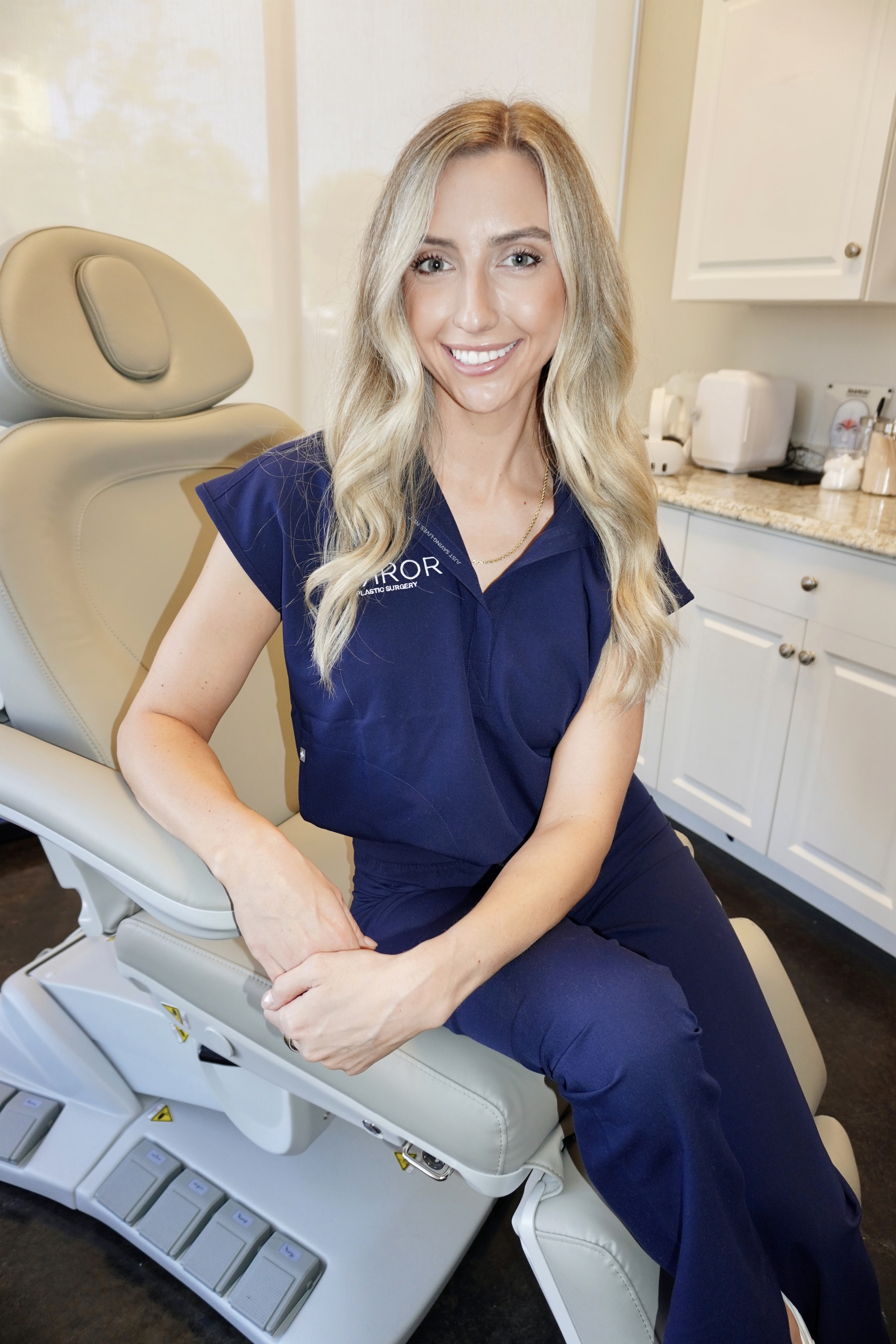
Ellie Pranckevicius holds a Bachelor’s in Health Science from Boston University and completed a 600-hour hands-on aesthetics licensure program. She earned both her BSN and MSN from the University of South Florida. Before joining Mirror Plastic Surgery, she spent four years in the Neuroscience ICU at Tampa General Hospital, a clinical foundation that supports her anatomical precision and complication readiness.
Complication Management Protocols You Should Expect
The 2021 ASDS Multi-Society guideline notes that intravascular occlusion with dermal fillers is rare. Rarity does not eliminate risk. The outcome of a vascular occlusion depends almost entirely on how quickly and correctly the clinic responds.
Vascular occlusion can present with pain, localized skin blanching or livedo reticularis, and other signs of ischemia. Any visual disturbance, ptosis, diplopia, or fixed pupil after facial filler injection constitutes an ophthalmic emergency that requires immediate cessation and emergency transfer to ophthalmology. The therapeutic window before permanent retinal ischemia is measured in minutes.
A recognized approach to management is the DeLorenzi high-dose pulsed hyaluronidase protocol. This protocol involves hyaluronidase delivered into and around the ischemic territory and repeated as needed until clinical reperfusion is achieved. The immediate protocol also includes warm compresses, gentle massage, aspirin 300 mg stat if not contraindicated, and escalation to emergency care if perfusion does not return.
Every compliant clinic keeps at least 3,000 units of hyaluronidase on-site. Each clinic should maintain a written and rehearsed vascular emergency protocol and have named pathways for immediate ophthalmology referral and hyperbaric oxygen therapy.
Concierge vs. High-Volume Injectable Models
Emergency protocols only protect patients when the injector has time to perform the anatomical assessment that prevents complications in the first place. Practice structure therefore becomes a safety issue, not just a service-quality preference.
Concierge aesthetic appointments allow more time than high-volume med spa visits. Longer visits support thorough skin analysis, lifestyle review, and individualized treatment planning. Standard med-spa appointments are structured around throughput with short consultations, frequent room turnover, and financial models that depend on units of product injected per hour. That structure creates an incentive to recommend treatment regardless of clinical necessity.
For neuromodulator and filler placement, providers in concierge models watch patients talk, smile, and frown to determine dose and injection points based on individual movement patterns. That level of assessment is not realistic in a very short appointment. Concierge models base dosing decisions on a detailed anatomical assessment and the patient’s specific goals. This approach supports precise, conservative treatment.
Mirror Plastic Surgery limits injectable appointments to one to two procedures per day. Ellie is supplier-neutral and selects from Botox, Dysport, Xeomin, Daxxify, Juvederm, RHA, Versa, Restylane, Radiesse, and Evolysse based on individual anatomy and goals, not product quotas or commission arrangements.
The table below shows how these structural choices translate into specific credential and safety differences between concierge and high-volume models.
| Credential or Standard | Mirror Plastic Surgery | Typical High-Volume Med Spa |
|---|---|---|
| Medical Director | Board-certified plastic surgeon (Dr. Akash Chandawarkar, MD, Johns Hopkins-trained) | Florida-licensed physician who provides responsible supervision under a written agreement, but board certification in dermatology or plastic surgery is not required |
| Injector Credential | FNP-BC (Ellie Pranckevicius), MSN, USF, 600-hour hands-on aesthetics training, 4 years Neuroscience ICU | Varies; Florida issues no separate aesthetic-injector certificate |
| Fellowship Training | MEETH/Lenox Hill Hospital aesthetic surgery fellowship (Dr. Akash) | Not applicable to most med-spa medical directors |
| On-Site Vascular Occlusion Protocol | Written, rehearsed protocol, hyaluronidase stocked on-site, escalation pathway to ophthalmology | Required by best-practice standards, not universally implemented |
Pre-Treatment Safety Checklist for Patients
Before any injectable appointment, confirm the following points with your provider.
- Vascular-occlusion training: Ask whether the injector has completed documented live-patient training in recognition and management of vascular occlusion, not just a didactic course.
- Hyaluronidase availability and dosing: Confirm that at least 3,000 units of in-date hyaluronidase are stocked on-site and that the team knows the DeLorenzi pulsed dosing protocol.
- 24-hour provider access: Verify that a licensed provider, not a front-desk coordinator, is reachable after hours for complication questions.
- Documented good-faith exam: Confirm that the exam requirement discussed earlier is documented in your chart before any treatment proceeds.
- Informed consent naming specific risks: Structured informed consent must name relevant risks and the local management pathway, including vascular occlusion and the possibility of vision loss in high-risk zones.
Schedule your safety-first consultation with Ellie to walk through this checklist in person and receive a full anatomical assessment before any treatment is planned.
Long-Term Maintenance and Treatment Planning
Provider continuity across multiple years allows accumulation of detailed knowledge about a patient’s skin responses, seasonal pigmentation shifts, and neuromodulator metabolism rates. That continuity improves the accuracy of subsequent treatments compared to fragmented care with different injectors.1
Ellie approaches facial rejuvenation the way a dentist approaches oral health. Professional treatments deliver results, and lasting outcomes depend on understanding and consistent maintenance.1 Her initial focus stays on restoring inherent facial characteristics. Volume augmentation enters the plan only after foundational restoration is complete.
This sequencing helps prevent the “overdone” appearance that often results from isolated, single-area injections performed without a full-face framework.1 Because Mirror Plastic Surgery is supplier-neutral, product selection is driven by individual anatomy, skin physiology, and treatment goals. Ellie will sometimes advise that an expensive service is not yet necessary, which builds long-term trust and avoids unnecessary procedures.
When non-surgical results reach their ceiling, Dr. Akash’s surgical expertise is available within the same practice. This structure preserves continuity of care without referral gaps.
Frequently Asked Questions
What should you not do before a med-spa injectable appointment?
Avoid blood-thinning medications and supplements, including aspirin, ibuprofen, fish oil, vitamin E, and alcohol, for at least 24 to 48 hours before treatment, because these increase bruising risk. Beyond bruising, infection risk also requires attention, so do not schedule injectables within two weeks of recent dental work or active infection, as bacteria can seed filler material and cause biofilm. Your medication history affects both bleeding and infection risk, so disclose all current medications, including anticoagulants and immunosuppressants, during your good-faith exam. Finally, arrive without heavy makeup so the injector can assess skin texture, vascularity, and facial animation accurately, the same surface evaluation that informs infection-control and injection-depth decisions. At Mirror Plastic Surgery, Ellie reviews your full medical history and current skincare regimen during the consultation before any treatment is planned.
How long does certification take for aesthetic nurse practitioners in Florida?
Florida does not issue a separate state aesthetic-injector certificate. The legal pathway for an APRN to inject independently requires an active RN license and BSN, followed by a graduate NP degree (MSN or DNP), national NP certification through AANP or ANCC, and Florida APRN licensure via the Board of Nursing. Starting from an active RN license with a BSN, NP school usually takes about two years of full-time study.
After licensure, real injection competency requires substantial supervised experience injecting patients, a threshold that weekend certificate courses do not meet. Ellie Pranckevicius completed her BSN and MSN at the University of South Florida, holds FNP-BC certification, and built her clinical foundation across four years in a Neuroscience ICU before specializing in aesthetics.
Is concierge pricing worth it?
Concierge pricing reflects the cost of unhurried anatomical assessment, supplier-neutral product selection, 24-hour provider access, and longitudinal follow-up, not simply the cost of product injected. High-volume models recover margin through throughput, which means more patients per hour and more units per visit. Concierge models recover margin through relationship depth and outcome quality.1
For patients who have experienced rushed consultations, asymmetric results, or the need for corrective treatment after a high-volume visit, the true cost comparison includes the expense of revision. Mirror Plastic Surgery does not publish standard pricing because every treatment plan is individualized. Ellie will sometimes advise that a requested procedure is not yet necessary, which means you are not paying for a service that does not serve your anatomy or goals.
Disclaimer: Results may vary from person to person. Editorial content, before and after images, and patient testimonials do not constitute a guarantee of specific results.
When should you seek a second opinion?
Seek a second opinion when a provider recommends multiple syringes of filler at a first visit without a full-face assessment. A second opinion also makes sense when you cannot verify the injector’s license type or the medical director’s board certification, when no good-faith exam is documented before treatment, or when the clinic cannot confirm on-site hyaluronidase availability and a written vascular-occlusion protocol.
A second opinion is appropriate after any adverse event, including prolonged swelling, asymmetry, vascular changes, or visual disturbance, that your current provider has not addressed with a documented management plan. Mirror Plastic Surgery welcomes patients seeking a second opinion and provides the same comprehensive anatomical assessment regardless of whether a prior treatment was performed elsewhere.
Conclusion: Choosing a Safe Concierge Injectable Clinic
Identifying a genuinely accredited concierge aesthetic clinic in St. Petersburg, FL for injectables requires a few specific checks. Verify AHCA registration, confirm the medical director’s active board certification, review the injector’s license type and live-patient training record, and confirm on-site hyaluronidase with a written vascular-occlusion protocol. High-volume models that prioritize throughput over anatomy cannot meet these standards within a 12 to 18 minute appointment structure.
Mirror Plastic Surgery follows the opposite model. The team limits injectable appointments to one to two procedures per day, allows 60-minute anatomical assessments, maintains supplier-neutral product selection, and works within a physician-led structure whose credentials are verifiable and whose complication protocols are rehearsed. Safety comes first, function second, and aesthetics third, in that order every time.
Book a consultation with Ellie at Mirror Plastic Surgery and receive a full top-to-bottom assessment before any treatment is recommended.
Disclaimer: Results may vary from person to person. Editorial content, before and after images, and patient testimonials do not constitute a guarantee of specific results.
1 Results may vary from person to person. Editorial content, before and after images, and patient testimonials do not constitute a guarantee of specific results.