

Written by: Dr. Akash Chandawarkar, Board Certified Plastic Surgeon, Mirror Plastic Surgery | Last updated: September 9, 2026
Key Takeaways
- PRF is a 100% natural, additive-free treatment made from your own blood that releases growth factors over 7–14 days to support steady healing and tissue regeneration.
- Compared with PRP, PRF uses no anticoagulants, forms a fibrin matrix scaffold, and often retains higher levels of white blood cells and stem cells for longer-lasting effects.
- PRF is most established in dentistry for socket preservation, bone grafting, and implant healing, while aesthetic uses such as facial rejuvenation, under-eye treatment, and hair restoration are expanding with strong clinical support.
- Results vary based on your health and treatment area, usually require 2–3 sessions spaced 4–6 weeks apart, and often last 12–18 months for facial rejuvenation or 12–24 months for hair restoration with maintenance.1
- At Mirror Plastic Surgery, our board-certified plastic surgeon personally performs all PRF treatments with a focus on safety, clear communication, and individualized care. Schedule your PRF consultation with Ellie to see whether this treatment fits your goals.
How Platelet-Rich Fibrin Works in Your Body
PRF releases growth factors such as PDGF, TGF-beta, and VEGF. These stimulate cell growth, collagen production, and new blood vessel formation. The fibrin matrix acts as a scaffold, slowly releasing these factors over 7–14 days. This steady release supports ongoing healing and tissue regeneration. PRF therefore provides a longer therapeutic window than PRP, which releases most growth factors within the first hour.
The PRF preparation process involves four steps:
- Blood Draw: A small amount of blood, usually 10–40 mL, is drawn from your arm, similar to a routine lab test.
- Centrifugation: The blood is spun in a specialized centrifuge at low speed for 3–12 minutes, depending on the protocol.
- Separation: The spin separates the blood into layers, concentrating platelets, white blood cells, and growth factors in a fibrin matrix that retains about 97% of platelets and 50% of leukocytes from the sample.
- Application: The PRF is injected in liquid form or placed as a membrane at the treatment site.
PRF must be used within 15–20 minutes of preparation because it contains no anticoagulants, and it begins to clot and solidify naturally shortly after processing. This rapid clotting reflects its purity and biological activity.
PRF vs. PRP: Key Differences That Affect Results
PRP (platelet-rich plasma) and PRF are related but distinct treatments with different strengths. Knowing how they differ helps you and your provider match the treatment to your goals.
A 2026 randomized split-face trial in the Journal of Cosmetic Dermatology found that both PRP and PRF improved periorbital rejuvenation. PRF produced more stable reductions in pigmentation and earlier gains in skin elasticity. PRP still has a larger evidence base, especially for hair restoration, and its liquid form can help when broad scalp coverage is needed. PRF’s unique properties make it a strong option for many patients, especially for facial rejuvenation and dental procedures that benefit from sustained healing. That versatility explains why PRF now appears across several specialties.
Common Medical and Aesthetic Uses of PRF
PRF’s ability to support ongoing tissue repair makes it useful wherever the body needs structured, long-lasting regeneration. Dentistry remains the most established field, while aesthetic and other medical uses continue to grow.
Platelet-Rich Fibrin in Dentistry
Dental applications represent the most thoroughly studied use of PRF. Common uses include:
- Socket preservation after tooth extraction
- Bone grafting and sinus lifts
- Gum graft procedures as an alternative to connective tissue grafts
- Dental implant healing
- Treatment of periodontal defects
A 2025 systematic review in the Annals of the Russian Academy of Medical Sciences analyzed 19 clinical studies and reported that 78.9% showed at least one positive outcome for post-extraction socket healing, including reduced pain and faster healing. A 2026 review in Frontiers in Dental Medicine found that adding PRF to open flap debridement for intrabony defects reduced probing depth by about 1.27 mm and improved clinical attachment level by about 1.24 mm.
Aesthetic Applications for Skin and Hair
PRF is gaining momentum in aesthetic medicine because it stimulates collagen and tissue regeneration using your own biology. Common aesthetic uses include:
- Facial rejuvenation to improve skin texture, tone, and fine lines
- Under-eye hollows and dark circles for periorbital rejuvenation
- Hair restoration for androgenetic alopecia
- Scar remodeling
At Mirror Plastic Surgery, we offer PRF treatment for facial rejuvenation and hair restoration. A 2026 systematic review in Stem Cell Research & Therapy reported that PRF showed the fastest and most consistent response among regenerative therapies for androgenetic alopecia, with hair density increasing by 62–97% within 3–6 months.1
Emerging Orthopedic and Wound Care Uses
Clinicians are also studying PRF for joint pain, tendon injuries, and wound healing. Early studies suggest potential benefit, yet the orthopedic evidence base remains smaller and more variable. Outcomes depend heavily on the specific condition and the PRF protocol used.
Benefits and Limitations of PRF Treatment
PRF offers meaningful advantages for many patients, and it also has clear boundaries. Understanding both sides helps you set realistic expectations.
Benefits:
- 100% natural and autologous: Because PRF comes from your own blood, it carries virtually zero risk of allergic reaction, immune rejection, or disease transmission.
- No additives or chemicals: PRF uses no anticoagulants or bovine thrombin, which keeps the preparation simple and biologically familiar to your body.
- Minimal downtime: Most patients resume normal daily activities right after treatment.
- Sustained healing: Gradual growth factor release supports longer-term tissue regeneration compared with PRP’s short burst.
- Versatile applications: PRF supports healing in dental, aesthetic, and selected orthopedic settings.
Limitations:
- Variable results: Outcomes depend on your overall health, age, and the specific condition treated.
- Series of treatments: Most protocols recommend 2–4 sessions to reach and maintain optimal results.
- Supportive, not reconstructive: PRF stimulates your body’s healing response and cannot replace missing tissue or fully reverse advanced aging.
- Developing evidence in aesthetics: Dental uses have strong research support, while some aesthetic indications still rely on smaller or newer studies.
- Technique-sensitive: Differences in preparation protocols and patient factors significantly influence outcomes, so practitioner expertise plays a major role.
PRF works best as part of a thoughtful, comprehensive treatment plan that may include skincare, injectables, surgery, or hair therapies tailored to your needs.
What to Expect During Treatment, Recovery, and Results
The treatment process is straightforward from consultation through application.
- Consultation: Your provider reviews your concerns, medical history, and candidacy for PRF, then outlines a customized plan.
- Blood Draw: A small blood sample is taken from your arm.
- Preparation: The blood is centrifuged to isolate PRF, which usually takes about 10–15 minutes.
- Application: PRF is injected into the target area or placed as a membrane during a surgical procedure.
Recovery is typically brief, and most patients return to normal activities right away. Common side effects include mild swelling, bruising, or redness at the injection site. These usually resolve within 24–72 hours. To support healing and comfort, avoid strenuous exercise, heavy sun exposure, and NSAIDs for a few days after treatment.
Results timeline:
- Initial improvements: Regenerative benefits often become noticeable over 4–6 weeks as collagen production increases.
- Full benefits: Results build gradually over 2–4 months as tissue remodels.
- Duration: Facial rejuvenation results often last 12–18 months, and hair restoration can last 12–24 months with maintenance sessions.1
Most patients benefit from 2–3 sessions spaced 4–6 weeks apart. Your provider will recommend a schedule that fits your goals and response.
What Platelet-Rich Fibrin Typically Costs
PRF pricing varies based on your city, your provider’s training, and the area treated. Insurance almost never covers PRF because insurers classify it as elective or adjunctive. Some dental plans may cover part of the cost when PRF is bundled with a medically necessary surgery such as an extraction or implant, so patients should confirm details with their insurer before treatment.
Many patients use Health Savings Accounts (HSAs) or Flexible Spending Accounts (FSAs) to pay for regenerative procedures as qualified medical expenses. Using pre-tax dollars can lower the effective cost.
At Mirror Plastic Surgery, we provide clear pricing and straightforward recommendations. You receive honest guidance about whether PRF fits your needs and budget. Get a personalized PRF quote and treatment plan with Ellie based on your anatomy and goals.
Side Effects and Risks: Safety Considerations for PRF
PRF ranks among the safest regenerative treatments because it uses your own blood. Because the material is autologous, the risk of allergic reaction, immune rejection, or disease transmission is essentially nonexistent.
Common, mild side effects that usually resolve within 1–3 days include:
- Temporary swelling or redness at the injection site
- Bruising, which typically fades within 5–10 days
- Mild tenderness or discomfort
Rare risks include:
- Infection, which providers minimize with strict sterile technique
- Nerve injury, which is very rare and less likely with an experienced injector
- Temporary lumpiness, especially in thin-skinned areas such as the under-eye region
Who should avoid PRF or proceed with caution:
- Individuals with blood disorders such as thrombocytopenia, platelet dysfunction, or hemophilia, because these conditions affect clotting and platelet function
- People with active infections or sepsis, due to higher risk of spreading infection
- Patients on anticoagulant therapy, a relative contraindication because of increased bleeding risk
- Pregnant or breastfeeding women, since safety data remain limited
- Individuals with active cancer, due to a theoretical concern that growth factors could influence tumor activity; oncologist clearance is required even in remission
The most important safety factor is the person performing your treatment. A qualified, board-certified provider who understands anatomy and PRF protocols can greatly reduce risk and improve outcomes.
Why Mirror Plastic Surgery Is a Strong Choice for PRF
Mirror Plastic Surgery in St. Petersburg, FL, offers PRF treatment within a comprehensive, evidence-based regenerative program. Our founder, Dr. Akash Chandawarkar, is a Harvard-educated, Johns Hopkins-trained, board-certified plastic surgeon who personally performs all injectable treatments.
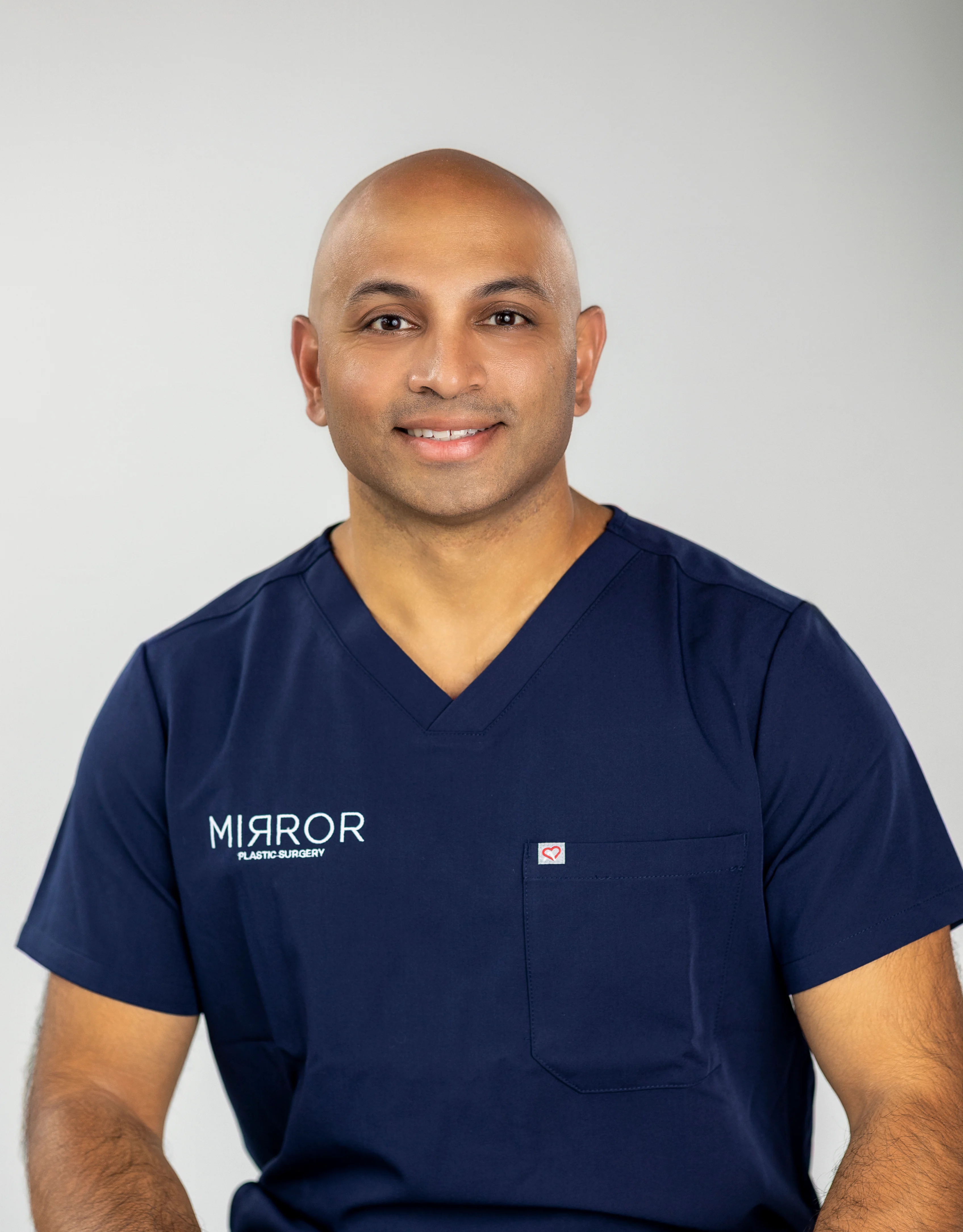
What Sets Our Practice Apart
- Surgeon-Level Expertise: Dr. Chandawarkar’s detailed knowledge of facial and subdermal anatomy supports precise, safe, and effective PRF placement.
- Concierge Philosophy: We prioritize safety, then function, then aesthetics. Consultations may last up to an hour so we can understand your goals and design a tailored plan.
- Direct, Educational Communication: We focus on educating you about your options. If PRF does not match your needs, we explain why and suggest alternatives.
- Holistic Treatment Planning: PRF is integrated into a broader approach to your aesthetic and regenerative health, rather than offered as an isolated add-on.
We provide PRF for facial rejuvenation, under-eye hollows and dark circles, and hair restoration for patients in the St. Petersburg and Tampa Bay area. Schedule your consultation with Ellie by calling 727-361-6515 or emailing hello@mirrorplasticsurgery.com.
Frequently Asked Questions About Platelet-Rich Fibrin
How Long Does Platelet-Rich Fibrin Last?
As outlined in the results section above, facial rejuvenation results often last 12–18 months, and hair restoration can last 12–24 months with maintenance. Because PRF stimulates your own collagen production, some structural benefits may continue beyond that window. Many patients schedule yearly maintenance sessions to keep results steady.
Is PRF Painful?
Most patients experience only mild discomfort. Your provider applies a topical anesthetic before treatment. PRF itself is well tolerated because it comes from your own blood and maintains a physiological pH, so it avoids the burning or stinging that can occur with some PRP preparations that use anticoagulants. You may feel brief pinches during injections, yet the procedure is generally comfortable.
How Many PRF Sessions Are Needed?
Most patients need 2–3 sessions spaced 4–6 weeks apart to reach their initial goals. The exact number depends on the treatment area, the severity of your concern, and how your body responds. Your provider will map out a plan during your consultation, and patients with more advanced concerns may benefit from additional sessions.
Can PRF Be Used for Hair Loss?
PRF works well for androgenetic alopecia, also known as pattern hair loss. A 2026 systematic review showed strong performance for PRF among regenerative hair therapies, with substantial gains in hair density within a few months. New hair growth often appears 6–8 weeks after starting treatment, and many patients notice reduced shedding within 3–4 weeks. PRF does not change the hormones that drive hair loss, so it works best as part of a broader hair restoration plan.
Is PRF the Same as PRP?
PRF and PRP are related but distinct treatments. PRF is often described as a “next generation” alternative because it uses no anticoagulants or additives, retains more white blood cells and stem cells, and releases growth factors gradually over 7–14 days instead of in a rapid burst. PRF is prepared with a single, lower-speed spin and forms a three-dimensional fibrin scaffold that also supports the treated tissue, which liquid PRP cannot provide. Each treatment has specific strengths, and your provider will recommend the option that best matches your anatomy and goals.
Conclusion: Deciding Whether PRF Is Right for You
Platelet-rich fibrin is a safe, natural, and versatile regenerative treatment with strong support in dentistry and growing evidence in aesthetics. Results depend on your health, your goals, the area treated, and the skill of the provider preparing and administering the PRF.
The most reliable way to decide whether PRF treatment fits your needs is to meet with a qualified provider who will evaluate your goals honestly and design a plan around your anatomy and long-term well-being. Start your PRF journey with a consultation with Ellie at Mirror Plastic Surgery in St. Petersburg, serving the greater Tampa Bay area.
Disclaimer: Results may vary from person to person. Editorial content, before and after images, and patient testimonials do not constitute a guarantee of specific results.
1 Results may vary from person to person. Editorial content, before and after images, and patient testimonials do not constitute a guarantee of specific results.


