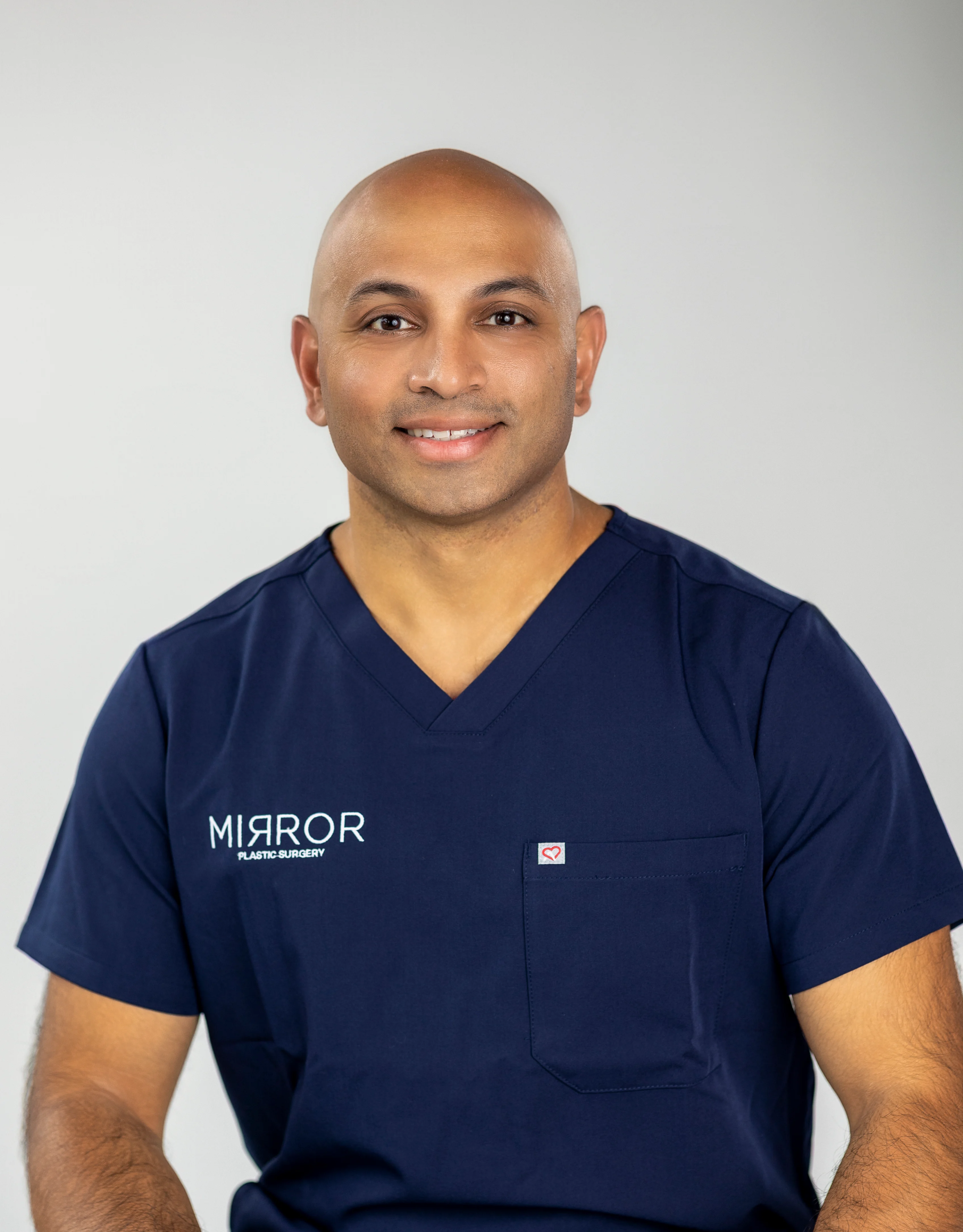
Written by: Dr. Akash Chandawarkar, Board Certified Plastic Surgeon, Mirror Plastic Surgery
Key Takeaways
- NAD+ injections are not FDA-approved as finished drugs, so provider quality and medical oversight largely determine safety and results.1
- Because documented risks, including Class I recalls due to endotoxin contamination, stem from poor sourcing, reputable 503A or 503B pharmacies under physician supervision are essential.
- Concierge physician-led clinics provide the most personalized care, including thorough evaluations, baseline labs, and direct physician access throughout treatment.
- Patients should confirm physician credentials, sourcing standards, individualized dosing protocols, and ongoing monitoring before beginning NAD+ therapy.
What NAD+ Injections Are And Why Supervision Matters
NAD+ is a coenzyme present in every living cell. It converts nutrients into ATP, supports DNA repair, and regulates gene expression and circadian rhythms. NAD+ levels naturally decline with age, and lower levels have been associated with age-related conditions such as neurodegenerative and cardiovascular disease. Association does not prove that replenishing NAD+ reverses these processes in humans, so careful counseling is essential.
The critical regulatory reality is this: no injectable NAD+ product is FDA-approved as a finished drug. Clinics use compounded preparations from pharmacies registered as FDA Section 503B outsourcing facilities or state-licensed 503A pharmacies. Regulators oversee the facility and process, not each specific NAD+ product. This regulatory gap makes source, purity, dosing, and administration highly dependent on qualified medical supervision.
The consequences of this gap are well documented. On October 21, 2025, the FDA classified a recall of a compounded NAD+ injection as Class I, its most serious category, because elevated endotoxin levels led to emergency room hospitalizations. In October 2024, the FDA reminded compounders not to use food-grade NAD+ to make sterile products after reports of severe chills, shaking, vomiting, and fatigue consistent with endotoxin exposure. These events show how inadequate sourcing and oversight can create real harm.
Discuss Supervised NAD+ Therapy With Dr. Chandawarkar and get a personalized risk–benefit review.
Types Of Providers For Supervised NAD+ Injections
Medical Spas And IV Lounges
Medical spas and IV lounges are often the most accessible entry point for NAD+ therapy. In these settings, nurses usually administer injections or infusions under a medical director. The collaborating physician should approve standing orders, dosing protocols, infusion rate adjustments, screening criteria, and adverse-event procedures, although the depth of involvement varies widely.
These clinics offer convenience and often lower upfront costs. They also have limitations. High patient volume can lead to rushed consultations. Physician oversight may be nominal instead of personalized, and protocols may follow a template rather than your physiology. Telehealth-only supervision does not meet requirements for NAD+ IV therapy in states that mandate in-person oversight for vascular access procedures, and an agreement for injectables like Botox does not automatically cover infusion-based services.
Concierge Wellness And Longevity Clinics
Concierge clinics provide physician-led care with comprehensive evaluations and protocols tailored to each patient. These evaluations often include lab panels and detailed health histories. The physician personally designs and supervises the protocol rather than merely approving a standing order. Patients typically have direct access to the physician for questions, side-effect management, and protocol adjustments.
This model offers deeper medical oversight, individualized dosing, and consistent follow-up. It may involve travel or remote consultations, and costs vary with protocol complexity and provider expertise. For patients who want genuine supervision and a close clinical relationship, this model often provides the most robust safety net.
Telemedicine Providers
Telehealth providers licensed in a patient’s state can legally prescribe compounded NAD+ for injection in most states, as long as they establish a valid patient-physician relationship and follow state telemedicine laws. Some states require an initial in-person visit. Telemedicine works best for subcutaneous self-injection protocols. IV infusions still require in-person monitoring.
Telemedicine NAD+ programs range from concierge practices with thorough evaluations and direct access to high-volume subscription services with minimal personalization. The term “telehealth” does not guarantee meaningful oversight. Apply the vetting criteria below to any remote provider.
How To Find A Medically Supervised NAD+ Clinic
- Search strategically. Use terms like “NAD+ injections near me” or “medically supervised NAD+ clinic,” then compare options using the criteria below instead of choosing the first result.
- Verify physician credentials. Look for board-certified physicians who personally oversee therapy. A physician-led clinic should have a medical director who understands NAD+ biology, counsels patients honestly, selects appropriate candidates, and titrates infusion rates to manage reactions.
- Confirm the evaluation process. A legitimate provider reviews your medical history and often orders baseline labs covering thyroid, liver, kidney, and metabolic markers before prescribing. Helpful baseline labs include a liver panel, a comprehensive metabolic panel with creatinine, and A1c and glucose tests.
- Ask about sourcing and quality. NAD+ should come from reputable compounding pharmacies with batch testing. Confirm whether the pharmacy is a 503A state-licensed pharmacy or a 503B FDA-registered outsourcing facility, and whether it holds PCAB accreditation from ACHC.
- Inquire about the protocol. Dosing, frequency, and follow-up should reflect your health profile. In physician-supervised practice, subcutaneous NAD+ often starts low, around 20–50 mg per injection, and increases gradually because nausea and flushing depend on dose and rate.
- Evaluate the supervision model. Clarify whether you will have direct access to the physician, what monitoring is provided, and how quickly you can reach the team if problems arise. This structure defines the difference between genuine supervision and a supervision label.
What To Ask Before Getting NAD+ Injections: Vetting Checklist
- Who will conduct the initial consultation and provide ongoing medical oversight, a board-certified physician or a non-physician?
- What medical history and lab tests are required before starting NAD+ therapy?
- Where is the NAD+ sourced, and is it third-party tested for purity, sterility, and endotoxin levels?
- Which compounding pharmacy is used, and is it 503A state-licensed or 503B FDA-registered?
- What is the dosing protocol, and how is it tailored to my health profile?
- What potential side effects should I expect, and how are they managed?
- What follow-up and ongoing support are provided during treatment?
- Is the protocol personalized or sold as a standardized package?
Risks Of Unsupervised NAD+ Injections
Unsupervised NAD+ use from unregulated sources carries real and avoidable risks. Gray-market “research-only” vials sold online can be contaminated or mislabeled, and NAD+ is chemically fragile, degrading with heat, light, moisture, and pH changes. Injecting a degraded or contaminated compound introduces unverified impurities and bacterial endotoxins directly into the body.
The FDA’s compounding directorate has reminded compounders that food-grade bulk ingredients are unsuitable for sterile injection preparations. The October 2025 Class I recall of a compounded NAD+ injection, which involved elevated endotoxin levels and emergency room visits, illustrates what happens when sourcing standards fail.
Beyond contamination, unsupervised use carries additional documented risks:
- Incorrect dosing. NAD+ side effects depend on dose and rate. Without a physician titrating the protocol, patients guess at doses without a safety net.
- No contraindication screening. Contraindications for NAD+ injection include pregnancy and breastfeeding, active cancer or a history of certain cancers, significant cardiovascular disease, and known hypersensitivity to NAD+ or excipients such as benzyl alcohol. These factors remain undetected without a medical evaluation.
- No medical support if a reaction occurs. Chest pain that does not settle when an infusion is slowed requires assessment, and anyone with known cardiac disease should avoid NAD+ infusions outside a supervised medical setting.
Professional supervision addresses these risks through careful sourcing, appropriate dosing, medical screening, and ongoing access to a physician who can respond quickly when needed. Here is how that supervision typically looks in practice.
What To Expect In A Supervised NAD+ Protocol
At a high-quality, physician-led practice, supervised NAD+ care follows a clear sequence that prioritizes safety and personalization:
- An initial 30–60 minute consultation with the physician, reviewing medical history, medications, health goals, and existing lab results.
- Baseline lab panels ordered when needed, covering thyroid, liver, kidney, and metabolic markers.
- A personalized protocol designed from labs and individual physiology rather than a standardized template.
- Instruction on administration, often subcutaneous self-injection, with step-by-step teaching and video demonstrations.
- Ongoing follow-up with the physician, including direct access for questions, side-effect management, and protocol adjustments based on response.
No standardized clinical guidelines currently define a routine supervised protocol for NAD+ administration, so the quality of supervision depends on the provider’s clinical judgment and commitment to individualized care. Results vary by individual, and many patients need maintenance protocols to sustain benefits over time.1
Why Mirror Plastic Surgery Provides High-Level NAD+ Supervision
Mirror Plastic Surgery in St. Petersburg, Florida, is led by Dr. Akash Chandawarkar, a board-certified plastic surgeon with extensive training. His background includes MIT degrees in neuroscience and nuclear engineering, graduation with Honors from Harvard Medical School through the Harvard-MIT Division of Health Sciences and Technology, a seven-year integrated plastic and reconstructive surgery residency at Johns Hopkins University, and the Stanford University Biodesign Innovation Fellowship. He also completed specialized aesthetic surgery fellowship training at the Manhattan Eye Ear and Throat Hospital/Lenox Hill Hospital.
Dr. Akash personally leads every NAD+ protocol at Mirror Plastic Surgery. Each plan is built around the patient’s labs and physiology and remains medically supervised throughout treatment. This level of oversight supports both safety and effectiveness.1 The practice’s concierge philosophy allows consultations of up to an hour, with a top-to-bottom assessment and direct text access to Dr. Akash during the treatment course.
Mirror Plastic Surgery sources NAD+ from reputable providers that perform rigorous batch testing to confirm quality, purity, and accurate dosage. The practice serves patients in St. Petersburg and Tampa in person and works with patients remotely across the United States, including Hawaii and Alaska. This reach makes physician-led, concierge-quality supervision available to a wide range of patients.
To explore NAD+ therapy at Mirror Plastic Surgery, review the practice’s detailed resources on NAD Peptide Treatments: Benefits, Evidence and What To Expect and the NAD Injections St. Petersburg: 2026 Guide To NAD+ Therapy.
Frequently Asked Questions
Are NAD+ Injections Safe?
When a physician supervises treatment and uses quality-sourced, pharmacy-compounded NAD+, side effects are usually mild and manageable. Common reactions include nausea, flushing, headache, and injection site soreness. These effects often relate to dose and rate and tend to resolve within hours. Because NAD+ is not FDA-approved as a finished drug, safety depends heavily on the provider’s sourcing and protocols.
Documented risks include infusion-related reactions such as nausea, flushing, and chest pressure. With unregulated sources, contamination and endotoxin exposure become additional concerns. Contraindications include pregnancy, active cancer or a history of certain cancers, significant cardiovascular disease, and known hypersensitivity to NAD+ or its excipients. A qualified provider screens for these factors before prescribing and manages side effects throughout the protocol.
Can I Get NAD+ Injections Online?
Telemedicine providers can prescribe compounded NAD+ in most states after establishing a valid provider-patient relationship. Quality varies widely across platforms. Some states require an initial in-person visit, and telemedicine usually works best for subcutaneous self-injection rather than IV infusion, which needs in-person monitoring.
Look for a telemedicine provider that performs a thorough medical evaluation, orders appropriate lab work, sources from reputable compounding pharmacies with batch testing, and offers direct physician access. Avoid companies that sell NAD+ injections without any health screening, because that pattern signals poor oversight.
How Often Do I Need NAD+ Injections?
Frequency depends on your goals, tolerance, and response. Many providers begin with a loading phase of several injections per week, then shift to a maintenance schedule of one to three times weekly. Some protocols use a short loading phase of roughly 100–200 mg daily for 7–10 days, then step down to weekly maintenance doses.
Loading phases increase exposure and the chance of transient side effects, so physicians reserve them for patients who tolerate lower doses. Your physician should tailor frequency based on your labs, tolerance, and treatment objectives.
What Is The Difference Between NAD+ Injections And IV Therapy?
NAD+ injections, either subcutaneous or intramuscular, deliver smaller doses more gradually and often can be self-administered at home after proper training. They tend to cause fewer whole-body side effects than IV infusions because absorption is slower. IV therapy delivers higher doses over several hours and always requires in-person monitoring by a nurse or clinician.
Pushing NAD+ too quickly intravenously can cause intense flushing and chest tightness, so titration requires clinical skill. Injections usually work better for ongoing maintenance, while IV infusions may be reserved for intensive loading protocols. Your physician can help you choose the approach that matches your health profile and goals.
Will Insurance Cover NAD+ Injections?
NAD+ therapy is considered elective and wellness-oriented rather than medically necessary, so insurance typically does not cover it. Some clinics accept HSA or FSA cards when patients have a letter of medical necessity from a prescribing physician, although eligibility varies by plan.
Expect to pay out of pocket and ask any prospective provider which fees the quoted cost includes. Clarify whether consultation, lab work, compounding, and shipping are bundled or billed separately.
Choose Supervision For Safer NAD+ Therapy
The safety and effectiveness of NAD+ injections depend on the quality of medical oversight. Because of the current regulatory gap, providers carry full responsibility for quality assurance, appropriate dosing, and ongoing monitoring. A physician-led, concierge approach, such as the model at Mirror Plastic Surgery, offers personalization, rigorous sourcing, and continuous medical support that help turn a higher-risk therapy into a more predictable wellness tool.1
Professional guidance forms the baseline for responsible NAD+ care. For a compounded therapy with documented contamination risks and dose-related side effects, expert supervision protects your health and investment. The right provider designs a protocol around your physiology, tracks your response, and remains available when questions or concerns arise.
This article is for informational purposes only and does not constitute medical advice. Consult a qualified healthcare provider to determine if NAD+ therapy is appropriate for you.
1 Results may vary from person to person. Editorial content, before and after images, and patient testimonials do not constitute a guarantee of specific results.
Peptide therapy is intended for wellness and optimization purposes and is not prescribed to diagnose, treat, cure, or prevent disease unless specifically stated. Many peptides are not FDA-approved and may be used off-label. Some have limited long-term safety data, with a potential for unknown risks, complications, or desensitization with prolonged use.