
Written by: Dr. Akash Chandawarkar, Board Certified Plastic Surgeon, Mirror Plastic Surgery | Last updated: September 9, 2026
Key Takeaways
- Medical spas must have physician oversight, yet the level of real involvement varies widely by state and by practice.
- Florida law requires a licensed MD or DO medical director with documented oversight, geographic proximity, and limits on supervised mid-level practitioners.
- Only physicians, nurse practitioners, and physician assistants can legally perform injectables and medical procedures in Florida; aestheticians and unlicensed staff cannot inject under any circumstances.
- Patients face serious risks, including scarring, infection, and vascular complications, when unqualified providers treat them or skip proper medical evaluation.1
- At Mirror Plastic Surgery, board-certified plastic surgeon Dr. Akash Chandawarkar personally oversees every consultation and treatment; schedule your consultation today to experience true physician-led care.
The Role Of The Medical Director In Your Care
A medical director is a licensed physician (MD or DO) who holds legal responsibility for all medical services at a med spa. Their duties include setting treatment protocols, supervising clinical staff, ensuring safety standards, and remaining available for consultations and emergencies.
In real life, a medical director’s involvement falls along a spectrum. One model uses a “paper director,” a physician who signs an agreement, collects a fee, and rarely appears in the clinic. Another model uses an actively engaged director who is present, reviews charts, trains staff, and personally evaluates patients. The American Med Spa Association notes that medical directors hold ultimate responsibility for all medical procedures performed at the facility.
Florida enforcement is moving hard against the paper-only oversight model, and regulators increasingly target “ghost” medical director arrangements that enable absentee physician oversight. This is exactly the model to avoid, and it explains why at Mirror Plastic Surgery, Dr. Chandawarkar leads every consultation and treatment personally, embodying the standard patients should expect.
Who Actually Performs Your Treatment: The Delegation Hierarchy
Physicians in most states may delegate specific medical tasks to qualified professionals, which creates a clear hierarchy of providers. The key point in Florida is that only physicians, nurse practitioners, physician assistants, and registered nurses working under orders may inject; aestheticians and unlicensed staff may never inject. The table below shows each provider’s training, scope, and supervision requirements.
| Provider Type | Training | What They Can Do | Florida Supervision Requirement |
|---|---|---|---|
| Physician (MD or DO) | Medical school plus residency | All procedures; prescribe; supervise | Self-supervising; holds ultimate responsibility |
| Nurse Practitioner (ARNP) | Advanced nursing degree | Injectables, fillers, laser under physician protocol | Written collaborative agreement with physician |
| Physician Assistant (PA) | Medical-model graduate training | Injectables and delegated procedures under physician delegation | Written supervision per §458.347 |
| Registered Nurse (RN) | Nursing degree and licensure | Administer injectables under physician order and supervision | Physician must be physically present and visually observing |
| Aesthetician | Cosmetology license | Facials, superficial peels, non-medical services | Cannot inject or perform medical procedures under any circumstances |
Rules about whether a PA can run a med spa depend on the state. In Florida, physician assistants work under written supervision protocols per §458.347, and the supervising physician must maintain a supervisory contract. Regardless of who performs the treatment, the physician medical director carries the ultimate legal and ethical responsibility for patient safety.
Med Spa Laws Across States: A Changing Landscape
The American Medical Association reported that 36 states lack med spa-specific laws, so supervision requirements differ significantly nationwide. Recent laws show a clear push toward stronger accountability:
- Texas: “Jenifer’s Law” (HB 3749, effective September 2025) restricts delegation of elective IV therapy after a patient death at an unregulated clinic.
- Indiana: The first comprehensive med spa statute (SB 282, effective July 2026) requires registration and a designated responsible practitioner.
- Rhode Island: The Medical Spas Safety Act (2025) requires licensed medical directors and healthcare facility licensure.
- California: Enforces a strict corporate practice of medicine doctrine that requires physician ownership of medical entities.
Florida’s regulatory framework ranks among the most active in the nation and matters most if you seek treatment in the Tampa Bay area.
Florida’s Supervision Requirements For Med Spas
Florida Statute § 458.348 requires a written supervisory contract between a supervising physician and mid-level practitioners in medical spa settings. Key provisions include:
- The medical director must be a Florida-licensed MD or DO in good standing and actively practicing.
- The supervising physician’s primary practice location must be within 25 miles, or in the same or a contiguous county, of the supervised practitioner.
- A physician may supervise no more than four physician assistants or ARNPs concurrently across all clinics.
- Supervision must be documented and active, with evidence of site visits, chart reviews, and protocol oversight, not just a signature.
Florida has the highest concentration of med spas in the country and a complaint-driven enforcement model, so many borderline practices continue operating until a patient complaint triggers investigation. Mirror Plastic Surgery is fully compliant with all state physician supervision requirements.
The Real Risks Of Inadequate Supervision
When treatments occur without proper physician oversight, the consequences can be severe.1 Documented risks include:
- Unqualified practitioners: The CAPER registry, developed by the American Society for Dermatologic Surgery Association, found that 51% of reported adverse events were associated with procedures performed by non-dermatology providers, with 77% of scarring cases linked to non-dermatology providers.
- Counterfeit products: The FDA issued its first Drug Supply Chain Security Act warning letter to a medical spa in 2026 after finding the facility administered significantly more Botox than it had purchased from authorized distributors. A U.S. Attorney’s Office case describes an unlicensed med spa owner who injected clients with unapproved botulinum toxin, causing severe botulism cases.
- Inadequate medical evaluation: Without a proper good-faith exam and medical history review, providers may miss contraindications. Missed issues can lead to vascular compromise, necrosis, infections, or poor outcomes.1
- Lack of emergency preparedness: As one AmSpa-affiliated provider notes, “If you do enough treatments in aesthetic medicine, you will have complications. It is how you handle them that makes you a true professional.”
Red flags to watch for:
- A spa that will not name its medical director.
- A spa that refuses to provide credentials.
- A spa that offers treatments without a consultation.
- A spa that cannot explain who will perform the procedure.
To avoid these red flags, ask targeted questions before you book any med spa treatment.
Questions To Ask Before You Book: Your Safety Checklist
Every patient benefits from a simple safety checklist before scheduling treatment. Ask these questions:
- Who is the medical director, and are they a licensed physician (MD or DO)?
- Will the physician be on-site during my treatment or available for consultation?
- Who will actually perform my procedure, and what are their specific credentials?
- How do you handle medical emergencies or complications?
- Can I see your license and the medical director’s license?
- Do you review my medical history and current medications before treatment?
- What happens if I experience a complication after I leave?
Mirror Plastic Surgery follows this model closely. Dr. Chandawarkar leads every consultation, personally oversees all treatments, and the practice remains transparent about its supervision structure.
How To Verify Credentials And Choose A Safe Med Spa
Verifying a practice’s legitimacy takes only a few minutes and can protect you from serious harm. Start by checking your state medical board website to confirm the medical director holds an active, unrestricted license. Then ask for the medical director’s name and license number, and look it up independently on the Florida Board of Medicine website. Finally, confirm that the practice follows state regulations for your specific procedure.
Look for transparency at every step. A reputable practice will openly discuss its supervision model, staff credentials, emergency protocols, and consultation process. Safe clinics also perform a thorough consultation and medical history review before any treatment.
Common Misconceptions About Med Spa Supervision
Before you book, clear up three widespread misunderstandings that put patients at unnecessary risk; each one reinforces why physician-led care matters:
- “If it’s called a medical spa, a doctor must be present at all times.” Supervision requirements vary by state and procedure, and some states allow remote oversight after an initial face-to-face consultation. A physician often does not have to remain on-site for every visit.
- “All med spa treatments are low-risk.” Injectables, lasers, and IV therapies carry significant risks, including vascular compromise, necrosis, scarring, and infection when performed improperly.1
- “A nurse or aesthetician is just as qualified as a doctor.” This is false because training, scope of practice, and oversight requirements differ substantially between physicians, mid-level providers, and aestheticians. As noted earlier, Florida law prohibits estheticians and unlicensed staff from injecting under any circumstances.
Conclusion: Choose Physician-Led Care For Your Safety
Knowing who oversees your care is the most important safety step you can take before booking any med spa treatment. The med spa industry grew nearly sixfold from roughly 1,600 locations in 2010 to more than 10,000 by 2023, yet regulation in many states has not kept pace. Florida offers stronger protections than most, although the quality of supervision still varies by practice.
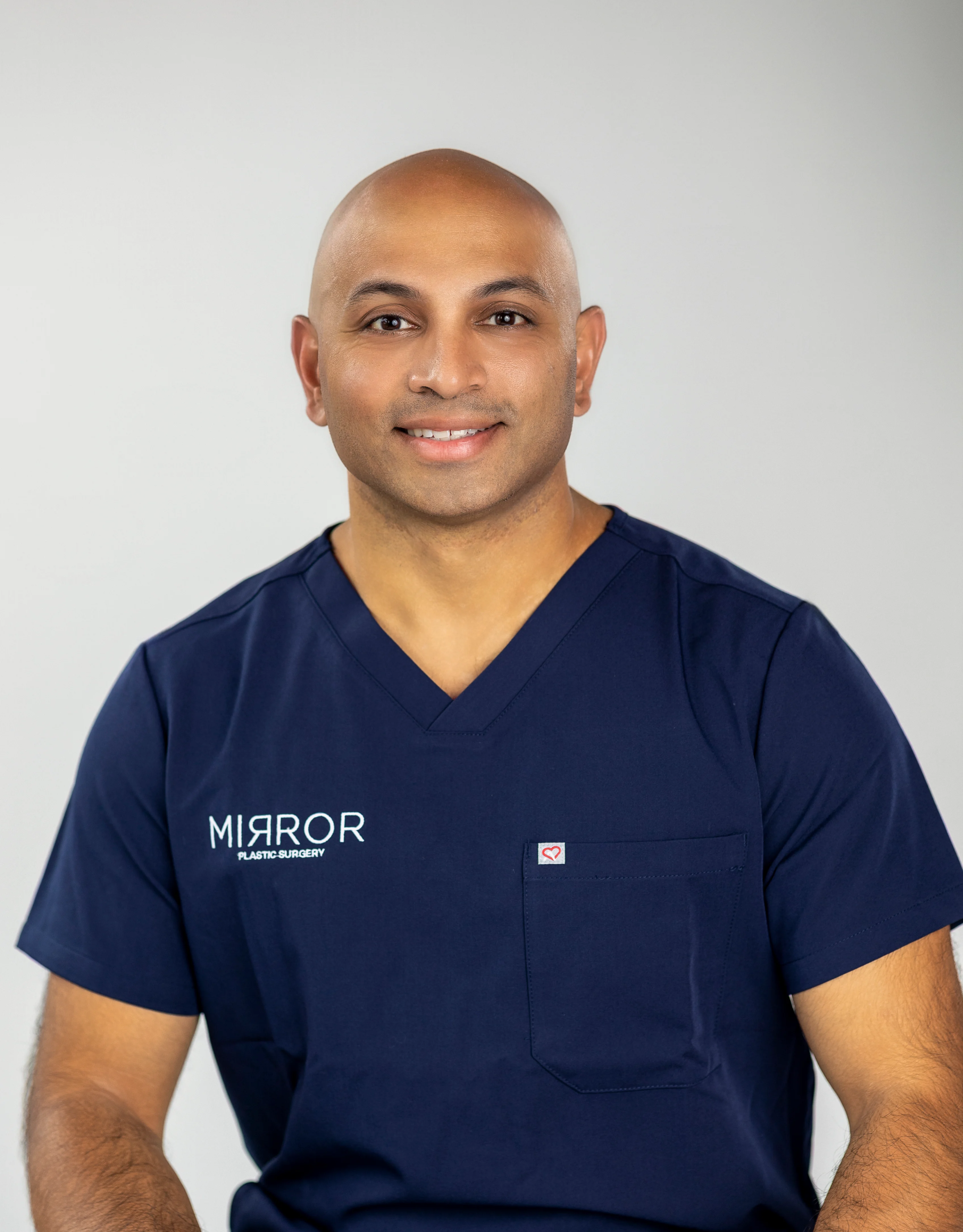
The safest choice is a practice where a physician stays actively involved in every step of your care, not one where the doctor appears only on paperwork. At Mirror Plastic Surgery in St. Petersburg, Dr. Akash Chandawarkar personally directs every consultation and treatment. He is a Harvard-educated, Johns Hopkins-trained, board-certified plastic surgeon. That level of accountability should be your standard, even though it is not yet the industry norm.
Frequently Asked Questions
Do Med Spas Use Real Doctors?
Many med spas use real doctors, although not all do. A med spa must have a medical director who is a licensed physician, yet that doctor may not be present during your treatment. The quality of oversight ranges from a fully engaged physician who reviews every chart and performs consultations personally to a “paper director” who signs an agreement and never appears. Always ask who will perform your procedure and confirm the medical director’s credentials before booking.
Can A PA Run A Med Spa?
The answer depends on the state. In Florida, physician assistants work under written supervision protocols with a supervising physician who retains ultimate responsibility. A PA cannot serve as the medical director in Florida, because that role requires a licensed MD or DO. In some states with broader PA authority, a PA may have significant operational involvement, yet a physician still holds the legal responsibility for patient safety.
RN Ownership And Medical Oversight In Florida
An RN can own the business entity in Florida, since the state does not enforce a strict corporate practice of medicine doctrine. However, an RN cannot provide medical oversight. Florida law requires a physician medical director to supervise all medical services, and an RN cannot perform the good-faith exam or generate treatment orders independently. Ownership of the business does not grant clinical authority.
What Are The Risks Of Medical Spa Treatments?
Risks include infection, scarring, vascular compromise, necrosis, and poor aesthetic outcomes, especially when unqualified providers treat patients or skip proper medical evaluation.1 As noted earlier, the CAPER registry found that most adverse events and scarring cases were linked to non-dermatology providers. Counterfeit products and the absence of emergency preparedness compound these risks significantly.
Are Medical Spas Supervised By Doctors In Florida?
Yes. Florida law requires a licensed physician (MD or DO) to serve as medical director and supervise all medical services. Florida Statute § 458.348 mandates a written supervisory contract, documented oversight, and geographic proximity between the physician and supervised practitioners. However, the quality of supervision varies widely by practice. The safest choice is a practice where the physician remains actively involved in every patient’s care, rather than appearing only on paperwork.
1 Results may vary from person to person. Editorial content, before and after images, and patient testimonials do not constitute a guarantee of specific results.
Peptide therapy is intended for wellness and optimization purposes and is not prescribed to diagnose, treat, cure, or prevent disease unless specifically stated. Many peptides are not FDA-approved and may be used off-label. Some have limited long-term safety data, with a potential for unknown risks, complications, or desensitization with prolonged use.