

Written by: Dr. Akash Chandawarkar, Board Certified Plastic Surgeon, Mirror Plastic Surgery | Last updated: September 9, 2026
Key Takeaways
- Med spa hair restoration options are non-surgical treatments that target miniaturized but viable follicles and work best after a formal medical diagnosis identifies the true cause of hair loss.
- PRP, microneedling, LLLT, exosomes, and medical-grade topicals each carry different levels of evidence, and combination protocols consistently outperform any single modality.
- Diagnosis is essential. Treating the wrong condition wastes time and money, while proper evaluation ensures every treatment dollar addresses the actual pathology.
- Provider credentials matter. Board-certified physicians with formal training in scalp anatomy deliver safer, more precise results than delegated med-spa staff.
- At Mirror Plastic Surgery, Dr. Akash Chandawarkar personally performs every hair restoration treatment after a comprehensive diagnostic evaluation. Schedule your diagnostic evaluation to receive a personalized, evidence-based plan.
Why a Medical Diagnosis Must Precede Any Hair Restoration Treatment
Hair loss is a symptom, not a diagnosis. The American Academy of Dermatology recommends seeking professional evaluation before beginning any hair restoration protocol because different causes require entirely different treatments.
Androgenetic alopecia (AGA) is the most prevalent type of hair loss, affecting up to 80% of males and 40% of females over their lifetimes. AGA is only one cause of thinning. Telogen effluvium, a stress- or illness-triggered shedding pattern, presents similarly and resolves with different interventions. Nutritional deficiencies in iron, zinc, or vitamin D can drive significant shedding. Thyroid dysfunction, in both hypo- and hyperthyroid states, frequently contributes to hair loss. Each of these conditions requires a distinct treatment pathway. Applying PRP or LLLT to telogen effluvium caused by iron deficiency, for example, fails to address the underlying pathology.
A proper diagnostic workup includes a thorough scalp examination and, when clinically indicated, targeted bloodwork covering CBC, ferritin, TSH, free T4, vitamin D, B12, and a hormone panel. Dr. Akash Chandawarkar performs this complete evaluation at Mirror Plastic Surgery before recommending any protocol. This approach directs every treatment dollar at the actual cause of a patient’s hair loss.
The Med Spa Hair Restoration Landscape: Five Modalities Evaluated
The following sections evaluate each major treatment category against current evidence, regulatory status, and realistic patient expectations. Combination protocols represent the 2026 standard of care, because layering treatments that target different biological mechanisms consistently outperforms any single intervention.
Platelet-Rich Plasma (PRP) Therapy: The Evidence-Backed Workhorse
PRP begins with a blood draw, centrifugation to concentrate platelets, and micro-injection of the resulting plasma into the scalp. The concentrated platelets release growth factors such as PDGF, VEGF, TGF-β, and IGF-1. These factors promote angiogenesis, cell proliferation, and follicular cycling in dormant or miniaturized follicles.
A 2026 Frontiers in Medicine review confirmed moderate-to-strong evidence for PRP in androgenetic alopecia, with randomized trials reporting hair density increases of approximately 10–30 hairs/cm² compared to baseline or controls.1 Protocol variability remains a key limitation. Differences in platelet concentration, leukocyte content, activation methods, and injection timing hinder direct study comparisons. PRP is not FDA-approved for hair loss, although the centrifuge devices used to prepare it may be FDA-cleared.
A standard protocol involves 3–4 sessions spaced 4–6 weeks apart, followed by maintenance every 4–6 months. Patients typically notice reduced shedding at 2–3 months and visible density improvement at 3–6 months.1 Dr. Akash personally performs all PRP injections at Mirror Plastic Surgery, applying a surgeon’s anatomical precision to every scalp injection.
Microneedling for Hair Loss: The Combination Amplifier
Microneedling creates controlled micro-injuries in the scalp that stimulate collagen production and wound-healing growth factors. It also enhances topical product absorption by up to fivefold. Its greatest clinical value appears when used as a combination partner rather than as a standalone treatment.
A landmark 2013 randomized controlled trial by Dhurat et al. found that microneedling combined with minoxidil produced a mean hair count gain of 91.4 hairs versus 22.2 hairs with minoxidil alone, a roughly fourfold advantage.1 A 2022 meta-analysis in the Journal of the American Academy of Dermatology pooling 11 RCTs (N=459) confirmed that adjunctive microneedling improved total hair density by a weighted mean difference of +16.81 hairs/cm² over conventional medical therapy alone.1
Microneedling is not FDA-cleared specifically for hair loss. Its regulatory clearance covers facial acne scars and wrinkles. Patients and providers should understand this distinction when evaluating treatment claims.
Low-Level Laser Therapy (LLLT): The FDA-Cleared Adjunct
LLLT works through photobiomodulation. Red or near-infrared light is absorbed by follicular cells, stimulating mitochondrial energy production and shifting hairs toward the anagen (growth) phase. It targets miniaturized follicles that still retain biological activity, rather than follicles that have undergone complete fibrotic loss.
LLLT is the only hair restoration modality with direct FDA 510(k) clearance for promoting hair growth in androgenetic alopecia. A systematic review and meta-analysis of seven double-blinded randomized controlled trials found significant hair density improvement with LLLT versus sham treatment, with a standardized mean difference of 1.27 (95% CI 0.993–1.639).1 A January 2026 12-month prospective trial published in Dermatologic Therapy confirmed sustained improvement in androgenetic alopecia with home-use LLLT, with hair counts and thickness gradually increasing over time in both men and women.1
LLLT produces modest effects and requires consistent use, typically 2–3 sessions per week for 8–25 minutes. It works best as part of a multimodal plan rather than as a standalone solution for significant thinning.
Exosome and Growth Factor Therapies: The Emerging Frontier
Exosomes are nanoscale extracellular vesicles (~30–150 nm) that carry proteins, lipids, mRNA, and microRNAs, and mesenchymal stem cell-derived exosomes have shown preclinical effects on dermal papilla cell proliferation and ex vivo human hair follicle support. The clinical evidence base remains early-stage.
A 2025 clinical review of nine exosome alopecia studies covering 125 patients found rare local side effects but concluded that larger controlled trials are needed. Critically, exosome therapy is not currently FDA-approved for the treatment of any disease or medical condition, and the FDA advises consumers to use caution when considering exosome products. The FDA has issued warning letters to multiple companies distributing unapproved exosome products.
Mirror Plastic Surgery offers Acorn Biolabs Secretome, a regulated, physician-sourced product, as a next-line option for patients who have not responded adequately to PRP. The practice frames this accurately as promising but investigational, requiring informed consent and physician oversight. Patients considering exosome therapy deserve a provider who explains exactly what product is being used and why.
Medical-Grade Topicals and Scalp Treatments: The Everyday Foundation
A 2026 network meta-analysis ranked topical minoxidil 5% as the most effective therapy among 15 off-label and topical treatments evaluated for male androgenetic alopecia based on 6-month change in total hair density.1 Topical minoxidil remains the only FDA-approved over-the-counter topical for hair loss in both men and women.
Prescription-strength options include oral finasteride and emerging topical finasteride formulations. A critical 2025–2026 safety update warrants attention. In April 2025, the FDA warned that compounded topical finasteride carries similar psychiatric side effects to oral finasteride, including depression, anxiety, and suicidal ideation. In May 2025, the European Medicines Agency officially confirmed suicidal ideation as a side effect of finasteride, prompting updated labeling across the EU. Any practice prescribing compounded finasteride should disclose this risk as part of informed consent.
Professional scalp treatments that support a healthy scalp environment serve as useful adjuncts. Topicals form the evidence-based foundation upon which in-office procedures build.
How to Choose the Right Treatment for Your Hair Loss Type
- Get a medical diagnosis first. Begin treatment only after identifying the underlying cause of hair loss. Treating the wrong condition wastes money and delays effective care.
- Stage your hair loss honestly. Early-to-moderate thinning (Norwood II–V in men, Ludwig I–II in women) responds best to non-surgical options. Advanced baldness may require surgical consultation, because permanently miniaturized follicles cannot be reactivated by topical or injectable therapy.
- Understand the evidence tier. FDA-approved medications (minoxidil, oral finasteride) and PRP carry the strongest clinical support. LLLT is FDA-cleared but produces modest effects. Exosomes are emerging and investigational.
- Plan for combination therapy. 2026 evidence consistently shows that multimodal protocols targeting multiple pathogenic pathways outperform monotherapy.
- Budget for maintenance. Non-surgical results require ongoing sessions. PRP typically requires maintenance every 4–6 months, and LLLT requires consistent ongoing use. Understand the full financial and time commitment before starting.
- Verify your provider’s credentials. Board certification in dermatology or plastic surgery signals formal training in the anatomy and pathophysiology relevant to hair restoration. Ask who will actually perform your treatment and whether that person reviewed your chart.
The table below compares each modality’s evidence level, FDA status, and typical protocol to help you weigh your options.
| Treatment | Evidence Level | FDA Status | Typical Protocol |
|---|---|---|---|
| PRP | Moderate-to-strong (RCTs showing 10–30 hairs/cm²) | Off-label (centrifuge devices may be cleared) | 3–4 sessions, then maintenance every 4–6 months |
| Microneedling | Strong as adjunct (+16.81 hairs/cm² with minoxidil in 11-RCT meta-analysis) | Not cleared for hair loss | 6–12 sessions, often combined with PRP or topicals |
| LLLT | Moderate (SMD 1.27 vs. sham in 7-RCT meta-analysis) | FDA-cleared (510(k)) | 2–3× weekly, 8–25 minutes, ongoing |
| Exosomes | Emerging (9-study review, 125 patients; larger controlled trials needed) | Not FDA-approved | 1–3 sessions; protocol varies by product and provider |
What’s New in 2026: Emerging Treatments on the Horizon
The modalities above represent today’s standard of care, and several pipeline treatments may soon reshape this landscape.
Three pipeline developments are generating significant clinical interest in 2026, though none are yet commercially available as approved treatments in the United States.
Clascoterone 5% (Breezula) is a topical androgen receptor inhibitor developed by Cosmo Pharmaceuticals. Its Phase 3 trials (SCALP 1 and SCALP 2, December 2025, N=1,465) showed up to 539% relative improvement in target-area hair count versus placebo, with no sexual side effects.1 FDA and EMA submissions are expected in 2026, potentially making it the first new therapeutic mechanism for AGA in over 30 years. Its non-hormonal mechanism makes it a candidate for both men and women.
PP405, a small-molecule drug by Pelage Pharmaceuticals targeting dormant hair follicle stem cells via the mitochondrial pyruvate carrier pathway, showed in Phase 2a results that 31% of men with higher-degree hair loss achieved greater than 20% hair density increase.1 It entered Phase 3 trials in 2026 after Pelage raised $120 million in Series B financing, and Time magazine named it one of the best inventions of 2025.
Veradermics’ VDPHL01, a proprietary extended-release oral minoxidil tablet, met all primary and key secondary endpoints in a Phase 2/3 trial (N=519 men, announced April 27, 2026), showing +47.3 hairs/cm² versus roughly 35 hairs/cm² for standard oral minoxidil.1 It could become the first FDA-approved oral pill for pattern hair loss in nearly 30 years.
A physician-led practice monitors these developments continuously so that when evidence matures and approvals arrive, patients receive access to validated options rather than premature commercial offerings.
What To Ask Your Provider Before Any Hair Restoration Treatment
A qualified provider welcomes clear, specific questions and answers them directly.
- What is the specific cause of my hair loss, and how did you diagnose it?
- Which treatments do you recommend for my pattern, and why?
- What clinical evidence supports these treatments for my specific condition?
- What are the risks, side effects, and expected downtime?
- How many sessions will I need, and what is the total commitment over 12 months?
- What results can I realistically expect, and on what timeline?
- Who will actually perform my treatment, and what are their credentials and board certifications?
Ask Dr. Chandawarkar these questions in person at Mirror Plastic Surgery during an hour-long consultation designed around your specific anatomy and goals.
Why Mirror Plastic Surgery Is Tampa Bay’s Physician-Led Choice for Hair Restoration
Mirror Plastic Surgery is St. Petersburg’s premier physician-led practice for non-surgical hair restoration. Dr. Akash Chandawarkar, Harvard-educated, Johns Hopkins-trained, board-certified by the American Board of Plastic Surgery, and fellowship-trained in aesthetic surgery at the Manhattan Eye Ear & Throat Hospital (MEETH)/Lenox Hill Hospital, personally performs every hair restoration treatment the practice offers, including PRP and Acorn Biolabs Secretome (injected or topical).
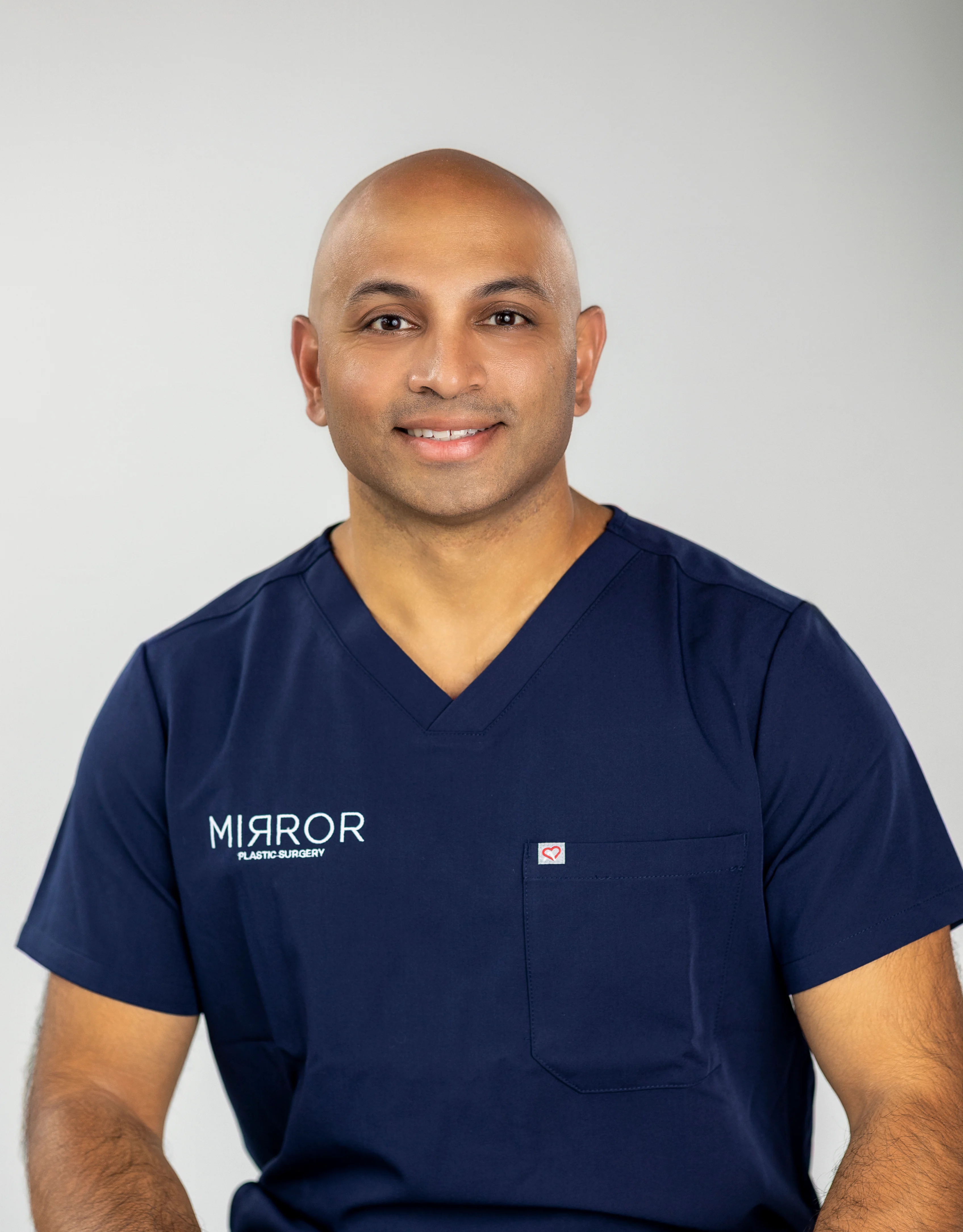
This distinction carries real clinical impact. In most U.S. states, PRP scalp injections must be performed or directly supervised by a physician, physician assistant, or nurse practitioner, and estheticians cannot legally administer injections in any U.S. state. At many high-volume med spa models, treatments are frequently delegated to minimally trained staff with no formal medical education in scalp anatomy. At Mirror Plastic Surgery, a surgeon’s command of subdermal anatomy governs every injection, applying the same precision used in surgery to non-surgical care.
The practice’s concierge medicine philosophy means consultations run up to an hour. The practice operates without supplier quotas, upselling incentives, or one-size-fits-all protocols. The guiding framework is safety first, function second, aesthetics third. When a treatment is not yet appropriate for a patient, Dr. Akash states that clearly, which builds the kind of long-term trust that high-volume clinics structurally cannot offer.
Mirror Plastic Surgery is located at 780 4th Ave S, St. Petersburg, FL 33701. Patients can reach the practice by phone or text at 727-361-6515, or by email at hello@mirrorplasticsurgery.com.
Conclusion: The Evidence-Based Path Forward
Four takeaways define the 2026 landscape of med spa hair restoration options.
First, diagnosis is essential. Hair loss has multiple causes, and the wrong treatment for the right symptom produces no result. Second, multiple effective non-surgical options exist, and they work best in combination. Combination therapy targeting multiple pathogenic pathways consistently outperforms monotherapy in androgenetic alopecia. Third, evidence calibration matters. PRP and FDA-approved medications lead the evidence hierarchy. LLLT is FDA-cleared and serves as a reliable adjunct. Exosomes are promising but investigational and require physician oversight and honest informed consent. Fourth, provider credentials determine both safety and outcomes. Outcomes depend more on the person holding the syringe than on the treatment itself.
Mirror Plastic Surgery offers a physician-led, concierge approach for patients in the Tampa Bay area, grounded in evidence, safety, and freedom from the commercial pressures that distort recommendations at high-volume clinics.
Start your personalized treatment plan at Mirror Plastic Surgery with a comprehensive diagnostic evaluation and an evidence-based hair restoration strategy built around your specific pattern, goals, and timeline.
Frequently Asked Questions
To address common concerns, here are answers to frequently asked questions about non-surgical hair restoration.
What Is the Most Effective Hair Restoration Procedure?
No single procedure works best for everyone, because effectiveness depends on the underlying cause and stage of hair loss. For androgenetic alopecia, the strongest clinical evidence supports FDA-approved medications (topical minoxidil and oral finasteride) as the medical foundation. PRP is the most evidence-backed in-office regenerative adjunct. Because combination protocols consistently outperform monotherapy, pairing PRP with topical minoxidil, or adding microneedling to medical therapy, produces meaningfully better outcomes than any single treatment. LLLT is FDA-cleared and adds modest benefit as an ongoing adjunct. The most effective approach for any individual patient is the one selected after a proper medical diagnosis and tailored to that diagnosis.
What Is the Newest Treatment for Female Hair Loss?
As of 2026, several developments are relevant to women specifically. Clascoterone 5% (Breezula) completed Phase 3 trials in December 2025 with compelling results and no sexual side effects. Its non-hormonal mechanism makes it a candidate for women, unlike finasteride, which clinicians do not routinely use in women of childbearing age. PP405, targeting dormant follicle stem cells, enrolled both men and women in its Phase 2a trial. For currently available options, topical minoxidil remains the only FDA-approved topical for female pattern hair loss.
PRP has strong clinical support in women, with a 2024 meta-analysis of 21 studies involving 628 women confirming significant improvements in hair density and thickness. Microneedling combined with minoxidil has been identified as the most effective combination for female androgenetic alopecia in a 2025 network meta-analysis. A physician evaluation is essential for women because female hair loss has a broader differential diagnosis than male pattern loss, and hormonal imbalances, thyroid dysfunction, and nutritional deficiencies more frequently contribute and require targeted treatment.
What Will Be the Breakthrough in Hair Loss Treatments in 2026?
Three pipeline candidates represent the most significant near-term developments. Clascoterone 5% is the furthest along, with FDA and EMA submissions expected in 2026 following Phase 3 results noted earlier. PP405 from Pelage Pharmaceuticals, which reactivates dormant follicle stem cells, entered Phase 3 trials in 2026 after Phase 2a results showed meaningful density gains in 31% of men. Veradermics’ VDPHL01, an extended-release oral minoxidil tablet, met all Phase 2/3 endpoints with superior hair density gains versus standard oral minoxidil and is targeting an NDA submission in early 2027.
None of these options are currently available as approved treatments. A physician-led practice monitors these developments so patients receive access to validated options as they become available rather than premature commercial versions of investigational therapies.
Is PRP Hair Restoration Safe, and Who Should Administer It?
PRP is generally well-tolerated because it uses the patient’s own blood, which minimizes the risk of allergic or immune reactions. Common side effects are mild and temporary, including scalp tenderness, minor swelling or redness, pinpoint bleeding, and occasional headache, typically resolving within 24–72 hours. Rare but more serious complications, such as infection, nerve injury, and scar tissue formation, are documented and occur more often when sterile technique is not followed or when the provider lacks adequate training in scalp anatomy.
In most U.S. states, PRP scalp injections must be performed or directly supervised by a physician, physician assistant, or nurse practitioner. Patients should verify that the person performing their treatment holds an active medical license, has documented training in hair restoration or a relevant specialty, and performs a full medical evaluation before recommending any protocol. Pricing well under market rate often signals diluted PRP or inadequate platelet concentration rather than a genuine bargain.
How Long Does It Take To See Results From Non-Surgical Hair Restoration?
Timeline varies by modality and individual biology, but general patterns remain consistent across the clinical literature. With PRP, most patients notice reduced shedding at 2–3 months and visible density improvement at 3–6 months, with peak results at 6–9 months after completing the initial series.1 Microneedling combined with topical therapy typically shows visible improvement between weeks 8 and 12, with continued gains through month 6.1 LLLT requires 4–6 months of consistent use before meaningful density changes are apparent, with early signs including reduced shedding and increased fullness at the part line.1
Non-surgical results do not last indefinitely. Androgenetic alopecia is a progressive condition, and maintenance treatments are required to sustain gains. Patients who begin treatment during early-to-moderate thinning, while follicles are still biologically active, consistently achieve better outcomes than those who wait until advanced loss has occurred.
Disclaimer: Results may vary from person to person. Editorial content, before and after images, and patient testimonials do not constitute a guarantee of specific results.
1 Results may vary from person to person. Editorial content, before and after images, and patient testimonials do not constitute a guarantee of specific results.


