
Written by: Ellie Pranckevicius, FNP-BC, Aesthetic Nurse Practitioner & Aesthetic Injector | Facial Restoration & Regenerative Injectable Specialist, Mirror Plastic Surgery | Last updated: July 21, 2026
Key Takeaways About Lip Filler Pricing in Tampa Bay
- Lip filler cost in Tampa Bay depends on filler type, dosage, injector expertise, and clinical infrastructure rather than a fixed national price.
- At Mirror Plastic Surgery, pricing is set after a personalized, full-face anatomical assessment with Ellie Pranckevicius, FNP-BC.
- Premium hyaluronic acid fillers with advanced cross-linking technologies cost more but often integrate more smoothly and move more naturally in the lips.1
- Most first-time patients need about one full syringe for natural results, while half-syringe or staged treatments may suit specific anatomy and goals.1
- Book a consultation with Ellie at Mirror Plastic Surgery for a supplier-neutral product recommendation and a long-term maintenance plan tailored to your lips.
How Ellie Plans Your Lip Filler Treatment
Mirror Plastic Surgery follows a concierge medicine model that reserves up to an hour for each initial consultation. Ellie Pranckevicius, FNP-BC, performs a full-face assessment before discussing syringe counts or product names. She evaluates upper-to-lower lip ratio, Cupid’s bow projection, vermillion border structure, lip corner orientation, and how the lips relate to the midface and lower face.
Ellie holds a Bachelor’s in Health Science from Boston University, completed a 600-hour aesthetics licensure program, and earned both her Bachelor’s and Master’s in Nursing from the University of South Florida. She spent four years in the Neuroscience ICU at Tampa General Hospital, which sharpened her ability to recognize early warning signs and manage complications. Her combined background in esthetics and advanced nursing supports a detailed understanding of surface and subdermal anatomy that guides safer, more precise lip filler outcomes.
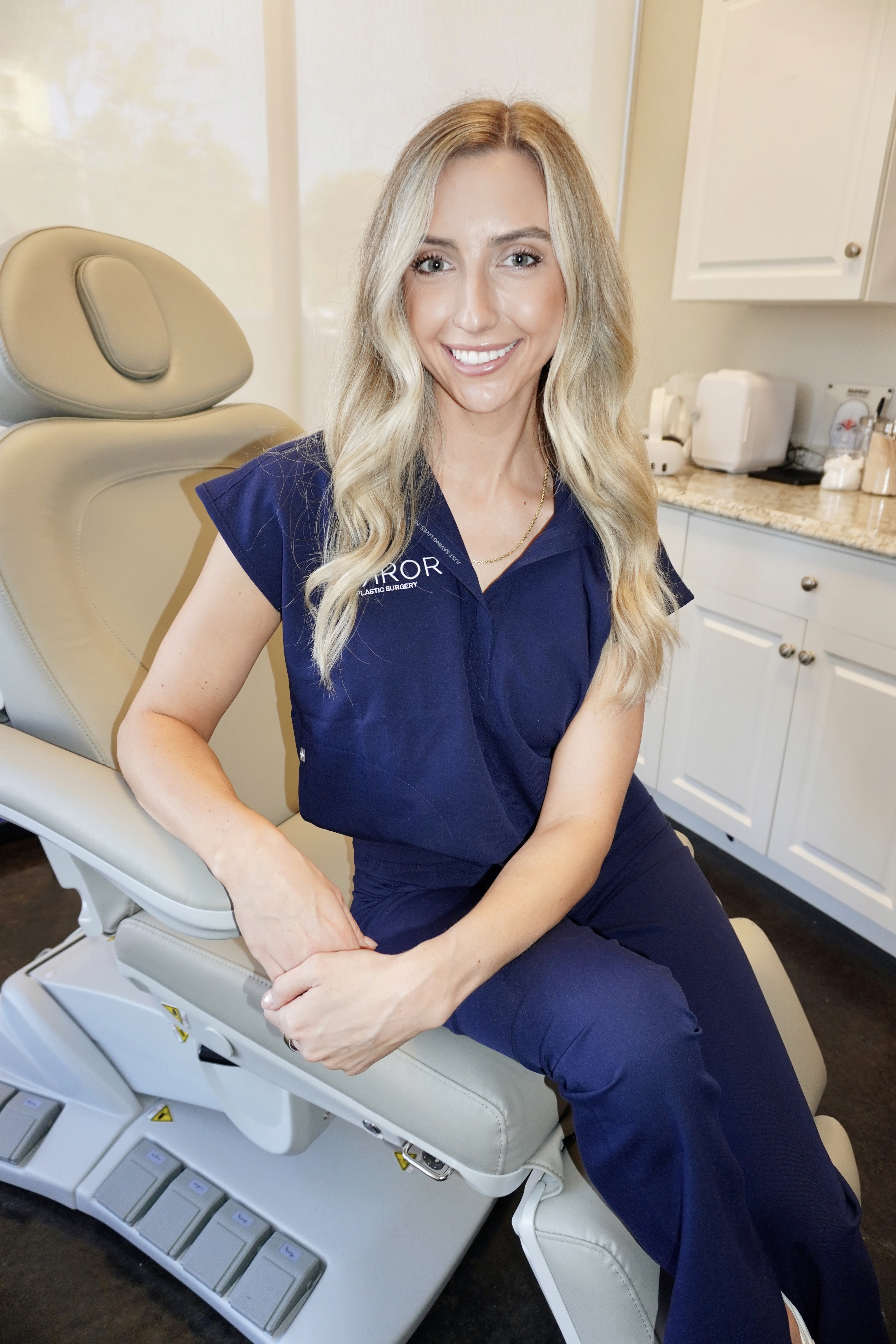
Ellie follows the practice’s guiding principle: safety first, function second, aesthetics third. She considers volume augmentation only after foundational facial restoration. This approach helps prevent isolated, single-area injections that often create asymmetry or an overdone look.
Book a consultation with Ellie to start with a full-face assessment before any product recommendation.
Modern Lip Filler Products and How They Differ
The dominant material for lip augmentation is hyaluronic acid (HA) because it has a strong safety record, works well with tissue, and can be fully dissolved with hyaluronidase. Different HA fillers behave differently in the lips.
Cross-linking technology shapes how a filler integrates with tissue, how it moves during expression, and how long it lasts. Newer platforms such as Vycross, XpresHAn, and Resilient Hyaluronic Acid (RHA) typically cost $100–$300 more per syringe than older NASHA-based products. They are designed for smoother integration and more natural movement in dynamic areas like the lips. Restylane Kysse uses XpresHAn technology, and the RHA Collection uses Resilient Hyaluronic Acid technology to support natural lip movement and flexing during expressions. These products often suit patients who want lips that look natural at rest and in motion.
Mirror Plastic Surgery is a supplier-neutral practice. Ellie selects the product best suited to each patient’s anatomy, skin quality, and goals, not a brand tied to any commission or quota. The practice works with Juvederm, RHA, Versa, Restylane, Radiesse, Evolysse, and other FDA-approved fillers.
What Drives the Price of 1 ml of Lip Filler
The wholesale cost of a syringe of Restylane is typically $120–$209. The gap between a lower quote and a higher one usually reflects overhead, rent, staff costs, insurance, and injector expertise rather than product cost alone. Your fee covers the entire clinical setup, including proper filler storage, access to dissolving agents, emergency vascular occlusion protocols, and the depth of anatomical assessment.
Injectors should evaluate upper-to-lower lip ratio, Cupid’s bow projection, lip corner orientation, and vertical height above and below the vermillion border to determine the volume needed for natural results. At Mirror Plastic Surgery, this assessment comes before any product discussion. Many first-time patients need about one full syringe (1 ml) of hyaluronic acid filler for natural-looking lip results, and Ellie bases that decision on anatomy rather than habit.1
Florida’s 2026 average lip filler cost sits near the national average. Pricing at each practice reflects its clinical model. A concierge assessment with a highly credentialed injector offers a different value than a quick, high-volume, per-syringe visit.
When 0.5 ml of Lip Filler Makes Sense
Half-syringe (0.5 ml) treatments can create subtle volume changes suited to refinement, while a full syringe (1 ml) can provide more noticeable yet still natural-looking results when placed correctly.1 The suitability of 0.5 ml depends on the patient’s starting anatomy and goals.
Half-syringe treatments often work well for first-time patients who want subtle hydration or a trial before committing to a full syringe. Patients with naturally fuller lips who only want border definition or hydration may be well served by 0.5 ml. Patients with thinner lips or more significant volume loss often benefit from starting with 0.5 ml and returning two to four weeks later. This staged approach allows a gradual build and time to assess symmetry and tissue response before adding more product.
Building volume gradually is easier and safer than reversing an outcome that feels excessive, and many of the most natural results develop over two or three carefully planned appointments rather than a single treatment. Ellie’s approach at Mirror Plastic Surgery follows this staged philosophy.
How Long Lip Fillers Last and What Changes Their Longevity
Lip fillers last 6–18 months depending on the specific product used, patient metabolism, amount injected, lip movement, hydration levels, sun exposure, and prior treatment history.1 The lips are among the most dynamic areas of the face, and the aesthetic peak, or plump and hydrated look most patients want, typically lasts 9 to 12 months in clinical practice1, even when some filler remains at 12 months.
Several patient-specific factors can speed breakdown. High-intensity exercise raises metabolism, which increases the body’s natural absorption of hyaluronic acid. Smoking compounds this effect, because reduced circulation impairs tissue maintenance and often leads to faster degradation than in non-smokers.
Beyond lifestyle, product choice also affects longevity. Juvederm Volbella XC can last around 12 months in the lips, while Juvederm Ultra XC typically lasts 6–12 months.1 This product-neutral approach at Mirror Plastic Surgery prioritizes clinical fit over marketing claims about longevity.
Understanding how long your specific filler is likely to last helps you and Ellie decide when and how to plan maintenance treatments.
Lip Filler Maintenance for Long-Term, Natural Results
Maintenance planning forms a core part of Mirror Plastic Surgery’s concierge approach. Ellie treats each appointment as part of a long-term plan rather than a one-time transaction. She accounts for residual product, tissue response, and changes in facial anatomy over time.
Patients who follow a consistent lip filler schedule often need less product over time because residual filler provides a baseline of volume, which can lower the amount required at each maintenance visit. Subsequent lip filler treatments can also last longer than first-time injections for some patients because of this residual product.1
Maintenance treatments scheduled when about 60–70% of volume remains tend to extend overall results and preserve natural contours better than waiting for complete dissolution, which often requires larger volumes later.1 Ellie recommends timing based on the specific product and each patient’s metabolism rather than a generic annual schedule.
Why Lips Do Not Automatically Sag After Fillers
Concerns about sagging lips after filler appear frequently in Reddit threads and patient forums, and they deserve a clear anatomical explanation. Sagging or distortion after lip filler does not occur automatically. These problems usually follow specific practices such as overfilling in a single session, repeated high-volume treatments without checking residual product, incorrect injection depth, or product placement that ignores the vermillion border and natural lip structure.
Repeated hyaluronic acid filler use can cause long-term tissue changes, including increased scar tissue and residual filler that complicates future treatment and can prevent tissues from returning fully to normal anatomy. This risk highlights the value of conservative dosing and experienced clinical judgment at every appointment. Ellie performs a full-face assessment at each visit to see how existing filler has settled and whether the lips still sit naturally within the overall facial profile before adding more product.
Questions to Ask Before Choosing a Lip Filler Provider
Patients comparing lip filler providers benefit from asking direct questions before booking. The answers reveal the standard of care more accurately than before-and-after photos alone.
- Does the practice keep hyaluronidase on-site for immediate vascular occlusion management?
- Are all products FDA-approved and sourced through verified pharmaceutical distributors?
- What specific training does the injector have in facial and perioral anatomy?
- Is a full-face assessment performed before any product recommendation?
- What is the follow-up policy if refinement is needed at two weeks?
- Is the practice supplier-neutral, or does it have brand quotas or commission arrangements?
Red flags include prices far below market, unclear injector credentials, pressure to book immediately, or treatments offered outside clinical settings. Pricing under $400 per syringe may signal that the product is not genuine or the injector is not properly licensed.
Risks, Trade-Offs, and How Mirror Differs From High-Volume Clinics
High-volume aesthetic clinics, often called “mills,” follow a very different model from concierge practices. Consultations are brief, product selection may reflect brand agreements more than patient anatomy, and injector time per patient is limited. Vascular occlusion, a rare but serious complication that can lead to tissue death if not dissolved quickly with hyaluronidase, occurs more often when untrained injectors at high-volume, low-cost clinics miss early warning signs such as blanching or severe pain.
Ultrasound studies show that the labial arteries lie at varying depths, which underscores the need for precise anatomical knowledge to avoid vascular injury during lip filler injections. Ellie’s Neuroscience ICU background and advanced nursing training support the clinical judgment needed to recognize and manage complications that a less experienced injector might overlook.
Mirror Plastic Surgery limits the practice to one to two procedures per day. This deliberate cap keeps the entire clinical team focused on each patient before, during, and after treatment. High-volume practices often perform five to ten procedures daily, which changes how much time and attention each patient receives.
Book a consultation with Ellie to experience how a full anatomical assessment shapes your treatment before any needle is placed.
Common Misconceptions About Lip Filler Cost
Several persistent misconceptions push patients toward choices that cost more, both financially and aesthetically, over time.
Cheaper is better value. The wholesale cost of a premium HA filler syringe is similar across providers. Quotes far below market rate often involve unbranded products, expired or improperly stored materials, or heavily diluted filler. Correcting a poor outcome with hyaluronidase dissolution adds cost and recovery time that usually cancels any initial savings.
Price is fixed per syringe. A clear lip filler quote should list the consultation fee, filler product cost, injector fee that reflects training and experience, clinical supplies, numbing support, and follow-up policy. Advertised per-syringe prices often leave out these elements, which makes simple price comparisons misleading.
One treatment is permanent. Most hyaluronic acid lip fillers last 6–12 months, and some newer formulations can hold 12–15 months in certain patients. Budgeting for maintenance from the start and planning that maintenance with a provider who tracks residual product and tissue response usually produces better long-term outcomes and lower total cost than sporadic, one-off treatments. To understand how anatomy and goals translate into specific volumes, consider the clinical scenarios in the table below.
Dosage Scenarios: Clinical Considerations at a Glance
The following table summarizes how clinical anatomy and patient goals guide appropriate filler volumes. These examples show that dosage is a clinical decision based on lips and lifestyle, not a simple menu choice.
| Scenario | Typical Volume | Clinical Considerations |
|---|---|---|
| Subtle refinement or first-time trial | 0.5 ml | Subtle volume increase, often suitable for patients with naturally fuller lips seeking hydration, border definition, or a conservative first experience; per-ml cost is often higher than a full syringe |
| Standard natural enhancement | 1 ml | More noticeable volume increase for natural-looking results when placed correctly; anatomy-driven product selection remains critical |
| Staged approach | 0.5 ml initial, reassess at 2–4 weeks | Gradual build allows assessment of symmetry, swelling, and patient response before adding more volume; often preferred for patients with significant asymmetry, thin tissue, or high sensitivity to swelling; subsequent treatments can last longer due to residual product |
Frequently Asked Questions
How much does 1 ml of lip filler cost in the Tampa Bay area?
Lip filler pricing in Tampa Bay reflects the provider’s credentials, the product selected, the depth of the consultation, and the clinical infrastructure supporting treatment. Mirror Plastic Surgery does not publish a fixed per-syringe price because Ellie determines the appropriate product, volume, and treatment plan only after a full-face anatomical assessment. Patients who have experienced rushed, price-list-driven consultations elsewhere often find that the Mirror approach, which may recommend less product, a different product, or a staged plan, delivers better long-term value than the lowest quote.
How long do lip fillers last?
Most hyaluronic acid lip fillers maintain their aesthetic peak for 9 to 12 months, and the overall range spans 6 to 18 months based on the factors discussed earlier, including product formulation, metabolism, lifestyle, and treatment history. The lips’ high mobility from speaking, eating, and expression accelerates filler breakdown compared with more static areas like the cheeks or jawline. Ellie matches product longevity to each patient’s lifestyle and then builds a maintenance schedule around that profile.
Is 0.5 ml of lip filler worth it?
Whether 0.5 ml is the right clinical choice depends entirely on the patient’s starting anatomy and goals. As outlined in the dosage and staging sections above, a half syringe can be ideal for subtle refinement or serve as the first step in a staged treatment plan. The decision should follow anatomy and outcome goals rather than the appeal of a lower upfront price.
Do lips go saggy or distorted after repeated filler treatments?
Sagging, migration, and distortion are not inevitable outcomes of lip filler. These changes usually result from overfilling in a single session, repeating treatments without checking residual product, injecting at the wrong depth, or placing product without respect for the vermillion border and natural lip architecture. An experienced injector who performs a full-face assessment at every visit, tracks how existing filler has settled, and uses conservative volumes tailored to the patient’s anatomy greatly reduces these risks. Ellie’s approach at Mirror Plastic Surgery prioritizes this ongoing evaluation over volume-driven treatment.
What should I ask a lip filler provider before booking?
The most useful questions uncover clinical standards that photos alone cannot show. Ask whether the practice keeps hyaluronidase on-site for immediate vascular occlusion management, whether all products are FDA-approved and sourced through verified distributors, what specific training the injector has in facial and perioral anatomy, whether a full-face assessment occurs before any product recommendation, what the two-week follow-up policy includes, and whether the practice is supplier-neutral. A provider who answers clearly and without pressure demonstrates the transparency that separates concierge-level care from high-volume, price-list-driven practices.
Next Steps for Lip Filler in Tampa Bay
Lip filler cost in Tampa Bay cannot be set accurately before a thorough anatomical assessment. The right product, volume, and timing are clinical decisions, and at Mirror Plastic Surgery those decisions happen during an hour-long, full-face consultation with Ellie Pranckevicius, not at the front desk.
Mirror Plastic Surgery is located at 780 4th Ave S, St. Petersburg, FL 33701. Patients can call or text 727-361-6515 or email hello@mirrorplasticsurgery.com.
Book a consultation with Ellie to receive a personalized assessment, a supplier-neutral product recommendation, and a long-term maintenance plan based on your anatomy and goals.
Disclaimer: Results may vary from person to person. Editorial content, before and after images, and patient testimonials do not constitute a guarantee of specific results.
1 Results may vary from person to person. Editorial content, before and after images, and patient testimonials do not constitute a guarantee of specific results.