
Written by: Dr. Akash Chandawarkar, Board Certified Plastic Surgeon, Mirror Plastic Surgery | Last updated: September 9, 2026
Key Takeaways
- Clinical trials show that hyaluronic acid lip fillers can improve lip fullness by about 60% and aesthetic appearance by 82%, with roughly half of patients maintaining results at 12 months.1
- Natural-looking results depend on provider expertise, conservative volumes of about 1 mL or less per session, and respect for the 24 lip compartments identified in anatomical studies.1
- Recovery includes noticeable swelling for the first 48 to 72 hours, and final results are best judged at the two-week mark once the filler settles.1
- More than 90% of patient regret comes from excess volume or poor anatomical placement, so choosing the right provider is the most important decision.
- Patients seeking evidence-based, anatomy-first lip augmentation in St. Petersburg, Florida can schedule a consultation with Dr. Akash Chandawarkar at Mirror Plastic Surgery.
Lip augmentation is one of the most requested cosmetic treatments, yet before-and-after photos rarely tell the full story. This article explains what clinical research shows about natural results, what to expect during recovery, and how to choose a provider who prioritizes anatomy and safety.
The Evidence Base: What Clinical Trials Actually Measure in Lip Augmentation
Clinical research defines success in clear, measurable ways. In the FDA registration trial for Juvéderm ULTRA XC (HYC-24L), 213 patients were randomized to treatment or a no-treatment control group. At three months, 79.1% of treated patients achieved at least a one-grade improvement on the validated Allergan Lip Fullness Scale, compared with 26.1% of controls, a statistically significant difference (p<0.0001). By twelve months, just over half of treated patients maintained their response.1
A 2025 systematic review and meta-analysis in the Aesthetic Surgery Journal found that hyaluronic acid lip fillers produce a 60% improvement in lip fullness, an 82% improvement in aesthetic appearance, and a 68% patient satisfaction rate.1 The same meta-analysis reported that 50% of patients experience at least one adverse event. Swelling was most common at 78% and usually resolved within 48 hours. Firmness occurred in 48% of patients, bruising in 34%, and tenderness in 33%. Serious adverse events that required intervention occurred in only 1.5% of cases.
Clinical success centers on graded, incremental improvement. Natural-looking results are the benchmark that FDA trials and peer-reviewed research support.
How Lip Augmentation Changes Your Features
A 2026 clinical study by Barakah et al. in the Journal of Cutaneous and Aesthetic Surgery measured how hyaluronic acid lip augmentation changed the lips in 25 healthy adult females. The researchers documented the following statistically significant changes (p < 0.001):
- Upper lip projection increased by 1.26 mm relative to the E-Plane
- Lower lip projection increased by 1.01 mm relative to the E-Plane
- Maxillary incisor display on smiling decreased by an average of 1.11 mm
The study showed that baseline soft-tissue position influenced the degree of change more than filler volume alone. This supports what expert injectors see in practice. Natural results come from working with your existing anatomy and tailoring volume to your starting point.1
A 2026 expert consensus in the Journal of Cosmetic Dermatology, based on more than 12,000 lip injections, outlined key principles for natural outcomes:
- Whole-face consideration, so the lips harmonize with surrounding features
- Respect for individual lip anatomy, including the 24 distinct compartments identified in cadaver studies
- Conservative initial volumes, usually no more than about 1 mL into the vermilion in a single session
- Small injection aliquots, because each compartment holds only 0.30–0.52 mL
The authors also noted that the optimal upper-to-lower lip height ratio is about 1:1.6 to 1:2 in Caucasian females, with variation by ethnicity and cultural preference. Reversing this ratio and making the upper lip larger than the lower lip typically creates an artificial look.
Realistic Recovery Timelines After Lip Filler
Most before-and-after galleries show patients at their settled two-week result. They rarely show the early recovery period, which can look dramatic and cause unnecessary worry for first-time patients. CoLaz Aesthetics Clinic’s aftercare guide explains that hyaluronic acid attracts water, so lips often look fuller and puffier than the final result for several days. The most accurate assessment happens around two weeks.
| Timeline | What to Expect |
|---|---|
| Day 0 (Immediate) | Visible volume with mild swelling; lips may look uneven |
| 24–72 Hours | Peak swelling; lips may look overfilled, so avoid judging results |
| 3–7 Days | Swelling subsides; bruising may peak then fade |
| 1–2 Weeks | Most visible side effects resolve; filler begins integrating |
| 2–4 Weeks | Final result visible; filler fully settled |
To minimize swelling and bruising in the first 48 hours, NexaSkinMed’s aftercare guide recommends several simple steps. Apply cold compresses to calm swelling. Avoid vigorous exercise, alcohol, and heat exposure such as saunas, because these can worsen swelling. Skip active skincare ingredients like retinoids, AHAs, and BHAs near the treatment area to prevent irritation. Do not touch or press the treated area so the filler can settle evenly. Avoid NSAIDs like ibuprofen and aspirin, which increase bruising, and stay upright and well hydrated.
Once you understand the recovery timeline, the next question usually involves how long the results will last.
How Long Lip Augmentation Results Last
A meta-analysis of hyaluronic acid lip augmentation across 10 studies and 1,228 participants found that 91% of patients maintained at least a one-grade improvement at two months, 74% at six months, and 46% at twelve months.1 These findings align with the FDA trial data mentioned earlier.
In everyday practice, hyaluronic acid lip fillers usually last 6 to 18 months.1 Several factors influence this range:
- Product selection, because softer formulas such as Volbella and Belotero may last 6–9 months, medium-flexibility gels like Kysse and RHA about 9–12 months, and firmer products up to 12 months
- Individual metabolism, since younger patients with faster metabolisms often need touch-ups sooner
- Lifestyle factors, because smoking, sun exposure, and high-intensity exercise can accelerate breakdown
- Injection technique, since placement depth and technique affect how the filler integrates with tissue
The lips move constantly and metabolize filler faster than many other facial areas, so most patients plan maintenance sessions every 6 to 12 months.
Why Patients Regret Lip Fillers
Most patients who seek filler dissolution do so because of excess volume relative to their anatomy. Research highlights three main causes of regretted results:
- Too much product in a single session, often described as a “volume failure,” with first-time patients better served by starting with 0.5 mL and building gradually
- Incorrect placement that ignores natural anatomy, such as overfilling the upper lip body while neglecting the philtral columns, which creates a shelf-like “duck lip” appearance
- Practitioner lacking anatomical training, which remains the largest risk factor for complications because lip injections require deep knowledge of facial anatomy
Common signs of an undesirable result include uneven or asymmetrical lips, visible lumps or hard bumps, a stiff “duck lip” look, product migration above the lip border, and bruising or tenderness that persists beyond two weeks.
Hyaluronic acid fillers are reversible, and hyaluronidase can dissolve them within 24–48 hours. Repeated overfilling over time can stretch lip tissue, which makes later correction more complex. That is why choosing the right provider from the beginning is so important.
Discuss your goals with Dr. Chandawarkar at Mirror Plastic Surgery to explore a conservative, anatomy-first approach to lip augmentation.
The Most Natural-Looking Lip Augmentation
The 2026 expert consensus in the Journal of Cosmetic Dermatology identifies hyaluronic acid fillers as the gold standard for nonsurgical lip enhancement. These fillers are biocompatible, reversible, and provide immediate results that can be adjusted over time. Alternatives such as fat transfer and surgical implants are more invasive, less predictable, and associated with higher revision rates.
The consensus authors explain that natural results depend on several factors working together:
- Provider expertise, including a surgeon’s command of facial and subdermal anatomy
- Conservative, staged treatment, with volume built gradually over multiple sessions
- Product selection matched to lip anatomy, using softer gels for definition and more cohesive formulations for structural support
- Injection technique, with small aliquots placed at appropriate depths while respecting the 24 lip compartments
Dr. Akash Chandawarkar’s surgeon-level training at Johns Hopkins and fellowship in aesthetic surgery at MEETH/Lenox Hill Hospital means every injection reflects deep anatomical understanding. This level of training supports natural results and helps keep complications rare.
Before-and-After Gallery: How to Judge Quality Results
Insert actual before-and-after images here, with captions that describe the treatment approach and outcome for each case.
When you review any lip filler gallery, focus on specific markers of quality. Cosmetic Connection’s clinical criteria highlight the following features:
- Proportionate volume relative to the full face
- Preserved natural architecture, with the Cupid’s bow and philtral columns enhanced rather than erased
- Defined but flexible vermilion border
- Natural movement with speech and expression
- Consistency across angles and lighting
- An upper-to-lower lip ratio close to 1:1.6
Galleries that showcase only dramatic, heavily filled lips often reflect a volume-focused approach. High-quality practices highlight subtle, balanced changes that blend with the patient’s overall features.
Why Choose Mirror Plastic Surgery for Lip Augmentation
Dr. Akash Chandawarkar brings a rare combination of training and personal involvement to every lip augmentation:
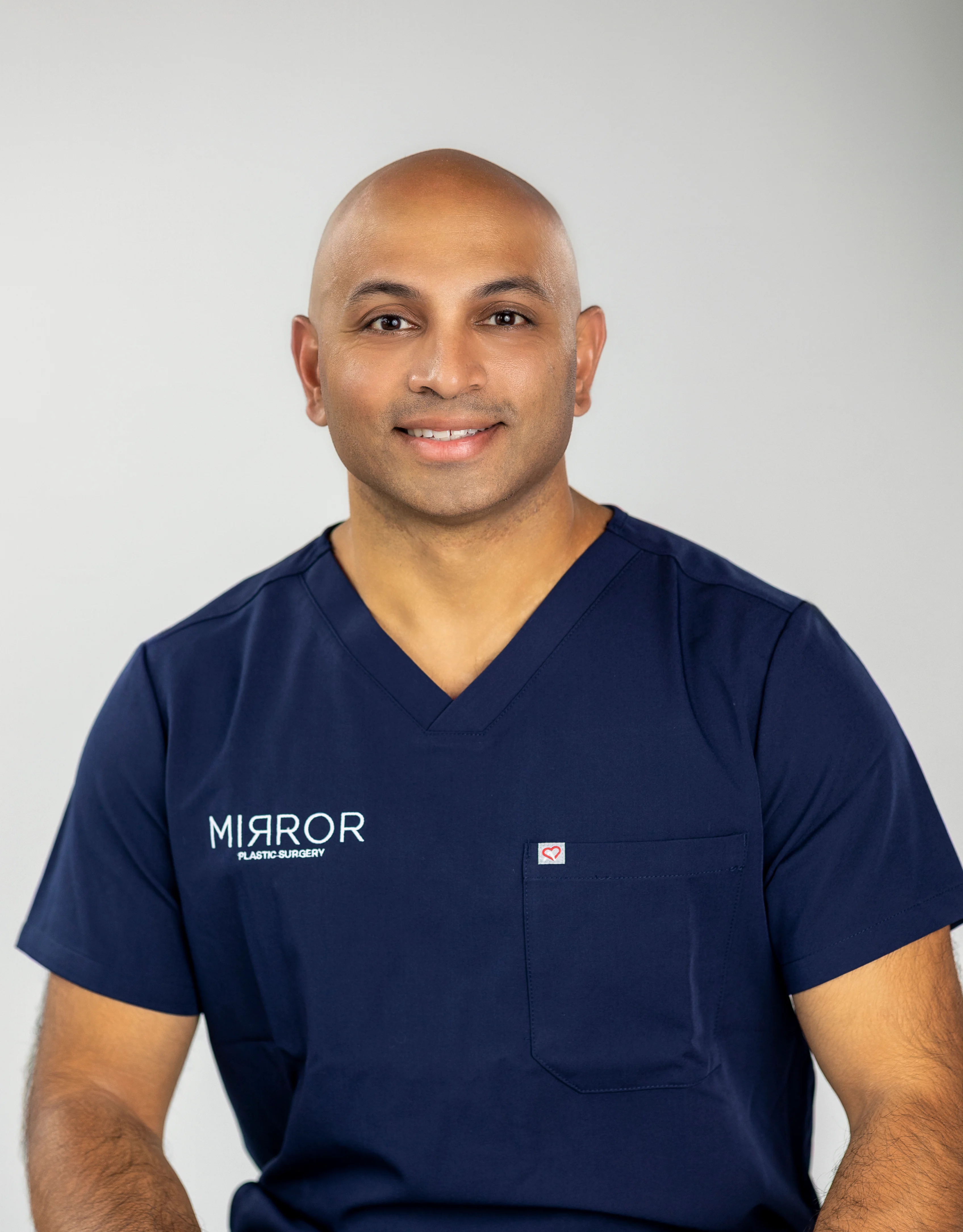
- Harvard-educated, Johns Hopkins-trained plastic surgeon
- Fellowship-trained in aesthetic surgery at MEETH/Lenox Hill Hospital
- Board-certified by the American Board of Plastic Surgery
- Advisory board member for Merz Aesthetics and Tiger Aesthetics
- Personally performs all injectable treatments
His philosophy is safety first, function second, aesthetics third. This approach means your lips receive the same anatomical rigor as a surgical procedure. Consultations can last up to an hour and include a top-to-bottom assessment that considers full facial harmony. Mirror Plastic Surgery limits daily procedures so each patient receives focused, unhurried care.
Dr. Chandawarkar is known for transparent recommendations and will sometimes advise that an expensive treatment can wait. This honesty builds long-term trust. Schedule your personalized consultation today to experience evidence-based, anatomy-first lip augmentation in St. Petersburg, Florida.
Frequently Asked Questions
Do Lips Sag After Lip Fillers?
Hyaluronic acid fillers do not cause lip sagging. The filler integrates with lip tissue and is gradually metabolized over 6 to 18 months, returning the lips to their baseline. Repeated overfilling over many years can stretch lip tissue and make future natural results harder to achieve. Conservative, staged treatment helps prevent this outcome.
If you already have overfilled lips, hyaluronidase can dissolve the filler. After a two-week settling period, a skilled injector can rebuild volume with correct technique and proportionate amounts.
Which Is Better: Lip Filler or Surgical Lip Augmentation?
“Lip augmentation” describes all methods that enhance lip volume, shape, or projection. Lip filler, especially hyaluronic acid filler, is the most common and clinically validated method. It is reversible, adjustable, and involves minimal downtime.
Surgical options such as fat transfer or implants are more permanent and more invasive, with less predictable outcomes and higher revision rates. For most patients who want natural enhancement, hyaluronic acid fillers offer a strong balance of safety, control, and results. The best choice depends on your anatomy, goals, and desired degree of change, which a thorough consultation can clarify.
How Much Does Lip Augmentation Cost?
Cost depends on the amount of product used, provider expertise, and geographic region. The American Society of Plastic Surgeons reports an average physician fee of $743 for lip augmentation with injectable materials. Most patients need one to two syringes per treatment and plan maintenance every 6 to 12 months.
At Mirror Plastic Surgery, pricing is personalized during consultation. The focus stays on using the right amount of high-quality product for your goals. Every patient receives a tailored treatment plan based on individual anatomy and long-term objectives.
How Painful Is Lip Augmentation?
Most patients describe lip augmentation as mildly uncomfortable rather than painful. Topical numbing cream is applied before injection, and many hyaluronic acid fillers contain lidocaine for added comfort. The treatment usually takes 15 to 30 minutes.
Mild swelling and tenderness are common for 24 to 72 hours. Serious pain is uncommon. If you notice severe or increasing pain, blanching, or color changes in the skin after treatment, contact your provider immediately, because these symptoms can signal vascular compromise, a rare but urgent complication that requires prompt treatment with hyaluronidase.
Why Do People Regret Lip Fillers?
Regret usually stems from too much product in a single session, incorrect placement that ignores natural lip anatomy, or a practitioner without sufficient anatomical training. Social media can also distort expectations by promoting a single exaggerated look that does not suit most faces.
The positive news is that regret with hyaluronic acid fillers is largely preventable with the right provider and often correctable with hyaluronidase dissolution. Choosing a board-certified plastic surgeon with deep anatomical expertise is one of the most effective ways to avoid regret.
Conclusion: Making an Evidence-Based Decision
Research shows that natural-looking lip augmentation is both achievable and predictable when a skilled injector uses conservative, anatomy-respecting techniques. When you review before-and-after photos, look for proportion, preserved lip architecture, and harmony with the rest of the face. Expert guidelines emphasize whole-face assessment, small injection aliquots, and staged treatment. Careful provider selection greatly reduces the risk of regret.
If you are considering lip augmentation in the St. Petersburg or Tampa Bay area, Dr. Akash Chandawarkar at Mirror Plastic Surgery offers concierge-level care grounded in clinical evidence. Experience the Mirror Plastic Surgery approach and pursue natural results with confidence.
Disclaimer: Results may vary from person to person. Editorial content, before and after images, and patient testimonials do not constitute a guarantee of specific results.
1 Results may vary from person to person. Editorial content, before and after images, and patient testimonials do not constitute a guarantee of specific results.