
Written by: Dr. Akash Chandawarkar, Board Certified Plastic Surgeon, Mirror Plastic Surgery | Last updated: September 9, 2026
Key Takeaways
- Natural lip augmentation focuses on subtle enhancement that maintains facial harmony instead of dramatic transformation.
- Key anatomical landmarks, including the vermilion border, Cupid’s bow, and philtrum, must stay defined so your lips still look like you.
- Conservative hyaluronic acid fillers using micro-droplet technique remain the gold standard, while Botox lip flips and surgical options like fat transfer or lip lift suit specific goals.
- Choosing a board-certified plastic surgeon with deep anatomical knowledge and a safety-first philosophy is the most important step in avoiding unnatural results and complications.
- Schedule a personalized consultation with Ellie at Mirror Plastic Surgery to create a tailored plan for natural, beautiful lips.
What “Natural” Actually Means In Lip Augmentation
“Natural” describes the relationship between your lips and the rest of your face, not a single universal look. Three anatomical landmarks define a youthful lip and must be preserved by any augmentation technique. Recognizing these landmarks helps explain why some approaches look fresh while others appear artificial.
- The Vermilion Border: The defined edge separating the colored lip from surrounding skin. When this line is sharp, lips look defined and youthful.
- Cupid’s Bow: The M-shaped curve of the upper lip that gives it character and individuality.
- The Philtrum: The groove running from the base of the nose to the upper lip, which frames the central lip and contributes to facial symmetry.
Proportion matters, yet no single formula fits every face. A 2026 expert consensus paper in the Journal of Cosmetic Dermatology notes that upper-to-lower lip height ratios around 1:1.6 to 1:2 often look harmonious in Caucasian females. The same paper stresses that whole-face assessment and individual anatomy matter more than chasing a specific ratio.
An international consensus paper published in the Journal of Cosmetic Dermatology (2026) introduces the “Natural Outcomes Framework,” which evaluates results across four dimensions: see (visual observation), touch (palpation), feel (patient satisfaction), and express (dynamic facial expressions). Focusing narrowly on “perfect” symmetry or “ideal” proportions can paradoxically create results that look less natural.
Non-Surgical Options For Natural Lip Augmentation
Hyaluronic Acid Fillers For Soft, Subtle Volume
Hyaluronic acid (HA) fillers attract water and add volume to the lips in a controlled way. FDA-approved brands used at Mirror Plastic Surgery include Juvéderm, RHA, Restylane, and Versa, each with specific properties that suit different goals. A 2026 clinical strategy review in the Journal of Cosmetic Dermatology recommends softer, less cohesive gel-type HA fillers for lip augmentation because firmer products more easily create nodules.
Volume and technique influence the outcome more than brand choice. The 2026 Journal of Cosmetic Dermatology expert consensus advises limiting volume per injection point and generally keeping total vermilion volume around 1 mL or less in a single session. A cadaver study cited in the same paper identified 24 separate lip compartments, each holding only 0.30–0.52 mL, which supports a strategy of small, precisely placed deposits.
The consensus recommends different injection techniques for each goal. For structural definition at the vermilion border, inject horizontal retroinjection lines in the dermal or subdermal plane. For projection, use vertical retroinjection lines in the subcutaneous plane. For eversion, place small boluses in the deep fat compartment. In all cases, plane selection is as important as product selection. A 2026 narrative review in the Journal of Cosmetic Dermatology confirms that superficial placement increases risks such as the Tyndall effect, a bluish discoloration, and visible contour distortion.
In a randomized controlled trial supporting US FDA approval of Juvéderm ULTRA XC for lip augmentation, 79.1% of the treatment group showed a ≥1 grade improvement in lip fullness at 3 months, compared with 26.1% of controls. At 12 months, 56.4% maintained their response.1 HA fillers are also reversible with hyaluronidase, which provides a major safety advantage and supports their role as the first-line choice for lip augmentation.
For more on selecting the right filler for your anatomy, see our guide to the Best Lip Fillers For A Natural Look: A Tampa Bay Guide.
The Botox Lip Flip For Very Subtle Change
The lip flip relaxes the superficial fibers of the orbicularis oris muscle so the upper lip rolls outward slightly. This technique changes lip position without adding volume. A 2026 prospective study in Aesthetic Plastic Surgery confirmed that the lip flip enhances upper lip projection through selective neuromodulation rather than volumetric augmentation, which suits patients who want gentle eversion instead of fullness.
In that study of 17 women (mean age 40.4 years), upper lip height increased modestly but significantly at 15 days, from 8.31 mm to 8.74 mm, and patient satisfaction scores improved. The effect remained temporary, with upper lip height trending back toward baseline at 30 and 90 days, consistent with botulinum toxin pharmacodynamics.1
The lip flip works best for patients whose upper lip rolls inward at rest, those with a gummy smile, or those new to lip treatments who want to preview subtle enhancement. It does not suit patients with truly thin lips who want volume or those with significant perioral muscle weakness. No botulinum toxin product is FDA-approved for a lip flip, so this treatment is off-label, and any side effects must fade naturally over 2–3 months.
At Mirror Plastic Surgery, Dr. Chandawarkar performs all neuromodulator injections personally. His detailed understanding of perioral anatomy reduces the risk of over-relaxation and helps preserve normal mouth function.
At-Home Topicals That Offer Temporary Plumping
Plumping glosses and balms use ingredients like peppermint or cinnamon to increase blood flow and create short-term fullness, usually lasting 1 to 4 hours per application. Peptide-based products may support skin health over several weeks but do not change lip structure. Patients who want lasting, structural improvement need professional treatment.
Surgical Options For Longer-Lasting Lip Enhancement
When non-surgical options cannot achieve your goals, surgical approaches can provide more permanent solutions. For a complete overview of surgical and non-surgical options, see our detailed guide on Lip Augmentation Options: Fillers, Lifts & Implants.
Fat Transfer Using Your Own Tissue
Fat transfer harvests the patient’s own fat, typically from the abdomen or thighs, and injects it into the lips. Because the procedure uses autologous tissue, it avoids allergic reactions and creates a natural feel. Fat that successfully establishes a blood supply can last at least five years, which significantly outlasts HA fillers.1
Fat transfer involves trade-offs. It requires a surgical setting, one to two days of initial downtime, and swelling that can persist for five to ten days. Fat survival is more variable in the lips than in other facial areas, and a portion of the transferred fat is reabsorbed over the first few months. Many patients start with fillers to preview their preferred volume, then consider fat transfer once they feel confident about a more permanent change.
Lip Lift For Structural Rejuvenation
A lip lift shortens the distance between the nose and the upper lip and rotates the lip outward to reveal more pink tissue. This procedure works best when the main concern is structural, such as a long upper lip that has thinned with age, rather than a simple lack of volume. The goal is to reveal approximately 2 mm of the central upper teeth at rest, which restores a youthful resting lip position.
The incision sits within the nasal crease. Recovery usually involves mild swelling and discomfort for the first week, suture removal at one week, and gradual scar maturation over several months. Results are permanent. One plastic surgeon describes the key decision as determining whether the concern reflects temporary volume loss or a deeper structural issue in the tissue.
Dr. Chandawarkar’s surgical training at Johns Hopkins and fellowship at the Manhattan Eye Ear & Throat Hospital equip him to make that distinction accurately and perform the procedure that best matches your anatomy.
How To Avoid The “Overfilled” Look: 7 Expert Tips
Follow these seven tips to keep your lip augmentation looking natural and to avoid the overfilled appearance.
- Choose a provider with deep anatomical knowledge, ideally a board-certified plastic surgeon who injects with a surgeon’s understanding of subdermal structures.
- Start conservative. You can always add more at a follow-up visit, while dissolving excess filler adds cost and complexity.
- Ask for micro-droplet technique. Placing 0.01–0.05 mL per deposit supports even distribution and natural tissue integration.
- Ensure your injector preserves your vermilion border and Cupid’s bow. The 2026 expert consensus specifically warns against techniques that breach the vermilion border, because channels between the cutaneous lip and vermilion increase the risk of product displacement.
- Walk away from providers who push large volumes or trendy styles without first discussing your anatomy and goals.
- Review before-and-after photos of patients with similar lip anatomy, not only a provider’s most dramatic results.
- Confirm hyaluronidase is on-site. An injector who does not keep it in the room is not equipped to manage the worst outcome their procedure can cause.
Results look unnatural when providers overfill, inject too superficially, ignore facial harmony, or disregard the lip’s natural compartments. Stacking treatments without dissolving previous filler layers stretches tissue and blurs lip contours as cumulative volume overwhelms the lip’s structural limits. Spacing treatments based on what filler remains, rather than on a fixed schedule, offers the strongest protection against cumulative overfilling.
Lip Filler Trends In 2026: Techniques That Look Natural
The aesthetic industry is shifting away from dramatic volume and toward subtle refinement. This change appears clearly in the decline of high-drama techniques and the rise of softer, anatomy-respecting approaches.
The “Russian lip” technique uses vertical columns of filler to create dramatic height and a sharp Cupid’s bow. It often pushes the lip forward, produces a sharp border, and increases the risk of stiffness or migration with repeated treatments.
The “Swedish lip” technique, popularized by Scandinavian aesthetic clinics, reflects a “less is more” philosophy. It aims for soft, natural results with minimal anterior projection and a smooth side profile. Injectors place structural support deep, behind the orbicularis oris, and use microdroplets superficially to smooth contour irregularities, avoiding a shelf-like appearance.
Data from professional societies supports this move toward natural results. The American Society of Plastic Surgeons reported 1,449,565 lip augmentation procedures using injectable materials in 2024, up 1% from 2023. ASPS President C. Bob Basu, MD, notes that patients increasingly want to “look and feel more like themselves,” favoring natural-looking refinement over dramatic change. Among all age groups, adults ages 36 to 55 still account for nearly half of all cosmetic procedures performed, and this group often prioritizes subtle, identity-preserving outcomes.
Lip Augmentation And Aging: Why Technique Matters Over Time
Poorly executed lip filler can make the face look older instead of younger. Overfilling stretches the skin, distorts natural proportions, and creates the telltale “filler mustache” or shelf above the lip. A 2026 case report in the Journal of Cosmetic Dermatology documented a patient with roughly two decades of lip filler treatment and cumulative exposure exceeding 30 mL, which illustrates the extreme end of repeated overfilling.
Conservative treatment with appropriate intervals supports rejuvenation of the lips and surrounding area while preserving tissue integrity. Current evidence does not show that hyaluronic acid filler permanently deforms the lip when used at suitable intervals and doses. Very high doses repeated frequently over many years can stretch lip tissue, so a long-term relationship with a trusted provider who treats based on what remains, not the calendar, offers the safest path.
Schedule a consultation with Ellie to design a long-term lip care plan tailored to your anatomy and aging pattern.
How To Choose The Right Provider In St. Petersburg
The injector’s skill level shapes your results more than any product choice. Guidance from the Natural Outcomes Framework emphasizes that injection technique, training, knowledge of facial anatomy, and understanding of aging all play crucial roles in achieving natural outcomes.
Bring these questions to any consultation:
- Are you board-certified in plastic surgery or dermatology?
- How many lip augmentations do you perform per month?
- What is your approach to achieving natural results?
- Can I see before-and-after photos of patients with similar lip shape to mine?
- What products do you use, and why did you choose them for my anatomy?
- How do you handle complications, and is hyaluronidase available on-site?
- What is your vascular occlusion protocol?
Red flags include providers who upsell aggressively, rush consultations, cannot explain their complication management protocols, or recommend volumes that exceed what your anatomy can handle. High-volume practices that perform many procedures each day often struggle to provide the individualized attention that natural results require.
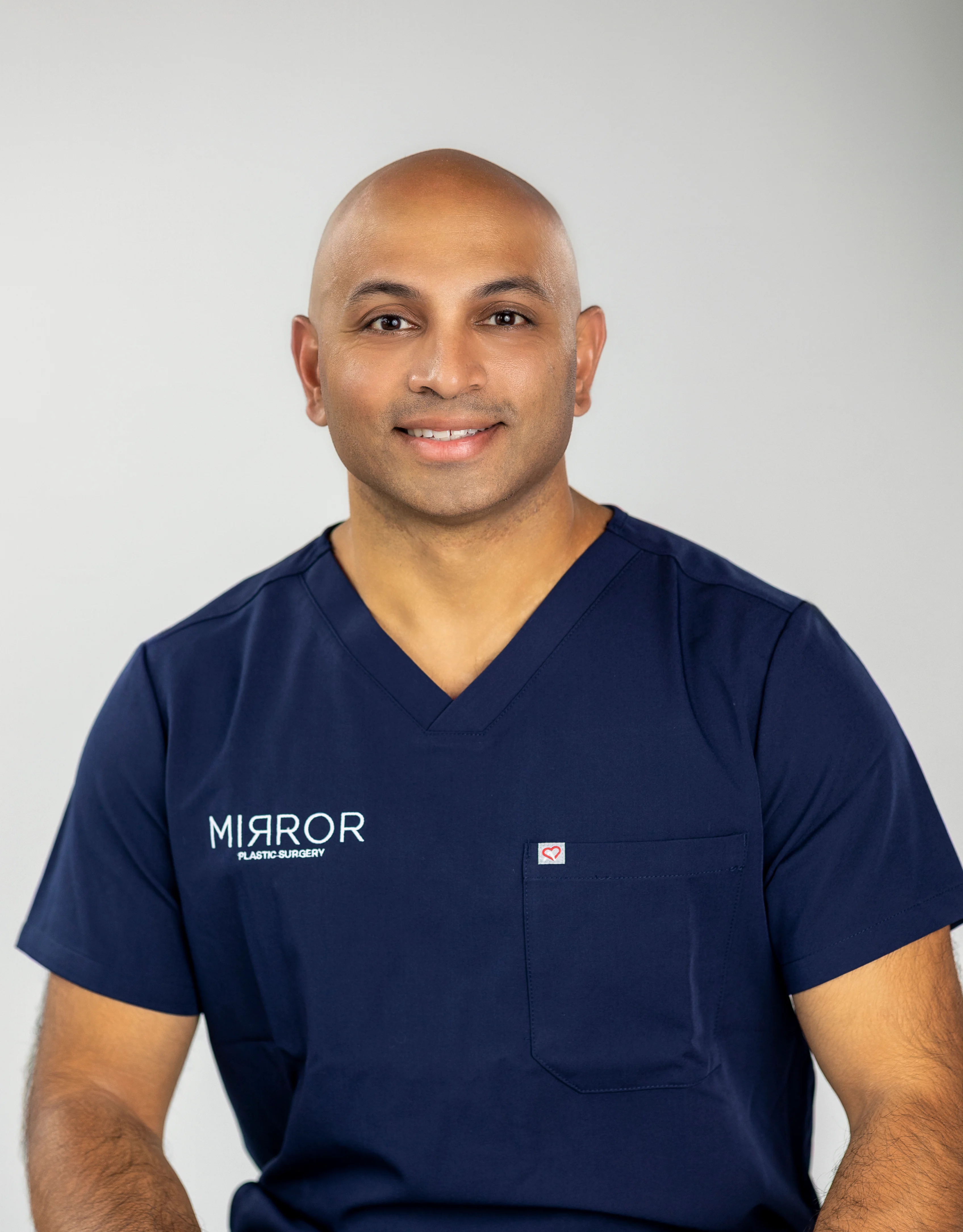
Mirror Plastic Surgery follows a concierge medicine model. Dr. Chandawarkar limits the practice to one to two procedures per day and dedicates up to an hour to each initial consultation. He communicates transparently, including advising patients when an expensive service is not yet necessary, because long-term trust matters more than procedure count. As a board-certified plastic surgeon and advisory board member for Merz Aesthetics and Tiger Aesthetics, he brings a surgeon’s command of facial anatomy to every injectable treatment.
Cost And Maintenance: Planning For The Long Term
Costs vary based on product, provider expertise, and the treatment plan tailored to your anatomy. Mirror Plastic Surgery provides personalized quotes during consultation rather than a single flat price. HA fillers last about 6–12 months in the lips on average, with some patients maintaining results longer depending on product, placement, and metabolism. Fat transfer can last five years or more, and a lip lift provides permanent change.1
The most cost-effective long-term strategy uses conservative, well-spaced treatments with a provider who evaluates what remains before adding more. Treating simply because “it’s been a year” can lead to unnecessary stacking. Longer intervals, smaller volumes, and a willingness to say “not yet” at some visits protect both your results and your budget.
Frequently Asked Questions
Is It Possible To Naturally Increase Lip Size Without Injections?
At-home options like plumping glosses provide temporary effects lasting 1 to 4 hours by increasing surface blood flow. Makeup techniques and overlining can create the illusion of fullness, and peptide-based topicals may support skin health over time. These methods do not create structural, lasting change. Patients who want results that persist and genuinely alter lip proportion need professional treatment, such as conservative filler, a lip flip, or a surgical procedure matched to their anatomy.
What Is The Most Natural-Looking Lip Augmentation?
Conservative hyaluronic acid filler using micro-droplet technique, performed by a board-certified plastic surgeon who respects your individual anatomy, tends to look most natural. As noted earlier, the 2026 expert consensus emphasizes small volumes, appropriate injection depth, whole-face consideration, and a staged approach for natural results. The injector’s anatomical knowledge and philosophy influence the outcome more than the specific brand.
How Long Does Lip Augmentation Last?
As mentioned in the cost section, HA fillers last 6–12 months on average, with some patients seeing benefits up to 18 months depending on formulation, placement, and metabolism. The Botox lip flip lasts about 2–3 months because the orbicularis oris moves constantly and metabolizes the toxin quickly.1 Fat transfer can last five years or more once the graft establishes a stable blood supply, although a portion is absorbed in the first few months. A surgical lip lift provides permanent structural change.
Why Does Lip Filler Sometimes Age You?
Overfilling stretches the skin and distorts natural proportions, which can create a shelf above the lip line and blur the vermilion border. Injecting too superficially can cause the Tyndall effect, a bluish discoloration visible through thin skin. Repeated stacking of treatments without allowing previous filler to resolve creates cumulative volume that overwhelms the lip’s structural compartments, each of which holds only 0.30–0.52 mL. This pattern leads to tissue distortion that reads as older rather than younger. Conservative treatment with appropriate intervals prevents these outcomes.
Do Lips Go Saggy After Lip Fillers?
Lips maintain their shape when treatment stays conservative and technically sound. Current evidence does not show that hyaluronic acid filler permanently deforms the lip at suitable intervals and doses. Very high doses repeated frequently over many years can stretch lip tissue beyond its limits. The safest plan uses modest volumes, adequate spacing between sessions, and a provider who assesses what remains before adding more instead of treating on a fixed schedule.
Your Path To Natural, Beautiful Lips In St. Petersburg, FL
Natural lip augmentation depends on the injector’s anatomical expertise, conservative philosophy, and commitment to your overall facial harmony. Options range from a subtle Botox lip flip to micro-droplet HA filler to surgical fat transfer or a lip lift, and the right choice depends on your anatomy, goals, and timeline.
Dr. Akash Chandawarkar at Mirror Plastic Surgery embodies these principles. He is Harvard-educated, Johns Hopkins-trained, board-certified by the American Board of Plastic Surgery, and fellowship-trained in aesthetic surgery at the Manhattan Eye Ear & Throat Hospital. He brings a surgeon’s precision to every injectable treatment and pairs that with a concierge approach that includes hour-long consultations, a safety-first mindset, and long-term care that prioritizes your well-being over procedure volume. He is currently welcoming new patients in the St. Petersburg and Tampa Bay area.
Arrange your consultation with Ellie at Mirror Plastic Surgery, call or text 727-361-6515, or visit us at 780 4th Ave S, St. Petersburg, FL 33701. Your lips can look refreshed, balanced, and distinctly you.
Disclaimer: Results may vary from person to person. Editorial content, before and after images, and patient testimonials do not constitute a guarantee of specific results.
1 Results may vary from person to person. Editorial content, before and after images, and patient testimonials do not constitute a guarantee of specific results.