
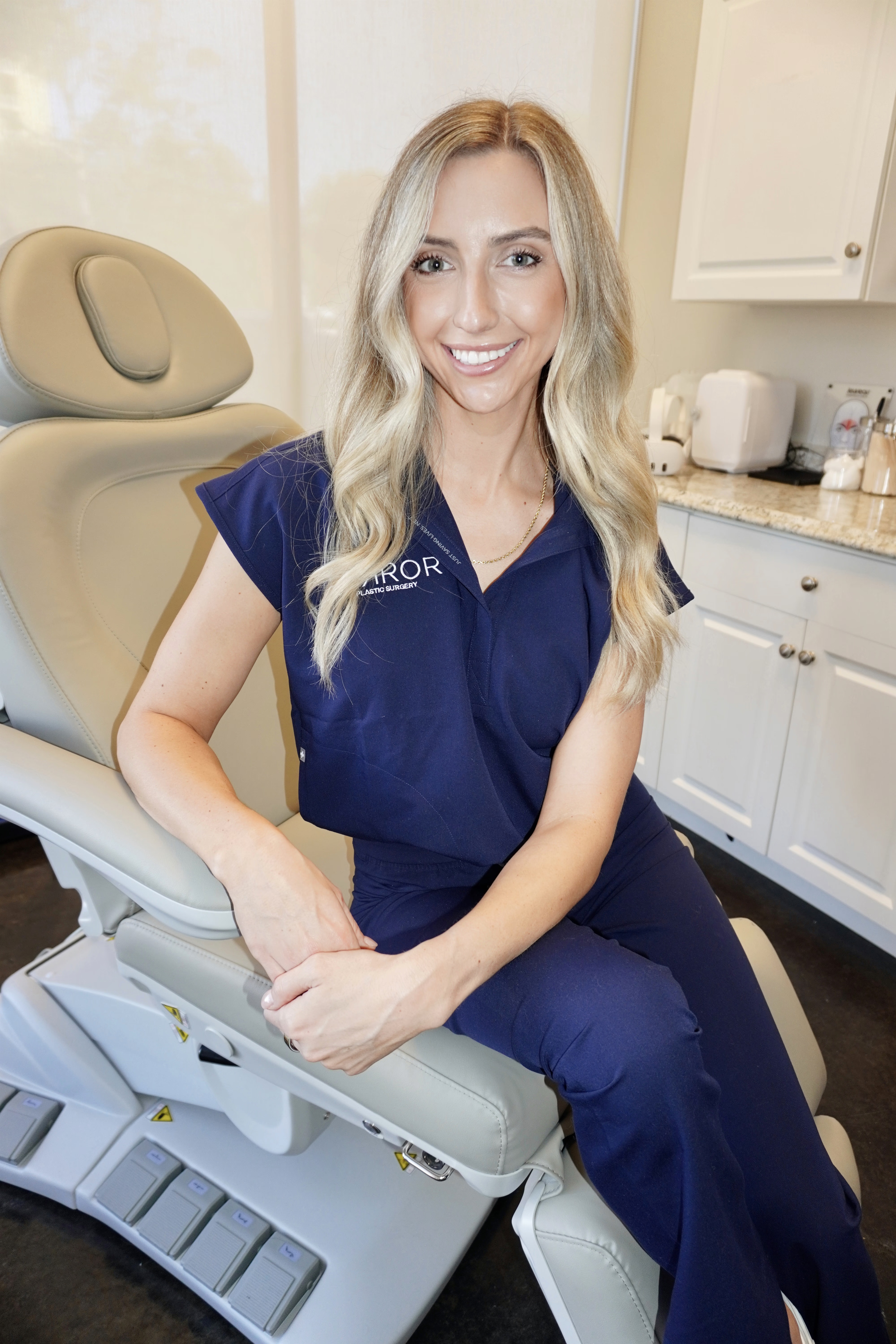
Written by: Ellie Pranckevicius, FNP-BC, Aesthetic Nurse Practitioner & Aesthetic Injector | Facial Restoration & Regenerative Injectable Specialist, Mirror Plastic Surgery
Key Takeaways
-
Natural lip augmentation focuses on subtle, anatomy-first enhancement that improves volume, shape, and definition while preserving authentic lip movement and facial proportions.
-
Non-filler options such as lip flips, thread lifting, and fat grafting provide alternatives for patients seeking definition or longer-lasting results without traditional injectable volume.
-
Overdone lip results usually come from technique issues like incorrect placement or excessive dosing rather than the product itself. Conservative, incremental approaches and full-face assessments help prevent unnatural outcomes.
-
Provider selection is critical. Patients should prioritize anatomical expertise, hour-long consultations, unbiased product selection, and a safety-first philosophy when choosing a lip augmentation specialist.
-
At Mirror Plastic Surgery, Ellie Pranckevicius delivers personalized, anatomy-first lip assessments. Book a consultation to explore the best approach for your goals.
Non-Filler Options for Natural Lip Enhancement
Injectable fillers are not the only pathway to improved lip appearance. Several non-filler options address shape, definition, and subtle lift through different mechanisms.
A lip flip uses a small amount of neuromodulator injected into the orbicularis oris muscle to relax the muscle that causes the upper lip to roll inward, creating the appearance of slightly more visible lip without adding volume. It is a distinct treatment from filler, because it changes movement, not structure.
Thread lifting places dissolvable threads in or around the lips to stimulate collagen production, adding definition and slight lift without introducing liquid volume. Results develop gradually and often complement other treatments.
Fat grafting is a surgical option that transfers the patient’s own purified fat into the lips, producing longer-lasting results because the body recognizes its own tissue. This option appears again later in the article with more detail.
Choosing Between a Lip Flip and Fillers
The lip flip and dermal filler serve different purposes and are not interchangeable. A lip flip changes lip movement rather than volume, while filler adds volume, structure, shape, definition, and symmetry. Patients who expect dramatic change or lasting volume from a lip flip will feel disappointed. Results appear in 3–7 days and last 2–3 months, which makes it a low-commitment option for those whose upper lip disappears when smiling.1
Filler, by contrast, physically adds structure. These products differ in viscosity, cross-linking technology, and movement characteristics, and a skilled injector weighs these factors against individual anatomy before selecting a product.
In some cases, a lip flip and filler work together as part of a broader treatment plan. Ellie’s approach at Mirror Plastic Surgery evaluates the full face before recommending either, so the treatment serves the patient’s anatomy rather than a preset protocol. To determine whether a lip flip, filler, or a combination approach aligns with your anatomy and goals, schedule an assessment with Ellie.
How to Avoid Overdone Lips
Overdone lip results are almost always a technique and dosing problem, not a product problem. Overfilled or unnatural outcomes are typically caused by incorrect placement or overly aggressive technique rather than the amount of filler used.
Several practices reduce this risk significantly. Microdosing, or injecting smaller amounts per session, has emerged as a leading approach for achieving subtle, natural results while minimizing swelling and bruising. This conservative approach directly addresses the most common technical errors, such as excessive volume per session and placement into improper tissue planes, which can contribute to filler migration and patient dissatisfaction.
Ellie’s practice at Mirror Plastic Surgery begins with foundational facial restoration before any volume augmentation. Isolated lip injections without assessing the surrounding facial zones, including the perioral area, chin, and midface, frequently produce the asymmetry and “overdone” appearance that patients want to avoid. A full-face assessment keeps the lips proportionate to the rest of the face.
Fat Grafting for Longer-Lasting Lip Volume
Fat grafting transfers purified fat harvested from another area of the patient’s body into the lips. As noted earlier, fat grafting’s use of the patient’s own tissue contributes to its longevity compared to temporary fillers, and fat transfer often yields longer-lasting results than temporary fillers.1 It is a surgical procedure, so it involves a meaningful commitment and a recovery period.
Candidacy for fat grafting depends on having sufficient donor fat, realistic expectations about graft survival rates, and a preference for longevity over reversibility. Fat grafting is not easily reversible, which distinguishes it from fillers that can be dissolved with hyaluronidase.
At Mirror Plastic Surgery, surgical options like fat grafting fall within Dr. Akash Chandawarkar’s scope, a Johns Hopkins-trained, Harvard-educated plastic surgeon with fellowship training at the Manhattan Eye Ear & Throat Hospital. These options are discussed during consultation when they match the patient’s anatomy and goals.
Biostimulatory Lip Boosters Without Traditional Fillers
Biostimulatory treatments form an emerging category that improves lip quality without directly adding volume through filler. Biostimulatory fillers stimulate the body’s natural collagen production, creating gradual improvements in lip texture and quality that develop over several months and may last longer than traditional fillers. These products differ from traditional volume-adding fillers and suit patients focused on tissue quality rather than size.
Thread lifting, mentioned earlier as a non-filler option, fits this biostimulatory category. These approaches work best when selected after a thorough anatomical assessment instead of applied in a generic way.
Non-Injection Ways to Plump the Lips
Topical products such as lip plumpers, peptide serums, and hydrating balms can temporarily improve the appearance of lip fullness through mild irritation or moisture retention. They do not alter lip structure or produce results comparable to injectable or surgical options. Their effects remain transient and cosmetic rather than clinical.
Consistent hydration, sun protection, and avoidance of smoking all support lip tissue quality over time. Lifestyle factors such as smoking and excessive sun exposure accelerate filler breakdown and affect overall lip tissue health. These habits matter for patients who choose injectable treatments and for those who do not.
Choosing a Lip Filler Provider in Tampa Bay
Provider selection is the single most consequential decision in lip augmentation. The most important factor in patient safety is not the product, it is who is holding the syringe. The following checklist reflects the standard of care patients should expect.
-
Anatomical expertise: Provider skill must include a deep understanding of facial anatomy, proportions, and aesthetics so that lips blend naturally with the nose, chin, and surrounding contours while respecting the patient’s unique facial structure, age, sex, and ethnicity. This expertise should guide every treatment decision.
-
Hour-long consultations: Rushed consultations cannot accommodate the full-face assessment required for safe, proportionate results. Mirror Plastic Surgery dedicates up to an hour per consultation, which supports the detailed anatomical analysis described above.
-
Conservative, incremental approach: Patients should seek providers who use a conservative, incremental approach rather than pursuing dramatic volume changes that risk an overfilled appearance. That measured strategy builds on the insights gained during a longer consultation.
-
Unbiased product selection: The provider selected has a greater impact on results than any other single factor; patients should evaluate board certification, lip-specific experience, and commitment to conservative planning. Mirror Plastic Surgery remains supplier-neutral, selecting products based on patient anatomy rather than commercial relationships.
-
FDA-approved products: Patients should confirm the provider uses FDA-approved products and has training in facial aesthetics and lip-specific injection techniques. This safeguard supports the safety-first approach described throughout this checklist.
-
Reversal capability: Confirm the provider stocks hyaluronidase and has a clear protocol for managing complications, including vascular occlusion. This capability adds an extra layer of safety for patients who value reversibility.
-
Safety-first philosophy: Ellie’s practice at Mirror Plastic Surgery follows a hierarchy of safety first, function second, and aesthetics third. This framework ties together the previous criteria and governs every treatment decision.
To experience an anatomy-first assessment that prioritizes your long-term well-being over volume-driven results, schedule a personalized consultation with Ellie.
Comparison of Natural Lip Augmentation Options
|
Option |
Purpose |
Longevity |
Reversibility |
Typical Candidacy |
|---|---|---|---|---|
|
Fillers |
Add volume, define shape, improve symmetry, smooth perioral lines |
6–12 months, with advanced formulations like Restylane Kysse typically lasting 9–12 months1 |
Fully reversible with hyaluronidase, often within 24–48 hours |
Good overall health, realistic expectations, no active infection; adults 21+ |
|
Lip Flip (Neuromodulator) |
Increase upper lip visibility by relaxing orbicularis oris; no volume added |
2–3 months1 |
Not reversible; effect dissipates naturally as neuromodulator metabolizes |
|
|
Fat Grafting |
Add longer-lasting volume using patient’s own tissue |
Longer-lasting than temporary fillers, with duration varying based on graft survival1 |
Not easily reversible; surgical procedure with recovery period |
Patients preferring longevity over reversibility with sufficient donor fat; surgical candidates in good health |
|
Topical Alternatives |
Temporary cosmetic improvement in lip appearance via hydration or mild irritation |
Hours; no structural change |
Not applicable; no clinical alteration to lip tissue |
Patients seeking non-clinical maintenance between treatments or unwilling to pursue injectable or surgical options |
Tampa Bay Aftercare and Maintenance Guidance
Florida’s climate shapes specific aftercare needs for lip augmentation patients. Heat, humidity, and sun exposure all affect recovery and filler longevity. Avoiding excessive sun exposure, smoking, and strenuous exercise for a designated period after treatment, along with regular use of lip balm to maintain hydration, helps prolong results.1 These recommendations directly address the environmental stressors common in Tampa Bay.
Initial swelling after filler is expected and should not be interpreted as a final result. Final lip filler results become visible by weeks 2–4 as the product fully integrates, after initial swelling subsides between days 3–7. Tampa Bay patients planning for events should schedule treatments at least two weeks in advance.
Consistent maintenance treatments every 6–12 months help maintain desired volume.1 because the lips are a high-movement area that metabolizes filler more quickly than other facial zones. Ellie structures long-term care plans rather than one-off appointments, which aligns with Mirror Plastic Surgery’s concierge medicine philosophy.
Conclusion: Planning Your Natural Lip Augmentation
Natural lip augmentation functions as an approach, not a single treatment. It relies on anatomical assessment, conservative technique, and honest provider communication. Options range from temporary neuromodulator-based lip flips to hyaluronic acid fillers with built-in reversibility, and to longer-lasting surgical fat grafting. Each option carries a distinct purpose, longevity profile, and candidacy profile that a thorough consultation must match to the individual patient.
Mirror Plastic Surgery’s model, which includes hour-long consultations, supplier-neutral product selection, and a safety-function-aesthetics hierarchy, serves patients who want a more thoughtful experience than high-volume settings provide.
Ellie Pranckevicius brings dual expertise in esthetics and advanced nursing, grounded in four years of neuroscience ICU clinical judgment, to every lip assessment she performs in St. Petersburg. To receive an anatomy-first evaluation built around your facial structure, long-term goals, and well-being, arrange a consultation with Ellie at Mirror Plastic Surgery.
Frequently Asked Questions
How do I know if I need a lip flip or lip filler?
The right choice depends on what you want to change. A lip flip relaxes the muscle that causes the upper lip to roll inward, making more of the lip visible without adding any volume. It is a subtle, short-duration option lasting roughly 2–3 months. Lip filler physically adds structure, volume, and definition and lasts considerably longer.
If your concern is that your upper lip disappears when you smile, a lip flip may be appropriate. If you want improved shape, symmetry, or volume, filler is the more effective tool. In some cases, both are used together. Ellie evaluates the full face during consultation before recommending either, so the treatment matches your anatomy rather than a default protocol.
What causes overdone or unnatural lip results, and how does Mirror Plastic Surgery avoid them?
As discussed earlier in the article, overdone results stem from incorrect placement, excessive volume per session, or failure to assess the lips in the context of the full face. They are technique issues, not inevitable outcomes. At Mirror Plastic Surgery, Ellie’s approach begins with a full-face assessment before any volume augmentation.
She uses conservative, incremental dosing and selects products based on each patient’s specific anatomy and movement patterns rather than a one-size-fits-all volume. The practice is also supplier-neutral, so product selection is driven entirely by what is appropriate for the patient, not by commercial relationships or quotas.
Is fat grafting a better option than fillers for long-lasting natural lip results?
Fat grafting often offers longer-lasting results than temporary fillers because the body recognizes its own tissue. However, it is a surgical procedure with a recovery period, and it is not easily reversible. Fillers, by contrast, can be dissolved with hyaluronidase if results are unsatisfactory or if a complication arises, which makes them a lower-risk starting point for many patients.
The right choice depends on your candidacy for surgery, your preference for longevity versus reversibility, and your overall facial anatomy. At Mirror Plastic Surgery, Dr. Akash Chandawarkar, a Johns Hopkins-trained plastic surgeon, is available for surgical consultations when fat grafting appears to be the most appropriate option for a patient’s goals.
How long do lip fillers last, and what affects their longevity in Tampa’s climate?
Most lip fillers last 6–12 months, with advanced formulations lasting toward the longer end of that range.1 The lips are a high-movement area, which means filler metabolizes faster there than in less active facial zones. Individual metabolism, injection technique, product selection, and lifestyle factors all influence duration.
In Tampa Bay’s climate, sun exposure and heat can affect both skin health and filler longevity. Avoiding excessive sun exposure, staying well-hydrated, using SPF lip protection, and avoiding smoking all support longer-lasting results. Ellie builds maintenance plans into her care approach so patients are not left managing their results alone between appointments.
What should I ask during a lip augmentation consultation to evaluate my provider?
A thorough consultation should give you clear answers to several key questions. Is the filler being recommended FDA-approved for lip augmentation in adults 21 and over? Can it be reversed with hyaluronidase if needed, and does the provider stock it on-site? What is the provider’s approach to dosing, and do they start conservatively and reassess or default to a standard volume?
How does the provider assess your lips in relation to your full face, including your nose, chin, and midface proportions? What is their protocol if a complication arises? At Mirror Plastic Surgery, these questions are addressed within a structured, hour-long assessment that prioritizes your anatomy and long-term well-being before any treatment is recommended.
Disclaimer: The information provided is for educational purposes only and does not constitute medical advice. Consult a qualified healthcare provider for personalized recommendations.
Disclaimer: Results may vary from person to person. Editorial content, before and after images, and patient testimonials do not constitute a guarantee of specific results.
1 Results may vary from person to person. Editorial content, before and after images, and patient testimonials do not constitute a guarantee of specific results.