

Written by: Dr. Akash Chandawarkar, Board Certified Plastic Surgeon, Mirror Plastic Surgery | Last updated: September 9, 2026
Key Takeaways
- Both non-surgical BBL and hip dip filler carry real risks, and no filler currently has FDA approval for buttock or hip dip treatment.
- Hip dip filler is a focused version of non-surgical BBL that uses the same products and anatomy with smaller volumes and fewer sessions.
- Biostimulatory fillers such as Radiesse and Sculptra are the standard for these procedures, so your injector’s expertise directly affects your safety.
- Serious risks include vascular occlusion, nodules, granulomas, and migration, and board-certified plastic surgeons reduce these risks with careful technique.
How Non-Surgical BBL and Hip Dip Filler Work
A non-surgical BBL at Mirror Plastic Surgery uses injectable biostimulatory fillers to add volume, improve contour, smooth cellulite, and soften the look of stretch marks across the gluteal region. Hip dip filler is a more targeted treatment that places filler into the lateral trochanteric depression, the concave area on the sides of the buttocks, to create a smoother hip-to-thigh curve.
The main difference between the two procedures is scope. A non-surgical BBL treats the entire gluteal region as part of a full contouring plan. Hip dip filler focuses on a single localized concavity. Hip dip filler is technically a subset of non-surgical BBL, because the same products, anatomical plane, and safety principles apply. A full non-surgical BBL may require 10–30+ syringes across multiple sessions, while hip dip correction typically uses fewer total milliliters.
This volume difference affects safety. Risk levels in gluteal injections rise as total volume increases, because larger volumes create more tissue pressure and raise the chance of filler migration and nodule formation. Product selection and provider expertise remain the most important safety factors, and volume is only one part of the picture.
The FDA Stance on Hip Dip and Buttock Filler
The FDA has not approved any dermal filler for buttock enhancement, hip dip correction, or body contouring. This regulatory gap has direct safety implications for patients.
The FDA warns that injectable fillers used for large-scale body contouring can cause long-term pain, infection, permanent scarring, disfigurement, and death. The agency also issues specific warnings against injectable silicone and other unapproved substances marketed for buttock enhancement, citing embolism, stroke, and permanent injury.
When a provider advertises “FDA-approved hip dip filler,” they are misinformed or misleading. Products like Radiesse and Sculptra hold FDA approval for facial indications only. Using them in the buttocks or hips counts as off-label use, which is legal and common in aesthetic medicine but has not undergone FDA safety and efficacy review for those specific areas.
Responsible providers explain this off-label use clearly. Sculptra’s FDA-approved labeling states that “the safety and effectiveness of injecting Sculptra in larger amounts, at different frequencies, at anatomic sites different than specified for the intended use… have not been evaluated.” If your provider does not mention this, you should bring it up and ask for a direct answer.
Schedule a Personalized Safety Consultation to review these details with a board-certified plastic surgeon who will walk you through every aspect of your treatment plan.
Safety By Product Type: Biostimulatory Fillers
Product choice strongly shapes your safety profile, and biostimulatory fillers are the standard for non-surgical BBL and hip dip correction. These products create structure and stimulate collagen, which supports long-lasting contour.
Radiesse (calcium hydroxylapatite) provides immediate volume from its gel carrier. It also stimulates collagen production for lasting structural results. Sculptra (poly-L-lactic acid) works purely through biostimulation and contains no immediate volume filler. It triggers the body to produce new collagen over three to six months. Both products are thick and structural, which is why they are preferred for gluteal contouring in the subcutaneous plane.
A key safety distinction sets biostimulatory fillers apart from many facial fillers. CaHA complications rely on prevention, supportive care, and in select cases surgical removal, because no enzymatic reversal exists. Sculptra follows the same pattern. Once injected, these fillers must run their course over months or years. They remain the standard for non-surgical BBL in expert hands, but the smaller margin for error makes provider skill especially important.
At Mirror Plastic Surgery, Dr. Akash Chandawarkar also offers AlloClae, an adipose filler that broadens non-surgical body contouring options for patients who need greater projection. Product recommendations always reflect your anatomy and goals, not quotas or commissions.
The table below summarizes key safety features of biostimulatory fillers so you can see how they behave in the body over time.
| Safety Factor | Biostimulatory Fillers (Radiesse, Sculptra) | Note |
|---|---|---|
| Consistency | Thick, structural, collagen-stimulating | Preferred for gluteal contouring due to structural support |
| Mechanism | Immediate volume (Radiesse) or gradual collagen production (Sculptra) | Results develop over 3–6 months with Sculptra and immediately with Radiesse1 |
| Reversibility | Not dissolvable | Complications managed with supportive care or surgical removal |
| Longevity | 12–24+ months depending on product | Sculptra often lasts 2–3 years, Radiesse about 12–18 months1 |
Risks and Complications You Should Consider
Both non-surgical BBL and hip dip filler involve specific risks, and understanding them helps you ask better questions and make informed choices.
Vascular occlusion is the most serious risk. If filler enters a blood vessel, it can block blood flow and cause tissue necrosis. The FDA’s MAUDE adverse event database documents thousands of reports of obstruction, necrosis, and vision changes across filler types. The risk is lower in the hip dip area than in the face because the lateral hip contains tiny, superficial arteries and veins that average under 0.9 millimeters in diameter, but the risk does not disappear.
Nodules and granulomas can appear months to years after injection. A 2024 Brazilian multicenter case series of 55 collagen biostimulator complications found late-onset nodules in 89.1% of cases. These issues can be challenging to treat, especially with non-reversible fillers.
Migration occurs when filler moves away from the intended site. This risk increases in areas with less natural soft tissue, which is why the hip dip region demands precise placement and a blunt-tipped cannula technique.
Long-term considerations matter as well. Because biostimulatory fillers stimulate collagen production, results can last two years or longer.1 This longevity usually benefits patients, yet it also means complications can persist for a similar period. Some patients seek removal years later due to migration, dissatisfaction, or delayed inflammatory reactions. Surgical intervention may be necessary in these situations.
Serious complications remain rare when experienced providers use proper technique. The MAUDE database cannot calculate exact complication rates, yet it consistently shows that injector technique plays a major role in adverse events.
Provider Red Flags and Smart Questions to Ask
The person injecting your filler is the single most important safety factor. A board-certified plastic surgeon with deep anatomical training can safely inject biostimulatory fillers into the gluteal region. An undertrained injector can create complications even with high-quality products.
Watch for these red flags and walk away if you see them:
- Claims of FDA approval for hip dip filler or non-surgical BBL. No such approval exists.
- Use of silicone or permanent fillers. Injectable silicone lacks FDA approval for any aesthetic procedure and carries high risks of migration, granulomas, and permanent disfigurement.
- Providers who are not board-certified plastic surgeons. Med spas and non-physician injectors may not have the anatomical training needed for safe gluteal injections.
- Rushed consultations. A provider who skips a detailed review of your anatomy, goals, and medical history is not prioritizing safety.
- Inability to explain risks and off-label use. If a provider cannot clearly describe the FDA’s stance and the risks of your procedure, they do not understand them well enough to inject safely.
- Pressure tactics or “limited time” offers. The UK Advertising Standards Authority has flagged time-limited pressure tactics and risk-trivializing claims in liquid BBL advertising as compliance breaches.
Before any treatment, ask your provider these questions:
- Are you board-certified by the American Board of Plastic Surgery?
- What type of filler do you recommend for my anatomy, and why?
- How do you minimize the risk of vascular occlusion?
- What is your specific experience with non-surgical BBL and hip dip filler?
- Can you show me before-and-after photos of your own patients?
- What is your protocol if a complication occurs?
Discuss These Questions in a Consultation so you can hear how a board-certified plastic surgeon approaches each one.
Decision Guide: Choosing Between Non-Surgical BBL and Hip Dip Filler
Your choice between non-surgical BBL and targeted hip dip filler should reflect your anatomy and your goals.
Targeted hip dip filler works well when your main concern is the concave depression on the sides of your buttocks and you already have adequate overall gluteal volume. This approach uses less product, carries lower volume-related risks, and usually requires fewer sessions.
Non-surgical BBL fits patients who want overall buttock shape enhancement, cellulite reduction, stretch mark improvement, and hip dip correction as part of one contouring plan. This option uses more product and multiple sessions but treats the entire gluteal region.
A thorough consultation helps determine which approach, or combination, suits you best. Your provider should evaluate your anatomy, skin quality, fat distribution, and aesthetic goals before recommending a plan. At Mirror Plastic Surgery, Dr. Akash dedicates up to an hour to this assessment so every patient receives a personalized, evidence-based recommendation.
Why Mirror Plastic Surgery Is a Safety-First Choice
Mirror Plastic Surgery builds every decision around safety. The guiding philosophy follows a clear order of priorities: safety first, function second, aesthetics third.
Dr. Akash Chandawarkar is a Harvard-educated, Johns Hopkins-trained, board-certified plastic surgeon with fellowship training in aesthetic surgery at the Manhattan Eye Ear & Throat Hospital. He personally performs all injectable treatments and brings a surgeon’s command of subdermal anatomy to each procedure. Safe outcomes often depend on the injector’s ability to visualize and avoid vascular structures, which requires surgical-level training.
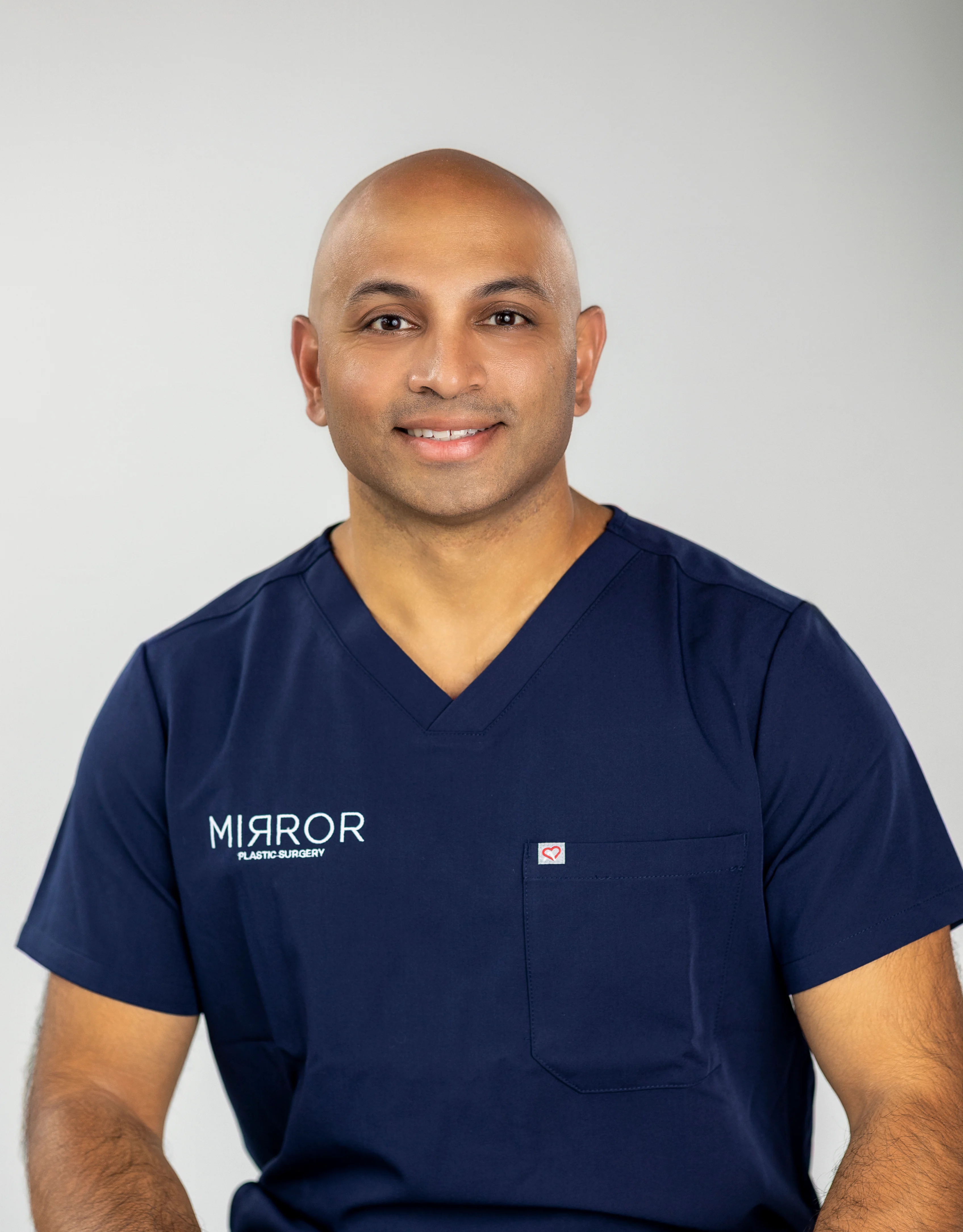
Dr. Akash serves on advisory boards for Merz Aesthetics, the manufacturer of Radiesse, and Tiger Aesthetics, the manufacturer of AlloClae and Avéli for cellulite. These roles help ensure access to high-quality products and current safety protocols. He uses only FDA-approved, medical-grade products and remains transparent about the off-label nature of gluteal filler treatments.
Mirror Plastic Surgery follows a concierge medicine model, so you receive ample time, personalized care, and honest communication. Consultations are unhurried, procedures are never pushed, and if a non-surgical option is not the safest fit for your goals, Dr. Akash will say so and recommend alternatives when appropriate.
The practice is located at 780 4th Ave S, St. Petersburg, FL 33701, and serves patients throughout the Tampa Bay area.
Frequently Asked Questions
Is Hip Dip Filler Safe?
Hip dip filler can be safe when a board-certified plastic surgeon uses FDA-approved products in the correct anatomical plane. The lateral hip area contains tiny, superficial blood vessels, which makes vascular occlusion less likely than in higher-risk facial zones. As noted earlier, no filler has FDA approval for hip dip correction, so safety depends heavily on provider expertise, product selection, and injection technique. Biostimulatory fillers like Radiesse and Sculptra are the standard choice for this area, and their irreversibility makes injector precision essential.
Is Non-Surgical BBL FDA Approved?
The FDA has not approved any dermal filler for buttock enhancement or body contouring. Products such as Radiesse and Sculptra hold approval for facial use only. Using them in the buttocks or hips counts as off-label treatment, which is legal and common but not FDA-reviewed for safety and efficacy at those sites. A responsible provider explains this clearly during your consultation and documents the off-label nature of the procedure in your consent forms.
What Are the Risks of Non-Surgical BBL?
Risks include vascular occlusion, tissue necrosis, infection, nodules, granulomas, filler migration, and asymmetry. Biostimulatory fillers do not have an enzymatic reversal agent, so complications may require surgical management. The FDA warns that large-scale filler injection can cause long-term pain, infection, permanent scarring, disfigurement, and death. These events remain rare when an experienced, board-certified plastic surgeon uses appropriate products and careful technique.
Can Hip Dip Filler Be Reversed?
Biostimulatory fillers such as Radiesse and Sculptra cannot be dissolved. After injection, your body must metabolize them over time, which can take months to years. In severe cases, surgical removal may be necessary. This limited reversibility is a central safety consideration and reinforces the need for a highly trained provider.
How Do I Choose a Safe Provider for Hip Dip Filler or Non-Surgical BBL?
Look for a board-certified plastic surgeon with specific experience in gluteal injections and a transparent approach to informed consent. Ask about their training, the products they use, their complication protocols, and how they discuss off-label treatment. Avoid providers who claim FDA approval for hip dip filler, use silicone or permanent fillers, rush consultations, or rely on pressure tactics. American Board of Plastic Surgery certification is the gold standard and reflects rigorous training and examination.
Your Safety Deserves the Right Provider
Non-surgical BBL and hip dip filler can deliver natural-looking results when performed safely.1 As discussed earlier, no filler currently has FDA approval for these areas, so your safety depends on the product your provider selects and the expertise of the person injecting it.
Biostimulatory fillers such as Radiesse offer structural support and long-lasting results1, yet they cannot be dissolved if complications occur. Your outcome hinges on whether your provider has the anatomical knowledge to inject precisely and the integrity to be transparent about risks.
Mirror Plastic Surgery centers every decision on safety. Dr. Akash Chandawarkar’s background as a Harvard-educated, Johns Hopkins-trained, board-certified, fellowship-trained plastic surgeon supports a high standard of care. His advisory roles with Merz Aesthetics and Tiger Aesthetics keep the practice aligned with current safety data and product advances.
Your body deserves more than a rushed consultation and a one-size-fits-all plan. It deserves a provider who takes time to understand your anatomy, your goals, and your concerns, and who has the training to deliver results as safely as possible.
Schedule Your Consultation With Ellie and experience the safety-focused approach at Mirror Plastic Surgery.
Disclaimer: Results may vary from person to person. Editorial content, before and after images, and patient testimonials do not constitute a guarantee of specific results.
1 Results may vary from person to person. Editorial content, before and after images, and patient testimonials do not constitute a guarantee of specific results.


