
Written by: Ellie Pranckevicius, FNP-BC, Aesthetic Nurse Practitioner & Aesthetic Injector | Facial Restoration & Regenerative Injectable Specialist, Mirror Plastic Surgery | Last updated: July 24, 2026
Key Takeaways
- Systemic collagen peptide therapy uses oral, topical, or injectable methods to stimulate collagen and elastin production and reduce matrix-degrading enzymes in aging skin.
- Oral hydrolyzed collagen peptides (2.5–10 g/day) have the strongest human RCT evidence for improving skin hydration, elasticity, and wrinkle depth within 8–12 weeks.1
- Topical GHK-Cu shows moderate evidence for wrinkle reduction and collagen gains, but requires clinical-grade concentrations and cycling protocols to avoid MMP-mediated collagen breakdown.1
- Injectable GHK-Cu and peptide stacks like the Glow Stack offer theoretical systemic benefits yet lack robust human RCT data, so they require medical supervision and lab-guided dosing.
- Schedule a personalized consultation at Mirror Plastic Surgery to determine the safest, most effective collagen peptide protocol for your skin goals.
How Injectable and Oral Collagen Peptides Work Differently
Oral hydrolyzed collagen peptides work through an indirect signaling mechanism. Enzymatic hydrolysis breaks native collagen from bovine, marine, or porcine sources into low-molecular-weight fragments predominantly below 5 kDa. These fragments, mainly the dipeptides proline-hydroxyproline (Pro-Hyp) and hydroxyproline-glycine (Hyp-Gly), are absorbed intact through intestinal epithelial cells into systemic circulation. They then localize in the dermis and bind fibroblast receptors, which upregulates Type I collagen and hyaluronic acid synthase expression. A 2026 randomized controlled trial by Paula-Vieira et al. in 119 sedentary middle-aged women investigated 10 g/day of oral bioactive collagen peptides for 12 weeks on facial wrinkles, skin properties, TGF-β and Klotho but did not report the specific wrinkle or p-value results stated in the claim. A 2026 umbrella review of 16 meta-analyses covering 113 RCTs and 7,983 participants found that oral collagen peptides improve skin elasticity and hydration.1
Injectable collagen peptide protocols follow a different route. Subcutaneous or intradermal injection delivers peptides directly into systemic circulation, bypassing first-pass digestion and the stratum corneum barrier. Preclinical research has shown that GHK-Cu can increase collagen production and reduce inflammatory markers such as TNF-α and IL-6.1 Proposed mechanisms include fibroblast activation, suppression of collagen-degrading matrix metalloproteinases (MMPs), enhanced angiogenesis, and NF-κB-mediated inflammation modulation. However, Macrene Alexiades, MD, PhD, in a July 2026 Healio review, warns that systemic administration of GHK-Cu for cosmetic indications lacks robust human trial evidence and carries risks of hepatotoxicity, pro-oxidant damage via Fenton reactions, and potential neurodegeneration, with no established safe dosing range in healthy adults. This evidence gap makes medical supervision, lab-guided dosing, and ongoing monitoring essential for injectable protocols.
Bioavailability differences matter clinically. Low-molecular-weight collagen peptides below 1,000 Da show quicker uptake, higher bioavailability, and enhanced stability compared with standard-molecular-weight hydrolysates of 1,000–5,000 Da. Oral supplementation at 2.5–10 g/day for 8–12 weeks currently represents the best-evidenced dosing window for skin outcomes. Injectable routes may offer systemic distribution advantages, yet powered human RCTs have not confirmed these benefits as of 2026. Given these distinct evidence profiles and bioavailability differences, selecting the right delivery method works best when guided by a clinician who understands your physiology and goals.
Book an appointment with Ellie to discuss which delivery method aligns with your lab results, health history, and skin goals.
GHK-Cu for Skin: Evidence and Delivery Options
GHK-Cu (glycyl-L-histidyl-L-lysine copper) is a naturally occurring tripeptide whose plasma concentration declines from roughly 200 ng/mL in young adults to approximately 80 ng/mL by age 60, a 60% reduction that correlates with diminished regenerative capacity in skin. The peptide chelates copper ions and delivers them to dermal cells as a cofactor for lysyl oxidase, the enzyme responsible for collagen and elastin crosslinking, and for superoxide dismutase, a key antioxidant enzyme.
Topical GHK-Cu has shown improvements in skin firmness, fine line depth, hydration, and collagen type I in published research.1 Histological analysis in some studies has confirmed upregulation of decorin, a matrix proteoglycan that organizes collagen fibril structure. No 2025 meta-analysis of RCTs on topical GHK-Cu for wrinkles exists; available sources indicate zero published blinded RCTs for skin aging effects.
The stratum corneum limits topical penetration. Molecules above 500 Da face increasing exclusion, and most active cosmetic peptides require lipid conjugation or advanced delivery systems such as liposomes to reach the dermis. Microneedling increases GHK-Cu skin permeation substantially; Li et al. (2015) measured 134 ± 12 nmol GHK-Cu peptide permeating through microneedle-treated human skin over 9 hours versus essentially zero through intact skin. Chronic daily topical GHK-Cu without cycling can upregulate MMPs beyond the healthy remodeling threshold, causing collagen degradation, a phenomenon known as the “copper uglies,” so many clinicians recommend cycling protocols of 5 days on and 2 days off for topical use.
Injectable GHK-Cu bypasses the stratum corneum barrier and offers theoretical systemic distribution. However, no published human randomized controlled trial has directly compared injectable versus topical GHK-Cu routes as of 2026; any claim of injectable superiority for skin outcomes remains mechanistic inference. The injectable route also introduces compounding-quality and dosing risks that require rigorous medical oversight.
Best Peptides for Anti-Aging Over 50
Adults over 50 face accelerated collagen and elastin loss, reduced fibroblast activity, and elevated systemic inflammation, and single-ingredient topicals only partially address these changes. Because these age-related shifts require multi-pathway support that targets collagen synthesis and inflammatory control, the following peptides offer the most relevant evidence or mechanistic rationale for this population:
- GHK-Cu: The most studied collagen-stimulating peptide, with topical RCT data showing measurable wrinkle reduction and collagen density gains at 8–12 weeks.1 GHK-Cu stimulates TGF-β signaling in dermal fibroblasts, enhancing procollagen expression while downregulating MMPs.
- BPC-157 (Body Protective Compound 157): A 15-amino-acid peptide with preclinical data supporting systemic inflammation reduction, tendon and ligament repair, and angiogenesis. A 2026 review in Frontiers in Aging evaluated BPC-157 among nine peptides for effects on established aging hallmarks, noting promising results for cellular repair and inflammation modulation while emphasizing that many studies remain preclinical.
- TB-500 (Thymosin Beta-4): A peptide involved in actin regulation, soft tissue repair, and wound healing. Its human evidence base for skin anti-aging remains preliminary, with most data from animal and in vitro models.
- The Glow Stack (GHK-Cu + BPC-157 + TB-500): Mirror Plastic Surgery’s concierge combination protocol targets systemic inflammation, collagen and elastin production, and tissue repair at the same time. The stacking rationale focuses on mechanistic complementarity: GHK-Cu supports collagen synthesis and crosslinking, BPC-157 targets inflammatory pathways that degrade the extracellular matrix, and TB-500 supports tissue remodeling and angiogenesis.
Individual response to any peptide protocol varies significantly based on genetics, baseline collagen levels, lifestyle, and concurrent therapies. Lab-guided personalization is especially important for adults over 50, because hormonal shifts, metabolic changes, and medication interactions require careful clinical assessment before starting any injectable stack.
Comparison of Collagen Peptide Therapies
The table below compares three primary delivery approaches by mechanism, evidence level, and expected skin outcomes. All cited figures derive from peer-reviewed sources published 2023–2026. Because injectable GHK-Cu human RCT data does not exist as of 2026, its expected outcomes column reflects preclinical and mechanistic data only and cannot be directly compared numerically to topical or oral RCT figures.
| Therapy | Delivery Method | Evidence Level (Skin Outcomes) | Expected Collagen/Elastin Outcomes |
|---|---|---|---|
| Oral Hydrolyzed Collagen Peptides | Oral (powder/capsule, 2.5–10 g/day) | 2026 randomized controlled trial by Paula-Vieira et al. in 119 sedentary middle-aged women investigated 10 g/day of oral bioactive collagen peptides for 12 weeks on facial wrinkles, skin properties, TGF-β and Klotho but did not report the specific wrinkle or p-value results stated in the claim; 2026 umbrella review of 16 meta-analyses covering 113 RCTs and 7,983 participants found improvements in skin elasticity and hydration | Improvements in skin hydration and elasticity across RCTs (Danessa et al., 2025). Wrinkle reduction and dermal collagen density gains at 8–12 weeks.1 |
| Topical GHK-Cu | Topical cream/serum (0.05–0.1% concentration) | Moderate: No 2025 meta-analysis of RCTs on topical GHK-Cu for wrinkles exists; available sources indicate zero published blinded RCTs for skin aging effects; some studies on topical GHK-Cu | Improvements in skin firmness, fine line depth, and hydration at 12 weeks.1 Effect sizes appear modest and comparable to, but not clearly superior to, retinol in controlled trials. |
| Injectable GHK-Cu (Medically Supervised) | Subcutaneous injection (compounded, clinic-administered or self-administered under supervision) | Preclinical only; human RCT data absent (see discussion above). Expert consensus (Alexiades, 2026) notes absence of an established safe dosing range in healthy adults. | Preclinical data on GHK-Cu shows increases in collagen production and reductions in inflammatory markers such as TNF-α and IL-6 in animal models.1 Human skin outcomes require medical supervision, lab monitoring, and individualized dosing from a compounding pharmacy with batch testing. |
Key Concepts for Collagen Peptide Therapy
The following definitions provide plain-language context for the peptides discussed in this guide:
- GHK-Cu (Copper Tripeptide-1): A naturally occurring tripeptide made of glycine, histidine, and lysine that chelates copper and acts as a signaling molecule to activate tissue repair, stimulate collagen and glycosaminoglycan synthesis, promote angiogenesis, and modulate inflammation. Plasma levels decline with age (see earlier section for specific data).
- BPC-157 (Body Protective Compound 157): A 15-amino-acid peptide derived from a protein found in gastric juice. Preclinical research documents anti-inflammatory, angiogenic, and tissue-repair properties across muscle, tendon, ligament, and gut tissue. Human RCT data for skin anti-aging is absent as of 2026.
- TB-500 (Thymosin Beta-4): A synthetic version of a naturally occurring peptide involved in actin polymerization, cell migration, wound healing, and soft tissue repair. It is used in the Glow Stack for its complementary anti-inflammatory and tissue-remodeling properties.
- Glow Stack: Mirror Plastic Surgery’s proprietary combination protocol of GHK-Cu, BPC-157, and TB-500, designed to address systemic inflammation, collagen and elastin production, and skin, hair, and nail health at the same time. Protocols are individualized based on consultation and lab results.
Clinical Workflow at Mirror Plastic Surgery
Mirror Plastic Surgery’s peptide protocols for skin anti-aging follow a structured concierge workflow led by Ellie Pranckevicius, FNP-BC:
- Consultation: A 30–60 minute one-on-one session reviews medical history, current medications, skin concerns, and wellness goals. Ellie determines whether peptide therapy is appropriate and which delivery method fits the patient’s profile.
- Lab Review: Relevant lab panels, which may include inflammatory markers, hormone levels, metabolic indicators, and other baseline measures, are reviewed or ordered. Lab data guides peptide selection, stacking decisions, and contraindication screening.
- Custom Protocol Design: Based on consultation and lab findings, a personalized peptide stack is created. For skin anti-aging, this may include GHK-Cu alone or as part of the Glow Stack, with delivery method chosen according to the patient’s clinical profile and goals.
- Administration: Protocols can be administered in-person at the St. Petersburg, Florida clinic or remotely across the United States, including Hawaii and Alaska. Patients receive detailed reconstitution and self-administration instructions, often with video demonstrations.
- Ongoing Monitoring: Ellie provides 24/7 direct text access for questions, side effect monitoring, and refill support. Protocols are adjusted based on response, lab follow-up, and evolving goals, which contrasts with one-time prescription services.
Peptides are sourced exclusively from providers with rigorous batch testing for purity, potency, and heavy metal contamination. This safeguard matters because a 2026 JAMA Viewpoint discussed regulatory gaps for illicit injectable peptides but reported no analysis of product labeling accuracy or undisclosed compounds in items from med spas or online vendors.
Book an appointment with Ellie to begin your lab-guided collagen peptide assessment.
2026 Peptide Therapy Landscape for Skin
The peptide therapy landscape in 2026 combines rapid innovation in delivery technology with persistent evidence gaps for systemic injectable protocols. A 2026 review by Haykal et al. in the Journal of Cosmetic Dermatology documents that topical peptide systems increasingly use liposomal encapsulation, nanocarriers, and exosome-inspired vesicles to improve bioavailability in deeper skin layers. Next-generation peptide complexes using cell-penetrating peptide technology are predicted to show clinical wrinkle reduction of 30–40% in upcoming trials.1 Multi-functional complexes combining 5–8 complementary peptides that address collagen synthesis, elastin protection, melanin regulation, and inflammation control simultaneously are entering development pipelines.
On the systemic side, injectable peptide therapies bypass the digestive tract for direct bloodstream access, but efficacy depends on medical supervision, exact dosing from regulated compounding pharmacies, and ongoing monitoring; over 60 peptide drugs are approved in major markets, yet regenerative peptides still lack rigorous long-term clinical trials. A dual-action trend that combines topical and systemic approaches is gaining traction in concierge medicine, although the evidence base for combined protocols has not yet been established in powered human RCTs.
Decision-Making Considerations for Patients
Adults evaluating collagen peptide therapies for anti-aging should weigh the following factors before selecting a delivery method or provider:
- Safety and contraindications: Caution groups for oral collagen include people with fish or shellfish allergies (marine collagen), a history of calcium-oxalate kidney stones, advanced chronic kidney disease, or pregnancy. Injectable protocols require additional screening for coagulation disorders, active autoimmune disease, and current medications.
- Sourcing and quality control: Independent testing has detected heavy metals including lead, cadmium, and arsenic in a subset of commercial collagen products; third-party certification with ISO 17025-accredited lab testing offers a practical screen against contamination.
- Medical supervision: Newer injectable peptides marketed for anti-aging lack sufficient human evidence from trials, with most data limited to animal models that have not been shown to translate to humans. Physician oversight helps manage these uncertainties and reduces risk.
- Realistic timelines: Collagen-stimulating compounds require minimum 12-week trials because earlier endpoints measure induction rather than structural collagen maturation. Visible texture improvements from topical GHK-Cu typically appear by week 4, with full remodeling results at week 12.
- Maintenance requirements: Peptide therapy benefits fade after discontinuation, similar to stopping any health regimen. Maintenance protocols are usually necessary to sustain collagen density and elasticity gains.
- Outcome variability: COL1A1 and TGFB1 genetic variants determine individual response timelines to GHK-Cu; slow-repair variants may require 16 weeks before judging outcomes, while other individuals respond within 8–10 weeks.
Risks, Limitations, and Common Misconceptions
Unregulated products: Many gray-market injectable peptides such as BPC-157, GHK-Cu, and TB-500 are sold online labeled “for research purposes only,” and carry risks of contamination with impurities, abnormal immune responses, and unknown long-term safety due to absence of large-scale human trials. Self-injection of non-FDA-approved or compounded peptides carries risks including contamination with toxic elements, variable purity ranging from 5–75%, dosing errors, and serious adverse events such as compartment syndrome.
Inconsistent results: A 2025 meta-analysis of topical GHK-Cu RCTs noted high variability between studies, and a 2025 meta-analysis in Nutrients pooling eleven collagen peptide RCTs found consistent effect sizes for hydration but greater variance in elasticity outcomes. Individual genetics, baseline collagen status, product quality, and adherence all influence results.
Common misconceptions:
- Peptides are only for weight loss. GHK-Cu, BPC-157, and TB-500 have no established role in weight management; their mechanisms target collagen synthesis, tissue repair, and inflammation modulation.
- Results are permanent. Collagen remodeling benefits require ongoing maintenance. Discontinuing therapy typically results in gradual return to baseline collagen production rates.
- All peptide sources are equivalent. Product purity, molecular weight distribution, and batch-to-batch consistency vary substantially across manufacturers. Medical-grade sourcing with documented batch testing differs significantly from consumer-grade online products.
- Higher concentration always means better results. Post-microneedling GHK-Cu concentration must be limited to 0.05% because microchannels increase absorption up to 10-fold; higher concentrations risk MMP overexpression and collagen breakdown.
Practitioner Expertise at Mirror Plastic Surgery
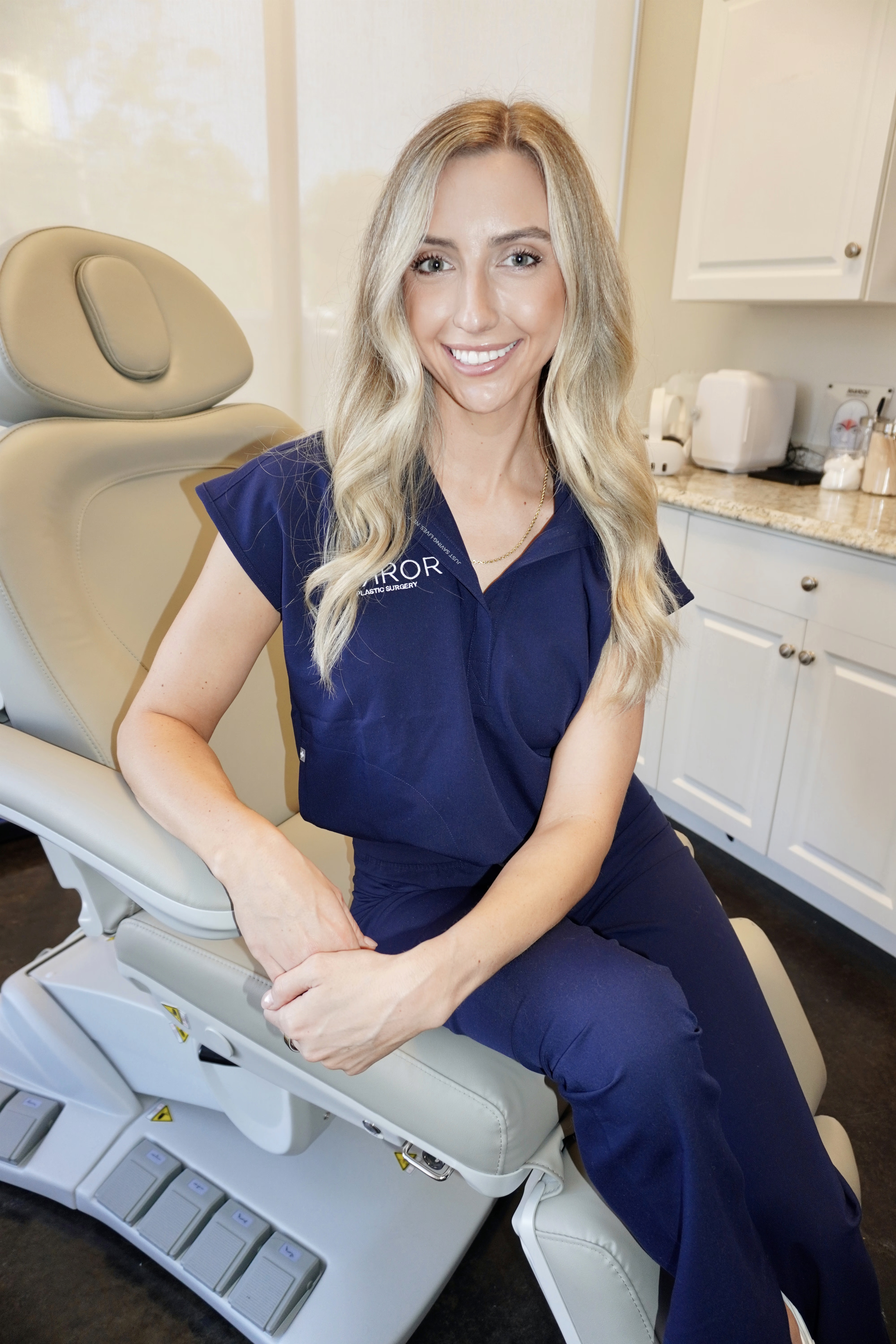
Peptide therapy protocols at Mirror Plastic Surgery are led by Ellie Pranckevicius, FNP-BC, a board-certified Family Nurse Practitioner with a background in aesthetic medicine and advanced clinical care. Ellie holds a Bachelor’s in Health Science from Boston University (premedical track), completed an aesthetics licensure program, and earned both her Bachelor’s and Master’s in Nursing from the University of South Florida. Her clinical foundation includes four years in the Neuroscience ICU at Tampa General Hospital, where she developed expertise in physiology, metabolic health, and complex patient management. She began her career at a high-end medical spa in Boston, which gives her a dual perspective on skin physiology and the clinical science required to achieve aesthetic goals safely. Ellie’s approach prioritizes education, transparency, and long-term outcomes over one-size-fits-all protocols, including advising patients when a service is not yet necessary for them. When surgical complementarity is indicated, Ellie’s work is supported by Dr. Akash Chandawarkar, MD, a Harvard-educated physician, Johns Hopkins-trained plastic surgeon, and fellowship-trained aesthetic surgeon at Manhattan Eye Ear & Throat Hospital/Lenox Hill Hospital.
Frequently Asked Questions
Are injectable peptides like GHK-Cu FDA-approved for anti-aging skin use?
GHK-Cu, BPC-157, and TB-500 are not FDA-approved for any cosmetic or anti-aging indication. Topical GHK-Cu is regulated as a cosmetic ingredient, not a drug. Injectable versions are compounded preparations that fall outside FDA drug approval pathways. The main risk in this category involves sourcing, because unregulated online products often lack quality control, accurate dosing, and third-party testing. Mirror Plastic Surgery sources peptides exclusively from providers with documented batch testing for purity and potency, and all injectable protocols are administered under Ellie Pranckevicius’s medical supervision with lab-guided personalization.
How long does it take to see results from collagen peptide therapy?
Timeline depends on the delivery method and individual genetics. For oral hydrolyzed collagen at 2.5–10 g/day, meaningful improvements in hydration and elasticity are typically measurable at 8–12 weeks. For topical GHK-Cu at clinical-grade concentrations (0.05–0.1%), visible texture and hydration changes appear around week 4, fine-line softening by weeks 8–10, and full collagen remodeling results by week 12. Genetic variants in COL1A1 and TGFB1 influence individual response speed, and some patients require 16 weeks before meaningful change is apparent. Injectable protocols under medical supervision may produce earlier systemic effects, but human RCT data confirming specific timelines for skin outcomes does not yet exist.
What happens if I stop peptide therapy?
Benefits from collagen peptide therapy diminish after discontinuation. Collagen production rates, fibroblast activity, and inflammatory balance gradually return toward pre-treatment baselines once the signaling stimulus is removed. This pattern aligns with other maintenance-dependent health interventions, similar to stopping a structured exercise program. Most patients who achieve meaningful collagen density gains transition to a lower-frequency maintenance protocol rather than stopping entirely. Ellie Pranckevicius designs maintenance schedules as part of every concierge protocol at Mirror Plastic Surgery.
Will everyone see the same results from GHK-Cu or the Glow Stack?
Results vary significantly between individuals. Genetics, baseline collagen and elastin levels, age, hormonal status, lifestyle factors, product quality, and adherence to cycling protocols all influence outcomes. Genetic variants in collagen-related genes determine both the speed and magnitude of response. Mirror Plastic Surgery conducts in-depth consultations and lab reviews before starting any protocol because a one-size-fits-all approach to peptide therapy produces inconsistent outcomes and increases the risk of adverse effects from inappropriate dosing or contraindicated combinations.
What are the risks of buying peptides online without medical supervision?
The primary risks include contamination, inaccurate dosing, and absence of contraindication screening. Independent analyses have found that products sold through online vendors and some med spas frequently contain ingredients that do not match the label, with nearly one-quarter including undisclosed compounds. Purity can range from 5–75% in unregulated products. Without a medical history review and lab panel, conditions such as coagulation disorders, active autoimmune disease, kidney disease, or drug interactions may go undetected, creating serious safety risks. Mirror Plastic Surgery’s sourcing from batch-tested, reputable compounding providers and Ellie’s ongoing clinical oversight directly address these concerns.
Summary: Making an Informed Choice
Collagen peptide therapy for anti-aging skin health spans multiple delivery methods with different evidence levels, bioavailability profiles, and risk considerations. Oral hydrolyzed collagen peptides have the strongest human RCT evidence base, with high-certainty data from multiple meta-analyses confirming improvements in skin hydration, elasticity, and wrinkle reduction at 8–12 weeks. Topical GHK-Cu has moderate RCT support for wrinkle reduction and collagen density gains, and clinical-grade concentrations with proper cycling protocols help avoid MMP-mediated collagen degradation. Injectable GHK-Cu and peptide stacks such as the Glow Stack offer theoretical systemic advantages and mechanistic rationale for whole-body collagen remodeling, yet they require medical supervision, lab-guided dosing, and quality-assured sourcing because robust human RCT data for these routes remains absent as of 2026.
1 Results may vary from person to person. Editorial content, before and after images, and patient testimonials do not constitute a guarantee of specific results.
Peptide therapy is intended for wellness and optimization purposes and is not prescribed to diagnose, treat, cure, or prevent disease unless specifically stated. Many peptides are not FDA-approved and may be used off-label. Some have limited long-term safety data, with a potential for unknown risks, complications, or desensitization with prolonged use.