

Written by: Ellie Pranckevicius, FNP-BC, Aesthetic Nurse Practitioner & Aesthetic Injector | Facial Restoration & Regenerative Injectable Specialist, Mirror Plastic Surgery | Last updated: March 13, 2026
Key Takeaways: How Peptides Support Faster Recovery
- Peptide therapy accelerates physical recovery from surgery, injuries, and workouts by supporting cellular healing beyond rest and nutrition.
- BPC-157 supports tendon repair and inflammation control, achieving greater than 50% fistula closure by day 3 in studies.
- TB500 promotes wound healing and new blood vessel formation, with 25% complete ulcer healing in 3 months in Phase 2 trials.
- The Glow Stack (GHK-CU + BPC-157 + TB500) reduces inflammation, boosts collagen, and helps minimize scarring after surgery.
- Medically supervised protocols at Mirror Plastic Surgery support safety, personalized dosing, and strong recovery results, so you can book your consultation with confidence.
How Recovery Enhancement Supports Physical Healing
Recovery enhancement focuses on four key pillars that work together to support healing: adequate rest, proper nutrition, targeted therapy, and peptide therapy as the fourth pillar. Physical healing then progresses through five stages: inflammation control, growth of new tissue, remodeling of damaged structures, maturation of repairs, and long-term resilience.
The four pillars of enhanced recovery include:
- Rest and sleep support cellular repair
- Nutritional support with adequate protein and micronutrients
- Physical therapy and guided movement protocols
- Peptide therapy for targeted cellular signaling
Physical recovery enhancement focuses on tissue repair mechanisms rather than mental health stages. Peptide therapy has become a leading tool for recovery enhancement because it provides precise cellular communication that supports traditional healing methods.
Top Peptides That Support Recovery Enhancement
Three primary peptides show strong benefits for recovery enhancement, and each one targets a specific part of tissue repair and inflammation control. These peptides use distinct mechanisms that can speed healing beyond what traditional supplements typically provide.
| Peptide | Key Mechanism | Evidence (2026 Studies) | Sample Protocol |
|---|---|---|---|
| BPC-157 | Tendon repair, anti-inflammation | >50% fistula closure day 3 (PMC) | Consult provider for personalized dosing |
| TB500 | Wound healing, angiogenesis | 25% ulcer healing in 3mo (Phase 2) | Consult provider for personalized dosing |
| GHK-CU | Collagen production | Synergistic in stacks | Consult provider for personalized dosing |
BPC-157 supports tendon and ligament repair through growth hormone receptor activation and promotion of new blood vessel formation. BPC-157 achieved greater than 50% closure of surgical fistulas by day 3, with complete healing by day 7 and no reported adverse effects in that study.
TB500 supports systemic wound healing by promoting cell migration and reducing inflammatory cytokines. Topical TB500 achieved complete healing in approximately 25% of venous stasis ulcer patients within 3 months, and it showed particular benefit for small-to-moderate wounds.
The Glow Stack: A Targeted Peptide Combination for Post-Surgery Recovery
The Glow Stack combines GHK-CU, BPC-157, and TB500 to address several aspects of recovery at the same time. This coordinated approach focuses on reducing inflammation, increasing collagen production, and speeding healing in a single protocol that can outperform individual peptides used alone.
This stack works especially well for patients recovering from Dr. Akash Chandawarkar’s surgical procedures, where smooth healing and minimal scarring matter most. Book an appointment to see how a customized peptide stack can support your specific recovery goals.
Step-by-Step Peptide Protocols for Faster Post-Op Recovery
Effective peptide protocols follow a clear timeline that supports healing while prioritizing safety. Week 1 often starts with BPC-157 loading, which helps establish anti-inflammatory effects and begins tissue repair signaling. This early phase creates a strong foundation for the rest of the healing process.
The BPC-157 and TB500 stack can provide impressive results when used in a structured way. Mirror Plastic Surgery’s personalized approach includes detailed lab analysis to guide dosing, professional-grade peptide reconstitution, and 24/7 text access to Ellie Pranckevicius for ongoing support. This level of medical supervision supports both safety and meaningful results throughout your recovery.
Why Medically Supervised Peptides Outperform Supplements and Unregulated Sources
Traditional supplements from major retailers provide nutritional building blocks but do not offer the targeted signaling that peptides provide. Supplements support general nutrition, while peptides deliver specific cellular instructions that can speed repair processes beyond what nutrients alone can achieve.
Unregulated online peptide sources create real risks because purity, dosing accuracy, and medical oversight remain unknown. Mirror Plastic Surgery uses peptides from reputable providers that perform rigorous batch testing, which supports product quality and accurate dosing under professional supervision.
Peptides can accelerate collagen deposition by 20% compared to standard treatments and can reduce inflammation markers by 35%. This targeted approach delivers measurable improvements that generalized supplements alone typically cannot match.
Real Recovery Improvements at Mirror Plastic Surgery
Patients at Mirror Plastic Surgery frequently report faster healing timelines, less inflammation, and better tissue quality after following peptide protocols. These results reflect the guidance of Ellie Pranckevicius, who holds a Master’s in Nursing from the University of South Florida and has four years of Neuroscience ICU experience applied to peptide therapy.
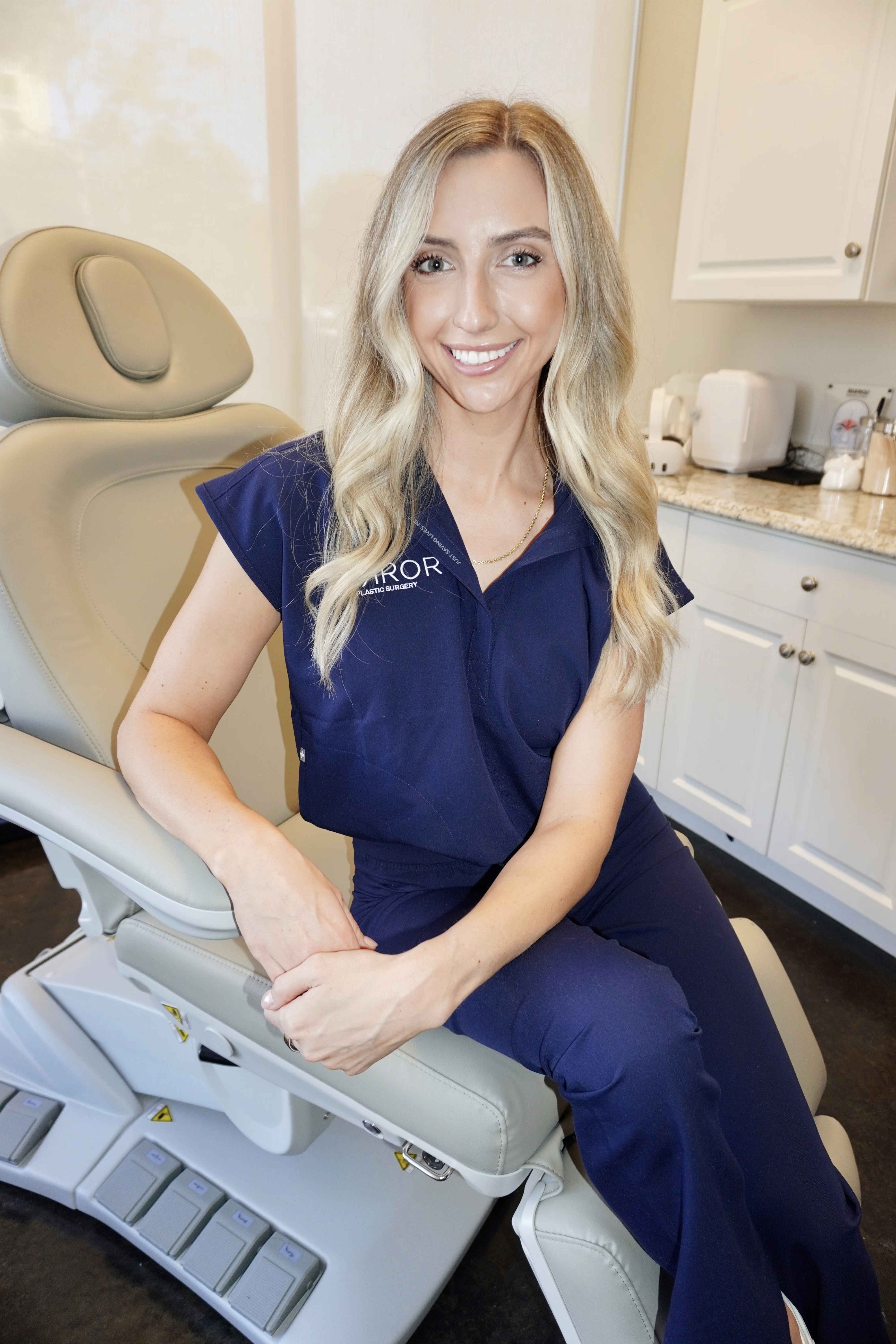
Dr. Akash Chandawarkar’s Harvard education, Johns Hopkins plastic surgery training, and Stanford medical innovation background help ensure that peptide protocols align smoothly with surgical care. This combination of advanced training and focused peptide expertise supports strong recovery outcomes for patients who expect a high level of care.
Recovery enhancement with medically supervised peptides shifts healing from a passive process to an active, guided strategy. Targeted cellular signaling from peptides such as BPC-157 and TB500 can speed tissue repair, reduce inflammation, and support long-term healing outcomes beyond what traditional methods often provide. Book an appointment at 727-361-6515, hello@mirrorplasticsurgery.com, or visit 780 4th Ave S, St. Petersburg, FL to explore how a personalized peptide protocol can support your recovery.
FAQ
Are peptides safe for recovery without FDA approval?
Many peptides do not have FDA approval, so medical supervision at Mirror Plastic Surgery plays a key role in managing risk. The team uses comprehensive health assessments, lab monitoring, and sourcing from providers with rigorous batch testing. Recent 2026 studies report no major adverse events when peptides are used with proper medical guidance and careful screening for pre-existing conditions and medication interactions.
What happens if I stop taking peptides?
Peptide benefits gradually fade after treatment stops, similar to other therapeutic regimens. Inflammation and tissue repair processes that peptides supported often return to baseline levels without continued signaling. Maintenance protocols are sometimes recommended to help preserve gains made during the initial treatment phase.
Do peptide results vary between individuals?
Peptide responses vary widely between individuals due to genetics, lifestyle, underlying health conditions, and overall physiology. This variation makes personalized protocols essential rather than optional. Ellie Pranckevicius completes detailed evaluations, including medical history and comprehensive lab analysis, to design treatment plans tailored to each patient’s recovery needs and goals.
Are peptides more effective than traditional supplements for recovery?
Peptides provide targeted cellular signaling that traditional supplements cannot match through nutrition alone. Supplements supply raw materials for repair, while peptides give specific instructions that can speed healing processes by 25% to 40% compared with nutritional support alone. Using both together under medical supervision often produces the strongest recovery outcomes.
How quickly can I expect to see recovery improvements with peptides?
Many patients notice early improvements in inflammation and pain within the first week of peptide therapy. Structural tissue repair usually becomes more noticeable within 2 to 4 weeks, with major healing milestones often reached in 1 to 2 months. Long-term benefits, including reduced scarring and improved tissue quality, tend to develop over 3 to 6 months when patients follow their protocol consistently.
Disclaimer: Results may vary from person to person. Editorial content, before and after images, and patient testimonials do not constitute a guarantee of specific results.
Disclaimer: Peptide therapy is intended for wellness and optimization purposes and is not prescribed to diagnose, treat, cure, or prevent disease unless specifically stated. Many peptides are not FDA-approved and may be used off-label. Some have limited long-term safety data, with a potential for unknown risks, complications, or desensitization with prolonged use.
