
Written by: Dr. Akash Chandawarkar, Board Certified Plastic Surgeon, Mirror Plastic Surgery | Last updated: September 9, 2026
Key Takeaways
Overfilling is preventable when you pair conservative technique with thoughtful product selection and a focus on facial balance. After treatment, give your results time to settle before you judge them, because early swelling can temporarily distort your appearance. Once swelling improves, a simple, structured self-check in consistent lighting helps you separate true overfilling from normal healing changes. Hyaluronidase can safely dissolve hyaluronic acid fillers when needed, while non-HA products require different management strategies tailored to the specific filler.
Why Overfilling Happens And How To Prevent It
Overfilling usually stems from technique, planning, and treatment philosophy rather than the filler itself. The root causes follow a recognizable pattern:
- Injector inexperience: Limited understanding of facial anatomy can lead to misplaced product and distorted proportions.
- Overcorrection in a single session: Trying to reach the final result in one visit instead of building volume gradually.
- Treating areas in isolation: Injecting lips or cheeks without considering how they relate to the chin, jawline, and temples as one unit.
- Product mismatch: Using a firm, structural filler in a delicate area that needs a softer formulation can create visible rigidity and unnatural texture.
- Cumulative buildup: Repeated top-ups can layer on top of residual product over time, even when each session seems minor.
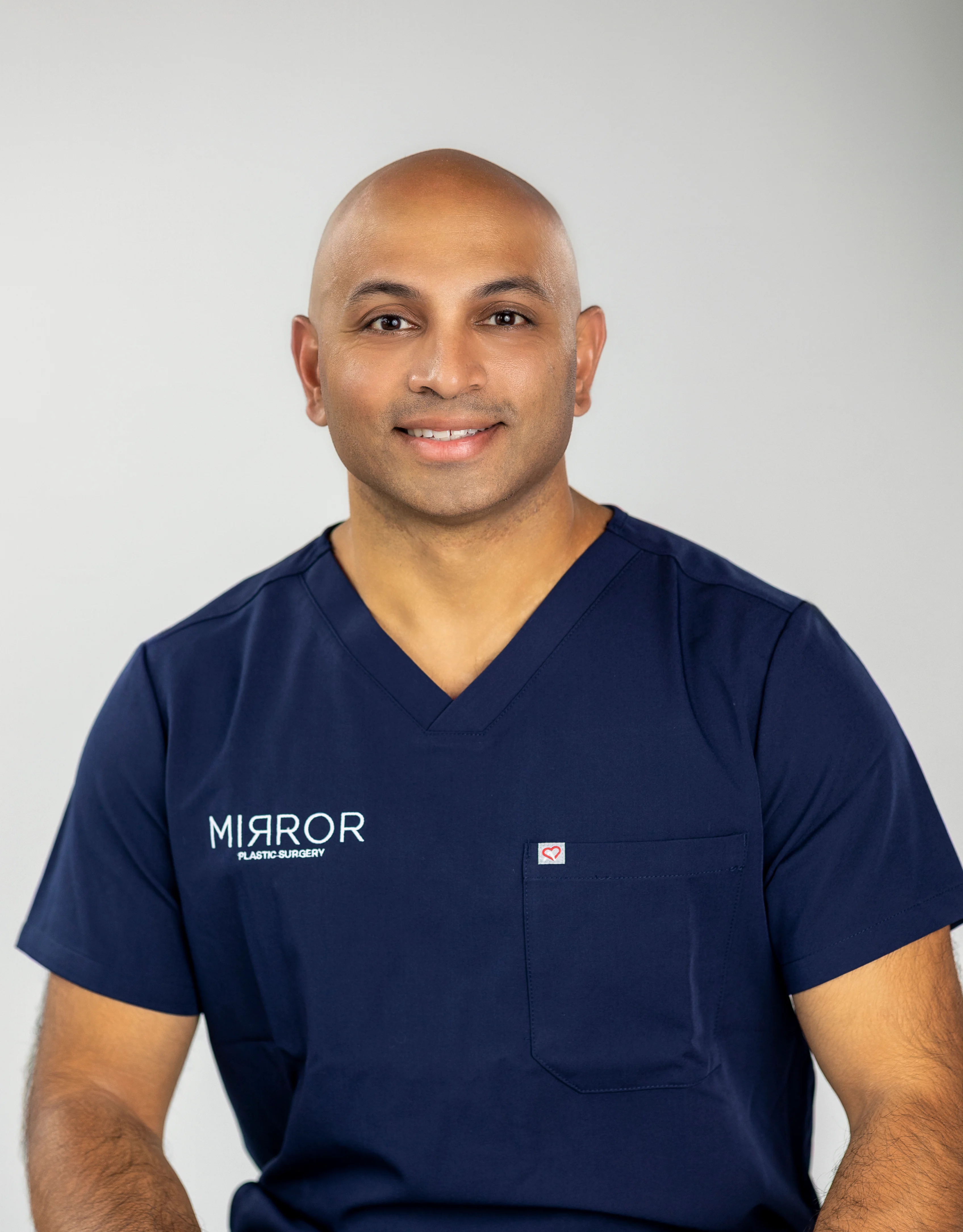
Prevention starts with a board-certified injector who follows a conservative, “under-correct and reassess” philosophy. Dr. Akash Chandawarkar, a Harvard-educated, Johns Hopkins-trained plastic surgeon with fellowship training in aesthetic surgery at Manhattan Eye Ear & Throat Hospital/Lenox Hill Hospital, personally performs every injection at Mirror Plastic Surgery. His approach focuses on revitalizing your inherent features first, adding volume only where it is truly needed, and balancing the upper, middle, and lower face as one cohesive whole.
Before Treatment: Key Questions For A Safe, Natural Plan
A thorough consultation is your first line of defense against an overfilled result. Before any product is injected, ask your provider:
- “How will you ensure my results look natural rather than ‘done’?”
- “What is your approach to facial balancing across all zones?”
- “How much filler do you typically start with for my concern?”
- “What product will you use, and why is it right for this area?”
- “What are my options if I do not like the results?”
- “Do you offer a follow-up evaluation to assess whether adjustments are needed?”
The consultation is the clinical starting point for natural-looking results. During this visit, providers review facial anatomy, treatment history, and goals before recommending any product or dose. A rushed consultation or a provider who dismisses your concerns signals a poor fit. Mirror Plastic Surgery offers an hour-long, top-to-bottom assessment that addresses each of these questions before a single syringe is prepared.
The 2–4 Week Waiting Period: What To Expect
Post-treatment anxiety is common, and it often shows up before your face has had time to settle. Knowing the normal healing timeline helps you avoid unnecessary worry and early interventions.
- Days 1–3: Swelling peaks and bruising may appear. This period gives the least accurate picture of your final result.
- Days 4–7: Most visible swelling improves and your natural contours begin to reappear.
- Days 8–14: Filler continues to integrate and mild asymmetry or firmness usually settles.
- Weeks 2–4: Final results become visible as the filler fully integrates and hydrates to a stable state.1
Fillers are hygroscopic, meaning they attract and hold water. Treated areas can look fuller in the first days than they will around week three. Avoid seeking adjustments before the two-week mark unless you experience severe pain, skin discoloration, blanching, or other warning signs that need immediate medical attention.
How To Evaluate Your Dermal Filler Results After Treatment
Once the initial two-week settling period has passed and swelling improves, you can use a structured self-evaluation to decide whether adjustments make sense.
- Give your results time. Wait until swelling has resolved so you can judge the true outcome.
- Use consistent lighting and angles. Compare front, three-quarter, and side views in natural light near a window, not harsh overhead lighting.
- Check asymmetry in movement and at rest. Smile, frown, and talk. Fillers should allow natural facial animation without stiffness.
- Look for overfilled signs. Watch for puffiness, visible lumps or ridges, loss of natural contour, a noticeably different but not younger look, and features that appear unbalanced from the front or side.
- Notice how you feel about your reflection. Ask whether you look like yourself and feel refreshed. Disliking how you look is a valid reason to seek evaluation, even without a medical complication.
- Take photos that match your pre-treatment images. Use the same lighting and angles. Objective comparison is more reliable than frequent mirror checks.
- Write down concerns for your follow-up visit. A qualified injector will give an honest, unbiased opinion about whether you need an adjustment, more time, or no further treatment.
When To Wait And When To Seek Adjustments
Not every concern after filler needs immediate action. A simple framework can guide your next step.
Wait if: You are still within the first two weeks after treatment, you see mild asymmetry that improves day by day, or you notice minor swelling that changes throughout the day.
Seek adjustments if: After two to four weeks you still see persistent puffiness, visible lumps, migration, or an unnatural appearance that does not improve. Swelling that lasts beyond four to six weeks is less likely to be normal healing and may represent the filler itself. Also contact your provider if you notice the Tyndall effect, restricted movement during expression, or a face that no longer feels like yours.
When you decide to seek evaluation, you want a provider who communicates honestly. Dr. Akash’s philosophy centers on direct, unbiased guidance at every stage, including clear recommendations about whether you need adjustment, more time, or no additional treatment.
Hyaluronidase: What Filler Reversal Really Involves
Hyaluronidase is an enzyme that breaks down hyaluronic acid fillers. Results usually appear within 24 to 48 hours, and cases with accumulated product from multiple sessions may need more than one visit.1 A skilled provider uses conservative, staged dosing to avoid over-dissolving and allows tissue to settle between sessions before reassessing.
Hyaluronidase acts on both cross-linked filler and your body’s natural hyaluronic acid, so minimum effective dosing matters. Patients should wait at least two weeks after dissolution before considering new filler so residual enzyme activity can resolve.
Critical caveat: Not all fillers are reversible. Non-hyaluronic acid fillers such as Radiesse (calcium hydroxylapatite) cannot be dissolved with hyaluronidase and need a different management approach. This reality highlights the value of prevention and of choosing an experienced, anatomy-first injector. Dr. Akash’s advisory board roles with Merz Aesthetics and Tiger Aesthetics keep him current on both reversible and non-reversible products, so every treatment plan reflects long-term implications.
The FDA notes that hyaluronidase is “a clinically accepted method for removal of a hyaluronic acid filler,” although it is not formally approved for this specific indication and dosing guidelines in the literature remain variable. This makes clinical judgment and physician-level training especially important.
Long-Term Prevention: Avoiding Facial Overfilled Syndrome
Facial Overfilled Syndrome (FOS) is a cumulative condition caused by years of repeated filler that never fully clears. Hallmark signs include chronic puffiness, flattened three-dimensional contour, blurred cheek and jawline definition, and a face that appears round or wide instead of structured. Manifestations include “chipmunk” cheeks, “pillow” faces, and “witch” chins, which are easy to recognize in social media and celebrity images.
Staying off this path requires a long-term mindset:
- Choose a provider who prioritizes facial balancing over single-area spot treatments.
- Plan maintenance based on honest assessment instead of automatic top-ups.
- Consider a staged “reset” with controlled dissolution if you suspect significant buildup from prior treatments.
- Work with a provider who is comfortable saying “you do not need more filler right now.”
Mirror Plastic Surgery follows a guiding principle of safety first, function second, aesthetics third. In practice, this means Dr. Akash focuses on revitalizing your natural features before adding volume, which helps prevent an overfilled look from developing over time.
Frequently Asked Questions
How Long Does It Take For Fillers To Settle?
Most fillers take two to four weeks to fully integrate and soften.1 Initial swelling peaks in the first 48 to 72 hours and then gradually improves. The final result usually becomes clear around the two-week mark, with subtle refinement continuing through week four.1 Areas with thinner skin and more movement, such as the lips, may take the full two weeks or slightly longer, while areas with thicker skin, like the cheeks, sometimes stabilize sooner.
Can Too Much Filler Be Reversed?
Yes, when the filler is hyaluronic acid-based. Hyaluronidase dissolves HA fillers, often showing visible results within 24 to 48 hours, with full effects unfolding over one to two weeks1. Cases with significant buildup from multiple sessions may need more than one treatment. As noted earlier, non-HA fillers like Radiesse cannot be dissolved with hyaluronidase and require a different management strategy as they change naturally over time.
What Are The Signs Of Overfilled Fillers?
Persistent puffiness that does not change with sleep, hydration, or expression beyond two to four weeks is a common sign. Other indicators include visible lumps or ridges, loss of natural contour, restricted movement during expression, a “pillow face” or “chipmunk cheek” look, and the Tyndall effect, which appears as a bluish-gray tint under thin skin. A face that looks noticeably different without feeling refreshed, or that no longer feels like yours, also warrants professional evaluation.
How Do I Choose A Good Injector To Avoid Overfilling?
Look for a board-certified plastic surgeon or dermatologist with deep facial anatomy knowledge, a conservative treatment philosophy, and openness about reversal options. Ask about their approach to facial balancing across all zones, not only the area you want treated. Ask how they handle concerns after treatment and whether they schedule follow-up evaluations. Be cautious with any provider who recommends the maximum number of syringes at a first visit, who never suggests waiting or doing less, or who cannot clearly explain why a specific product suits your anatomy. A provider who can explain where treatment would not benefit you is often more trustworthy than one who only lists areas to inject.
Your Path To Natural, Long-Lasting Filler Results
The provider you choose before treatment offers the strongest protection against an overfilled look. A conservative, anatomy-first philosophy, a detailed consultation, and a structured two-to-four-week evaluation window work together to support natural, long-lasting outcomes.
If you have already had treatment and something feels off, the checklist above gives you a clear way to decide when to wait and when to act. When adjustments are needed, understanding your options, including the role and limits of hyaluronidase, can make the process feel far less stressful.
At Mirror Plastic Surgery, Dr. Akash Chandawarkar combines a surgeon’s precision with an educator’s transparency in every injectable treatment. His commitment centers on honest, unbiased guidance at every step, including clear advice when additional filler would not serve your goals.
Start Your Journey To Natural Results with a personalized consultation at Mirror Plastic Surgery.
Disclaimer: Results may vary from person to person. Editorial content, before and after images, and patient testimonials do not constitute a guarantee of specific results.
1 Results may vary from person to person. Editorial content, before and after images, and patient testimonials do not constitute a guarantee of specific results.