Written by: Dr. Akash Chandawarkar, Board Certified Plastic Surgeon, Mirror Plastic Surgery | Last updated: September 9, 2026
Key Takeaways for Fair Skin and Dark Hair
- Diode laser delivers significantly greater long-term hair reduction than IPL in fair-skinned patients with dark hair in the 2026 RCT.1
- Diode laser usually needs 6–8 sessions and produces more durable results than IPL, which often requires 8–12 or more treatments.1
- IPL causes more frequent redness, while diode laser causes more short-term pain and swelling around follicles. Both side-effect profiles resolve on their own.
- Light-colored hair is not treatable with light-based devices. Electrolysis is the only FDA-recognized option for permanent removal of blonde, red, gray, or white hair.
- Board-certified physician oversight maximizes safety and outcomes. You can schedule your personalized consultation with our board-certified surgeons at Mirror Plastic Surgery.
Background: Why Fair Skin With Dark Hair Responds So Well
Both IPL and diode laser rely on selective photothermolysis. Each device delivers light energy that melanin in the hair follicle absorbs, which heats and disables the follicle while sparing surrounding tissue.
Fitzpatrick types I–II describe fair skin that burns easily and tans minimally. This phototype creates strong contrast between low epidermal melanin and high follicular melanin in dark hair. That contrast allows practitioners to use higher fluences safely and achieve faster, more reliable hair reduction. The American Academy of Dermatology confirms that laser hair removal works best on dark hair against light skin.
Dark hair is the critical variable. A fair-skinned person with blonde, red, gray, or white hair remains a poor candidate for both IPL and diode laser because light-colored hair contains too little eumelanin to absorb enough energy.
Technology Comparison: How IPL and Diode Laser Work
IPL (Intense Pulsed Light) delivers broad-spectrum polychromatic light, typically 500–1200 nm, through cut-off filters. The FDA classifies IPL systems under product code ONF and notes that IPL systems deliver many wavelengths in each pulse instead of a single wavelength. Because energy spreads across several chromophores, IPL targets hair less precisely than a true laser.
Diode laser emits monochromatic coherent light at a specific wavelength, usually 808 or 810 nm. At this wavelength, the beam penetrates about 2.0–3.0 mm into the skin, reaching deep terminal hair bulbs in areas such as the underarms, pubic region, and back. Energy concentrates in follicular melanin and spares surrounding tissue.
For fair skin, this precision matters. Fitzpatrick types I–II have lower risk of post-inflammatory hyperpigmentation than darker skin types, yet IPL’s broad spectrum still raises the chance of superficial epidermal heating. Diode laser’s single wavelength allows more aggressive fluence delivery, typically 25–40 J/cm² for fair skin. When paired with active sapphire contact cooling to 0–5°C, this approach improves both safety and efficacy.
Clinical Evidence: The 2026 Randomized Controlled Trial
The landmark 2026 RCT (NCT06179186) from Universidade Nove de Julho in São Paulo, Brazil, enrolled 48 women with Fitzpatrick skin types I–IV in a randomized, double-blinded, within-person split-body design. Participants completed four monthly sessions comparing IPL with a 690-nm filter and 810-nm diode laser on axillary hair at a fixed fluence of 25 J/cm².
Key findings included:
- Primary endpoint (4 weeks post-treatment): Per-protocol analysis showed greater median hair-count reduction with diode laser (87.5%, IQR 83.3–94.2) versus IPL (76.6%, IQR 65.0–89.9; p=0.001).
- 30-week follow-up: Diode laser maintained clear superiority, with significantly lower hair counts and higher percentage reduction than IPL (p<0.001).
- Safety: Erythema occurred more often with IPL, while perifollicular edema and carbonization were more common with diode laser. All events were transient and required no medical intervention.
- Pain and satisfaction: Diode laser produced higher pain scores at every session, yet participant satisfaction still favored diode laser (p=0.005).
- Skin type stratification: Exploratory analysis by Fitzpatrick type showed no consistent pattern of increased adverse events in higher skin types.
This trial aligns with earlier work. A 2021 meta-analysis of 28 RCTs in Lasers in Medical Science found 808 nm diode laser achieved higher mean hair reduction after six sessions than IPL-based technologies.1 A separate systematic review reported long-term hair reduction ranges that consistently favored diode laser over IPL.
Given this superior efficacy, the next practical question is how many sessions patients with fair skin typically need to reach these levels of reduction.
Session Requirements for Fair Skin
A 2024 meta-analysis in Lasers in Medical Science reported that diode and alexandrite lasers produce similar long-term hair reduction of about 74–84% at 18 months.1 In real-world practice, diode laser usually requires 6–8 sessions spaced 4–8 weeks apart to reach roughly 80–95% permanent reduction.1
A 2020 systematic review found IPL achieved about 50–75% hair reduction after 6–10 sessions, with wide variability based on device quality, operator technique, and skin–hair contrast.1 IPL often needs 8–12 or more sessions for similar reduction and usually requires more frequent maintenance.1
Session timing also affects outcomes. Only 15–25% of hairs are in the anagen growth phase at any moment, and six-week spacing between sessions produced an average 81% hair reduction versus 57% at two-week intervals. Most patients benefit from maintenance sessions every 6–12 months, especially when hormones such as PCOS influence hair growth.
Does IPL Work on Fair Hair? Melanin Requirements Explained
Light-based hair removal depends on melanin. As detailed earlier, light-colored hair does not contain enough eumelanin for IPL or diode laser to work effectively. A 2026 study by Ugonabo et al. showed that individuals with red or light-colored hair and Fitzpatrick type II skin had lower efficacy than those with dark hair and the same phototype.
Electrolysis remains the only effective option for white, gray, red, or blonde hair and is the only method the FDA recognizes as permanent hair removal, rather than permanent hair reduction.
Safety and Side Effects for Fair-Skinned Patients
Most patients experience mild, short-lived side effects with both technologies. Typical reactions include temporary redness, perifollicular swelling, and a sunburn-like sensation that lasts from one to 24 hours.
- IPL-specific: Higher rates of erythema were reported in the 2026 RCT. Broad-spectrum output can increase the risk of superficial burns if filters are chosen incorrectly.
- Diode laser-specific: Perifollicular edema and carbonization occur more often and reflect deeper follicular targeting. Pain scores are higher but remain short-lived.
- Rare side effects: Hyperpigmentation, hypopigmentation, blistering, or crusting appear more often with aggressive settings, tanned skin, or inadequate cooling.
Fair skin has lower risk of post-inflammatory hyperpigmentation than darker skin types. Sun avoidance for 2–4 weeks before and after treatment still remains essential because even fair skin can burn with UV exposure, and burns increase the chance of pigment changes. An analysis of the FDA’s MAUDE database for major diode platforms identified 489 injuries, most often second-degree burns from treating tanned skin, excessive fluence, or poor cooling. These findings highlight the value of board-certified physician oversight.
Schedule a safety-focused consultation at Mirror Plastic Surgery so Dr. Akash Chandawarkar can personally evaluate your skin type, hair characteristics, and treatment settings before any session.
At-Home IPL vs Professional Diode Laser
At-home IPL devices such as Philips Lumea and Braun Silk-expert are FDA-cleared for permanent hair reduction in Fitzpatrick skin types I–IV with dark hair. Their main limitation is energy. Home devices operate at about 3–7 J/cm² to meet over-the-counter safety rules, compared with roughly 15–40+ J/cm² for medical-grade clinic lasers. This lower energy usually suppresses hair temporarily rather than destroying follicles.
At-home IPL can help with maintenance between professional treatments or for small areas when patients accept ongoing use and modest results. Professional diode laser remains the stronger choice for larger areas, dense or stubborn hair, and anyone seeking lasting reduction. Many patients who rely on at-home IPL for 12–18 months eventually transition to professional treatment and often cite time investment as their main regret.
Cost and Commitment: Professional Diode, Professional IPL, and At-Home IPL
The table below compares professional diode laser, professional IPL, and at-home IPL across four practical factors. Values come from the peer-reviewed and clinical sources cited.
6–8 sessions8–12+ sessions48–60+ sessions over 12 monthsAbout 80–95% (2024 meta-analysis)About 50–75% (2020 systematic review)About 30–50% (2020 study)30–60 J/cm²10–25 J/cm²3–7 J/cm²Ongoing every 2–4 weeks
| Factor | Professional Diode Laser | Professional IPL | At-Home IPL |
|---|---|---|---|
| Typical Sessions for Significant Reduction | |||
| Hair Reduction at 6–12 Months | |||
| Energy Delivered | |||
| Maintenance Required | Touch-up every 6–12 months | More frequent touch-ups |
A 2019 meta-analysis of 13 RCTs (n=1,247) found diode laser achieved about 82–91% hair reduction after six sessions with the lowest adverse event rate (2.1%) among all modalities.1 Over 10 years, at-home IPL often costs roughly $2,500–3,500 in direct expenses plus hundreds of hours of treatment time. A professional diode laser series, by contrast, offers a defined endpoint and more durable reduction.
How To Choose a Provider for Fair Skin Laser Hair Removal
Choosing the right provider has more impact on your results and safety than choosing a specific device brand. Before starting a treatment series, ask any prospective clinic:
- What type of laser do you use, and what wavelength does it deliver?
- What are your credentials and experience with fair skin types?
- How many sessions do you expect I will need, and what results are realistic for me?
- What cooling methods do you use to protect my skin?
- How do you manage side effects or complications if they occur?
- Can you share before-and-after photos of patients with similar skin and hair?
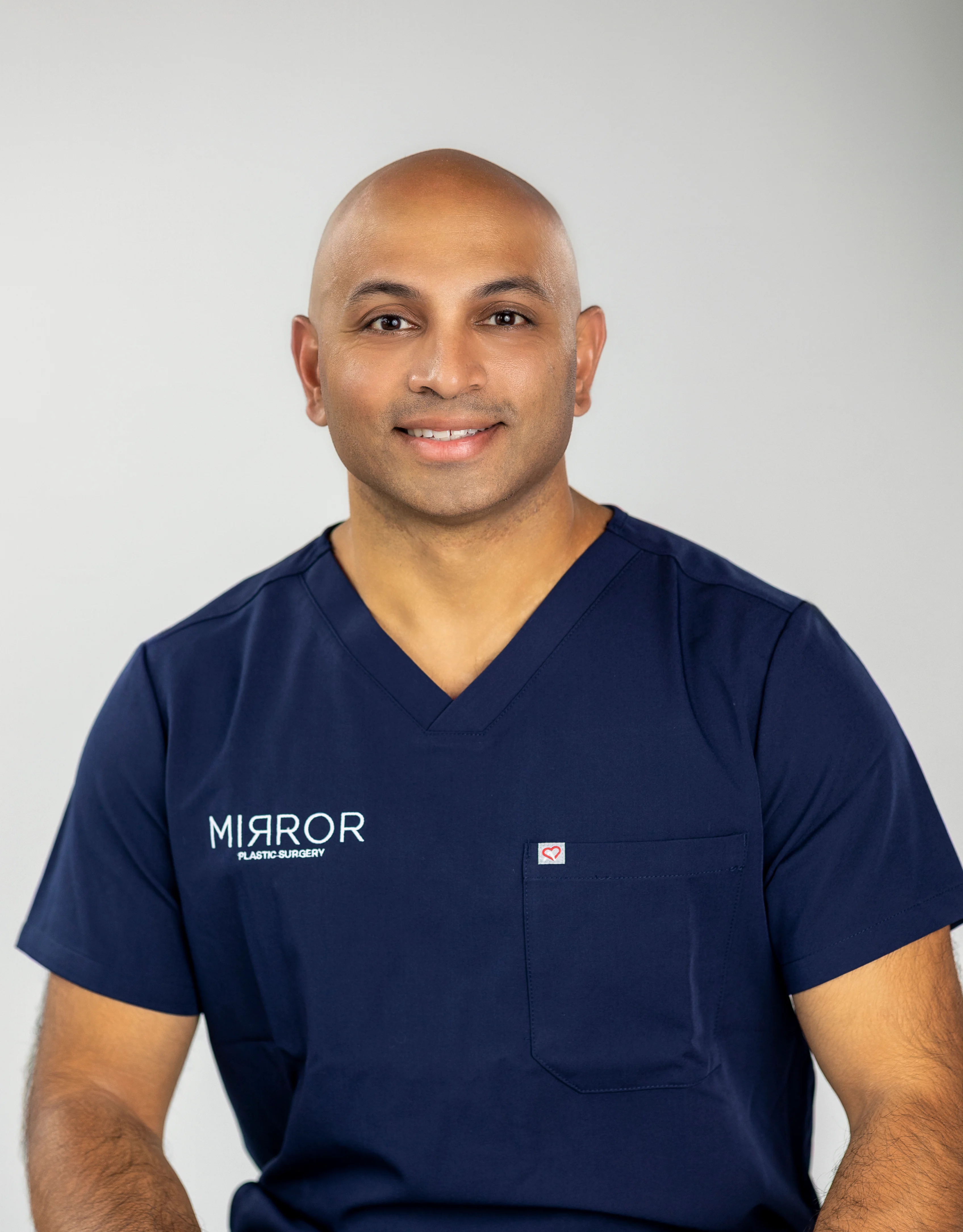
A board-certified plastic surgeon offers deep anatomical knowledge that many high-volume clinic operators do not have. Dr. Akash Chandawarkar’s Harvard education, Johns Hopkins training, and aesthetic surgery fellowship at MEETH/Lenox Hill Hospital support an approach grounded in evidence and surgical precision. Mirror Plastic Surgery’s concierge model reserves up to an hour for each consultation and prioritizes safety, function, and then aesthetics, rather than rapid, high-volume scheduling.
Conclusion: Evidence-Based Guidance for Fair Skin With Dark Hair
Current clinical evidence consistently favors professional diode laser for fair skin with dark hair. As outlined in the RCT and meta-analyses above, diode laser achieves higher long-term hair reduction than IPL, usually in fewer sessions, with a favorable safety profile under expert supervision.
IPL still has a role for some patients, especially for maintenance or when budgets are limited, and at-home IPL can support temporary reduction for those comfortable with ongoing use. Fair skin with dark hair remains the ideal profile for light-based hair removal, and provider expertise remains the most important factor in achieving safe, satisfying outcomes.
Schedule your personalized consultation to receive a treatment plan tailored to your skin type and hair concerns. Call 727-361-6515 or email us to book your appointment at 780 4th Ave S, St. Petersburg, FL 33701.
Frequently Asked Questions
Is Diode Laser Safe for Fair Skin?
Diode laser is very well suited to fair skin with dark hair. The strong contrast between low epidermal melanin and dark follicular melanin allows higher fluences with less competition from the surrounding skin. The 2026 randomized controlled trial found no consistent pattern of increased adverse events in fair skin types. The 2026 Fernández Santos study also reported only transient adverse effects with 808 nm diode laser across skin phototypes II–IV, with no unexpected or long-term events at six-month follow-up. Active sapphire contact cooling further protects the epidermis. As with any energy-based procedure, outcomes are safest when a board-certified physician with deep anatomical expertise performs or directly supervises treatment.
Can I Use At-Home IPL on My Face?
Most at-home IPL devices are cleared for use on the female face below the cheekbones and usually require a dedicated facial attachment. They are not intended for male facial hair. Caution remains essential. The FDA has received reports of burns and pigment changes from misuse. Philips advises keeping flashes away from the eyes, eyelids, and eyebrows and using only the approved facial attachment. Hormonal facial hair on areas such as the chin or upper lip often regrows under ongoing hormonal influence, which makes at-home maintenance less effective than professional treatment. For facial hair removal, physician-performed diode laser offers greater precision, higher fluence, and active cooling, which together improve safety and long-term results.
How Long Do Diode Laser Results Last?
Diode laser achieves permanent hair reduction as the FDA defines it, meaning a long-term, stable decrease in hair regrowth measured at 6, 9, and 12 months after treatment.1 One 810 nm diode laser follow-up study found that about 70% average hair-count reduction remained at one year after treatments ended.1 Most patients need a maintenance session every 6–12 months because finer vellus hairs can return, especially when hormones shift. Patients with PCOS or perimenopausal changes often need maintenance two to four times per year. As noted earlier, the 2026 RCT showed strong durability for diode laser compared with IPL.
Does IPL Work on All Skin Types?
IPL does not suit every skin type. It is contraindicated for Fitzpatrick skin types V and VI because of high risk of burns and post-inflammatory hyperpigmentation and requires great caution on type IV. IPL works best for fair to medium skin, types I–III, with dark hair. Diode laser is safe for Fitzpatrick types II–V and can be used on types I–VI with appropriate super hair removal protocols that use lower fluence and higher repetition rates. For darker skin types, Nd:YAG laser at 1064 nm is generally preferred because it has minimal epidermal melanin absorption. As noted earlier, light-colored hair is not treatable with light-based devices, and electrolysis is the only option for those hair colors.
What Is the Difference Between IPL and Laser?
IPL, or Intense Pulsed Light, is not a laser. It delivers a broad spectrum of polychromatic light, usually 500–1200 nm, through cut-off filters. This light scatters across several chromophores, including melanin, hemoglobin, and water. A diode laser emits a single coherent wavelength, typically 808 or 810 nm, that targets melanin in the hair follicle more precisely. The FDA notes that IPL systems deliver many wavelengths in each pulse instead of one wavelength. This physics difference explains why diode laser often achieves greater hair reduction in fewer sessions and with a lower adverse event rate than IPL. For fair skin with dark hair, both technologies can work, yet the clinical evidence consistently favors diode laser for patients who want durable, long-term results.
Disclaimer: Results may vary from person to person. Editorial content, before and after images, and patient testimonials do not constitute a guarantee of specific results.
1 Results may vary from person to person. Editorial content, before and after images, and patient testimonials do not constitute a guarantee of specific results.