
Written by: Dr. Akash Chandawarkar, Board Certified Plastic Surgeon, Mirror Plastic Surgery | Last updated: September 9, 2026
How Kim Kardashian’s Hair Removal Choices Compare
Kim Kardashian has shared that she relies heavily on laser hair removal, but public sources do not confirm any specific device she uses. This article explains how the main technologies work, what the science shows, and how that translates into real-world results for different skin tones and hair types.
What Laser Hair Removal Does Kim Kardashian Use? The Direct Answer
- Professional Diode Laser Treatment: Kim has spoken positively about professional laser hair removal in general. Professional diode lasers, such as the Soprano platform, use Super Hair Removal (SHR) technology with a cooling tip for comfort across a wide range of skin types, including darker Fitzpatrick IV–VI skin tones.
- At-Home Diode Lasers: At-home diode lasers like the TRIA Hair Removal Laser 4X are FDA-cleared at-home diode lasers (510(k) K120737). They operate at 810 nm and deliver higher energy than IPL devices but require consistent, frequent use.
- At-Home IPL Devices: IPL devices, such as those from Ulike, are popular at-home options. IPL is broad-spectrum light, not a true laser, and works less reliably on some skin and hair types.
These technologies work differently and do not deliver identical results. A board-certified plastic surgeon can determine which options match your Fitzpatrick skin type, hair color, and safety profile.
Get a personalized laser hair removal assessment to learn which technology fits your skin, hair, and goals.
Documented Evidence Of What Kim Kardashian Has Used
Professional Diode Laser Treatment
Kim Kardashian has repeatedly described her commitment to laser hair removal, yet public records do not show a confirmed endorsement of the Soprano diode laser platform. The Soprano Titanium, manufactured by Alma, uses SHR technology, which delivers energy gradually and cumulatively instead of in single sharp pulses. This feature distinguishes it from traditional single-pulse lasers. A full leg treatment typically takes 30–40 minutes, and the platform suits darker skin types (Fitzpatrick IV–VI) because of its longer wavelength and gradual heat delivery. Kim has emphasized her overall reliance on laser hair removal, telling Allure: “I am Armenian, so of course I am obsessed with laser hair removal! Arms, bikini, legs, underarms… my entire body is hairless.”
At-Home Diode Lasers (e.g., TRIA 4X)
Public sources do not document Kim Kardashian using the TRIA Hair Removal Laser 4X specifically. At-home diode lasers like the TRIA 4X still matter for comparison. The TRIA 4X is an 810 nm diode laser, the only FDA-cleared at-home laser for permanent hair reduction (510(k) clearance K120737), and delivers approximately 22 J/cm² per pulse. This fluence is higher than typical home IPL devices but far below professional diode platforms. The device suits Fitzpatrick skin types I–IV and includes a skin sensor that prevents use on darker skin tones as a safety feature.
At-Home IPL Devices (e.g., Ulike)
Media coverage has not confirmed Kim Kardashian promoting Ulike IPL devices. IPL uses intense pulsed light, which is broad-spectrum light filtered to a range of wavelengths, rather than a single laser wavelength. Ulike devices are FDA-cleared for at-home hair removal, yet they come with notable safety considerations. An FDA MAUDE adverse event report (Report Key 25048707) described a Ulike X device that intermittently emitted IPL flashes without skin contact, with visible light leakage from the side of the treatment window. The manufacturer did not classify this malfunction as a safety defect.
All information in this section comes from public interviews, social media, and media reports, not from Kim Kardashian’s medical records. Celebrity comments provide context but do not replace clinical evidence for any individual patient.
The Science Of Hair Removal: Comparing Diode, Alexandrite, Nd:YAG, And IPL
Diode Lasers (810 nm)
Diode lasers emit a wavelength around 800–810 nm that targets melanin in hair follicles with good depth penetration. A 2024 meta-analysis in Lasers in Medical Science found diode lasers achieve 74–84% long-term hair reduction at 18 months when used by trained operators, with fewer side effects in Fitzpatrick IV and V compared with Alexandrite1. The Soprano platform and TRIA 4X both use diode technology, although at very different power levels.
Alexandrite Lasers (755 nm)
Alexandrite lasers have the highest melanin absorption among common hair removal wavelengths, which makes them highly effective for Fitzpatrick I–III with coarse dark hair. The same 2024 meta-analysis reported that Alexandrite and diode lasers provide statistically equivalent long-term hair reduction1.
Nd:YAG Lasers (1064 nm)
Nd:YAG lasers have the longest wavelength and lowest melanin affinity, which makes them safest for Fitzpatrick V–VI and tanned skin. The beam passes through epidermal melanin to reach deeper follicular melanin and reduces the risk of burns and hyperpigmentation.
IPL (Intense Pulsed Light)
IPL uses a broad-spectrum xenon flashlamp rather than a true laser. A 2022 systematic review in the Journal of Cosmetic Dermatology reported long-term hair reduction of about 27–52.7% for IPL, compared with 32.5–84.25% for true lasers1. A 2026 randomized controlled trial comparing IPL and diode laser for axillary hair removal showed diode laser produced greater hair reduction at 30 weeks (median 96.0% vs. 77.9%, p<0.001), while IPL caused less pain1.
| Technology | Wavelength | Long-Term Hair Reduction (2022 Systematic Review) | Best For Fitzpatrick Skin Types (2024 Meta-Analysis) |
|---|---|---|---|
| Alexandrite Laser | 755 nm | 35–84.25% | I–III |
| Diode Laser | 800–810 nm | 32.5–69.2% | II–V |
| Nd:YAG Laser | 1064 nm | 30–73.61% | V–VI |
| IPL | Broad-spectrum | 27–52.7% | I–III (lighter skin only) |
Safety And Side Effects: What The Evidence Shows
Professional Laser Safety Profile
A 2023 network meta-analysis of 13 randomized controlled trials with 652 patients found that reported side effects from professional laser hair removal were transient, such as mild redness and swelling that resolved within hours to days. No permanent scars were reported. The Swiss Federal Office of Public Health notes that frequent but temporary effects include redness, heat sensation, swelling, and short-term pigmentation changes.
At-Home Device Risks
At-home devices carry a higher risk of user error. The Swiss Federal Office of Public Health lists major and sometimes permanent side effects of laser and IPL treatments, including burns, eye injuries, permanent pigmentation changes, scars, and paradoxical hair growth. Ulike’s aftercare guidance acknowledges that IPL can cause skin sensitivity, irritation, redness, and inflammation. Moreover, the FDA MAUDE report on the Ulike X device highlights concerns about unintended light emission and leakage.
Is Ulike Laser Hair Removal Safe?
Ulike devices are FDA-cleared for at-home hair removal when users follow instructions. However, the FDA MAUDE database records a malfunction report involving unintended IPL flashes without skin contact and visible light leakage, which the manufacturer did not classify as a safety defect. Ulike states that its devices work only on lighter to brown skin tones and are incompatible with dark brown or black skin. Users should follow all safety directions, perform patch tests, and stop using the device if unusual side effects appear.
Who Is A Good Candidate? Matching Skin Type And Hair Color
- Fitzpatrick I–III: Alexandrite or diode lasers work very well. Most at-home IPL devices are cleared for these lighter skin types.
- Fitzpatrick IV–VI: Nd:YAG or diode lasers with careful settings provide the safest option. Most at-home IPL devices warn against use on darker skin because of burn risk.
- Light Hair (Blonde, Red, Gray, White): Laser hair removal usually fails on very light hair because it lacks melanin. Electrolysis remains the effective alternative.
A professional consultation helps match your skin and hair profile with the safest and most effective technology.
At-Home Vs. Professional Laser Hair Removal: Evidence-Based Comparison
Efficacy
Professional diode laser treatment shows statistically significant hair count reduction at 3 months (SMD -13.21) and 6 months (SMD -11.01) compared with control, based on a 2023 network meta-analysis. A 2019 follow-up study of 173 patients reported 87.9% sustained improvement after 11.5 years1. In contrast, at-home IPL devices can reduce hair growth by 53.6–87% in clinical trials, but these results come from lower-power devices, and sustained results over 6–12 months tend to be lower1.
Power And Technology
Professional clinical lasers deliver up to 1800W of laser power. In contrast, the most powerful home IPL devices operate at 5–10W, a difference of roughly two orders of magnitude. Dr. Shilpi Khetarpal of the Cleveland Clinic notes that lower power means lower effectiveness, so at-home devices do not match professional models.
Safety
Peer-reviewed literature emphasizes that effectiveness and safety depend on both the device and the person performing treatment, and significant adverse effects have occurred when untrained providers use lasers. At-home devices place all responsibility on the user, which increases the risk of complications, especially on darker skin tones.
Cost And Convenience
At-home devices usually cost $200–600 upfront and often require ongoing maintenance sessions. Professional treatments reach higher reduction rates in fewer visits, which often makes them more cost-effective over time for many patients.
Why Mirror Plastic Surgery Recommends Professional Treatment
Professional laser hair removal with a board-certified plastic surgeon provides the highest level of safety, efficacy, and customization. At Mirror Plastic Surgery, Dr. Akash Chandawarkar, a Harvard-educated and Johns Hopkins-trained plastic surgeon, leads a concierge practice that prioritizes safety first, function second, and aesthetics third. Mirror Plastic Surgery schedules up to an hour for each consultation and performs a detailed assessment of anatomy, hair growth patterns, skin type, and long-term goals.
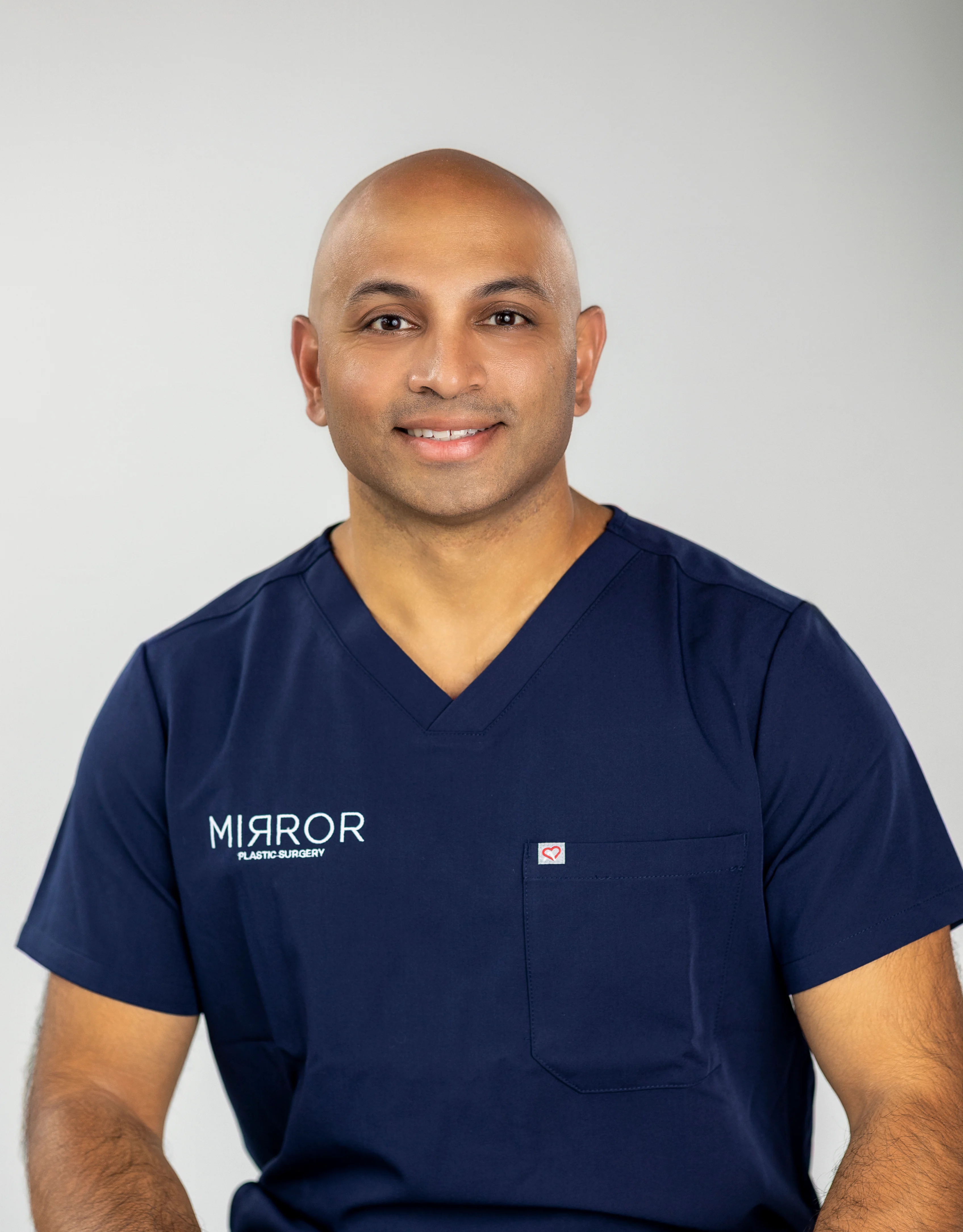
The practice follows an evidence-based approach, so patients receive clear, unbiased recommendations instead of sales-driven treatment plans. Dr. Chandawarkar compares this approach to dentistry: professional treatments create results, and informed maintenance preserves them. Whether you want in-office laser hair removal or want guidance on at-home devices, a consultation at Mirror Plastic Surgery keeps decisions grounded in clinical data rather than celebrity marketing.
Schedule your consultation to explore your laser hair removal options and receive a treatment plan tailored to your needs.
Conclusion: How To Choose Your Laser Hair Removal Approach
Clinical evidence shows that professional diode laser treatment achieves significantly greater long-term hair reduction than IPL, with results such as the 96% reduction at 30 weeks reported in recent trials1. Trained provider oversight also improves safety. At-home devices offer convenience but come with trade-offs: they require consistent use, deliver lower energy, and carry higher risks of user error, particularly on darker skin tones. For safe, effective, long-lasting results, professional consultation and treatment remain the most reliable path.
Request your tailored laser hair removal treatment plan at Mirror Plastic Surgery.
Frequently Asked Questions
Is Ulike Laser Hair Removal Safe?
Ulike devices are FDA-cleared for at-home use when users follow instructions carefully. The FDA MAUDE database, however, includes a malfunction report for the Ulike X model that involved unintended IPL flashes without skin contact and visible light leakage from the treatment window. The manufacturer did not classify these issues as safety defects. Ulike’s own guidance states that its devices are unsuitable for dark brown or black skin tones (Fitzpatrick V–VI) or tanned skin because of burn risk. Users should perform patch tests, wear eye protection, and stop treatment immediately if blistering, burns, or persistent side effects occur.
TRIA Vs. Soprano: Which Is Better?
The Soprano platform is a professional diode laser system that delivers much higher energy under clinical supervision, and many patients reach 80–90% permanent hair reduction after 6–8 sessions1. The TRIA 4X is an at-home diode laser that delivers about 22 J/cm² per pulse. It can support gradual reduction and maintenance but needs more frequent, consistent use and produces lower overall efficacy than professional systems. Professional clinical lasers can reach up to 1800W of power, while home devices operate at a small fraction of that output. For large areas, coarse hair, or Fitzpatrick IV–V skin, the Soprano’s adjustable settings and medical oversight provide a clearly stronger option.
Can I Use The Same Laser As Kim Kardashian?
Many at-home laser and IPL devices are available to consumers, yet suitability depends on your Fitzpatrick skin type, hair color, and medical history. At-home diode lasers like the TRIA 4X are FDA-cleared only for skin types I–IV and will not activate on darker skin. At-home IPL devices like Ulike are not cleared for Fitzpatrick V–VI or tanned skin. None of these devices match the energy output or precision of professional diode lasers. A consultation with a board-certified plastic surgeon is the safest first step before investing in any laser hair removal technology.
Disclaimer: Results may vary from person to person. Editorial content, before and after images, and patient testimonials do not constitute a guarantee of specific results.
1 Results may vary from person to person. Editorial content, before and after images, and patient testimonials do not constitute a guarantee of specific results.