

Written by: Ellie Pranckevicius, FNP-BC, Aesthetic Nurse Practitioner & Aesthetic Injector | Facial Restoration & Regenerative Injectable Specialist, Mirror Plastic Surgery | Last updated: August 13, 2026
Key Takeaways on FDA-Approved Bioidentical Hormones
- FDA-approved bioidentical hormones are finished pharmaceutical products containing 17β-estradiol and micronized progesterone that have completed FDA review for safety, efficacy, and manufacturing quality.
- Approved estradiol delivery forms include transdermal patches, topical gels, sprays, oral tablets, vaginal rings, inserts, and creams. Micronized progesterone is available as oral capsules or in the combination product Bijuva.
- February 2026 FDA label updates removed boxed warnings for several products and clarified guidance for starting therapy in women under 60 or within 10 years of menopause.
- Most commercial insurance plans cover FDA-approved bioidentical products, though prior authorization is often required. Compounded preparations are typically not covered.
- Schedule a personalized consultation at Mirror Plastic Surgery to match an FDA-approved delivery form to your symptoms, health history, and risk profile.
FDA-Approved Hormone Therapy Forms and What They Mean for You
FDA-approved bioidentical estradiol comes in six main delivery categories: transdermal patches, topical gels, topical sprays, oral tablets, vaginal rings, and vaginal inserts or creams. Each form behaves differently in the body and influences symptom control, side effects, and cardiovascular risk.
Transdermal patches such as Climara deliver 0.025 to 0.1 mg of estradiol per day for systemic symptom relief.1 For patients whose primary concern is vaginal dryness or discomfort rather than hot flashes or night sweats, low-dose vaginal preparations such as 10 mcg tablets, low-dose cream, or the Estring ring provide minimal systemic absorption and do not require concurrent progestogen in women with an intact uterus.
On February 12, 2026, the FDA approved label changes for six menopausal hormone therapy products, including Prometrium, Divigel, Cenestin, Enjuvia, Estring, and Bijuva, removing boxed warnings about heart disease, breast cancer, and dementia. The updated labels added guidance to consider starting therapy for moderate-to-severe symptoms in women under 60 or within 10 years of menopause.1
Bijuva remains the only FDA-approved single capsule that combines bioidentical estradiol and bioidentical micronized progesterone as of 2026. No new bioidentical hormone products received FDA approval in 2025–2026, so the main regulatory change involved updated risk labeling on existing therapies.
Schedule a consultation to determine which delivery form, such as a patch, gel, spray, or vaginal preparation, best matches your symptoms and cardiovascular risk.
Bioidentical Hormones That Hold FDA Approval
Several bioidentical hormones already carry full FDA approval. The delivery forms described above, including patches, gels, sprays, oral tablets, and vaginal preparations, are all FDA-approved, as are micronized progesterone capsules and the combination product Bijuva.
A critical regulatory distinction affects how these products are used in practice. FDA approval applies only to the exact finished manufactured product and its labeled use. It does not extend to compounded estradiol creams, troches, pellets, or any custom-mixed formulation, even when those formulations contain the same active hormone molecules.
There are no FDA-approved drugs containing estriol for human use in the United States.
Insurance Coverage for FDA-Approved Bioidentical Hormones
Most commercial insurance plans cover FDA-approved bioidentical products such as estradiol patches, gels, and oral micronized progesterone. Custom-compounded bioidentical hormone therapy, including pellets, creams, and troches, is typically not covered and is usually paid out of pocket.
Prior authorization is commonly required, and the prescribing clinician must submit documentation of symptoms, hormone level test results, and a rationale for medical necessity. Even after authorization, coverage depends on whether the product appears on your plan formulary, whether your pharmacy has a contract with your insurer, and whether your prescriber is in-network, all of which affect your out-of-pocket costs.
Patients can use HSAs or FSAs to pay for eligible FDA-approved bioidentical hormone therapy expenses that are not reimbursed by insurance. If an insurance claim is denied, patients can appeal by submitting additional documentation that supports medical necessity.
How Estradiol Fits Into Bioidentical Hormone Therapy
Estradiol is a bioidentical hormone when formulated to match the molecule produced by the ovaries. FDA-approved bioidentical hormones already include estradiol patches, gels, sprays, oral micronized estradiol, and micronized progesterone, all molecularly identical to ovarian hormones.
Approved estradiol routes include transdermal patches, topical gels, topical sprays, oral tablets, vaginal rings, vaginal inserts, and vaginal cream. By contrast, any formula containing estriol, such as biest or triest, is a compounded, unapproved product, as noted earlier.
Comparing FDA-Approved Hormones, Compounded BHRT, and Peptides
FDA-approved hormone products undergo clinical trials that demonstrate safety and efficacy, standardized manufacturing processes, consistent dosing from batch to batch, and ongoing FDA quality monitoring. Compounded bioidentical hormone therapy uses the same active molecules but is not reviewed by the FDA for safety, effectiveness, quality, or consistent dosing before sale, and oversight occurs through state boards of pharmacy and, for some outsourcing facilities, under Sections 503A and 503B of the Federal Food, Drug, and Cosmetic Act.
Many patients who explore hormone therapy also encounter peptide therapies marketed for wellness, recovery, or performance. Unregulated peptides occupy a separate regulatory category from estradiol and progesterone. Peptides such as GHK-Cu, BPC-157, or sermorelin are not FDA-approved drugs and have not undergone the same premarket review process. Medical supervision remains essential for both hormones and peptides, but the regulatory starting point differs significantly. At Mirror Plastic Surgery, Ellie Pranckevicius evaluates each patient’s full health picture before recommending any hormone-based or peptide-based protocol.
Start your evaluation to clarify which regulated therapies align with your health goals and risk factors.
Questions to Guide Your Hormone Therapy Visit
Effective hormone care depends on understanding why a specific product, dose, and route fits your health profile. Use the checklist below at your next hormone therapy consultation so you leave with clarity about regulatory status, delivery method, insurance coverage, and monitoring plans.
- Is the product you are prescribing FDA-approved, or is it compounded?
- Which delivery form, such as patch, gel, spray, oral, or vaginal, is most appropriate for my symptom profile and cardiovascular risk?
- Do I need progesterone, and if so, is micronized progesterone, such as Prometrium or a generic, an option?
- Will my insurance cover this product, and do I need prior authorization?
- What lab tests will you use to establish my baseline and monitor my response?
- How will you reassess the benefit-risk balance over time, and what would prompt a change in my protocol?
- Are there absolute contraindications in my history that rule out any of these options?
Meet Ellie Pranckevicius, FNP-BC, at Mirror Plastic Surgery
Ellie Pranckevicius is a board-certified Family Nurse Practitioner and the lead practitioner for non-surgical wellness and peptide therapies at Mirror Plastic Surgery in St. Petersburg, Florida. She holds a Bachelor’s in Health Science from Boston University, a Bachelor’s and Master’s in Nursing from the University of South Florida, and four years of critical-care experience in the Neuroscience ICU at Tampa General Hospital, which gives her a detailed understanding of metabolic health, physiology, and the body’s capacity for recovery.
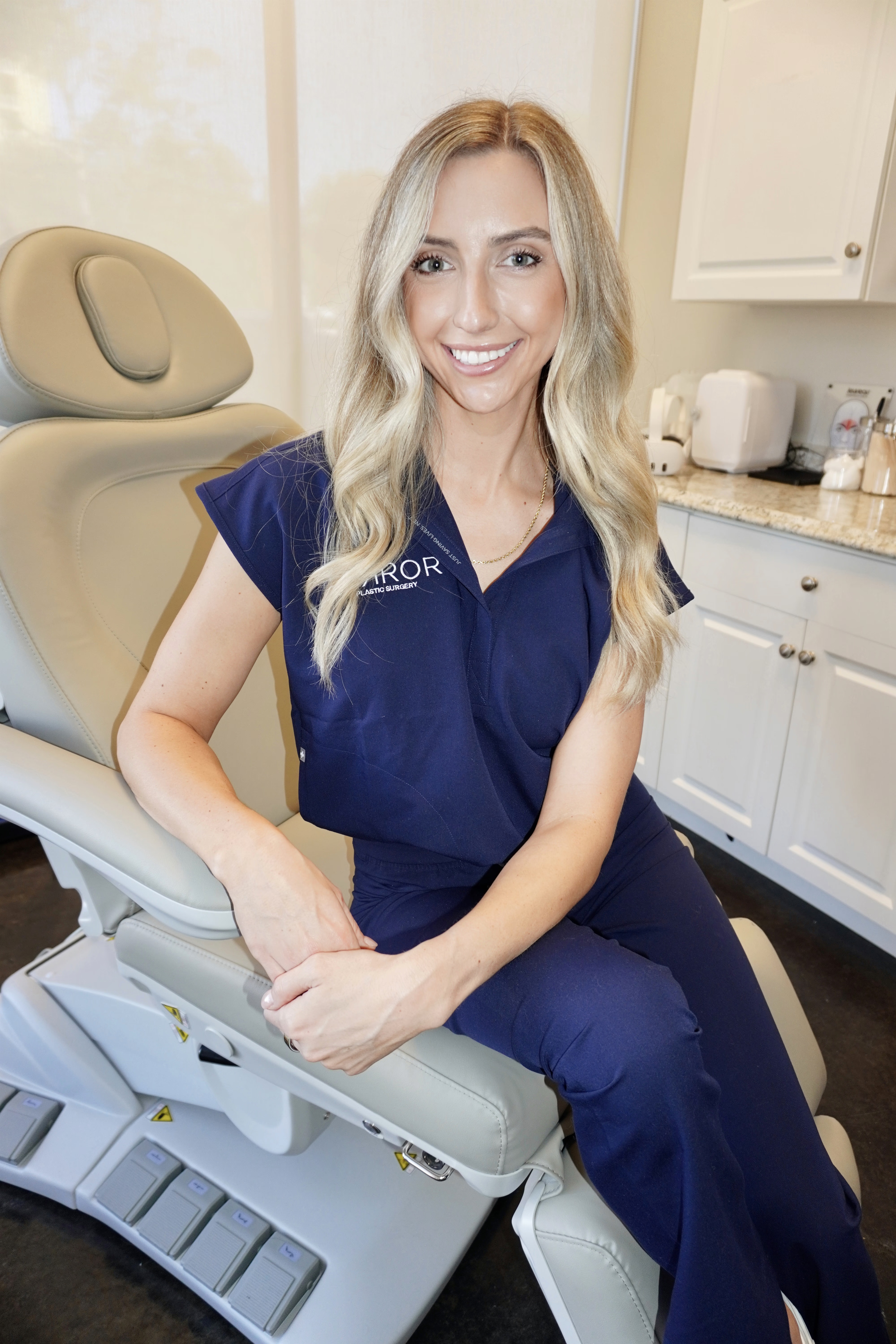
Ellie began her career at a high-end medical spa in Boston, where she developed expertise in skin physiology and aesthetic assessment before earning her nurse practitioner credentials. She brings that dual perspective to every consultation. She understands the aesthetic outcomes patients want and the clinical science required to reach them safely. Her approach centers on education and transparency, and she explains the physiology behind each recommendation in plain language and tells patients when a service is not yet necessary.
At Mirror Plastic Surgery, Ellie conducts comprehensive 30–60 minute consultations that include a full medical history review, lab panel analysis when indicated, and individualized protocol development. Patients have direct access to Ellie via text for ongoing support, questions, and adjustments throughout their care.
When surgical care is appropriate, Ellie’s work is complemented by Dr. Akash Chandawarkar, MD, a Harvard-educated physician, Johns Hopkins-trained plastic surgeon, and fellowship-trained aesthetic surgeon at Manhattan Eye Ear & Throat Hospital and Lenox Hill Hospital.
Begin your medically supervised hormone evaluation at Mirror Plastic Surgery’s St. Petersburg location.
Frequently Asked Questions About Bioidentical Hormones
-
What is the difference between FDA-approved bioidentical hormones and compounded bioidentical hormone therapy?
FDA-approved bioidentical hormones are finished pharmaceutical products that have completed federal review for safety, efficacy, dosing consistency, and manufacturing quality under Good Manufacturing Practice standards. Compounded bioidentical hormone therapy uses the same active molecules, such as estradiol or progesterone, but the finished product has not undergone that premarket review. Compounded products are not evaluated by the FDA for dose accuracy, sterility, or absorption before sale. Major medical organizations, including ACOG, the Endocrine Society, and the National Academies of Sciences, Engineering, and Medicine, recommend FDA-approved options first when they meet a patient’s clinical needs.
Are FDA-approved bioidentical hormones safe for long-term use?
Current clinical guidance from the Menopause Society, ACOG, and the Endocrine Society supports continuing hormone therapy as long as the benefit-risk ratio remains favorable for the individual patient, with annual reassessment by a clinician.1 There is no evidence-based arbitrary stopping point. The February 2026 FDA label updates for several bioidentical products, including Prometrium, Divigel, Estring, and Bijuva, removed boxed warnings about heart disease, breast cancer, and dementia, reflecting a more refined understanding of risk in appropriately selected patients. Absolute contraindications, including known estrogen-sensitive breast cancer, unexplained vaginal bleeding, active venous thromboembolism, active liver disease, and recent stroke or myocardial infarction, must be ruled out before starting therapy.
Does micronized progesterone carry the same breast cancer risk as synthetic progestins?
Available evidence suggests micronized progesterone carries a more favorable breast safety profile than synthetic progestins such as medroxyprogesterone acetate. A French cohort study of more than 80,000 postmenopausal women found that estradiol combined with micronized progesterone was not associated with a statistically significant increase in breast cancer risk, unlike estradiol combined with synthetic progestins. The British Menopause Society also notes that micronized progesterone is associated with a lower breast cancer risk compared with oral synthetic progestogens. Long-term randomized trial data beyond about 10 years remain limited, so individualized risk assessment with a clinician remains essential.
Why is there no FDA-approved testosterone product for women?
No testosterone product is currently FDA-approved for women in the United States. Male testosterone products exist but are formulated at doses that are too high for female use. Compounded low-dose testosterone formulations are the primary option for women with formally diagnosed hypoactive sexual desire disorder, and their use is considered off-label. International guidelines recommend transdermal delivery with blood level monitoring to remain within the premenopausal physiological range. Hormone pellets are not recommended because of risks of supraphysiological dosing and the inability to remove them if side effects occur.
How does medical supervision at Mirror Plastic Surgery differ from purchasing hormones or peptides online?
Mirror Plastic Surgery provides a comprehensive 30–60 minute consultation with Ellie Pranckevicius, FNP-BC, that includes a full medical history review and lab panel analysis when indicated. Protocols are individualized based on each patient’s physiology, symptom profile, and health goals rather than a one-size-fits-all template. Patients receive direct, ongoing access to Ellie via text for questions, adjustments, and refill support. Products are sourced from reputable providers with known quality and batch testing. Purchasing hormones or peptides online without medical supervision carries risks of unknown product quality, incorrect dosing, and no screening for contraindications or pre-existing conditions.
1 Results may vary from person to person. Editorial content, before and after images, and patient testimonials do not constitute a guarantee of specific results.
Peptide therapy is intended for wellness and optimization purposes and is not prescribed to diagnose, treat, cure, or prevent disease unless specifically stated. Many peptides are not FDA-approved and may be used off-label. Some have limited long-term safety data, with a potential for unknown risks, complications, or desensitization with prolonged use.
