

Written by: Dr. Akash Chandawarkar, Board Certified Plastic Surgeon, Mirror Plastic Surgery | Last updated: July 21, 2026
Key Takeaways From Mirror’s Concierge Consultation
- A concierge plastic surgery consultation at Mirror Plastic Surgery is a private 60-minute session that prioritizes safety first, function second, and aesthetics third.
- The process starts with virtual triage using a comprehensive intake form reviewed before the in-person appointment to flag any contraindications.
- During the visit, Dr. Akash performs a hands-on anatomical assessment, discusses realistic outcomes, and delivers a personalized written surgical plan.
- Aftercare coordination and direct surgeon access are built into the model, with surgical volume limited to one or two procedures per day for focused patient support.
- Patients seeking a thorough, anatomy-driven evaluation can schedule a 60-minute consultation at Mirror Plastic Surgery to begin their personalized journey.
Timing and Structure of the Concierge Consultation
The full concierge consultation at Mirror Plastic Surgery is structured around a 60-minute in-person appointment. A 2021 study published in Plastic and Reconstructive Surgery found that surgeons who spent more than 45 minutes in the initial consultation achieved 23% lower revision rates and higher patient satisfaction compared to shorter consultations typical of high-volume practices.1 That evidence directly informs the Mirror model.
Time within the 60-minute window is allocated deliberately. A structured 60-minute consultation typically includes 10–15 minutes for goals discussion and medical history, 10–15 minutes for physical examination and anatomical evaluation, 15–20 minutes for procedure explanation and risk discussion, 10–15 minutes for recovery timeline and cost breakdown, and 5–10 minutes for questions and next steps.
The broader scheduling philosophy reinforces this time investment. Mirror Plastic Surgery limits surgical days to one or two procedures, so the entire clinical team can remain focused on a single patient before, during, and after the procedure. High-volume practices may perform five to ten surgeries daily, which divides attention and compresses consultation time. The volume ceiling at Mirror is a structural safety decision that shapes the depth of pre-operative assessment and the accessibility of post-operative support.
Complex combination procedures such as a mommy makeover or post-bariatric body contouring may require additional planning time beyond the standard 60-minute window. These cases often need extra review of anatomical considerations and surgical sequencing. In those situations, a follow-up planning session is scheduled before any surgical date is confirmed.
Step 1: Virtual Triage Before You Arrive
The concierge consultation process starts before the patient arrives in the office. Patients complete a comprehensive intake form covering demographics, full medical history, current medications and supplements, prior surgeries, allergies, and aesthetic goals. A trained staff member reviews the completed intake form for red flags and uses a structured review process to highlight any medical history items representing contraindications or precautions.
This virtual triage phase allows Dr. Akash to enter the in-person appointment already oriented to the patient’s health profile. The 60 minutes of face time can then focus on clinical evaluation rather than administrative catch-up. Virtual consultations can support initial goal-setting and history collection, but they cannot replace the in-person tactile examination of skin texture, muscle movement, or volume loss required for surgical planning. At Mirror, virtual triage functions as a preparatory step, not a substitute for the in-person assessment that follows.
The table below illustrates how this preparatory approach, along with the other three consultation steps, differs structurally from traditional high-volume models and how those differences affect patients.
| Stage | Concierge Model (Mirror Plastic Surgery) | Traditional High-Volume Model | Patient Impact |
|---|---|---|---|
| Step 1: Intake & Triage | Comprehensive intake form reviewed by surgeon before appointment, contraindications flagged in advance | Shorter consultations with limited individualized pre-screening | Surgeon enters the room prepared, with no consultation time lost to basic data collection |
| Step 2: Anatomical Assessment | Hands-on evaluation of skin quality, tissue elasticity, muscle integrity, fat distribution, and bone structure, measurements documented in a written surgical plan | Quick visual checks without individualized anatomical documentation | Procedure rationale is tied to the patient’s specific anatomy, not a template |
| Step 3: Transparent Planning | Written, itemized surgical plan covering technique, sequencing, recovery milestones, and costs, patients who received written plans reported 34% higher satisfaction rates1 | Verbal communication only, single rushed visit without personalized written plan | Patients leave with documented expectations rather than recalled impressions |
| Step 4: Aftercare Coordination | Direct surgeon access post-consultation, 1–2 surgeries per day ensures team focus continues through recovery | High-volume practices offer no guaranteed continuity of care | Complications are identified and managed by the same surgeon who performed the procedure |
Step 2: In-Person Anatomical Assessment
The in-person anatomical assessment forms the clinical core of the concierge consultation. Dr. Akash conducts a systematic, hands-on physical examination of the treatment area, evaluating skin quality and elasticity, tissue volume and distribution, muscle integrity, bone structure, and symmetry. For abdominal procedures, this includes measuring diastasis recti gap, performing a pinch test for skin elasticity, and assessing superficial versus deep fat distribution. For breast procedures, it includes measuring nipple-to-inframammary-fold distance, evaluating glandular-to-fat ratio, and assessing chest wall anatomy to determine implant pocket placement.
Advanced in-office diagnostic tools, including ultrasound, support this assessment where indicated. The goal is to understand what the patient’s anatomy actually requires rather than to confirm a predetermined procedure. A surgeon who is not asking about medical history and taking it into account when discussing treatment options is not being thorough, and Mirror Plastic Surgery applies that standard without exception.
This phase also includes a frank discussion of what a procedure cannot achieve. Honest limitation-setting is a clinical responsibility, not a sales concession. Reputable plastic surgeons disclose realistic results that cannot be achieved, their revision policy, and their revision rate for the specific procedure during the consultation.
Step 3: Transparent Planning Discussion
After the anatomical assessment, Dr. Akash presents a personalized treatment plan tied directly to the examination findings. Every recommended procedure is explained with its anatomical rationale. The discussion covers why a specific technique is chosen, why a particular sequence is recommended, and why the timing makes sense. Non-surgical alternatives are presented where clinically appropriate. The full treatment plan presentation covers sequence, timeline, expected results and limitations, maintenance schedule, and transparent costs rather than focusing solely on the procedure itself.
Mirror Plastic Surgery is a supplier-neutral practice, meaning product and technique recommendations are driven by evidence and anatomy rather than vendor quotas or promotional incentives. This evidence-based approach supports clear expectation alignment, which a 2020 study in the Aesthetic Surgery Journal identified as the strongest predictor of patient satisfaction after cosmetic surgery.1 The planning discussion is the mechanism through which that alignment is achieved.
The consultation also addresses what happens if something does not go as planned. Patients are informed of the practice’s complication management protocol and contact procedures so they understand the safety net in place before consenting to any procedure. Because Dr. Akash holds board certification from the American Board of Plastic Surgery, he also maintains hospital privileges, which provides an additional layer of oversight and the ability to manage rare surgical complications in a hospital setting if needed.
Request your personalized written surgical plan by scheduling a consultation with Dr. Akash.
Step 4: Aftercare Coordination and Post-Consult Support
The concierge model continues after the consultation appointment concludes. Aftercare coordination begins during the consultation, with a documented recovery timeline that includes specific milestones such as return-to-work dates, activity restrictions, and follow-up visit schedules rather than generic averages. Surgeons conducting a thorough consultation discuss the recovery timeline with specific examples, aftercare requirements including a caretaker for the first 48 hours, and a comprehensive written fee breakdown covering surgeon, anesthesia, facility, garments, and implants.
Because Mirror Plastic Surgery limits surgical days to one or two procedures, the clinical team’s attention does not shift to the next patient on an assembly-line schedule. Post-operative accessibility, including direct contact with the surgeon and clinical team, is structurally built into the model. Direct surgeon follow-up and personal accountability are architecturally impossible in high-volume chain models. At Mirror, they are the default.
How to Prepare for Your Consultation
Prepared patients allow the 60-minute consultation to focus on clinical evaluation rather than orientation. The following checklist reflects preparation standards drawn from current consultation best practices.
Bring to the consultation:
- A complete list of current medications, including dosages, herbal supplements, and over-the-counter drugs, because items such as garlic and ginkgo can increase bleeding risk and must be disclosed
- A full surgical and medical history, including prior cosmetic procedures and any complications
- Reference photos of results you find appealing and results you want to avoid, sourced from galleries such as RealSelf or ASPS
- Honest disclosure of tobacco or nicotine use, since nicotine cessation 4–6 weeks pre-op is required to reduce healing risk
- Written questions prioritized by concern so the most important topics are addressed first
- A trusted support person if desired, as most surgeons welcome a second set of ears to help process information
Avoid the following during the consultation:
- Presenting idealized celebrity or heavily filtered reference images as a target outcome, since surgeons assess whether expectations are realistic relative to the patient’s actual anatomy
- Concealing relevant health history to appear a better candidate, because undisclosed conditions affect anesthesia planning and healing
- Making a same-day booking decision under time pressure, as manufactured urgency is a sales tactic, not a clinical recommendation
- Pursuing surgery primarily to satisfy a partner or in response to a recent major life event, since surgeons screen for whether the decision is patient-driven
Red-Flag Checklists for Evaluating Providers
The following warning signs, drawn from current industry guidance, indicate a consultation is not meeting safety-first standards:
- The surgeon refuses to name their specific certifying board or cannot be verified at ABMS.org
- Pressure to commit or pay a deposit at the first visit
- Guarantees of specific aesthetic results
- A consultation completed in under 15 minutes or delegated entirely to a coordinator
- Surgery planned in a non-accredited facility
- A quoted price significantly below market rate without explanation, often indicating reduced facility standards, staffing, or post-operative support
- Inconsistency between verbal statements and written consent documents
- The surgeon recommends unrelated procedures without clinical rationale
- No documented emergency concept or complication management protocol
Current Industry Standards for Personalized Evaluation
Board certification by the ABPS, the only board recognized by the American Board of Medical Specialties for plastic surgery, requires completion of an accredited residency, passage of written and oral examinations, and ongoing continuous certification including more than 150 hours of continuing medical education with at least 25 hours in patient safety.
A high-quality plastic surgery consultation produces a written, customized surgical plan that includes detailed anatomical findings from the physical exam, documented patient goals, recommended procedures with anatomy-tied rationale, alternative approaches considered, surgical technique specifics, anesthesia plan, facility details, recovery timeline with milestones, procedure-specific risks, post-operative care protocol, and itemized cost breakdown.
Surgeons who maintain hospital privileges at accredited hospitals undergo regular peer review and meet higher safety standards, providing an added layer of credibility for handling potential complications. This standard applies at Mirror Plastic Surgery, where all surgical procedures are performed in accredited facilities with board-certified physician anesthesiologists.
Expertise Behind the Concierge Model at Mirror Plastic Surgery
The clinical framework described in this article is delivered by Dr. Akash, whose academic and surgical training establishes the foundation for every consultation and procedure at Mirror Plastic Surgery.
Dr. Akash completed his undergraduate studies in neuroscience and nuclear engineering at the Massachusetts Institute of Technology before entering the Harvard-MIT Division of Health Sciences and Technology, a joint program designed to train physician-scientists by integrating rigorous scientific research with clinical medicine. He graduated from Harvard Medical School with Honors. His surgical training was completed through a seven-year integrated plastic and reconstructive surgery residency at Johns Hopkins University, which included rotations at the Johns Hopkins Hospital, the R Adams Cowley Shock Trauma Center, and the Curtis National Hand Center for microsurgical training.
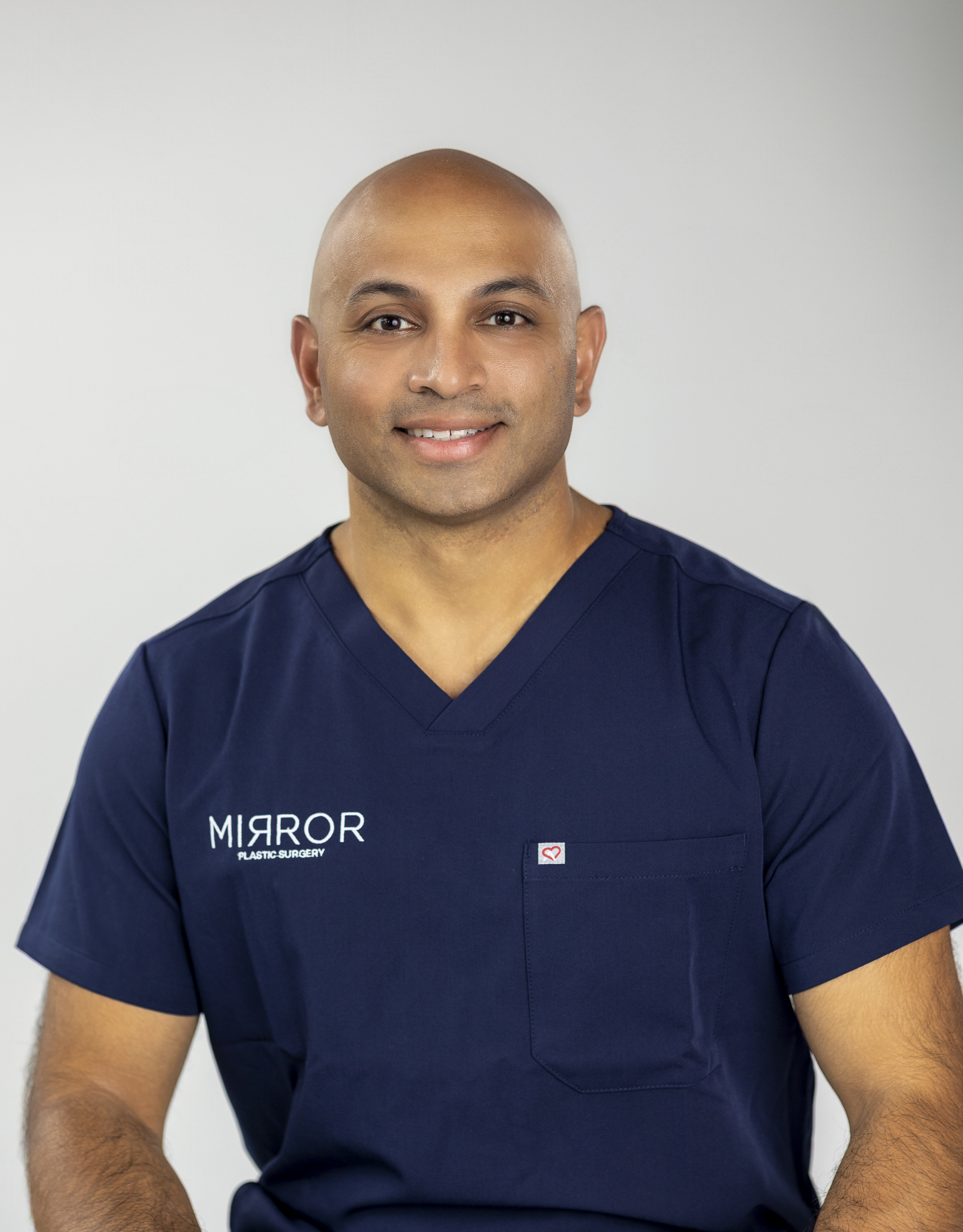
Following residency, Dr. Akash completed an aesthetic surgery fellowship at the Manhattan Eye, Ear and Throat Hospital (MEETH) at Lenox Hill Hospital, one of the most competitive aesthetic surgery fellowships in the United States, providing advanced training in facial rejuvenation, breast surgery, and body contouring. He also completed the Stanford University Biodesign Innovation Fellowship, a program that trains physician-innovators to identify unmet clinical needs and develop technological solutions. Dr. Akash is board certified by the American Board of Plastic Surgery and serves on the Next Generation Editorial Board of the Aesthetic Surgery Journal. He has testified before the U.S. Food and Drug Administration on breast implant safety and serves on multiple international committees of The Aesthetic Society.
Dr. Akash has been named to Newsweek’s America’s Best Plastic Surgeons list for two consecutive years. Mirror Plastic Surgery is located at 780 4th Ave S, St. Petersburg, FL 33701. Patients can reach the practice by phone or text at 727-361-6515 or by email at hello@mirrorplasticsurgery.com.
Begin your anatomy-first evaluation at Mirror Plastic Surgery’s St. Petersburg office.
Frequently Asked Questions
How long does a concierge plastic surgery consultation take at Mirror Plastic Surgery?
The initial consultation is structured as a 60-minute private appointment with Dr. Akash. Within that hour, you can expect time for goals discussion and medical history review, a hands-on anatomical examination, explanation of procedures and risks, and a brief period for recovery and cost planning. Complex combination procedures may require an additional planning visit before any surgical date is confirmed.
What should I bring to my first consultation?
Arrive with a complete medication list including supplements and herbal products, a full surgical and medical history, honest disclosure of tobacco or nicotine use, and reference photos of results you find appealing and results you want to avoid. Written questions prioritized by concern help ensure the most important topics are addressed within the appointment window. A trusted support person is welcome.
How does Mirror Plastic Surgery prioritize safety during the consultation?
Safety comes first in every consultation at Mirror Plastic Surgery, before function and before aesthetics. The intake process screens for contraindications before the appointment begins. The in-person examination uses advanced diagnostic tools including ultrasound where indicated. All surgical procedures are performed in accredited facilities with board-certified physician anesthesiologists. Dr. Akash holds hospital privileges, which provides a clinical safety net for rare complications. The practice also advises against combining too many procedures at once, since evidence indicates this can exponentially increase complication rates.
What does the written surgical plan include?
The written plan produced at Mirror Plastic Surgery documents the anatomical findings from the physical examination, the patient’s stated goals, the recommended procedure or procedures with anatomy-tied rationale, alternative approaches that were considered, surgical technique specifics, the anesthesia plan, facility details, a recovery timeline with specific milestones, procedure-specific risks, post-operative care protocol, and an itemized cost breakdown. Patients who receive written surgical plans rather than verbal-only communication report significantly higher satisfaction rates in published research.1
How is the concierge model different from a standard plastic surgery consultation?
The primary structural differences are time, volume, and continuity. Mirror Plastic Surgery schedules 60-minute consultations and limits surgical days to one or two procedures. High-volume practices may perform five to ten surgeries daily, which compresses consultation time, reduces individualized anatomical focus, and limits post-operative accessibility. At Mirror, the same surgeon who conducts the consultation performs the procedure and remains accessible throughout recovery, creating a continuity model that high-volume settings typically cannot provide.
Choosing a Thoughtful Provider
The concierge plastic surgery consultation process functions as the clinical mechanism through which safety, function, and aesthetics are properly sequenced. A 60-minute anatomy-first evaluation, a written surgical plan, transparent risk discussion, and structured aftercare coordination create the conditions under which informed consent is genuinely possible and outcomes are more predictable.1
For Tampa Bay residents evaluating providers, the criteria are straightforward. Verify ABPS board certification, confirm the surgeon personally conducts the examination, ask for a written plan with anatomy-tied rationale, and assess whether the practice’s surgical volume allows for the level of individual attention the procedure requires.
Mirror Plastic Surgery was built around exactly these standards. Dr. Akash, Harvard-MIT educated, Johns Hopkins trained, MEETH fellowship-trained, Stanford Biodesign-trained, and twice recognized by Newsweek as one of America’s Best Plastic Surgeons, conducts every consultation personally and follows the safety-first, function-second, aesthetics-third framework that defines the Mirror model.
Experience the concierge consultation process firsthand at Mirror Plastic Surgery in St. Petersburg, Florida.
1 Results may vary from person to person. Editorial content, before and after images, and patient testimonials do not constitute a guarantee of specific results.
