
Written by: Dr. Akash Chandawarkar, Board Certified Plastic Surgeon, Mirror Plastic Surgery | Last updated: September 9, 2026
Key Takeaways
- Concierge peptide therapy in Florida is expanding quickly, and quality differs greatly between physician-led practices and unregulated sellers.
- Legitimate care includes a board-certified physician, baseline labs, a licensed compounding pharmacy, and lot-specific Certificates of Analysis.
- Typical costs include $150–$450 for consultations, $75–$600 for labs, and $200–$650 monthly for protocols, with unusually low prices often signaling grey-market products.
- Most peptides used in wellness protocols are not FDA-approved, so medical oversight and verified sourcing are essential for safety.
- Patients seeking physician-led concierge peptide therapy in Florida can book a consultation at Mirror Plastic Surgery for personalized, lab-guided care.
What Concierge Peptide Therapy Involves
Concierge peptide therapy is a personalized, physician-supervised approach that uses amino-acid-based peptides to support goals like inflammation control, weight management, anti-aging, and recovery. Concierge care replaces anonymous online ordering with a full medical process that includes consultation, lab testing, custom protocols, quality-sourced peptides, and ongoing support.
The concierge model differs from standard telemedicine platforms and direct-to-consumer peptide sales. A physician reviews your complete medical history, orders or reviews lab panels, and designs a protocol specific to your physiology and goals. The relationship is ongoing rather than a one-time prescription. Peptides are not one-size-fits-all, so a peptide that helps one person with joint inflammation may be inappropriate for someone with different labs or health conditions.
Florida has a high concentration of wellness-focused practices in Miami, Fort Lauderdale, Tampa, St. Petersburg, Orlando, and Naples. This growth reflects strong demand but also creates wide variation in quality. Patients benefit from knowing how genuine concierge care differs from high-volume peptide prescribing.
How To Choose A Concierge Peptide Provider In Florida
Clear criteria help you compare providers and avoid unsafe options. A legitimate Florida peptide clinic includes a licensed physician, baseline labs, a named 503A or 503B compounding pharmacy, and a lot-specific Certificate of Analysis. You can apply the following framework to any practice in Tampa, Boca Raton, Naples, Fort Lauderdale, or elsewhere in Florida.
Credentials And Physician Involvement
- Verify the prescriber’s Florida license through the Department of Health MQA portal.
- Confirm that a board-certified physician (MD or DO) supervises care, rather than only a nurse or aesthetician.
- Look for advanced training in physiology, metabolic health, or regenerative medicine.
Personalization And Lab Testing
Responsible clinics order a comprehensive metabolic panel, CBC, lipid panel, fasting insulin and glucose or HbA1c, and IGF-1 if growth hormone secretagogues are prescribed, with retesting at 3 and 6 months. Avoid any clinic that skips labs before prescribing. Protocols should reflect your actual health status rather than a pre-set menu.
Pharmacy Sourcing And Quality
The single biggest risk in peptide therapy is receiving a peptide of unknown purity from a non-compliant source when no Certificate of Analysis is provided. A proper COA includes identity testing such as HPLC or mass spectrometry, purity percentage, endotoxin testing, sterility results, and a lot number that matches the vial. Patients should also confirm the compounding pharmacy’s NABP number and FDA-registered 503A or 503B status.
Ongoing Support And Monitoring
- Confirm there is a clear follow-up schedule for lab retesting and protocol adjustment.
- Verify that your physician, not only a care coordinator, is available for questions.
- Ensure the practice provides guidance on reconstitution, storage, and self-administration.
Telehealth And In-Person Visit Options
Florida Statute 456.47 allows synchronous telehealth prescribing by Florida-licensed physicians, and telehealth visits must meet the same standard of care as in-person visits. Strong practices offer both formats. Patients in Tampa and St. Petersburg can attend in person, while patients in Orlando, Miami, or other Florida cities can complete the entire process remotely.
Peptide Therapy Cost In Florida
Clear cost ranges help you budget and spot red flags. Pricing far below market range, such as under $80 per month for a full injectable growth hormone secretagogue protocol, often signals grey-market product sold “for research use only.”
Based on 2026 market data across Florida clinics:
| Cost Component | Typical Range |
|---|---|
| Initial consultation | $150–$450 |
| Baseline lab work | $75–$600 |
| Monthly peptide protocols | $200–$600 |
| Growth hormone secretagogue protocols (sermorelin, ipamorelin) | $300–$500/month |
| Compounded GLP-1 programs | $400–$650/month |
| Follow-up visits | $75–$150 every 1–3 months |
Membership or concierge models that bundle consultations, labs, and peptides for a flat monthly fee of $250–$500 are common and can offer good value when labs and follow-ups are truly included. Exact pricing at Mirror Plastic Surgery is set during a personalized consultation, because protocols depend on individual labs, goals, and peptide selections.
Insurance Coverage For Peptide Therapy
Most wellness, anti-aging, and weight-management peptide protocols are classified as elective treatments, so traditional health insurance generally does not cover them. Many patients can use Health Savings Accounts (HSA) or Flexible Spending Accounts (FSA) when a licensed physician documents medical necessity.
FDA-approved peptide drugs, including semaglutide (Ozempic, Wegovy) for diabetes or obesity and tirzepatide (Mounjaro, Zepbound), may be covered when prescribed for FDA-approved indications and when medical criteria are met. FDA-approved branded GLP-1 drugs often receive coverage for diabetes diagnoses, while coverage for obesity indications remains inconsistent.
Safety And Regulation Of Peptide Therapy In 2026
The regulatory environment for peptides continues to shift. Commonly discussed peptides such as BPC-157, TB-500, and injectable GHK-Cu are not FDA-approved drug products as of August 2026, and the FDA has identified potential significant safety risks for several peptides when used in compounded drugs, including BPC-157, CJC-1295, ipamorelin, KPV, MOTS-c, TB-500, and injectable GHK-Cu.
In July 2026, the FDA’s Pharmacy Compounding Advisory Committee met and voted on seven peptides nominated for the 503A bulks list. BPC-157, KPV, and TB-500 each received an 8–6 vote with one abstention. MOTS-c received a 7–5 vote with two abstentions. Epitalon received a 7–4 vote, and semax received an 8–5 vote. These recommendations are non-binding, and the FDA must complete formal rulemaking before any change affects what pharmacies may legally compound.
FDA approval applies only to specific finished drug products, not to peptide names in general. A clinic should avoid implying that research-peptide popularity equals FDA approval. Within this regulatory framework, Florida physicians can prescribe compounded peptides when the prescription serves a legitimate medical purpose, is based on a valid patient-specific prescription, and is prepared by a licensed pharmacy that follows federal and state regulations.
A safety checklist for evaluating any provider includes the following points:
- Require baseline labs: A responsible provider orders comprehensive blood work before prescribing.
- Verify pharmacy sourcing: Confirm the practice uses a named, FDA-registered compounding pharmacy.
- Request a Certificate of Analysis: This document proves identity, purity, sterility, and endotoxin testing.
- Avoid “research use only” products: Unregulated online “research chemicals” lack sterility guarantees and accurate dosing, which creates serious health risks.
- Ensure medical oversight: Your provider should monitor your response and adjust protocols as needed.
Common Misconceptions About Peptide Therapy
“Peptides are only for weight loss.” Peptides address a wide range of concerns. Beyond GLP-1 peptides for weight management, peptide therapies can target systemic inflammation, autoimmune conditions, collagen production and skin aging, gut health, anxiety and depression, sexual wellness, fertility, and post-surgical recovery.
“All peptides are dangerous.” When sourced from reputable compounding pharmacies and used under physician supervision, peptides are generally well-tolerated. BPC-157 shows no significant toxicity in animal studies or limited human data. It is not mutagenic or immunogenic, and users report no consistent adverse effects. The main danger comes from obtaining peptides from unregulated sources without medical oversight.
“Results are immediate and permanent.” Sleep, energy, and recovery often shift within weeks, while body-composition and skin changes typically take 2–3 months of consistent use1. Many patients need a maintenance protocol to sustain benefits.
“All providers offer the same quality.” The Florida market includes physician-led concierge practices, high-volume med spas, and unregulated online retailers. Quality varies significantly in peptide sourcing, dosing accuracy, lab testing, and medical supervision.
How Mirror Plastic Surgery Applies These Concierge Standards
Applying the criteria above, Mirror Plastic Surgery in St. Petersburg shows how physician-led concierge peptide therapy works in practice. The team prioritizes safety first, function second, and aesthetics third, which aligns with the evaluation framework in this guide.
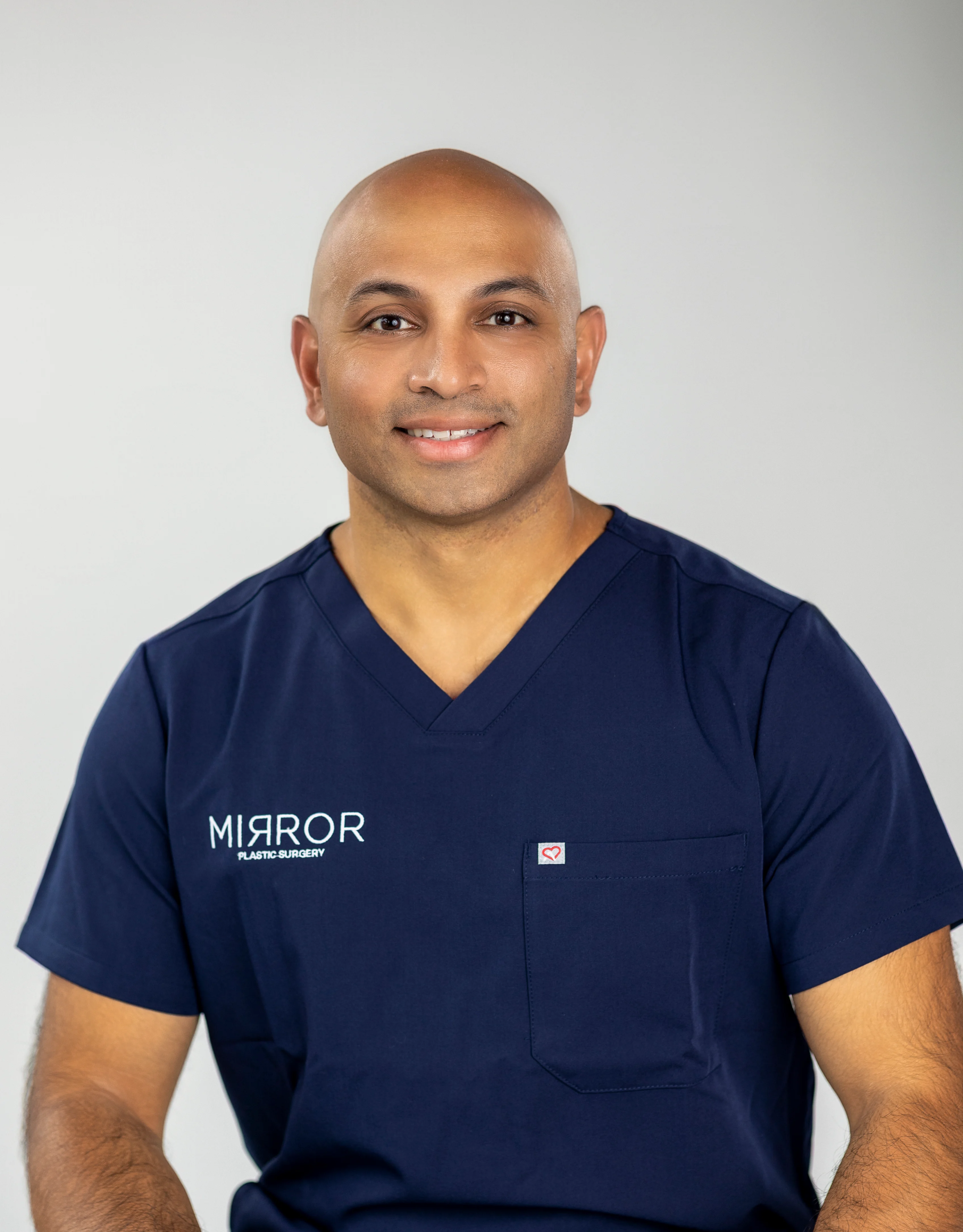
Physician-Led Care Under Dr. Akash Chandawarkar. Dr. Akash Chandawarkar, MD, is board-certified by the American Board of Plastic Surgery. His training includes graduation with Honors from Harvard Medical School through the Harvard-MIT Division of Health Sciences and Technology, a seven-year integrated plastic and reconstructive surgery residency at Johns Hopkins University, and a specialized aesthetic surgery fellowship at the Manhattan Eye Ear & Throat Hospital. He also completed the Stanford University Biodesign Innovation Fellowship, which supports a forward-looking, evidence-based approach to peptide protocols. This background matters because peptide therapy requires a deep understanding of physiology, metabolic health, and the body’s capacity for recovery.
Lab-Based Personalization. Every peptide protocol at Mirror Plastic Surgery begins with a detailed review of your unique physiology. For weight loss or inflammatory conditions, in-depth lab results such as thyroid, liver, kidney, diabetes markers, and hormone panels are reviewed before any prescription is written. If you do not have recent labs, the practice orders them. This process ensures that protocols reflect your actual health status rather than a generic template.
Quality Sourcing And Safety. Mirror Plastic Surgery sources peptides from reputable providers that complete rigorous batch testing to confirm product quality, purity, and accurate dosage. Patients receive clear instructions for reconstitution and self-administration, often supported by video demonstrations.
Ongoing Concierge Support. Patients have direct access to Dr. Akash by text for ongoing support, questions, and refill requests. This access allows concerns to be addressed quickly and protocols to be adjusted based on your response.
Remote Service Across Florida. Patients in Tampa, St. Petersburg, Miami, Orlando, Naples, and other Florida locations can use Mirror Plastic Surgery’s concierge peptide therapy remotely. The entire process, including consultation, prescription, and shipping, can occur through telehealth, while in-person visits are available at 780 4th Ave S, St. Petersburg, FL 33701.
Frequently Asked Questions
What Is The Average Cost For Peptide Therapy In Florida?
As detailed in the cost table above, consultation, lab, and protocol fees vary by provider and treatment type. Most concierge practices do not accept insurance, though HSA and FSA funds may apply when a physician documents medical necessity. Mirror Plastic Surgery provides personalized quotes during consultation, because protocols depend on individual labs, goals, and peptide selections.
Are Peptides FDA Approved?
Most peptides used in concierge therapy are not FDA-approved as finished drug products. FDA-approved peptide drugs include semaglutide (Ozempic, Wegovy), tirzepatide (Mounjaro, Zepbound), and bremelanotide (Vyleesi) for specific indications. As noted in the safety section, the FDA’s advisory committee made non-binding recommendations on several peptides in July 2026. FDA approval always applies to specific finished drug products rather than peptide names in general.
What Are The Risks Of Unsupervised Peptide Use?
The primary risk involves receiving a peptide of unknown purity from a non-compliant source. Without third-party testing, you cannot verify the product’s identity, potency, or sterility. No medical professional is present to determine appropriate dosing or screen for pre-existing conditions and medication interactions. These gaps can lead to no therapeutic response because the active content is low, or to serious complications from taking peptides without proper screening. Physician-supervised care at a practice like Mirror Plastic Surgery reduces these risks through quality sourcing, lab-based prescribing, and ongoing monitoring.
How Long Before I See Results From Peptide Therapy?
Results depend on the peptide and the individual. Sleep, energy, and recovery often improve within 2–4 weeks1. Body composition, skin quality, and inflammation reduction typically take 8–12 weeks of consistent use1. Full optimization may require 3–6 months1. Your physician should set clear milestones and monitor progress with follow-up labs. Mirror Plastic Surgery builds follow-up monitoring into every protocol so adjustments reflect your actual response.
Do I Need A Prescription For Peptides?
Yes. Legitimate therapeutic peptides are prescription-only medications in Florida. Patients need a formal medical consultation, comprehensive health review, diagnostic blood tests, and medical supervision by a licensed Florida healthcare professional. Products sold “for research use only” without a prescription are not appropriate for human use and carry significant contamination and dosing risks. Mirror Plastic Surgery’s protocols are prescribed by Dr. Akash Chandawarkar, a board-certified physician, and dispensed through licensed compounding pharmacies.
Making An Informed Choice For Concierge Peptide Therapy In Florida
Concierge peptide therapy in Florida offers a personalized, medically supervised path to address inflammation, weight management, anti-aging, recovery, and overall wellness. Success depends on choosing a provider who meets the standards in this guide, including board-certified physician involvement, lab-based personalization, quality pharmacy sourcing, and ongoing support.
Mirror Plastic Surgery meets each of these criteria. Under the leadership of Dr. Akash Chandawarkar, a Harvard-educated, Johns Hopkins-trained, board-certified plastic surgeon, the practice delivers concierge peptide therapy that centers your safety, physiology, and long-term goals. Every protocol begins with a comprehensive consultation and lab analysis. Every peptide comes from reputable providers with batch testing. Every patient receives direct access to their physician throughout treatment. Patients in Tampa, St. Petersburg, and across Florida can access physician-supervised peptide therapy through Mirror Plastic Surgery’s in-person and remote care model.
Disclaimer: Peptide therapies are not FDA-approved for all uses. Results vary by individual. Always consult a qualified healthcare provider before beginning any peptide protocol.
1 Results may vary from person to person. Editorial content, before and after images, and patient testimonials do not constitute a guarantee of specific results.
Peptide therapy is intended for wellness and optimization purposes and is not prescribed to diagnose, treat, cure, or prevent disease unless specifically stated. Many peptides are not FDA-approved and may be used off-label. Some have limited long-term safety data, with a potential for unknown risks, complications, or desensitization with prolonged use.