

Written by: Ellie Pranckevicius, FNP-BC, Aesthetic Nurse Practitioner & Aesthetic Injector | Facial Restoration & Regenerative Injectable Specialist, Mirror Plastic Surgery | Last updated: August 6, 2026
Key Takeaways About Ipamorelin at Mirror Plastic Surgery
- Ipamorelin is a synthetic growth-hormone secretagogue that stimulates pulsatile GH release without elevating cortisol or prolactin, but it has never received FDA approval.
- Current FDA Category 2 status restricts compounding of ipamorelin, while sermorelin remains on the Category 1 list and may still be compounded under 503A.
- Concierge protocols at Mirror Plastic Surgery require baseline labs, individualized dosing, and ongoing IGF-1 monitoring to support safety and track response.
- Benefits such as modest fat loss and lean-mass preservation are most pronounced when peptide therapy is paired with resistance training, nutrition, and quality sleep.1
- Patients considering growth-hormone secretagogue therapy can schedule a consultation with Mirror Plastic Surgery to review current regulatory status, lab findings, and personal health goals.
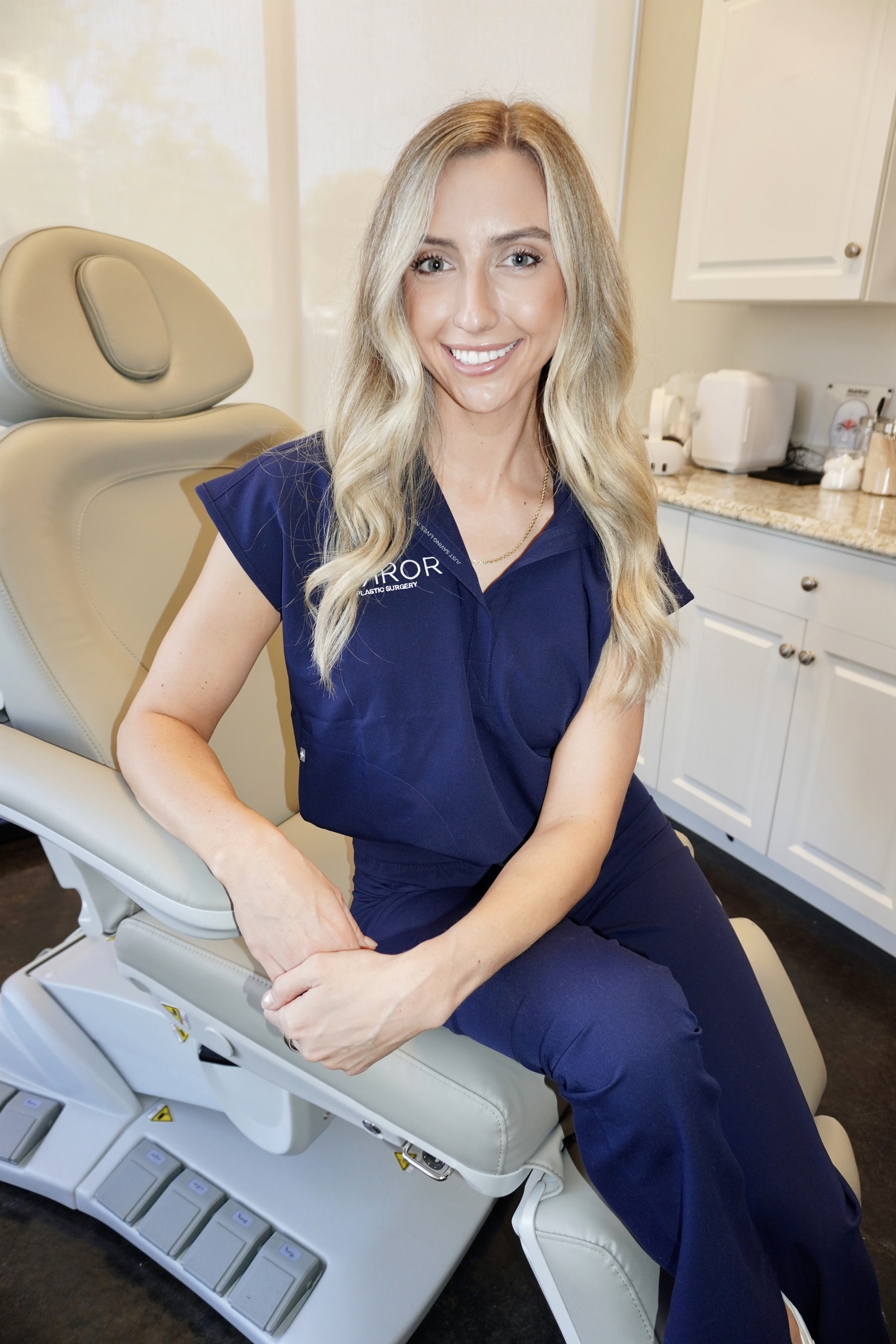
Meet Your Practitioner: Ellie Pranckevicius, FNP-BC
Ellie Pranckevicius, FNP-BC, leads peptide therapies at Mirror Plastic Surgery. She holds a Master’s in Nursing from the University of South Florida and spent four years in the Neuroscience ICU at Tampa General Hospital, where she developed a deep command of physiology, metabolic health, and complex patient management. Her rare combination of esthetician training and advanced nursing credentials allows her to address both the aesthetic goals patients want to achieve and the clinical science required to reach them safely. Ellie provides direct text and telemedicine access throughout every protocol, and she remains the primary point of contact from initial labs through ongoing maintenance.
Book an appointment with Ellie to discuss whether a growth-hormone secretagogue protocol fits your health profile.
How Ipamorelin and CJC-1295 Work in the Body
Understanding how these peptides work helps explain both their potential benefits and their limitations. Ipamorelin is a selective pentapeptide GHRP that binds GHSR-1a on anterior pituitary somatotrophs, activating the phospholipase C/IP3 pathway to raise intracellular calcium and trigger pulsatile GH release peaking within 30–40 minutes of injection. CJC-1295 (no DAC) is a DPP-IV-resistant 29-amino-acid analog of GHRH that binds a separate receptor, the GHRH receptor, activating the cAMP/PKA/CREB pathway to drive new GH synthesis rather than only releasing existing stores. Because the two peptides engage complementary receptors on the same pituitary cells, co-administration produces synergistic GH release documented at three to five times the output of either compound alone.
Neither ipamorelin nor CJC-1295 is FDA-approved. Both are compounded medications, meaning patients obtain them through licensed 503A compounding pharmacies against a valid individual prescription from a licensed practitioner. This status differs from FDA-approved drugs such as tesamorelin (Egrifta), which completed the full NDA process.
Current Rules Around Prescribing Ipamorelin
The regulatory picture for ipamorelin has shifted in recent years and now requires careful reading. The FDA placed ipamorelin acetate in Category 2 of its interim policy for bulk drug substances under Section 503A of the FD&C Act as of September 29, 2023, indicating that compounded drugs containing the substance may present significant safety risks. The FDA noted that compounded drugs containing ipamorelin acetate may pose risk for immunogenicity for certain routes of administration due to the potential for aggregation or peptide-related impurities, and that ipamorelin acetate contains unnatural amino acids, which add to the complexity of peptide characterization.
This regulatory restriction has led many practitioners to consider alternative secretagogues. Sermorelin, by contrast, remains on the FDA’s Category 1 bulk-drug-substance list and may be compounded under 503A with a valid prescription. Patients researching growth-hormone secretagogues should discuss current compounding eligibility directly with a licensed prescriber, as the regulatory landscape continues to evolve. Mirror Plastic Surgery sources peptides exclusively from reputable compounding pharmacies that conduct rigorous batch testing, and Ellie reviews each patient’s regulatory eligibility before any protocol begins.
How Mirror Plastic Surgery Uses Ipamorelin in Concierge Care
Peptide therapy at Mirror Plastic Surgery follows a structured, lab-driven sequence rather than a one-size-fits-all prescription model. This five-step process emphasizes safety through baseline screening and ongoing monitoring.
- A 30–60 minute consultation with Ellie covering full medical history, current medications, and health goals.
- Baseline lab panels, including IGF-1, fasting glucose, HbA1c, complete metabolic panel, and hormone markers, reviewed or ordered before any protocol begins.
- An individualized protocol built around lab findings, symptom profile, and body-composition goals rather than a standard template.
- Detailed education on reconstitution, subcutaneous self-administration technique, injection timing, and storage, often supported by video demonstrations.
- Ongoing direct text access to Ellie plus scheduled telemedicine follow-ups, with IGF-1 and metabolic markers rechecked at 6–8 weeks, 12 weeks, and then every 3–6 months throughout the protocol.
This model contrasts with high-volume telehealth platforms that may issue prescriptions without baseline labs or ongoing monitoring.
Daily Ipamorelin Use in Clinical Protocols
Research protocols document subcutaneous administration with close attention to timing relative to meals and sleep. Protocols scale by adding injection pulses rather than increasing the per-injection amount. Both continuous daily dosing and a 5-on/2-off weekly pattern appear in the research literature. These figures describe research contexts, not prescriptions, and any protocol at Mirror Plastic Surgery is individualized to each patient’s labs and response.
Typical Cycling Patterns for Ipamorelin
Most research protocols for ipamorelin run in defined cycles of roughly 8–12 weeks followed by an off period to limit receptor down-regulation. Continuous, uninterrupted stimulation of GHSR-1a may reduce receptor sensitivity over time and diminish the GH pulse amplitude that makes the peptide useful. Cycling preserves the pulsatile, physiological character of GH release, which distinguishes secretagogue approaches from exogenous recombinant HGH that bypasses the pituitary and produces continuous exposure. Ellie determines cycle length and off-period duration based on IGF-1 trends and individual response rather than a fixed calendar.
Downsides and Safety Concerns With Ipamorelin
Ipamorelin carries meaningful risks and limitations that every informed patient should understand before starting therapy. Most reported adverse effects are mild and transient, although metabolic signals require careful monitoring.
Reported adverse effects include:
- Transient facial flushing with ipamorelin described as rare or not documented in controlled human studies
- Mild water retention and occasional paresthesia
- Increased blood glucose and decreased insulin sensitivity from elevated IGF-1, a class-level metabolic signal for all GH secretagogues
- Injection-site reactions from subcutaneous administration
Serious safety signals also exist. A study identified serious adverse events including death when ipamorelin was administered intravenously for improving gastric motility. In a Phase II multicenter RCT, ipamorelin was associated with serious adverse events, though that trial used intravenous administration in a surgical population, a context distinct from subcutaneous wellness use. Active malignancy is a major contraindication due to potential proliferative risks from elevated IGF-1. No long-term safety data beyond single-dose pharmacokinetic studies are available for ipamorelin in humans, so caution remains essential with GH secretagogues.
Cost, Value, and Whether Ipamorelin Is Worth It
The value of ipamorelin depends on individual goals, baseline lab findings, and realistic expectations about outcomes. Monitoring requirements add to the total cost of care, because responsible concierge clinics require baseline and ongoing blood work to monitor IGF-1 levels, with out-of-pocket longevity panels often costing an additional $150–$300 every 3–6 months. No peptide is FDA-approved for anti-aging, and CJC-1295 and ipamorelin prescribed by wellness clinics are compounded medications used off-label with no insurance coverage.
Outcome variability is real. Clinical and observational data describe modest reductions in body fat percentage, preservation or modest gains in lean body mass, and reductions in visceral adipose tissue over typical 3–6 month protocol durations, but a 2026 evidence review concludes there is insufficient clinical evidence to recommend ipamorelin for increasing lean body mass or anti-aging use in healthy adults.1 Mirror Plastic Surgery does not offer a one-size-fits-all quote, and each patient receives a personalized assessment during consultation. That assessment begins with a comprehensive consultation.
Book an appointment with Ellie to review your labs and determine whether the potential benefits justify the investment for your specific situation.
Comparing Safety: Ipamorelin vs. Sermorelin
Ipamorelin and sermorelin act through entirely different receptors. Sermorelin is a 29-amino-acid synthetic analog of endogenous GHRH(1-29) that binds the GHRH receptor, a Gs-coupled GPCR on anterior pituitary somatotrophs, while ipamorelin is a selective agonist at GHSR-1a, the ghrelin receptor, stimulating GH release via the PLC/PKC pathway. From a regulatory standpoint, sermorelin holds a meaningful advantage. Sermorelin was FDA-approved as Geref in 1990 (diagnostic) and 1997 (therapeutic) for pediatric growth hormone deficiency and was later discontinued, which provides established dosing protocols and a stronger human clinical dataset.
Sermorelin’s Category 1 status, discussed earlier, gives it a practical regulatory advantage over ipamorelin’s current Category 2 restriction. Ipamorelin’s selectivity advantage, with reduced cortisol, ACTH, and prolactin stimulation relative to earlier GHRPs such as GHRP-6, is supported by preclinical animal studies and one small human comparison, not large RCTs. For patients who are candidates for a GHRH-pathway peptide, sermorelin’s longer regulatory track record and current compounding eligibility represent a practical safety consideration that Ellie addresses during consultation.
Important Considerations Before Starting a GH Secretagogue
FDA Regulatory Status Callout: Ipamorelin has never received FDA approval for any human indication. As of September 2023, the FDA placed ipamorelin acetate in Category 2 under Section 503B, citing potential safety risks including immunogenicity concerns. Its compounding eligibility under Section 503A is also under active review. Sermorelin remains on the Category 1 list and is currently compoundable under 503A. Any growth-hormone secretagogue protocol at Mirror Plastic Surgery begins only after a thorough review of current regulatory status, individual lab findings, and contraindications.
Before starting any GH secretagogue protocol, several core requirements must be in place. Baseline IGF-1 and metabolic labs are non-negotiable for safe prescribing, because they establish eligibility and reveal contraindications. Adults most often considered are aged 35–65 with documented IGF-1 decline below optimal ranges for age, accompanied by symptoms such as poor recovery, reduced lean mass, disrupted sleep, or increased visceral fat.
Sourcing quality also matters. Products from unregulated online vendors carry no guarantee of purity, sterility, or accurate dosing. Realistic expectations about timelines help patients stay grounded, since effects on body composition are most pronounced when peptide therapy is paired with nutrition, resistance training, and sleep support, and results emerge over months rather than weeks. Maintenance protocols are typically required to sustain benefits after an initial cycle, so patients should view this as an ongoing commitment rather than a one-time intervention.
Common Misconceptions About Ipamorelin
Several persistent misconceptions circulate in online forums and gray-market marketing materials, and they can set patients up for disappointment or risk. The first misconception is that ipamorelin produces universal results. The only human data come from a single Phase I pharmacokinetic study in 40 healthy male volunteers, and no large-scale RCTs on body composition or anti-aging outcomes exist. Individual response varies significantly based on genetics, baseline hormone levels, diet, and lifestyle.
The second misconception is that benefits are permanent. Peptide therapy functions more like an ongoing health regimen than a one-time intervention. When a protocol ends, GH pulse amplitude returns to baseline and the physiological effects diminish accordingly.
The third misconception is that unsupervised use is safe because the peptide is described as “natural-acting.” Between 2019 and 2024 the FDA issued warning letters to multiple compounding pharmacies producing ipamorelin for marketing it as a new drug without an approved NDA and for failing to compound pursuant to valid patient-specific prescriptions. Purchasing from unregulated online sources bypasses every safety checkpoint that a supervised clinical protocol provides.
Risks, Limitations, and Ongoing Challenges
Beyond the side-effect profile covered above, several structural limitations apply to ipamorelin and the broader GH secretagogue category. Data gaps are significant. Large-scale randomized controlled trials for body composition outcomes, long-term outcome data over years of use, and population-level safety data for CJC-1295/ipamorelin do not exist. The only Phase III clinical development program for ipamorelin failed to meet its primary endpoints, after which no further company-sponsored trials were registered. As one endocrinologist noted, “The selectivity data for ipamorelin are promising, but selectivity in a swine model does not guarantee the same profile in humans over months of use. We need controlled long-term data that simply do not exist yet.”
Contraindications requiring screening before any protocol include active malignancy, uncontrolled diabetes, pregnancy, and certain cardiovascular conditions. Monitoring requires baseline and follow-up IGF-1 and IGFBP-3 levels at 6–8 weeks, 12 weeks, then every 3–6 months, with IGF-1 targeted to the 60th–80th percentile of the age-adjusted range and immediate dose reduction if levels exceed 300 ng/mL in adults. These monitoring requirements are not optional. They form the mechanism by which a supervised protocol remains as safe as possible.
Frequently Asked Questions
Who is a good candidate for growth-hormone secretagogue therapy?
Adults aged 35–65 with documented IGF-1 decline below optimal age-adjusted ranges, accompanied by symptoms such as poor recovery, reduced lean mass, increased visceral fat, or disrupted sleep, are the most commonly evaluated candidates. Eligibility requires a full baseline lab panel including IGF-1, fasting glucose, HbA1c, and a complete metabolic panel. Active malignancy, uncontrolled diabetes, pregnancy, and certain cardiovascular conditions are contraindications. Ellie reviews each patient’s full medical history and lab results before any protocol is considered.
How long does it take to see results from a GH secretagogue protocol?
Subjective improvements in sleep quality and recovery are often reported within the first few weeks of a protocol.1 Measurable changes in body composition, such as modest reductions in fat mass and preservation or modest gains in lean mass, are typically observed over 3–6 month protocol durations.1 Results are most pronounced when peptide therapy is paired with consistent resistance training, adequate protein intake, and sleep support.1 Individual response varies based on genetics, baseline hormone levels, and lifestyle factors.
Why does Mirror Plastic Surgery require lab work before prescribing peptides?
Lab panels serve two purposes, safety screening and protocol personalization. Baseline IGF-1 establishes whether the GH axis is a rational therapeutic target for a given patient. Fasting glucose, HbA1c, and a complete metabolic panel identify contraindications such as insulin resistance or impaired kidney or liver function that would alter the risk-benefit calculation. Without this data, dosing becomes guesswork and contraindications go undetected. The monitoring schedule described in the protocol section allows Ellie to adjust dosing based on actual physiological response rather than subjective reporting alone.
What is the difference between buying peptides online and getting them through Mirror Plastic Surgery?
Products sold through online vendors, research chemical suppliers, or gray-market sources are not FDA-regulated, are manufactured without pharmaceutical oversight, and have not been tested for purity, sterility, or accurate dosing. No prescriber reviews contraindications, no baseline labs establish eligibility, and no monitoring detects adverse metabolic signals. Mirror Plastic Surgery sources exclusively from compounding pharmacies that conduct rigorous batch testing, requires a full medical history and lab review before initiating any protocol, and provides direct ongoing access to Ellie throughout the patient’s journey.
Is sermorelin a better option than ipamorelin given the current regulatory environment?
For many patients, sermorelin represents a more straightforward regulatory path at this time. Sermorelin has a documented FDA approval history, remains on the Category 1 bulk-drug-substance list, and can be compounded under Section 503A with a valid prescription. Ipamorelin’s compounding eligibility is currently restricted under Category 2, pending further FDA review. Mechanistically, the two peptides act on different receptors and can be complementary. The right choice depends on a patient’s individual lab findings, health goals, contraindication profile, and the current regulatory status at the time of consultation, all factors Ellie evaluates directly.
Summary: Choosing Safely With Ipamorelin and Related Peptides
Ipamorelin and related growth-hormone secretagogues occupy a complex space. They are mechanistically rational, selectively active in preclinical models, and widely used in concierge wellness settings, yet they lack the large-scale human RCTs, FDA approval, and long-term safety data that would place them on firmer clinical ground. The regulatory environment is actively evolving, and compounding eligibility can change between a patient’s initial research and their consultation date.
Supervised, lab-driven care consistently offers more protection than unsupervised self-administration. A protocol personalized to your IGF-1 levels, metabolic markers, and contraindication profile, with a board-certified practitioner available by text throughout, differs completely from a vial purchased from an unregulated online vendor. That difference represents the entire margin of safety.
Mirror Plastic Surgery’s concierge model is built around that margin. Ellie Pranckevicius brings ICU-level clinical judgment, esthetician-trained aesthetic understanding, and a commitment to honest, education-first communication to every peptide consultation. The practice limits patient volume deliberately, sources from batch-tested compounding pharmacies, and requires ongoing lab monitoring as a condition of care, not an optional add-on.
Health-conscious adults in the Tampa Bay area or anywhere in the United States who are researching growth-hormone secretagogue therapy benefit most from a direct conversation with a qualified prescriber who will review labs, explain the current regulatory picture, and state clearly whether this category of therapy is appropriate for their situation.
Book an appointment with Ellie at Mirror Plastic Surgery to begin with a comprehensive consultation, lab review, and a personalized protocol built around your physiology, not a template.
1 Results may vary from person to person. Editorial content, before and after images, and patient testimonials do not constitute a guarantee of specific results.
Peptide therapy is intended for wellness and optimization purposes and is not prescribed to diagnose, treat, cure, or prevent disease unless specifically stated. Many peptides are not FDA-approved and may be used off-label. Some have limited long-term safety data, with a potential for unknown risks, complications, or desensitization with prolonged use.
